
Microsoft's groundbreaking quantum computer chip, Majorana 1, will not be available through its Azure cloud platform initially. However, this decision paves the way for future, more powerful models to be integrated with Azure. The chip, which employs eight topological qubits, represents a significant step towards Microsoft's ambitious goal of achieving a million qubits on a single chip. While Majorana 1 will be used primarily for research and development, the company's Azure Quantum cloud service already provides developers with access to chips from other companies.
Majorana 1 , Microsoft's groundbreaking quantum computer chip, will not be accessible through its Azure cloud platform. However, this decision paves the way for future, more powerful models to be integrated with Azure . Jason Zander, Microsoft's executive vice president, revealed this information to CNBC, emphasizing that Majorana 1 represents a stepping stone towards the ambitious goal of achieving a million qubits on a single chip.
This advancement stems from extensive research in quantum computing physics. Unlike traditional computers that rely on bits, which can be either on or off, quantum computers utilize qubits. Qubits possess the unique ability to exist in both states simultaneously, opening up possibilities for solving complex problems that are currently beyond the capabilities of classical computers. Majorana 1 employs eight topological qubits constructed using indium arsenide, a semiconductor, and aluminum, a superconductor. A comprehensive description of the chip's intricacies is detailed in a recent publication in the esteemed journal Nature.Microsoft's strategy with Majorana 1 differs from its approach with custom AI chips, which will be available on Azure. Instead, the company intends to focus on research and development, collaborating with national laboratories and universities to explore the potential of this revolutionary technology. Zander explained that Microsoft aims to reach a few hundred qubits before considering commercial reliability. While Majorana 1 won't be directly accessible through Azure, Microsoft's Azure Quantum cloud service already provides developers with opportunities to experiment with programs and algorithms using chips from other companies like IonQ and Rigetti. Zander expressed confidence that a Microsoft quantum chip might become available on Azure before 2030, stating, 'There's a lot of speculation that we're decades off from this. We believe it's more like years.'The integration of quantum computing into Microsoft's existing infrastructure, particularly its AI business, holds immense promise. Zander envisions a future where quantum computers can facilitate groundbreaking advancements in fields such as drug discovery and materials science. He stated, 'Now you can ask it to invent some new molecule, invent some new drug, something that really would have been impossible to do before.' As Microsoft continues to push the boundaries of quantum computing, its impact on various industries is expected to grow significantly in the coming years
QUANTUM COMPUTING MAJORANA 1 MICROSOFT AZURE AI RESEARCH AND DEVELOPMENT
United States Latest News, United States Headlines
Similar News:You can also read news stories similar to this one that we have collected from other news sources.
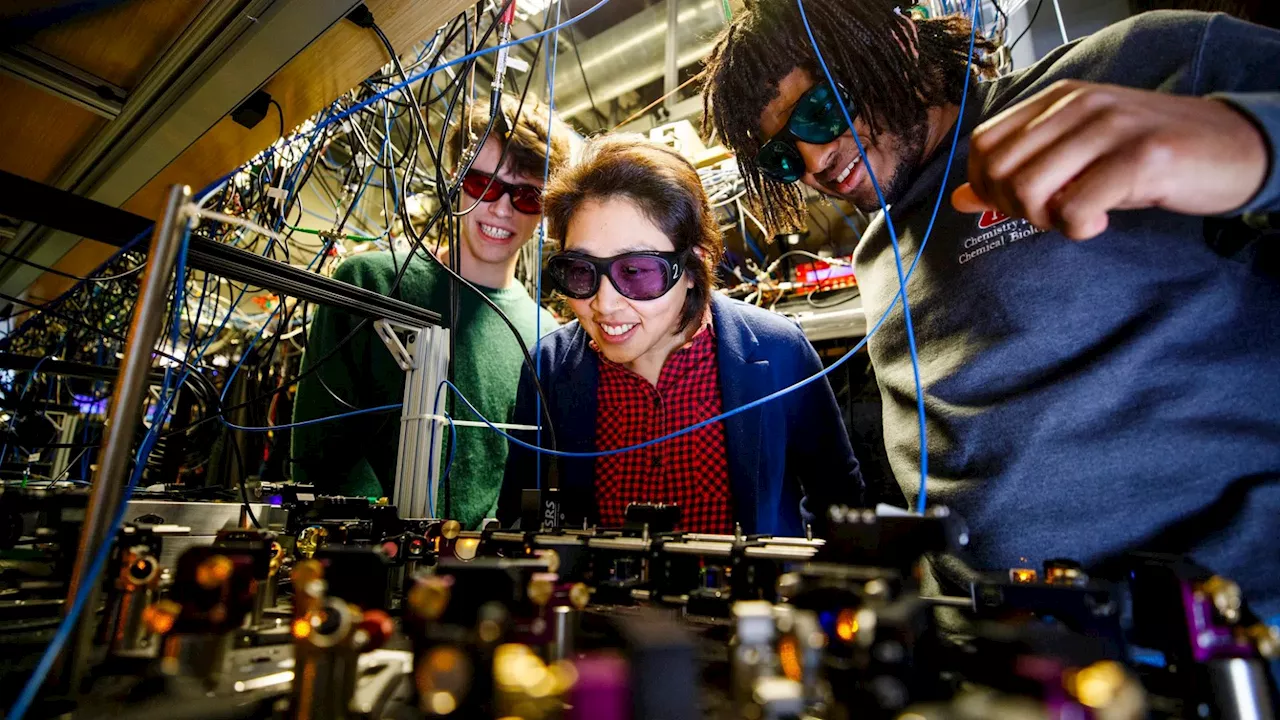 Harvard Scientists Trap Molecules for Quantum Operations, Ushering in a New Era of Quantum ComputingFor the first time, scientists have successfully trapped molecules and used them to perform quantum operations, marking a significant leap forward in the field of quantum computing. This breakthrough opens up new possibilities for building more powerful and versatile quantum computers.
Read more »
 Scientists Discover New Quantum State in 2D Semiconductors, Paving the Way for More Powerful Quantum ComputingResearchers at the Daegu Gyeongbuk Institute of Science and Technology have made a significant breakthrough in quantum computing by discovering a new quantum state within two-dimensional (2D) semiconductor chips. This discovery offers a promising path for controlling quantum information with enhanced reliability, potentially leading to more powerful and efficient quantum computers.
Read more »
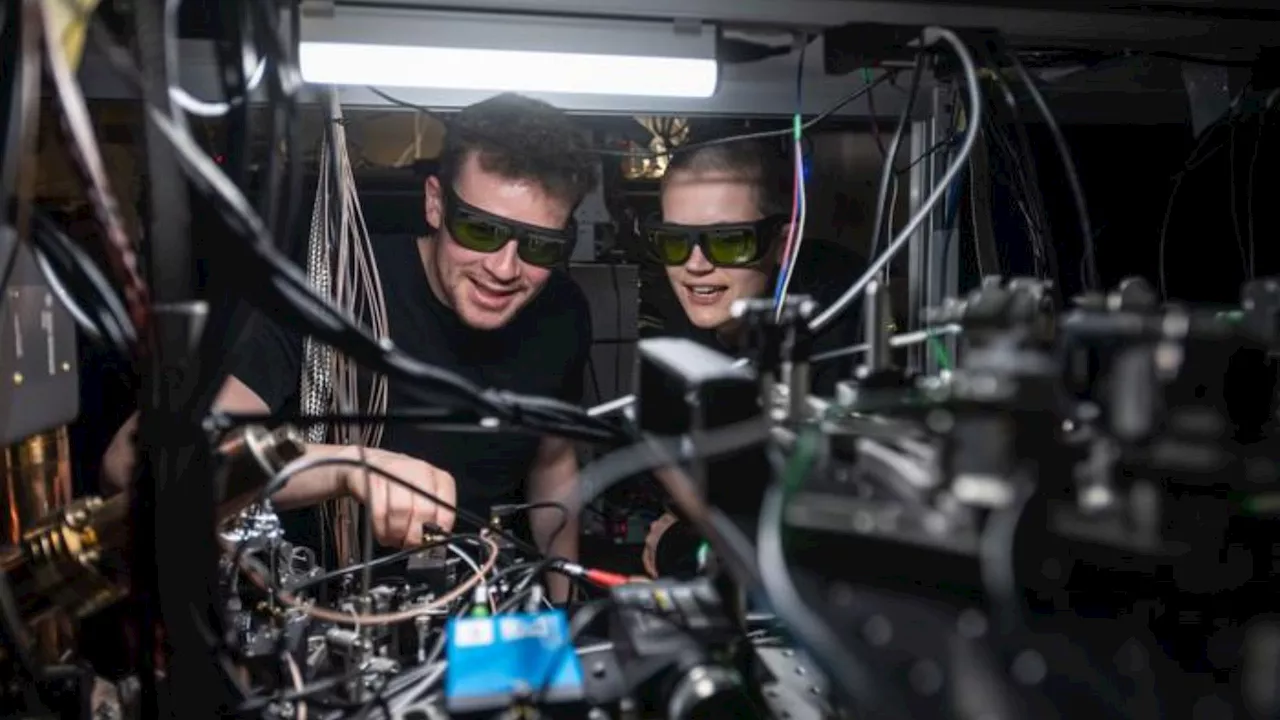 Oxford Researchers Achieve Quantum Teleportation of Logical Gates, Paving the Way for Scalable Quantum ComputingA team of researchers at Oxford University Physics has made a significant breakthrough in quantum computing by successfully demonstrating the first-ever quantum teleportation of logical gates. This achievement paves the way for building larger, more powerful quantum computers and overcomes the scalability challenges that have long hindered their progress.
Read more »
 Quantum Leap: Scientists Achieve Distributed Quantum ComputingScientists at Oxford University Physics have successfully connected two separate quantum processors using a photonic network interface, creating the first distributed quantum computer. This breakthrough paves the way for tackling complex computational challenges and addresses the scalability issue in quantum computing.
Read more »
 Quantum Teleportation Achieves Milestone in Distributing Quantum ModulesResearchers at Oxford University successfully teleport quantum states between computers, proving the feasibility of distributing quantum modules without performance loss. This breakthrough paves the way for scaling quantum technology and building larger, more powerful quantum computers.
Read more »
 Exploring Quantum Computing: Texas' Potential in the Quantum EraThe Texas Tribune hosts a panel discussion with leading quantum computing experts to explore the potential of this transformative technology and its implications for Texas' future.
Read more »