
Scientists at Microsoft have created a new quantum computing chip, Majorana 1, using a unique topological conductor material. This breakthrough enables the potential for building a single chip with millions of reliable qubits within a few years, rather than decades.
The ultimate action-packed science and technology magazine bursting with exciting information about the universeEngaging articles, amazing illustrations & exclusive interviewsThe new Majorana 1 quantum computing chip is fitted with eight topological qubits that tap into a new state of matter to perform computations.
Scientists at Microsoft have built a new quantum computing chip using a special category of material capable of tapping into a new state of matter. This breakthrough could enable researchers to build a single chip with millions of reliable qubits much sooner than experts predicted — possibly within just a few years rather than decades., called"Majorana 1," is an eight-qubit prototype chip built from the first material of its kind in the world — a topological conductor, or topoconductor. This can reach the"topological" state of matter and tap into the lawsThe new type of qubit, called a"topological qubit," is stable, smaller, less power-draining and more scalable than a qubit made from a"We took a step back and said 'Ok, let's invent the transistor for the quantum age. What properties does it need to have?',"."And that's really how we got here — it's the particular combination, the quality and the important details in our new materials stack that have enabled a new kind of qubit and ultimately our entire architecture." Quantum simulation breakthrough will lead to 'discoveries impossible in today's fastest supercomputers,' Google scientists claim The fabrication of this QPU was only possible after researchers, for the first time, used the architecture to definitively observe and control an enigmatic subatomic particle with special properties called the"Majorana fermion," or"Majorana zero mode" , theorized by mathematician Majorana's theory proposed that a particle could be its own antiparticle, and may actually coexist rather than only annihalating each other.June 2023Get the world’s most fascinating discoveries delivered straight to your inbox.Receive email from us on behalf of our trusted partners or sponsors Majorana's theory proposed that a particle could be its own antiparticle. That means it's theoretically possible to bring two of these particles together, and they will either annihilate each other in a massive release of energy or can coexist stably when pairing up together — priming them to store quantum information. These subatomic particles do not exist in nature, so to nudge them into being, Microsoft scientists had to make a series of breakthroughs in materials science, fabrication methods and measurement techniques. They outlined these discoveries — the culmination of a 17-year-long project — in a new study published Feb. 19 in the journalChief among these discoveries was the creation of this specific topoconductor, which is used as the basis of the qubit. The scientists built their topoconductor from a material stack that combined a semiconductor made of indium arsenide with an aluminum superconductor.The new Majorana 1 Quantum processor has eight topolgoical qubits, each composed of superconducting and topological conducting wires fitted alongside MZMs and a semiconductor quantum dot.To construct one qubit, which is less than 10 microns in size — much smaller than superconducting qubits — the scientists arranged a set of nanowires into an H shape, with two longer topoconducting wires joined in the center by one superconducting wire. They next induced four MZMs to exist on all four points of the H by cooling the structure down and tuning it with magnetic fields. Finally, to measure the signal when the device would be operational, they connected the H with a semiconductor quantum dot — equivalent to a small capacitor that carries charge. Topoconductors differ from superconductors in the way they behave when burdened with an unpaired electron. In superconductors, electrons usually pair up — known as Cooper pairs — with an odd number of electrons requiring a massive amount of energy to accommodate, or enter an excited state. The difference in energy between the ground state and the excited state is the basis for the 1s and 0s of data in superconducting qubits. Like superconductors, topoconductors use the presence or absence of an unpaired electron as the 1s and 0s of computing data, but the material can"hide" unpaired electrons by sharing their presence among the paired electrons. This means there is no measurable energy difference when unpaired electrons are added into the system, making the qubit more stable at the hardware level and protecting the quantum information. However, it also means it's harder to measure the qubit's quantum state. This is where the quantum dot comes in. The scientists beam a single electron from the quantum dot into one end of the wire, through the MZM, and it emerges from the other end, through another MZM. By blasting the quantum dot with microwaves as this happens, the returning reflection carries an imprint of the quantum state of the nanowires. The accuracy of this measurement is approximately 99%, the scientists said in the study, noting that electromagnetic radiation is one example of an external factor that triggers an error once per millisecond, on average. The scientists said this is rare and indicates that the inherent shielding in the new type of processor is effective at keeping radiation out."It's complex in that we had to show a new state of matter to get there, but after that, it's fairly simple. It tiles out. You have this much simpler architecture that promises a much faster path to scale,"Svore added this new qubit architecture, called the"Topological Core," represents the first step on the path to creating workable 1 million-qubit quantum computers — likening its creation to the shift from building computers using vacuum tubes to transistors in This is thanks to the smaller size and higher quality of the qubits, alongside the ease with which they can scale because of the way the qubits fit together like tiles, the scientists said in the study. In the next few years, the scientists plan to build a single chip with a million physical qubits, which will, in turn, lead to useful scientific breakthroughs in fields like medicine, materials science and our understanding of nature that would be impossible to make using the The scientists plan on improving this technology in the coming years to the extent we'll see a quantum chip with a million physical qubits.The quantum chip does not work in isolation, however. Rather, it exists in an ecosystem alongside a dilution refrigerator to achieve extremely cold temperatures, a system that manages control logic, and software that can integrate with classical computers and artificial intelligence . The scientists said that optimizing these systems so that they can work at a much bigger scale will take years of further research. But this timeline may be expedited with further breakthroughs. "Those materials have to line up perfectly. If there are too many defects in the material stack, it just kills your qubit," Svore said in the statement."Ironically, it's also why we need a quantum computer — because understanding these materials is incredibly hard. With a scaled quantum computer, we will be able to predict materials with even better properties for building the next generation of quantum computers beyond scale." Keumars is the technology editor at Live Science. He has written for a variety of publications including ITPro, The Week Digital, ComputerActive, The Independent, The Observer, Metro and TechRadar Pro. He has worked as a technology journalist for more than five years, having previously held the role of features editor with ITPro. He is an NCTJ-qualified journalist and has a degree in biomedical sciences from Queen Mary, University of London. He's also registered as a foundational chartered manager with the Chartered Management Institute , having qualified as a Level 3 Team leader with distinction in 2023.Quantum simulation breakthrough will lead to 'discoveries impossible in today's fastest supercomputers,' Google scientists claim
QUANTUM COMPUTING MAJORANA QUBIT TOPOLOGICAL MATERIALS SUPERCONDUCTORS MICROSOFT
United States Latest News, United States Headlines
Similar News:You can also read news stories similar to this one that we have collected from other news sources.
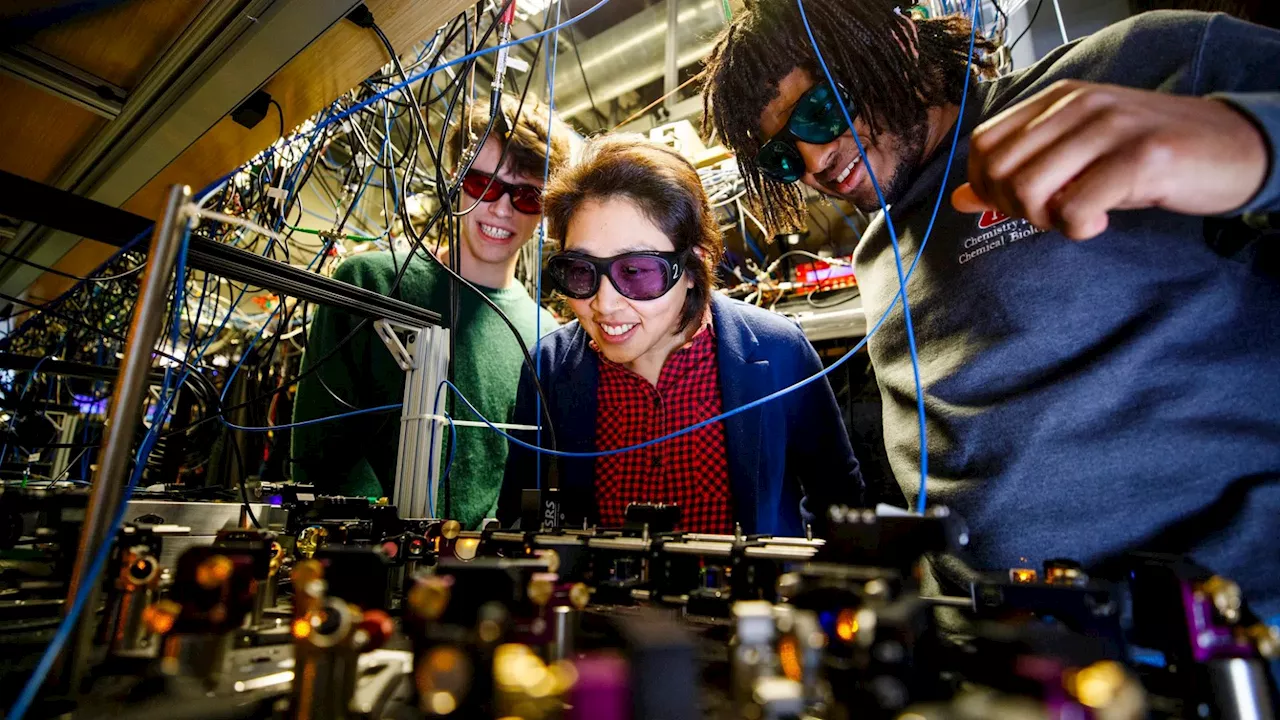 Harvard Scientists Trap Molecules for Quantum Operations, Ushering in a New Era of Quantum ComputingFor the first time, scientists have successfully trapped molecules and used them to perform quantum operations, marking a significant leap forward in the field of quantum computing. This breakthrough opens up new possibilities for building more powerful and versatile quantum computers.
Read more »
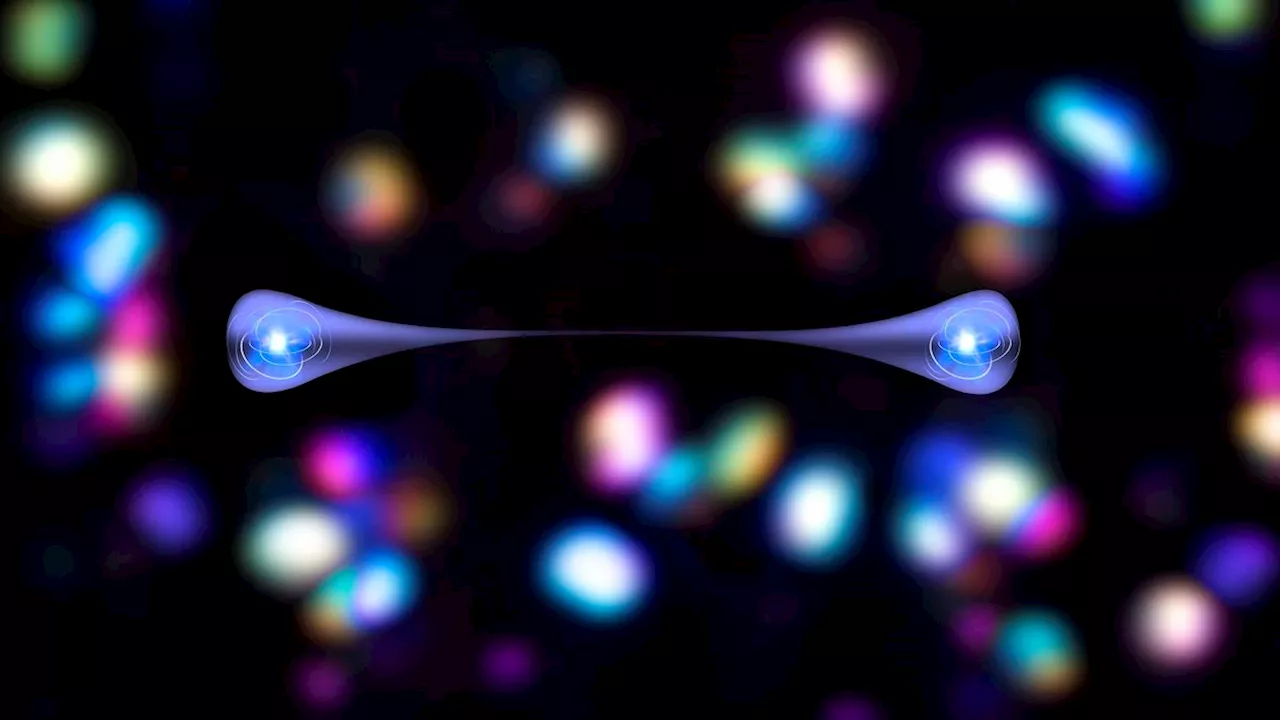 Scientists Discover New Quantum State in 2D Semiconductors, Paving the Way for More Powerful Quantum ComputingResearchers at the Daegu Gyeongbuk Institute of Science and Technology have made a significant breakthrough in quantum computing by discovering a new quantum state within two-dimensional (2D) semiconductor chips. This discovery offers a promising path for controlling quantum information with enhanced reliability, potentially leading to more powerful and efficient quantum computers.
Read more »
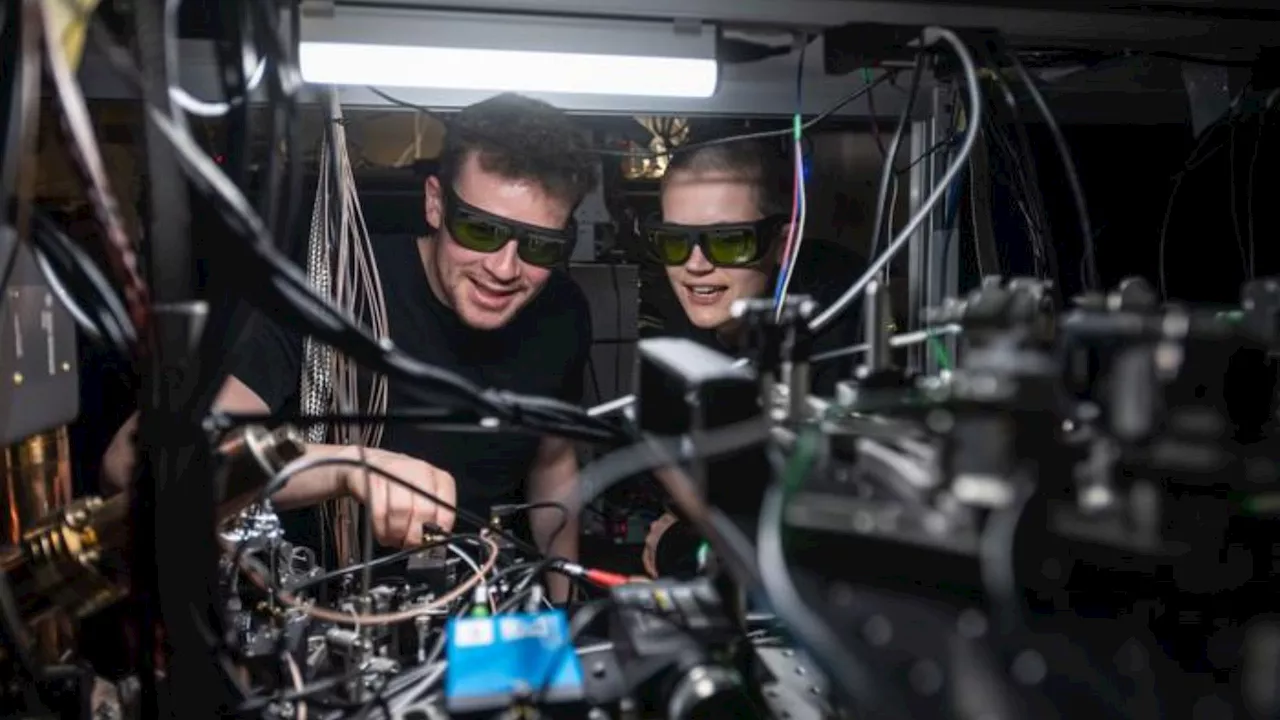 Oxford Researchers Achieve Quantum Teleportation of Logical Gates, Paving the Way for Scalable Quantum ComputingA team of researchers at Oxford University Physics has made a significant breakthrough in quantum computing by successfully demonstrating the first-ever quantum teleportation of logical gates. This achievement paves the way for building larger, more powerful quantum computers and overcomes the scalability challenges that have long hindered their progress.
Read more »
 Quantum Leap: Scientists Achieve Distributed Quantum ComputingScientists at Oxford University Physics have successfully connected two separate quantum processors using a photonic network interface, creating the first distributed quantum computer. This breakthrough paves the way for tackling complex computational challenges and addresses the scalability issue in quantum computing.
Read more »
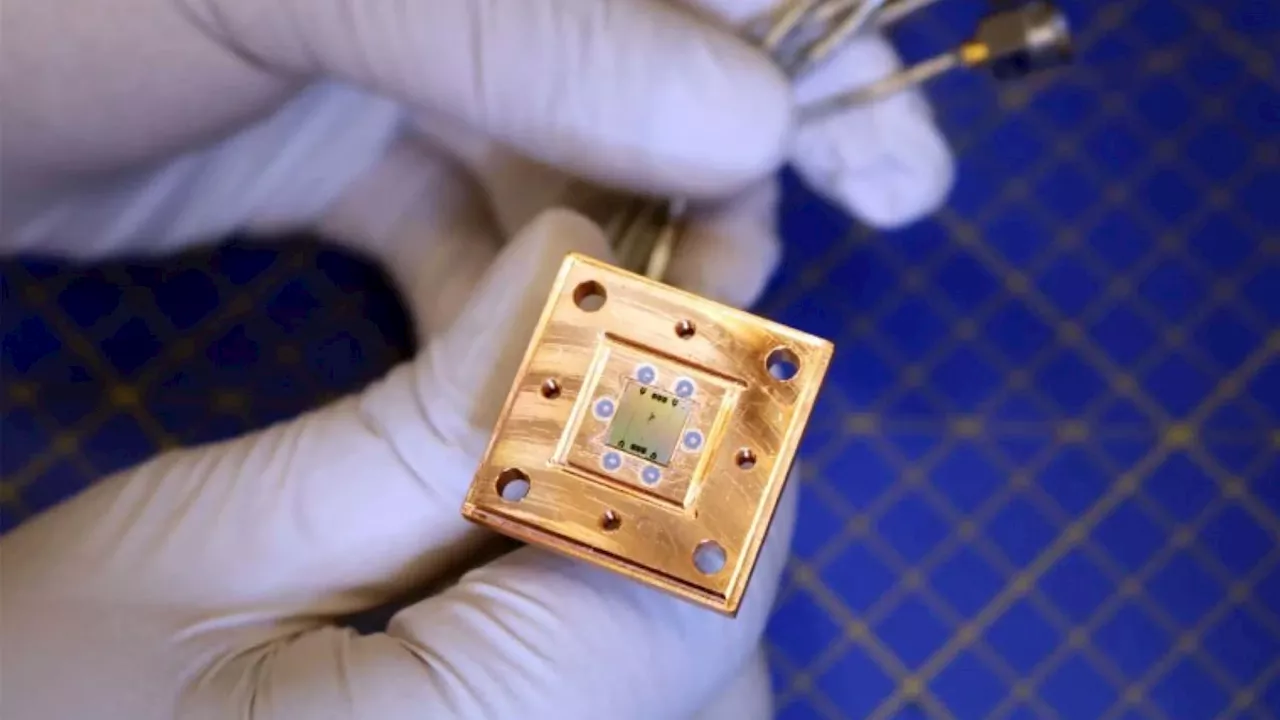 Autonomous Quantum Refrigerator Achieves Record-Low Temperature, Boosting Quantum Computer PerformanceScientists have developed a new type of autonomous quantum refrigerator that can cool qubits to a record-low temperature of 22 millikelvin. This breakthrough could significantly improve the performance and reliability of quantum computers by reducing errors caused by environmental disturbances.
Read more »
 Microsoft’s Majorana 1: What a new state of matter means for quantum computingBy integrating topoconductors and Majorana particles, Microsoft has mapped out a viable route to a million-qubit quantum chip
Read more »