
A new study explores the feasibility of using lightsails to propel spacecraft to distant star systems.
Chemical rockets, while powerful, have limitations when it comes to interstellar travel. Their reliance on energy-dense fuels and the vast distances involved present significant challenges. To reach distant star systems, we need more efficient propulsion methods. One promising solution is the use of lightsails, which harness the momentum of photons to propel spacecraft.
A recent study delves into the feasibility of lightsail technology for interstellar travel, exploring the design, materials, and potential challenges.The study, led by Jadon Y. Lin from the University of Sydney, focused on the journey to Proxima Centauri, the closest star system to our own, located approximately 4.2 light-years away. To reach this destination within a human lifetime, a spacecraft would need to travel at over 10% the speed of light, a feat impossible with current chemical propulsion methods. The Tsiolkovsky rocket equation highlights this limitation, demonstrating that the fuel required to accelerate a spacecraft to such speeds would exceed the mass of the observable universe.Lightsail technology offers a potential solution by utilizing an external source of momentum and energy. A lightsail, a large, reflective surface, would capture the momentum of photons from a powerful laser, propelling the spacecraft forward. Recent research suggests that a lightsail could reach Proxima Centauri in just 21 years. The study identified key factors for successful interstellar lightsail missions, including the selection of suitable materials for the sail and the development of advanced design concepts. Promising materials include silica, silicon nitride, and molybdenum disulfide, though further testing is needed to assess their performance in ultra-thin membranes. The researchers concluded that molybdenum disulfide currently holds the most potential but emphasized the need for continued research and development.
Interstellar Travel Lightsails Propulsion Photonics Space Exploration
United States Latest News, United States Headlines
Similar News:You can also read news stories similar to this one that we have collected from other news sources.
 Caltech Researchers Develop Miniature Lightsail to Advance Interstellar TravelScientists at Caltech have made significant strides in advancing interstellar travel by developing a miniature lightsail system. This innovative technology, which uses lasers to propel spacecraft, could potentially enable missions to Alpha Centauri, our nearest star system. Researchers are currently testing the sail's material properties and its response to laser radiation.
Read more »
 Lightsails could reach distant star systemsA team of scientists has made the first experimental measurements of laser-induced motions of miniature lightsails in the lab.
Read more »
 Caltech Researchers Measure Miniature Lightsail Movements, Proving Feasibility of Interstellar TravelA team of researchers at Caltech has made a breakthrough in the development of lightsails, a futuristic concept for interstellar travel. They devised a method to measure the delicate membranes of lightsails, enabling them to validate the fundamental principles of this innovative propulsion system in a laboratory setting.
Read more »
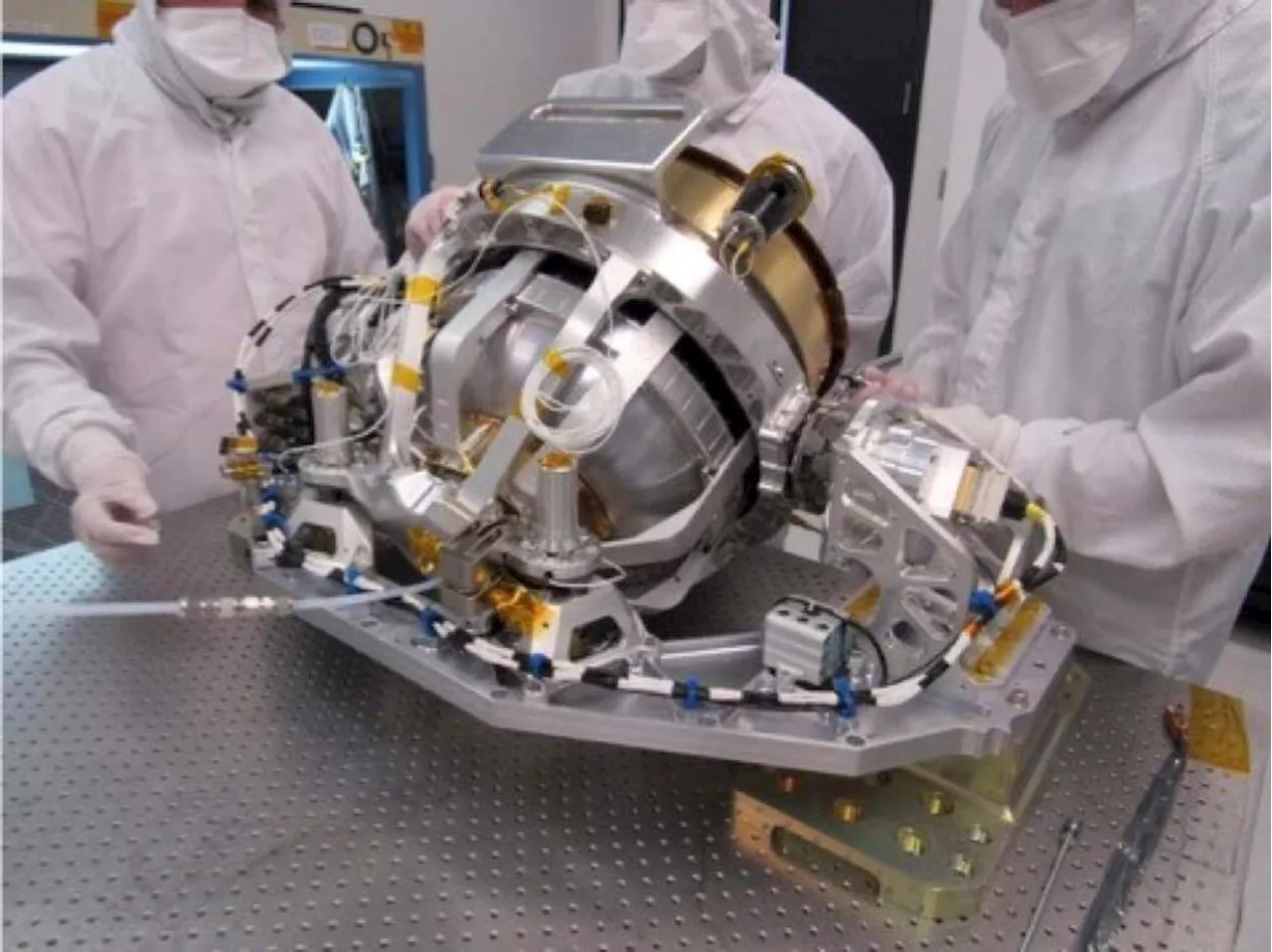 UNH Instrument Set to Launch on Mission to Explore Interstellar SpaceAn instrument developed by a team at the University of New Hampshire, IMAP-Lo, will be part of NASA's fifth Solar Terrestrial Probes mission. It will study the interstellar medium, the gas and dust between star systems, by analyzing neutral atoms. IMAP-Lo aims to fill a gap in our understanding of the space beyond our solar system and provide insights into our origins and the evolution of the universe.
Read more »
 New study claims our solar system is home to millions of interstellar objectsResearchers claim that there could be at least 1 million interstellar objects hiding in the Oort Cloud at the edge of our solar system.
Read more »
 Photonic Lightsails are our Best Shot at Reaching Another StarSpace and astronomy news
Read more »