
Scientists at Caltech have made significant strides in advancing interstellar travel by developing a miniature lightsail system. This innovative technology, which uses lasers to propel spacecraft, could potentially enable missions to Alpha Centauri, our nearest star system. Researchers are currently testing the sail's material properties and its response to laser radiation.
Interstellar travel has long been a dream, but getting to the stars is incredibly difficult. A new project is bringing the space community closer to realizing this dream.The Breakthrough Starshot Initiative — backed by theoretical physicist Stephen Hawking and scientist Yuri Milner — aims to send miniature spacecraft to Alpha Centauri , our nearest star system.
Interestingly, the spacecraft would use an innovative propulsion method: lightsails. These types of reflective sails use the pressure from lasers or starlight to propel spacecraft.These ultrathin sails could achieve speeds never before imagined. But building and testing these sails is a complex undertaking.“The lightsail will travel faster than any previous spacecraft, with potential to eventually open interstellar distances to direct spacecraft exploration that are now only accessible by remote observation,” explained Harry Atwater from Caltech.Tiny lightsail experimentResearchers at Caltech, led by Atwater, have created a system to study the extremely thin materials that will be used to build lightsails. Their miniature lightsail, crafted from silicon nitride just 50 nanometers thick, is designed to measure the force exerted by lasers. This involves measuring the incredibly subtle movements of the sail as it’s struck by the laser beam.These experiments are an important first step to moving lightsail development from theory and design to practical testing and material analysis.“There are numerous challenges involved in developing a membrane that could ultimately be used as lightsail. It needs to withstand heat, hold its shape under pressure, and ride stably along the axis of a laser beam,” Atwater said. “But before we can begin building such a sail, we need to understand how the materials respond to radiation pressure from lasers. We wanted to know if we could determine the force being exerted on a membrane just by measuring its movements. It turns out we can,” Atwater added. To begin their research, the team built a small, tethered lightsail within a larger membrane.They then shined a visible argon laser on it to measure the radiation pressure by observing the trampoline’s up-and-down movement.Tethering a light sail makes its dynamics complex. The sail vibrates like a trampoline when hit by light. These vibrations are primarily driven by heat from the laser, making it difficult to isolate the effect of radiation pressure. Sail’s response to laserA key innovation is the use of a common-path interferometer. This sophisticated tool allows scientists to measure the sail’s tiny movements – down to picometers – while minimizing environmental noise.They integrated a highly sensitive interferometer into their microscope, placing the device within a vacuum chamber. This allowed them to measure incredibly small movements of a miniature sail, as well as the sail’s stiffness when pushed by a laser. The team also tested the sail’s response to lasers at different angles, simulating the conditions a real lightsail would encounter in space.This mimicked the scenario where the sail wouldn’t be perfectly aligned with the laser source.They noticed that the force exerted on the sail was lower than predicted when the laser was directed at an angle. The researchers believe this is because some of the angled beam hits the edge of the sail, scattering some of the light and reducing the forward force.The team plans to use nanoscience and metamaterials to control the side-to-side motion and rotation of a miniature lightsail.“This is an important stepping stone toward observing optical forces and torques designed to let a freely accelerating lightsail ride the laser beam,” said Ramon Gao, part of the research team, in the press release.The findings were published in the journal Nature Photonics.
Interstellar Travel Lightsail Laser Propulsion Caltech Alpha Centauri
United States Latest News, United States Headlines
Similar News:You can also read news stories similar to this one that we have collected from other news sources.
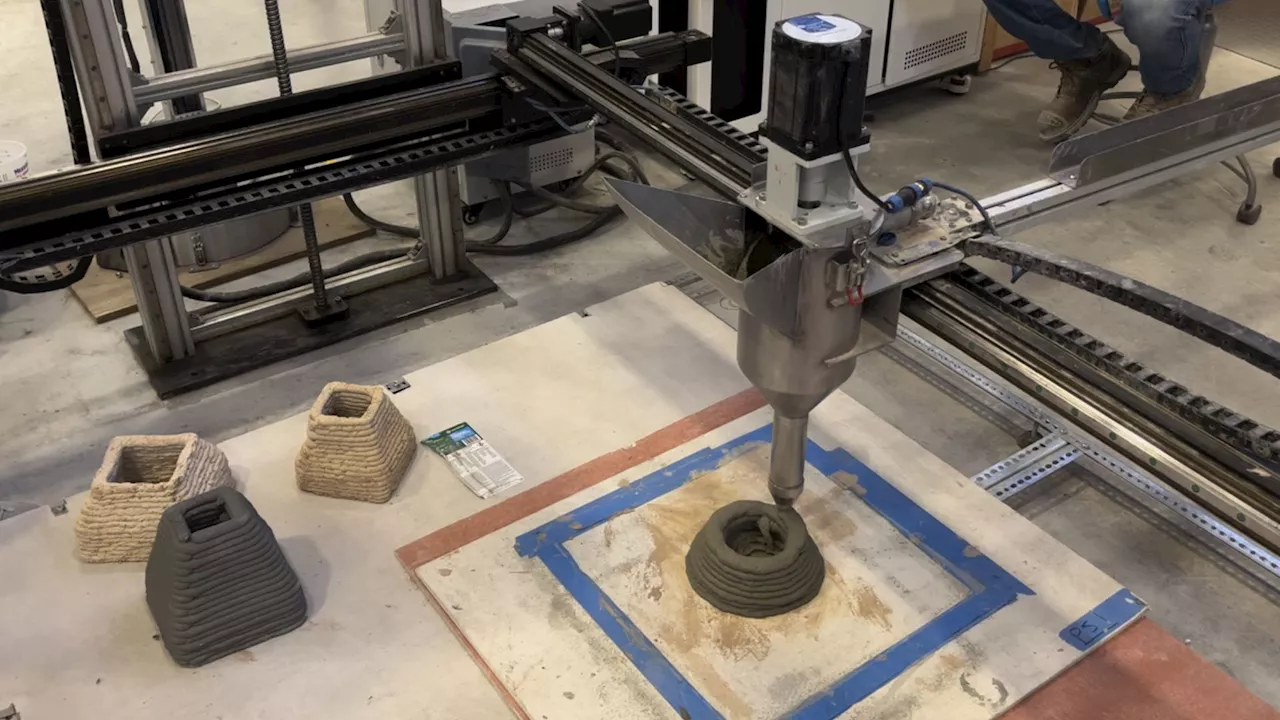 UNM Researchers Develop Bendable Concrete for 3D PrintingThe University of New Mexico researchers have invented a bendable concrete material designed for 3D printing, potentially revolutionizing construction and infrastructure maintenance. This self-reinforced ultra-ductile cementitious material offers enhanced flexibility and strength, addressing the brittleness of traditional concrete. The patented technology could lead to safer, more resilient buildings and bridges, requiring less frequent repairs.
Read more »
 Yale Researchers Develop Gene Editing Approach to Fight Cancer by Silencing Tumor-Supporting Immune Suppression GenesA new study from Yale School of Medicine has shown promise in developing a novel cancer treatment using gene editing to simultaneously target multiple immune suppression genes within the tumor microenvironment. This approach has the potential to benefit more patients than current therapies.
Read more »
 Caltech Researchers Unveiling 100GHz All-Optical Computer: A Leap Towards Ultrafast ComputingCaltech researchers have developed a groundbreaking all-optical computer capable of clock speeds exceeding 100 GHz, potentially revolutionizing industries requiring real-time data processing.
Read more »
 Korean Researchers Develop High-Capacity Lithium-Sulfur Batteries for Urban Air MobilityResearchers at the Korea Electrotechnology Research Institute (KERI) have overcome a major hurdle in lithium-sulfur battery technology, paving the way for their use in urban air mobility (UAM). The team developed large-area, high-capacity prototypes that address the issue of polysulfide shuttling, a key challenge hindering the performance and lifespan of these batteries.
Read more »
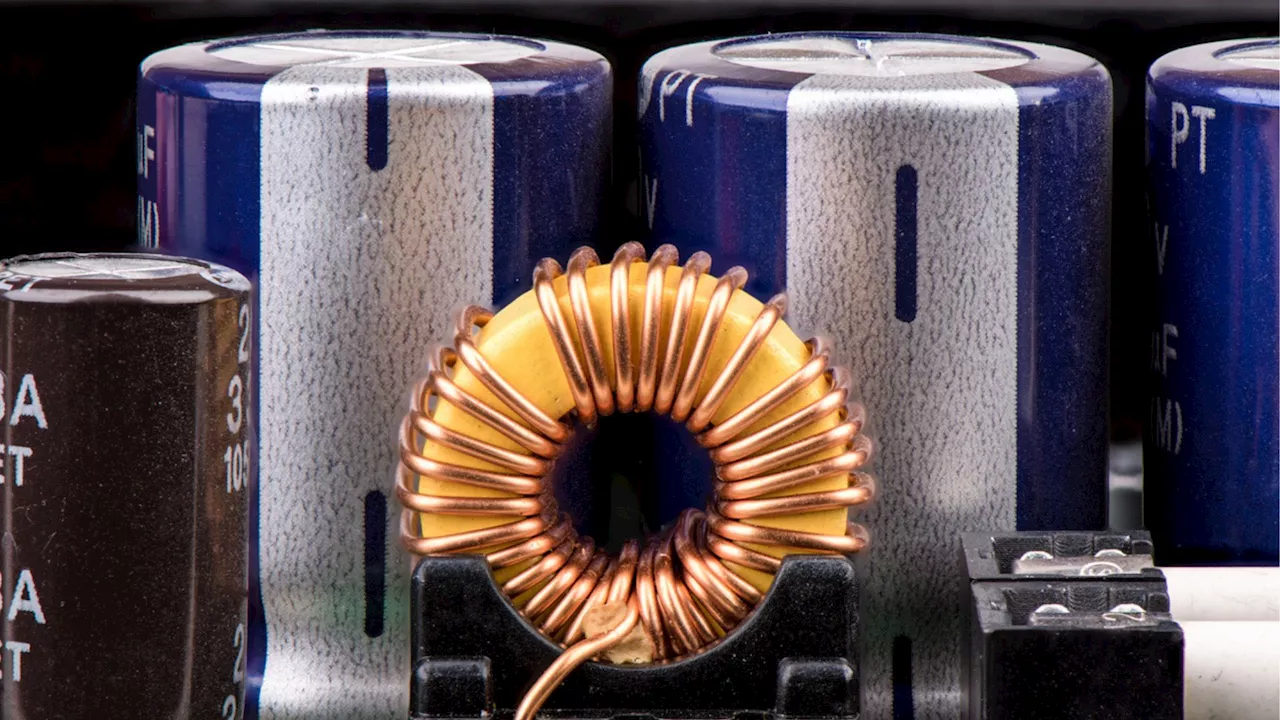 UCLA Researchers Develop High-Performance PEDOT Nanofibers for SupercapacitorsA groundbreaking development at UCLA has led to the creation of PEDOT nanofibers with exceptional energy storage capabilities. These nanofibers could revolutionize supercapacitors, enabling faster charging electronics, longer-range electric vehicles, and improved renewable energy storage.
Read more »
 Michigan Researchers Seek to Develop Frost-Resistant ApplesScientists at Michigan State University are studying a native apple tree species, the Malus coronaria, known for its ability to bloom later and avoid killing spring frost. They aim to identify the genes responsible for this trait and use them to create new apple varieties more resilient to extreme weather.
Read more »