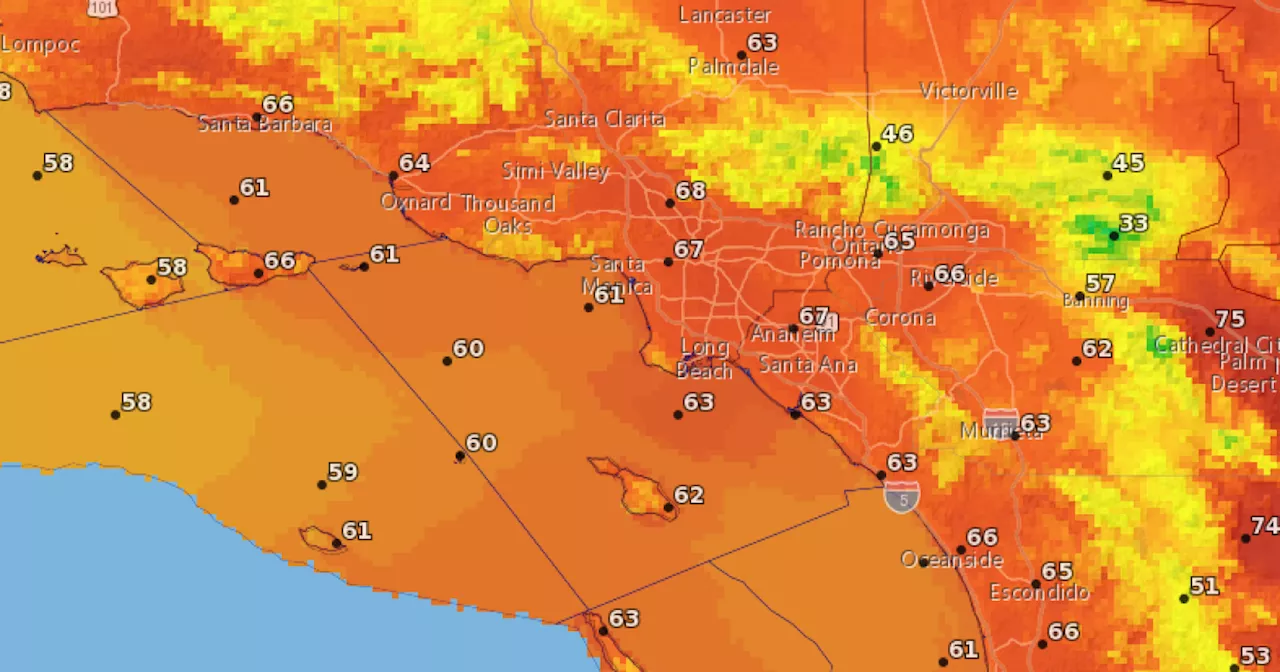
The most important stories for you to know today
Happy Tuesday! Yesterday's light showers are leaving the region, but don’t put away those umbrellas — yet another storm system is expected to arrive in L.A. this weekend. As for today, widely scattered light showers will continue, with the greatest chances for continued rainfall near the coastal slopes of mountain areas.
Up to half an inch is predicted for the mountains and foothills. Temperatures in downtown L.A. are expected to be in the 50s. In Long Beach, expect it to be foggy with temperatures in the 50s as well. In Burbank and the valley area it’ll be cloudy with temps in the low 50s.There is a wind advisory in effect until noon. According to the National Weather Service, gusty west winds of up to 40 mph in the mountains and deserts will diminish in the afternoon. A dry and warming trend is forecasted to begin Wednesday and into Thursday with above average temperatures. Forecasters say the storm coming from the Gulf of Alaska is expected to move into the area Friday evening. A winter storm watch will go into effect Saturday morning and currently is scheduled to last into Sunday morning. There is less moisture predicted with this storm, so rainfall totals won’t be as high as they have been. However, heavy snow is possible, with amounts of 6 to 12 inches above 2,500 Feet. Elevations above 7,000 feet could see up to 2 feet of snow.On this day in 1891, heavy rains over two weeks caused immense damage in San Diego and catastrophic damage in Tijuana. Three prospectors died at Table Mountain in Baja California.. See the works of Jean-Michel Basquiat, Keith Haring, David Hockney, and many more captured on Ferris wheels, in mirror rooms and other art pieces. Read moreCA Joins Suit To Stop Grocery Chains Merger, Electing Defenders As Superior Court Judges & Monarch Butterfly Population Survey Results— The A.M. EditionPismo State Beach Butterfly Grove in Grover Beach is a popular destination for millions of tourists each year to watch monarch butterflies. Volunteers and scientists with the Xerces Society said they’ve tallied 233,394 western monarch butterflies at more than 256 overwintering sites in California. That's about 30% lessIsis Howard is a biologist with the Xerces Society. She said the Western Monarchs have declined by more more than 95% since the 1980s. Howard said climate change and pesticide use have played a big role for their dwindling numbers. "The number one factor of decline is definitely habitat loss of both their milkweed breeding ranges and their overwintering habitat," Howard said.Howard said even snapping a photo of a butterfly and their host plant milkweeds can help the cause. You can submit those to the iNaturalist app or website, or to theBut if you want to go a step further, she recommended planting native milkweeds and native nectar plants for adult butterflies.Western monarch butterflies are having a rough start to 2024. Their population has declined by a third since last year’s count, according to theVolunteers and scientists with the Xerces Society said they’ve tallied 233,394 western monarch butterflies at more than 256 overwintering sites in California. That's about 30% less. She said the number of western monarchs has declined by more than 95% since the 1980s. Howard said climate change and pesticide use have played a big role for their dwindling numbers. "The number one factor of decline is definitely habitat loss of both their milkweed breeding ranges and their overwintering habitat," Howard said.Howard said even snapping a photo of a butterfly and their host plant milkweeds can help the cause. That information helps scientists better understand when and where monarchs and milkweeds are appearing in our communities.Thousands of monarch butterflies have returned to the eucalyptus groves dotting the coastline at the Pismo State Beach Butterfly Grove as viewed on Feb. 3, 2023, in Grover Beach, California. Because of its close proximity to Southern California and Los Angeles population centers, combined with a mild Mediterranean climate, the central coast is a popular weekend travel getaway destination for millions of tourists each year.But if you want to go a step further, she recommended plating native milkweeds and native nectar plants for adult butterflies. One note — milkweed does spread. You can plant it in a small area of your garden and remove the seed pods before they open and disperse in order to prevent them from spreading.“So a lot of monarchs are leaving their overwintering sites along the coast and starting to travel inland and more north across the United States to get back to where those milkweeds are popping up," Howard said. These sites are typically west of the Rocky Mountains like California, Oregon, and Washington, where they spend winter. “Monarchs rely on milkweeds to reproduce,” Howard said. “And if you think about it from a really logical standpoint, it doesn't really make sense for monarchs to be inland braving those cold winter temperatures if there's no milkweeds available because these milkweed plants will die back during winter.”Howard said monarchs serve as a sort of poster child for pollinator conservation. She said they inspire compassion, energy, and they really get people to take action to protect other at-risk pollinators, like bees. Typically, a monarch's decline can reflect the reduction in other insects. That result can then affect native songbirds and other mammals. “When we think of climate change, we often think of polar bears and penguins,” she said. “When we think of pollinator conservation, we often think of butterflies and bees.”Right now, Western monarchs are not on the endangered species list. But they are listed as vulnerable on the The International Union for Conservation of Nature Red List.But Fish and Wildlife Service could announce a listing decision later this year. Howard said that move could push them toward the endangered species list.L.A. City Councilmember Kevin de León greets people who came to his Eagle Rock office for a food giveaway. De León is seeking a second term.More than a year after President Biden called on him to resign over his participation in a secretly recorded conversation that included racist and derogatory remarks, L.A. City Councilmember Kevin de León is on the campaign trail asking for forgiveness.In a discussion about redistricting with two other council members and a labor leader, De León accused a white colleague of using his adopted Black son like a political prop akin to a luxury handbag. Demonstrators calling on De León to resign shut down council meetings. There is still a lot of angry sentiment among his constituents. “Take the bench, dude," said one resident recently.De León recently invited a reporter to his monthly food give away, where he greeted people as they stood in line.On a recent Thursday morning, Los Angeles City Councilmember Kevin de León walked along a line of hundreds of people outside his Eagle Rock office, greeting them with handshakes and hugs — and boxes of eggs, produce and bread.“I'm glad they have this type of service because I don’t know what I would do,” said Barbara Bourland, a retired teacher. This was her first time at the giveaway. Her husband of 61 years died two months ago. Money is tight.Bourland, 79, knew about the secretly recorded audio that surfaced more than a year ago in which De León, who is running for reelection this year, was heard participating in a conversation that included racist and derogatory remarks. In a discussion about redistricting with two other council members and a labor leader, he accused a white colleague of using his adopted Black son like a political prop akin to a luxury handbag.Bourland said she recalled receiving a campaign mailer from De León's office a few weeks ago. It was an apology letter. And she said she plans to support him in the March 5 election just like she did four years ago when he first ran for the office.The incumbent council member is counting on the forgiveness of voters like Bourland in his battle to continue to represent the 14th L.A. City Council district, which stretches from downtown L.A. and Boyle Heights to Highland Park and Eagle Rock. De León faces seven challengers, all of whom are looking to stop his attempted Rocky Balboa-style comeback from a hailstorm of criticism in the wake of the October 2022 leak of the tapes.On the one hand, De León expressed remorse about his role in the conversation. In an interview with LAist, he said he was “profoundly apologetic and deeply sorry to those I hurt.” He said he should have stopped the conversation when racist comments were made by his colleague, former Council President Nury Martinez, who did resign.But the 57-year-old longtime politician is also defiant. De León said he believes he is a victim of a “false narrative” that he is a racist. He denied accusations he was engaging in backroom dealing to redraw council district boundaries to keep himself and other allies in power. He pointed out that a majority of the City Council voted in favor of the redistricting maps that were discussed in the meeting. The protests in the wake of the scandal were intense. Demonstrators calling on De León to resign shut down council meetings. People protested outside his house. There is still a lot of angry sentiment among his constituents. A 32-year-old man, who identified himself only by his last name, Garza, was one of about 100 people who attended a debate at the Delores Mission in Boyle Heights earlier this month. “What he said was racist and wrong,” said Garza, who works at a nonprofit. “He disappointed the community not only with his racist remarks but by trying to gerrymander the district so he could stay in power.Eviction defense attorney Ysabel Jurado is among those seeking to unseat De León. In an interview with LAist, she pointed out that he was stripped of all his committee assignments after the entire City Council called on him to resign. “We, as a district, have suffered while he was being censured and not being on any committees,” she said. “I think this has been a huge distraction for this district.” Jurado describes herself as a progressive who would have opposed a hefty pay raise for Los Angeles police officers and the lifting of a rent freeze — measures De León supported. She said the police labor contract adds to a projected budget deficit of up to $400 million that will take resources away from other programs and that the rent hike will increase homelessness. De León has said officers deserved the raise and that he worked to reduce the allowed rent increase from 7 to 4%. Two Democratic members of the state assembly also are challenging De León in the non-partisan race, both with similar politics to the incumbent. Assemblymember Wendy Carrillo’s district overlaps much of the council district. She said De León’s participation in the secretly recorded conversation should disqualify him for reelection. “What I heard was a conversation about benefiting the individual versus the benefits of a community,” she said. Carrillo came under criticism after she was arrested for driving under the influence of alcohol in November and crashing into two parked cars in Northeast L.A. She pleaded no contest to misdemeanor DUI and is attending a substance abuse program at Kaiser and Alcoholics Anonymous meetings, she said.Miguel Santiago is the other assemblymember running. He called De León’s comments on the tape “shameful.”Santiago is the only candidate to benefit from outside money. Independent expenditure committees have spent more than $600,000 on his behalf, including groups representing the L.A. County Federation of Labor and a group of Latino-elected officials. The other less-well-funded candidates in the race include health care professional Nadine Dias, community advocate Genny Guerrero, attorney Teresa Hillery, public school teacher Eduardo “Lalo” Vargas.Inside his Eagle Rock office last week, De León stood amid a sea of glass statues. They are awards from community groups he’s received over his years as a politician. The wall is adorned with photos of him with other politicians, including two former governors. “I’ve dedicated my life to the well being of all individuals, regardless of who you are,” he said. “That’s who I am, and that’s why I did not step down.” De León was once a Democratic Party powerhouse, rising from labor organizer to leader of the California Senate. He unsuccessfully ran for the U.S. Senate and L.A. mayor along the way. His story is compelling. He is the son of an unauthorized immigrant mother who raised him and his siblings alone, cleaning houses for a living. He was the first to graduate high school in his family.“But we’ve leaned in hard,” he said, touting the building of multiple homeless shelters and nine new playgrounds in the district.Joe Gonzalez said he has voted for De Leon multiple times over the years — for state assembly, state senate, and for council member in 2020. The tape scandal is not his top concern.But he’s unhappy about the dirty streets he sees in his working class Boyle Heights neighborhood. “I see the lack of effort to do something in this neighborhood,” he said. “We’re being ignored here.” “Community members have to gather together with their own brooms and mops and trash bags and go clean up areas,” he added.Peter Dreier, professor of politics at Occidental College, said it’s unlikely any of the candidates will win a majority of votes in the primary, meaning the top two finishers would face off in the November general election. He said De Leon has more name recognition on his side than the other candidates, and he has city slush fund money that he’s using to hand out “turkeys and such.”What questions or concerns do you have about civics and democracy in Southern California? Frank Stoltze explores who has power and how they use it at a time when our democratic systems have been under threat.From L to R: L.A. County Superior Court judge candidates La Shae Henderson, George Turner and Ericka Wiley speak at a Defenders of Justice campaign event.Over the last 25 years, Los Angeles County has elected just two people from the public defender's office to a Superior Court judge seat. But there’s a growing push toward getting more people with defense backgrounds on the bench.Historically, voters have elected judges with prosecutorial experience. And although some California governors, including Gavin Newsom and Jerry Brown, have made it a point to appoint defense lawyers to judicial seats, the L.A. County Superior Court bench is comprised of more former prosecutors.Criminal justice reform advocates say judges with defense backgrounds — either public or private — can balance out the tough-on-crime rhetoric that has led to mass incarceration. And they say former defense attorneys can bring diversity to a bench that now has a range of alternatives to incarceration at its disposal.“I think that electing judges, appointing judges with the background, lived-experience and willingness to apply the law as it currently stands, which allows us to help people, that we’ll see a turning point,” said Ericka Wiley, a deputy public defender and candidate for Superior Court Office 48. “I’m hoping we can be a part of that.”Over the last 25 years, Los Angeles County voters have elected just two people from the public defender's office to a Superior Court judge seat. But there’s a growing push toward getting more people with defense backgrounds on the bench. This year, a slate of three defense attorneys calling themselves the “Defenders of Justice” is hoping to win seats on the bench. The candidates are: La Shae Henderson, George Turner and Ericka Wiley. Historically, voters have overwhelmingly elected judges with prosecutorial experience. And although some California governors, including Gavin Newsom and Jerry Brown, have made it a point to appoint defense lawyers to judicial seats, the L.A. County Superior Court bench is comprised of many more former prosecutors. Criminal justice reform advocates say judges with defense backgrounds — either public or private — can balance out the tough-on-crime rhetoric that has led to mass incarceration. And they say former defense attorneys can bring diversity to a bench that now has a range of alternatives to incarceration at its disposal.As a deputy public defender for 18 years, La Shae Henderson said she’s seen how the criminal justice system touches lives, not just for the defendants, judges and lawyers, but also the families.Why This Slate Of Judge Candidates Wants More Defense Attorneys Elected To The Superior Court “This is a human being. This is a life. This is a person ... they’re struggling right now, give them a second chance,” said Henderson, who is now an adjunct professor at Pepperdine University and teaches juvenile rights. She remembered a client who had been charged with a municipal code violation for selling oranges in front of a business. The client couldn’t afford to pay the fine and slipped her a written prayer in court. “And I just stood up and I said, ‘You know what, she’s not going to be convicted today … ’ and the case got dismissed,” she said. “Just seeing my client struggle and seeing what they go through has really touched my heart that we need more diversity on the bench. “We need people that understand struggle and that will listen to the stories and care,” Henderson said. Henderson is one of three current or former deputy public defenders running under the Defenders of Justice campaign, all of whom say they hope to transform the judiciary by getting more judges with defense backgrounds on the bench.While more than a dozen judges with backgrounds as public and/or private defense attorneys have been appointed by governors in the past 25 years, L.A. County voters have elected just two from the public defender's office during that time. Deputy Public Defender George Turner said he would like to add momentum to that movement. He’s in charge of a mobile unit that works to clear the criminal records of unhoused people who sometimes struggle to find housing because of minor convictions on their record. “Literally, the overwhelming majority of my clients are people who suffer from diagnosed and undiagnosed mental health issues,” Turner told LAist.Turner said he believes the court system is failing miserably at helping people with mental illness. He said his clients who mayIf he’s elected to the bench, Turner said he’d like to see people get mental health treatment up front instead of having to spend months or longer in jail cells while their conditions deteriorate. He also said he thinks judges should have to see the conditions incarcerated people are subject to in L.A. County by visiting local “The primary goal is not to cycle people in and out of Los Angeles County jail. But the primary goal is to make sure that people get access to resources,” Turner said. Ericka Wiley agrees. A deputy public defender for 23 years, she said mental illness has been common among her clients. Historically, she said, “there was this strange idea that you could punish away behavior, even if that behavior was based on an uncontrollable mental illness.” Wiley and her cohort said it’s important that judges take advantage of new laws and diversion programs that steer people living with mental illness and drug use issues into treatment instead of prison or jail. And sometimes, they see judges who are reluctant to employ those programs. Wiley and others on the ticket say it’s those diversion programs and updated laws that changed their ideas about running. “Certainly I did not see myself being a part of a system which made it difficult for me to help people in that condition, so the changes in the law are really the impetus for me,” Wiley said. And while a substantial number of their clients deal with mental health and substance use issues, all candidates on the Defenders of Justice slate said they wanted to see a more involved and observant judiciary no matter what the defendant’s struggles are. “If you come out of this robotic, we-punish-and-this-is-how-I’ve-been-doing-it-for-years, , you’re going to miss things,” Henderson said. “But if you come into it listening and being open and looking at everything you’re seeing, you’ll make a better decision.”Some public defense lawyers are reluctant to run for judicial seats because they’ve seen the judiciary work against their clients. Dan Simon, a law professor at the University of Southern California, said the American public is pretty punitive and often likes to see pro-prosecution judges elected. But there are signs that might be changing, according to Simon, both for the public and the judges they elected. “There have been some interesting sort of retrospective realizations by judges about having sat on the bench throughout this era we call mass incarceration and feeling quite self-conscious about their contribution to it,” Simon said. Wiley said she’s seen a growing desire in society to address underlying issues instead of leaning heavily into the tough-on-crime rhetoric that’s filled jails and prisons with people living with mental illness. “I think that electing judges, appointing judges with the background, lived-experience and willingness to apply the law as it currently stands, which allows us to help people, that we’ll see a turning point,” Wiley said.There are 10 Superior Court offices up for election in the March 5 primary, which is the last day to vote in person, drop your mail-in ballot in a ballot box, or postmark your mail-in ballot. In order to win, a candidate must receive more than 50% of votes in March. If no candidate gains a majority of votes, the two front-runners will compete again in November.One of my goals on the mental health beat is to make the seemingly intractable mental health care system more navigable.Man Arraigned in Unhoused Killings Cases, Capturing SoCal's Stormwater, & CA Pushes To Count MENA Americans — The P.M. EditionA report on how SoCal is saving stormwater from the recent winter storms. A state bill would require demographic data to include a category for Californians of Middle East and North Africa descent. Plus, more.The Book Rack in Arcadia is closing down after serving the community for 40 years. Karen Kropp has worked at the store for most of that time and in the last two decades has owned the used bookstore and tried to keep it afloat.: Rising costs, including rent and utilities, have become too much for Kropp, who is approaching her 80th birthday. So, come Thursday, she'll return the keys to her landlord and officially retire.Kropp moved to Arcadia 29 years ago to be closer to her daughter and granddaughter. An avid reader, she couldn’t borrow enough books from the library, so her daughter suggested she work at the store. When Pat Carlson, the original owner of the Book Rack, died, her husband Chuck sold the used bookstore to Kropp.After she donates the last of the books remaining on Wednesday, Kropp will empty her apartment and make the move to Albuquerque to be with her little sister. When her sister retires later this year, she plans to use her Social Security checks to travel in a RV.The Book Rack in Arcadia is closing down after serving the community for 40 years. Karen Kropp has worked at the store for most of that time and in the last two decades has owned the used bookstore and tried to keep it afloat. Rising costs, including rent and utilities, have become too much for Kropp, who is approaching her 80th birthday. So, come Thursday, she'll return the keys to her landlord and officially retire. Kropp moved to Arcadia 29 years ago to be closer to her daughter and granddaughter. An avid reader, she couldn’t borrow enough books from the library, so her daughter suggested she work at the store. “I always wanted to be a librarian and live in a library because people talk to you there. They don’t just ignore you,” she said. “So it would be a good place to be and to still have social contact and be able to talk about things you're really interested in.” When Pat Carlson, the original owner of the Book Rack, died, her husband Chuck sold the used bookstore to Kropp.Kropp employed two local high school students, part-time. They worked at the Book Rack through high school, college, and are now completing their graduate degrees. Rather than hire new employees, Kropp thinks it's a good time to shut down the shop as her longtime employees move on. County and statewide assistance programs, she said, required her to have a certain number of full-time employees to qualify and weren't really geared toward mom-and-pop stores like hers. As for city grants, Kropp says “by the time you hear about those, sometimes, they're past their usefulness. It isn't going to save you in the end.” She used up all her life savings— including her life insurance — to keep the place afloat. One of her employees set up a GoFundMe page. The funds raised helped for a while, but as Kropp says,”no matter how hard you try to cut corners, the cost of other things going up takes care of anything you are doing to try and save money.”Kropp said she’s made peace with closing the bookstore, even though it was a hard decision given that it was her life for so long.After she donates the last of the books remaining on Wednesday, Kropp will empty her apartment and make the move to Albuquerque to be with her little sister. When her sister retires later this year, she plans to use her Social Security checks to travel in a RV. She says she’ll miss California and the friends and people she’s met here.Mayor Karen Bass, LAPD Chief Michel Moore, and DA George Gascón hosted a news conference to get the message out about the shootings last December.Jerrid Joseph Powell, the Los Angeles man charged with the shooting deaths of three unhoused men and an L.A. County employee over a four-day span in November, pleaded not guilty in a downtown L.A courtroom on Monday.Powell, 33, has been held without bail at the Twin Towers Correctional Facility on four counts of murder, one count of residential robbery, and one count of being a felon with a firearm. He’s also facing special circumstances allegations of committing multiple murders, murder in the course of a robbery, and personal use of a firearm, according to the L.A. County District Attorney’s Office.Powell was arrested on Nov. 30 and is accused of shooting and killing four people — three unhoused men while they were sleeping alone in different parts of the city, and Nicholas Simbolon, a county chief executive office employee, in a follow-home robbery in San Dimas.Jerrid Joseph Powell, the Los Angeles man charged with the shooting deaths of three unhoused men and an L.A. County employee over a four-day span in November, pleaded not guilty on Monday.Powell, 33, has been held without bail at the Twin Towers Correctional Facility on four counts of murder, one count of residential robbery, and one count of being a felon with a firearm. He’s also facing special circumstances allegations of committing multiple murders, murder in the course of a robbery, and personal use of a firearm, according to the L.A. County District Attorney’s Office.Powell was arrested on Nov. 30 and is accused of shooting and killing four people — three unhoused men while they were sleeping alone in different parts of the city, and Nicholas Simbolon, a county chief executive office employee, in a follow-home robbery in San Dimas.Extreme wildfires have destroyed about one-fifth of all giant sequoia trees. To safeguard their future, the National Park Service is planting seedlings that could better survive a hotter climate.The numbers shocked ecologists, since the enormous trees can live more than 2,000 years and have evolved to live with frequent, low-intensity fires in the Sierra Nevada. Recent fires have burned bigger and more intensely than sequoias are accustomed to, a result of the way humans have changed the forest. After the 2020 and 2021 fires, scientists watched the sequoia groves to see if the next generation of trees is emerging to replace their lost parents. In some places, seedlings are filling the forest floor. In others, fewer are emerging from the burned soil.On a late autumn day, a team of forestry workers spreads out among the burned trunks of giant sequoia trees. The 1,000-year-old trees in the grove are dead but still standing, killed in an extreme wildfire that raced through Sequoia and Kings Canyon National Parks. In the shadow of one of the trees, the crew gets to work, pulling tiny, 4-inch seedlings out of bags clipped to their belts and tucking them into the dirt. "Wish it some luck and that's it," says Micah Craig of the Eastern Sierra Conservation Corps, standing back to look at the young sequoia. He then grabs another seedling, part of a historic planting effort that the National Park Service hopes will be enough to preserve one of the world's most iconic species. Ecologists estimate that up to 14,000 sequoias have been killed in recent wildfires, a shocking number for a species that was thought to survive most fires.Over only two years, about one-fifth of all giant sequoias have been killed in extreme wildfires in California. The numbers shocked ecologists, since the enormous trees can live more than 2,000 years and have evolved to live with frequent, low-intensity fires in the Sierra Nevada. Recent fires have burned bigger and more intensely than sequoias are accustomed to, a result of the way humans have changed the forest. After the 2020 and 2021 fires, scientists watched the sequoia groves to see if the next generation of trees is emerging to replace their lost parents. In some places, seedlings are filling the forest floor. In others, fewer are emerging from the burned soil. The smaller numbers of seedlings concerned scientists and the National Park Service. So in a historic step, the agency for the first time has begun replanting some severely burned areas. With a life span of thousands of years, the new seedlings will grow up in a climate that's rapidly changing. So, park officials are bringing in seedlings from other sequoia groves, ones that may have the genetic tools to handle a more hostile future. With so many ancient trees killed, the National Park Service has sprouted hundreds of sequoia seedlings to replant the severely burned areas, along with other species normally found there like white fir and sugar pines.The project has run into opposition. A handful of conservation groups are suing to halt the effort, arguing that such intervention shouldn't occur in an area designated as federal wilderness and that the sequoia trees could possibly regenerate adequately on their own. The debate is one occurring on public lands across the country as the impacts of climate change get worse. Land managers face a key question: As humans take an increasing toll on natural landscapes, how far should we go to fix it? Sequoia National Park was created in 1890 to protect the mammoth trees for the public. Along with Kings Canyon National Park, the two parks are home to about 40% of all sequoias.Hopeful signs have emerged in the wake of the KNP Complex Fire, which tore through Sequoia National Park in 2021. The forest floor is still scorched black, but in some areas, thousands of lime-green sequoia seedlings have sprung up, a few inches high. "It's awesome," says Christy Brigham, chief of resources management and science at Sequoia and Kings Canyon National Parks."This is what has happened for millennia." The lifecycle of sequoias is bound to fire. The massive trees, often 15 feet around, are protected from the heat by a thick, shaggy bark. Their lowest branches are far from the forest floor, reducing the chances they'll ignite when smaller trees burn. And when a fire's heat rises, the sequoias' cones open up, releasing thousands of seeds. Those seeds sprout quickly in the newly cleared soil below their parent trees. Most of the seedlings will die, eventually leaving only one or two giant trees centuries from now. Some areas of Sequoia and Kings Canyon National Parks show a carpet of green — thousands of sequoia seedlings poking a few inches above the ground. In more severely burned areas, there are fewer emerging from the soil."Lots of bad things are going to happen to these," Brigham says, looking down at the carpet of green."Another fire, fire after fire, before they get that big. Dead trees are going to fall on them. So they make a lot. A lot, a lot, a lot." High above, the thousand-year-old sequoias in this part of Redwood Mountain Grove are still alive, their broccoli-shaped tops still green. The fire burned at low or moderate intensity here because the forest floor was relatively clear of brush and other vegetation that could burn. National Park Service crews had previously done prescribed burns, purposely using fire to remove the dry, dead fuels. Sequoia trees are susceptible to heat and drought, conditions that are expected to get more extreme as the climate keeps changing.Farther down the trail, it's a different story. Many of the giant sequoias have little or no green foliage left, their bare, jagged branches rising high above the rest of the forest. "We have now arrived at the location we call the Gates of Mordor," Brigham says."These trees are not coming back." The KNP Complex Fire roared up this sequoia grove in less than a day. Fire crews made a last-ditch effort to save some of the enormous trees, clearing the vegetation around them as the flames moved in.Smaller pines and other trees, killed in California's extreme droughts, acted as kindling in recent wildfires, fueling the intense burning.The forest here was primed to burn. Historically, the Sierra Nevada saw regular low-grade wildfires, caused by lightning strikes and set by Native American tribes. But for the last century, humans have extinguished wildfires, allowing dead and dry vegetation to build up on the forest floor.in recent years. Water-stressed pines and other trees were more vulnerable to attacks from bark beetles. Researchers found that the"We have never seen anything like this in giant sequoia," Brigham says."Large giant sequoias, before now, survived wildfire." With so many giant trees gone, teams from several federal agencies turned to another key issue: the next generation of sequoias. They surveyed how many seedlings are growing below the burned trees.from scientists at the U.S. Geological Survey found that some of the severely burned areas have lower densities of sequoia seedlings, compared to the numbers found after previous fires. Brigham says it's possible that too many sequoia cones and their seeds burned up in the fire. But with fewer adult trees left alive to make seeds in the future, there's a risk some of this sequoia grove won't come back. "These parks were in part established to conserve sequoias," Brigham says."What would it mean for that mission if we did nothing here?"In the late afternoon, a line of mules winds its way through the burned sequoia grove. On their backs, they carry boxes of sequoia seedlings deep into the backcountry. A crew from the Eastern Sierra Conservation Corps takes the seedlings on the last steps of their journey, searching for planting spots that offer some protection from the upcoming summer heat. "Planting sequoias, that's a legacy thing. Something we were all stoked to do that will transcend after us," says crew member Micah Craig. Micah Craig and a team from the Eastern Sierra Conservation Corps replant sequoia seedlings. Some are from groves already experiencing hotter, drier conditions, which could give them a better shot at withstanding climate change.Most of these sequoia seedlings were grown from seeds collected from this same grove. But 20% come from seeds collected from other groves. Sequoia seedlings are vulnerable to heat and drought, conditions that will get more extreme as the climate keeps changing. With that in mind, managers selected seeds from groves at lower elevations that already naturally live in hotter conditions. The idea is to increase the genetic diversity, in case those trees are better adapted to a hotter, drier future. "We have the ability to give this grove a little bit of a bigger toolkit for adapting to changing conditions, and that's what we're trying to do," Brigham says."We're asking a lot of these trees to survive for 400 years, 1,000 years, and they can do it, but let's give them a little help." A mule train delivers boxes of sequoia seedlings through shrubs that have sprung up in the wake of the KNP Complex Fire. Sequoia seedlings do best in the first few years after a fire, when there's little vegetation to shade them out.. It's part of a larger toolkit land managers are beginning to consider as ecosystems struggle to keep up with climate change. The National Park Service has developed a new framework for considering when to intervene, known as, contending that because the sequoia groves are protected under the federal Wilderness Act, a higher level of intervention isn't appropriate. They argue that having wilderness protection means the land should remain untouched, even if that means losing sequoias there. "We need to allow nature some places where human beings aren't trying to be the managers, aren't trying to be the gardeners," says George Nickas, executive director of Wilderness Watch, one of the groups that filed suit."Because we're the ones that messed it up, it doesn't flow that we're the ones to fix it. That's that sort of arrogance of humanism, if you will. That's when we need to learn to step back."The Wilderness Act specifies that protected areas should be"untrammeled by man." That framing has frustrated Native American tribes in California, which shaped the landscape for millennia with cultural, or prescribed, burning., it responded that language in the Wilderness Act mandates that the land be"protected and managed so as to preserve its natural conditions," and the act doesn't infringe on the agency's responsibility to preserve the ecosystem. The conservation groups' lawsuit also contends that sequoias in severely burned areas could regenerate on their own. Sequoia seedlings tend to do best in places that have burned more intensely, since it clears out vegetation that shades the forest floor. "I'm not worried about it because the system is massively and redundantly resilient to these sorts of disturbances," says Chad Hanson, director of the John Muir Project, another group that joined the lawsuit. "These parks were in part established to conserve sequoias," says Christy Brigham of the National Park Service. "What would it mean for that mission if we did nothing here?"Hanson contends that any number of sequoia seedlings, no matter how low, is adequate for the groves to endure into the future. However, numerous scientific studies show that sequoia seedlings have high rates of mortality over the first few centuries of life, with more than In proposing the project, the National Park Service says climate change poses an even greater risk that sequoia seedlings will struggle to get established. Hanson says he'd prefer that the park service monitor the seedlings' survival before making a decision to replant. "What I would say is if they start dying at high levels, which is inconsistent with the data we've had up until this point, then I would have to evaluate my assumptions and maybe would need to do something there," Hanson says.The debate is a sign of the increasingly complex decisions land managers are facing in a hotter climate. In the face of unprecedented impacts, the risk of losing species only gets worse. Managers are having to weigh bigger and bigger human interventions, if they're seeking to preserve what's left. Brigham says that as one of the largest and longest-living species on the planet, giant sequoia trees are forcing that conversation to happen. "You cannot look at them without thinking about 1,000 years in the future," Brigham says."They demand better of us. And I think we need that. We need those species that are being impacted by climate change that we love to be, like, hey, I think you can do better."Fires. Mudslides. Heat waves. What questions do you need answered as you prepare for the effects of the climate emergency?Warnings and advisories:Happy Monday! It'll be a slightly cool and wet start to the work week as a Pacific storm system brings scattered showers and mountain snow to the Southland later today through early tomorrow. Rainfall is predicted to begin this afternoon with only about a quarter-inch expected. Temperatures will be relatively mild, but a bit chilly. Along the coasts temperatures will hover around the mid-to-high 60s, lower temperatures should hit the mid-50s. Meanwhile, the mountains should reach peak highs in the upper 50s, while the low temperatures will vary between the high 30s and the high 40s.It'll be a mostly cloudy day, with the best chances for light rain later tonight and into Tuesday. Rain amounts with this system are forecasted to be light, ranging from a few hundredths of an inch in the lowlands to a maximum of a 1/4 to 1/2 inch in some mountain areas. Looking ahead, a stronger and colder storm system originating from the Gulf of Alaska is expected to arrive in the area Friday through the weekend. The snow levels will start out at 7,000 feet tonight and lower to 6,000 feet by tomorrow, but forecasters don't expect more than about an inch of snow. There are wind advisories posted for tonight through Tuesday in the Inland Empire and high desert where you can expect prevailing winds of 25 mph, and gusts up to 45 mph across the desert. In the mountain desert slopes and through the San Gorgonio Pass, winds will vary between 35 and 55 mph.On this day in 1986, the thermometer hit 99 degrees in Palm Springs, the highest temperature on record for February. This also happened the following day.— Join this 21+ taco Tuesday event! Enjoy karaoke, music videos, drinks and, of course, all the tasty tacos you can handle. Entry is free and new karaoke songs added weekly. Read more
United States Latest News, United States Headlines
Similar News:You can also read news stories similar to this one that we have collected from other news sources.
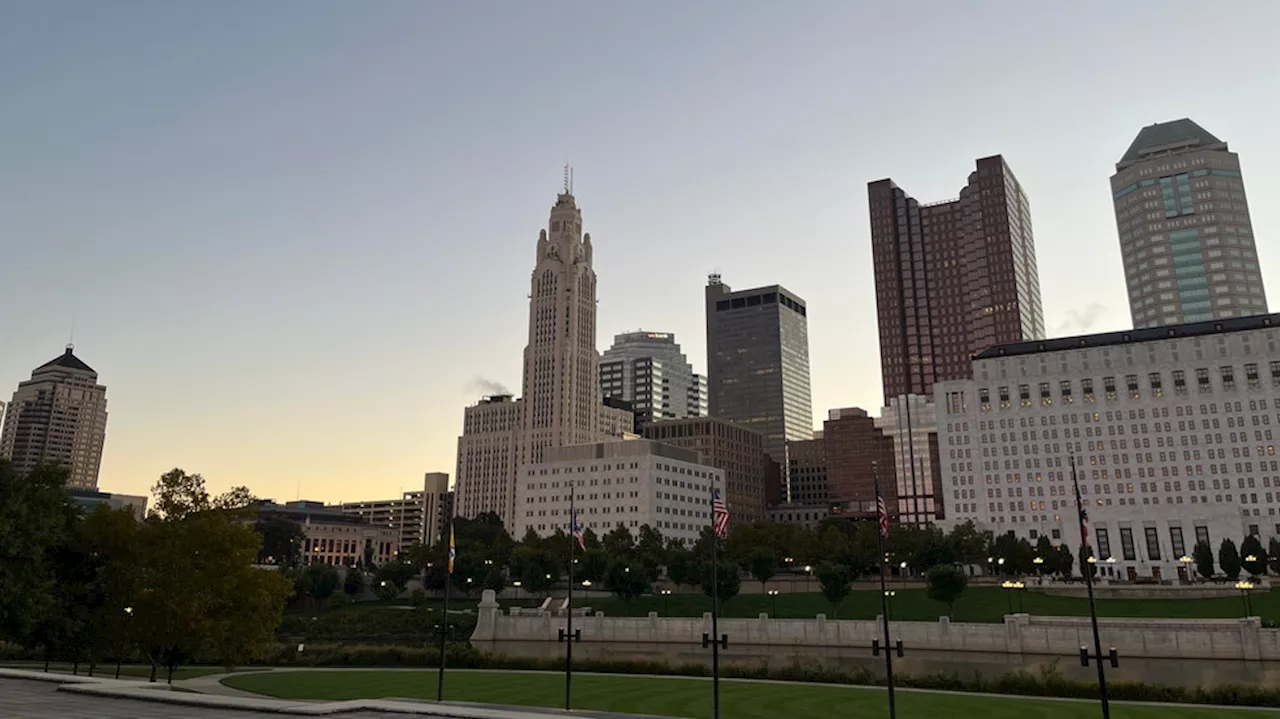 Columbus Weather: Another round of mild temperatures with morning showersSATURDAY: Rain showers early. Mostly cloudy skies. Winds: SW | NW 5-10 MPH. High: 59SATURDAY NIGHT: Mostly cloudy to cloudy skies. Winds: N 5-10 MPH. Low: 35SUN
Read more »
 Rain, rain go away: It won’t today, but sunny skies return MondayToday is another day of clouds and showers throughout our entire viewing area.
Read more »
 Heavy rain, showers, isolated thunderstorms on tap again for Bay Area; flood concerns lingerThe National Weather Service forecast for the greater San Francisco Bay Area for Tuesday calls for up to 90 percent chance of heavy rain throughout the whole day.
Read more »
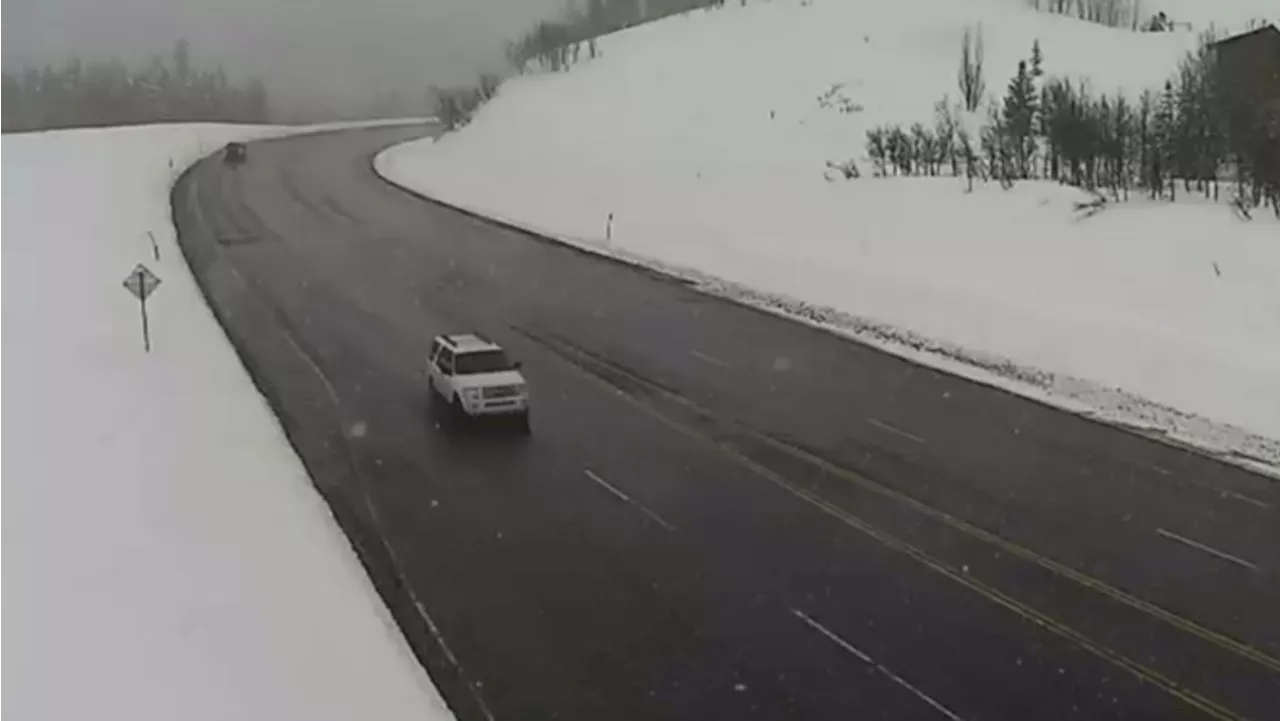 Slow-moving storm to continue bringing on-and-off showers across UtahA slow-moving storm will continue to crawl across Utah Tuesday and Wednesday.
Read more »
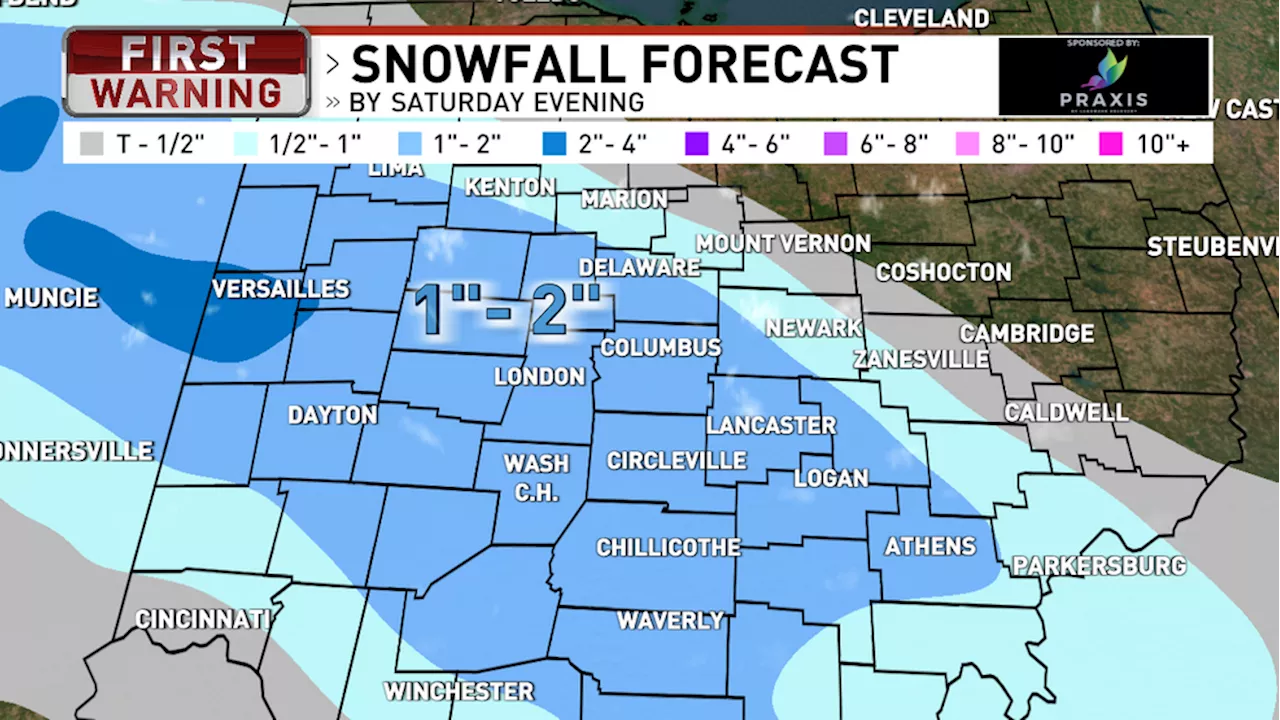 Columbus Weather: Clouds return with snow showers likely overnightClouds return tonight, and snow showers are likely to spread around the region. Overnight accumulations may create slick roads on Saturday morning.
Read more »
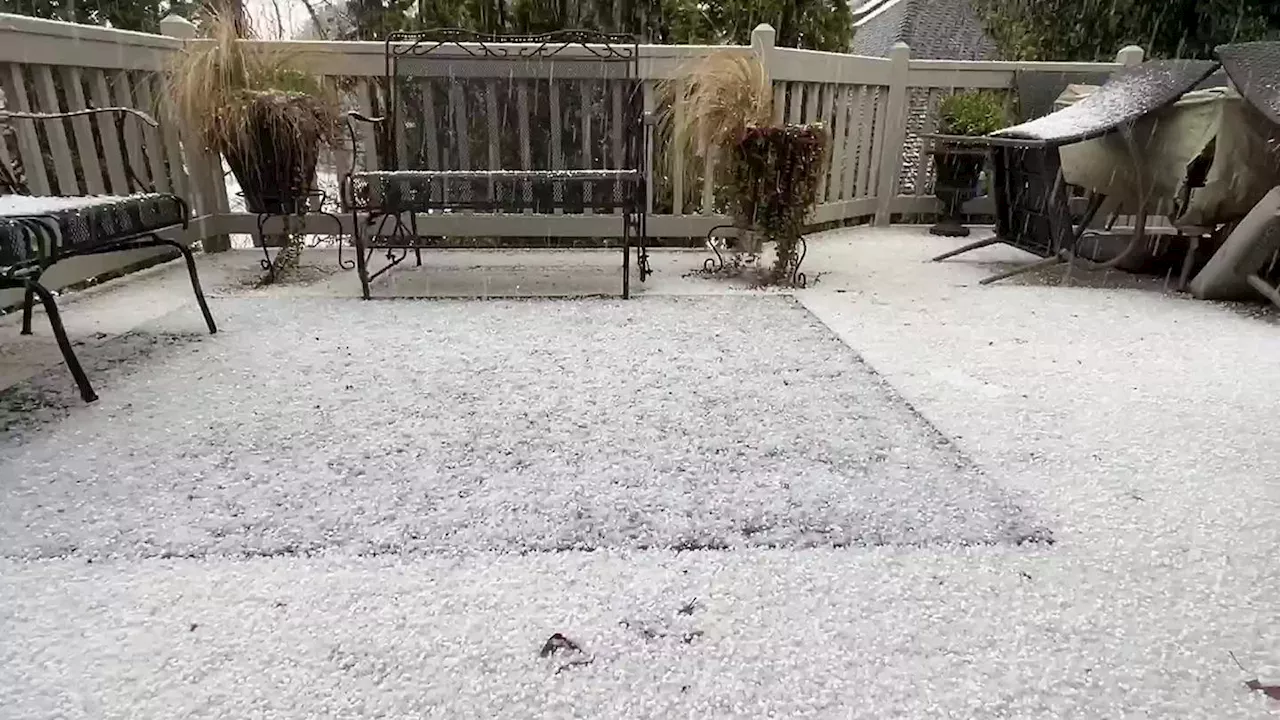 Busy start to the week with wintry showers, heavy mountain snow, gusty windsMonday evening, after a day full of heavy mountain snow, gusty winds, and on/off wintry showers, more of the same is expected overnight into Tuesday morning.
Read more »