
Shortages of helium, a byproduct of natural gas processing, could create problems for semiconductor and medical equipment manufacturers.
The Iran war is not only disrupting the global energy market but is also threatening the world's supply of helium and aluminum, key materials used in products such as semiconductor chips, medical equipment and other everyday goods.
Qatar, which accounts for roughly one-third of the world's helium supply, stopped producing helium this month following Iranian strikes on two liquid natural gas facilities owned by state-run QatarEnergy.Helium is a byproduct of natural gas processing, and attacks on Qatar's liquefied natural gas facilities mean it could take years to rebuild production lines. Earlier this month, QatarEnergy told Reuters that the attacks wiped out 17% of the country's LNG export capacity, and that repairs could take three to five years. Those complications could add to the strains on the global economy beyond the impact of higher oil and gas prices, which so far have drawn the lion's share of attention from consumers, businesses and economists. The helium shortage has largely been overlooked because the effects of oil supply constraints have been so acute and immediate, with the average price of gasoline on Tuesday hitting $4 a gallon for the first time since August 2022. 'We were so focused on gas supply that we didn't see the helium shortage,' Vidya Mani, a global supply chain expert and associate professor of business administration at the University of Virginia's Darden School of Business, told CBS News.Only a handful of countries produce helium, which means that a disruption from one of those nations can destabilize the global market. The United States is the biggest producer, accounting for 81 million cubic meters last year. Qatar, Algeria and Russia are the other major producers, but Russian supplies are banned under U.S. and European Union sanctions.Semiconductors and heliumBecause helium is highly effective at transferring heat, making it ideal for rapid cooling, it's essential for manufacturing semiconductors. Chipmakers use it to cool wafers — the discs of silicon printed with tiny electronic circuits. Helium is used during the etching process, when material that's been deposited on a wafer is scraped away to form transistor structures, said Jacob Feldgoise, an analyst at Georgetown University's Center for Security and Emerging Technology.'Helium is an essential component of semiconductor manufacturing, and a significant proportion of it comes from Gulf countries,' Mani said. 'Imagine not having chips to power laptops, iPhones and small appliances? Everything with circuitry runs on one, and all of those will be hurt if we don't get helium soon.'The medical industry also relies on helium to cool superconducting magnets powering magnetic resonance imaging, or MRI, machines. And the space industry uses helium to purge rocket fuel tanks, a demand that is expected to grow because of more frequent launches by companies like SpaceX and Blue Origin.Impact on iPhones, AI Mani said manufacturers that use helium tend to store no more than two months' worth of supplies of the gas. If those resources start to run low, 'You're going to see a much wider impact,' she said. Helium suppliers are already telling their U.S.-based customers, including semiconductor chip and electronics manufacturers, to expect shortages and price hikes, industry experts said. 'They are already receiving 'force majeure' and allocations letters,' Cliff Cain of Pulsar Helium, a helium exploration and development company, told CBS News. 'The effects are already being felt.'He added, 'Everything from vehicle chips to iPhones will definitely be affected.'Because there's no way to boost supplies of helium in the near term, a global helium shortage will crimp chip manufacturing, he added. That could interfere with building out AI data centers and curtail companies' investment plans, according to Oxford Economics. 'Semiconductor manufacturers have already indicated that they will not be able to meet their 2030 manufacturing goals,' Cain said. 'We have resources here, but it's not going to make up for the 33% disruption globally.'Yvette Connor, risk advisory leader at CohnReznick, a business advisory firm, said American AI companies' growth could be blunted by a chip shortage related to helium constraints. 'It could potentially slow their velocity, not their capability,' she told CBS News. Aluminum hits a 4-year highA prolonged conflict in Iran could also lead to shortages of nitrogen and aluminum, potentially driving up food and packaging costs for U.S. consumers, according to supply chain experts.Roughly 9% of the world's aluminum supply is produced by Gulf countries, and local disruptions are already having an impact, according to Stephen Hare and Sebastian Tillet of Oxford Economics. Aluminum prices this week touched a four-year high.'Disruptions in the region are reducing available supply, while rising energy costs are increasing production costs across the global cost curve. Together, this is tightening market conditions and pushing aluminum prices higher,' Hare and Tillet told CBS News. An aluminum shortage would have a direct impact on consumer goods packaging costs in the near term, Mani said. It's also used extensively in the automobile and electronics sectors, which can 'expect to see a crunch,' she said.
United States Latest News, United States Headlines
Similar News:You can also read news stories similar to this one that we have collected from other news sources.
 Pakistan says it will host U.S,-Iran talks as Iran warns against ground troopsPakistan announced Sunday that it will soon host talks between the U.S. and Iran.
Read more »
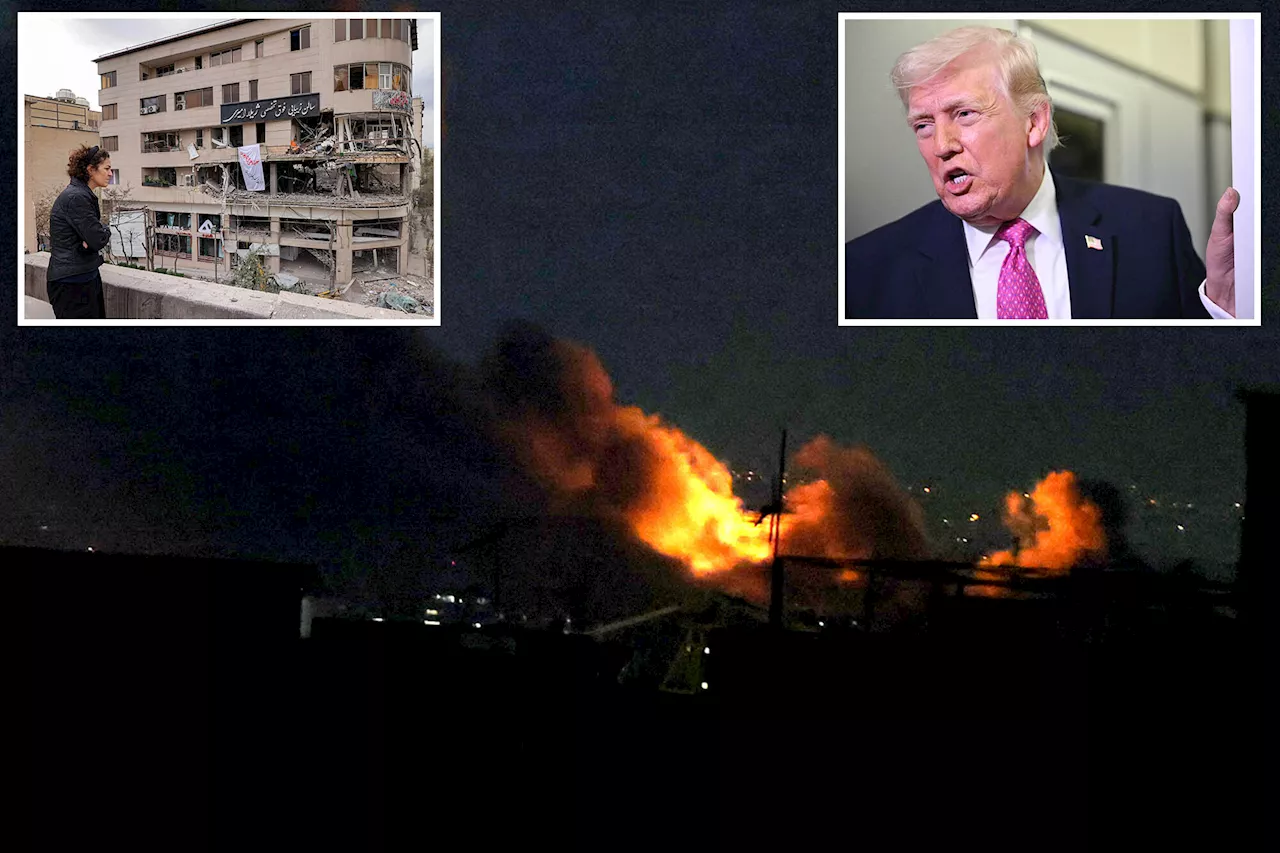 US Warns Iran: Deal or Destruction – Military Operations in Iran at a Critical JunctureThe United States is in intense negotiations with a new Iranian regime, threatening to obliterate critical infrastructure if a peace deal isn't reached and the Strait of Hormuz remains closed. The Pentagon prepares for ground operations as diplomatic efforts continue, while highlighting the destruction near the Al Araby TV offices after a missile strike in Tehran. The situation emphasizes the precariousness of the region, where diplomacy and military readiness are balanced.
Read more »
 Iran live updates: Trump threatens Iran infrastructure strikes if talks failTrump said 'serious' talks are ongoing with Tehran.
Read more »
 Iran live updates: Trump threatens Iran infrastructure strikes if talks failTrump said 'serious' talks are ongoing with Tehran.
Read more »
 Iran live updates: Trump threatens Iran infrastructure strikes if talks failTrump said 'serious' talks are ongoing with Tehran.
Read more »
 Iran live updates: Trump threatens Iran infrastructure strikes if talks failTrump said 'serious' talks are ongoing with Tehran.
Read more »