
Joshua Rothman writes about the philosopher Peter Godfrey-Smith, his book “Living on Earth: Forests, Corals, Consciousness, and the Making of the World,” and whether we divide ourselves from the world we inhabit.
In the depths of winter, the creek is often frozen, but in November or December it’s tolerable with a wetsuit. The water is transparent and, on calm days, swimming is like pulling yourself through liquid glass.
Rocks and mussel shells are visible at the bottom, embedded in silt and mud; my wake spreads wide behind me. The route I take goes east, and in the mornings I chase the silver sun rising behind our town’s drawbridge, which guards the bay. In the silence, it can seem as though nothing lives in the creek. I leave the frigid water as soon I can, at the closest beach, taking rickety wooden stairs up to a nearby street. In spring, I can go further, following the shore as the creek widens. The water then is crisp and cloudy; the buzzing of insects punctuates the lapping of waves. Schools of inch-long fish wind around my legs. The resurgent seagrass has sharp edges, and at high tide swathes of it are submerged. It’s easy to swim into it; stepping onto the beach, I’ll find long scratches along my chest, stomach, and legs. I’ll stand, examining my wounds, and sometimes hordes of coin-size crabs will emerge from holes in the sand, headed somewhere. It’s in summer that the creek really changes. The warm water becomes murky and fragrant; at its surface, the light catches on a living layer—a “biofilm”—created by microscopic life. Big fish glide; ospreys circle and hunt. It’s possible to swim accidentally into a zone saturated with life, in which tiny fish leap out of the water to catch bugs while birds swoop down to catch the fish; in these places, the water is perforated, as though it’s raining in the sun. And there are people in the water, too. Another swimmer might wave, or a neighbor might surge by in her kayak. “Good morning,” we’ll say, as though we’re passing in the street. Finally a day comes when it’s uncomfortable to swim. Usually, it’s in late August, when there’s a sense of frenzied activity reaching a peak. There’s too much movement, and too many things nibbling at my shoulders and back. The moment when I realize I’m done usually arrives mid-swim, and it’s odd: I feel both a little wry—I’ve stepped into the creek for a meditative interlude, not a cameo in “Planet Earth”!—and a little chastened. In the fall and winter, swimming seems heroic; it’s as though I’m the one keeping the creek alive. Then, in the spring and early summer, swimming is natural; the pitch of creek life is in tune with my own. When the end of swimming comes, it’s because I’ve been left behind. I’m too ponderous, too squeamish, too cerebral. I’ve turned against life, set myself apart from nature. I wonder, What does it say about me that I won’t swim until the creek dies back? A lot separates us from the kind of life that existed billions of years ago. We stride around, chatting, feasting, planning, plundering; we change our environment in drastic and sometimes disastrous ways. But in these respects, too, Godfrey-Smith argues that we actually have a great deal in common with other living things. Versions of the “forms of action” that characterize our lives, he writes, can even be seen in single-celled organisms. Many kinds of bacteria can swim, following the trails of desirable chemical resources; they can also “signal to one another, though this is done chemically rather than with bodily motion.” Some can even perform feats of engineering. Cyanobacteria, for instance, which are evolutionarily ancient, slowly produce huge, domelike structures called stromatolites, as a byproduct of their metabolisms. Made of sand or minerals, stromatolites can reach five metres tall. Cyanobacteria do much more than make mounds. When they evolved, around three billion years ago, the Earth was a relatively unformed place, and cyanobacteria helped change that. They developed an early kind of photosynthesis that released oxygen; at first, the oxygen reacted with iron in rocks, creating iron oxide, or rust. “Red desert landscapes were painted, and are still being repainted, by life in this way,” Godfrey-Smith writes. Later, as the bacteria proliferated, they produced so much oxygen that it began piling up in the atmosphere, fundamentally changing its composition. More oxygen in the air enabled plants to leave the sea and begin to grow on land. These plants eventually produced oxygen, too—and, because oxygen fuels life, their descendents could use it to grow more complex, developing roots, leaves, and seeds. “Water moving over land without much life tends to spread in sheets and braids,” Godfrey-Smith writes. The root systems of plants helped make meandering rivers possible, by stabilizing riverbanks. “Rivers on Earth changed, growing twists, turns, and tighter bends,” Godfrey-Smith writes. “Riverbanks direct water; water carves canyons and mountains. Life shapes rivers, and rivers shape the land.” So cyanobacteria, too, can reach out and change the planet. They helped create my creek. “Living on Earth” differs from a typical history of life, such as “The Ancestor’s Tale,” by Richard Dawkins, in that it is focussed on actions, rather than creatures. Usually, histories of life introduce us to creatures in sequence, showing how Earth’s menagerie has changed with time. But Godfrey-Smith’s goal is to show how different forms of life have altered the Earth, changing it physically, creating the conditions for the creatures that follow, beginning with cyanobacteria adding oxygen to the atmosphere and ending with climate change. The idea is to give us a better sense of the space we occupy together, and of our linked and ongoing responsibility for it. Each kind of creature sees the world in its own way, Godfrey-Smith writes, and so “our shared world can easily seem to fade.” But “our actions are poured, together, into a common arena.” This arena—our present ecological reality—is the sum of the actions of life on Earth through time. Godfrey-Smith doesn’t just want to understand this way of looking at the world. He wants us to feel it, and to experience ourselves within it. This might be “a matter of identifying with a process, rather than appreciating it as an onlooker,” he writes. I wasn’t sure exactly what he meant; was the idea that, while being nibbled at by the fish in the creek, I’d think of my own breakfast waiting at home? Then, one evening after dinner, my six-year-old son and I biked to the marina to use his remote-control boat—a green plastic vessel about a foot long, with a tiny black propeller, which he’d got for his birthday. We stood on the dock as he piloted it, making figure eights. All was well until the boat got stuck on a wooden joist in the structure of the dock, which had been exposed by the receding tide. The boat’s propeller spun in the air, useless; my son looked at me, uncertain. I figured it would be easy to get the boat, and I put on a pair of water shoes and walked down the boat ramp into the creek. At the end of the ramp, however, I realized that I’d misjudged how low the tide was. The water was only a couple of feet deep, and I had no choice but to walk on the creek bottom, quickly sinking up to my knees in warm mud. Broken mussel and oyster shells crunched beneath and around my legs, and clouds of silt billowed around me. I leapt forward and, swimming awkwardly in the shallow water, tried to stay above the muck. I made my way beneath the dock and reached up, knocking the boat loose from the joist. But when my hands returned to the water, they swept beneath me, and I felt a sudden pain: I’d cut my fingers on sharp fragments of buried shells. I walked back up the ramp, blood dripping from my muddy fingertips. The creek now seemed not just alive but geological; we were swimming and playing in an ancient, evolving place, built by life. We were all there, together, in the same current—questing, vulnerable, immersed, close enough to touch. ♦
United States Latest News, United States Headlines
Similar News:You can also read news stories similar to this one that we have collected from other news sources.
 Explore Joshua Tree art studios over three free fall weekendsHWY 62 Open Studio Art Tours encompasses much of the high desert; nearly 200 local artists will participate.
Read more »
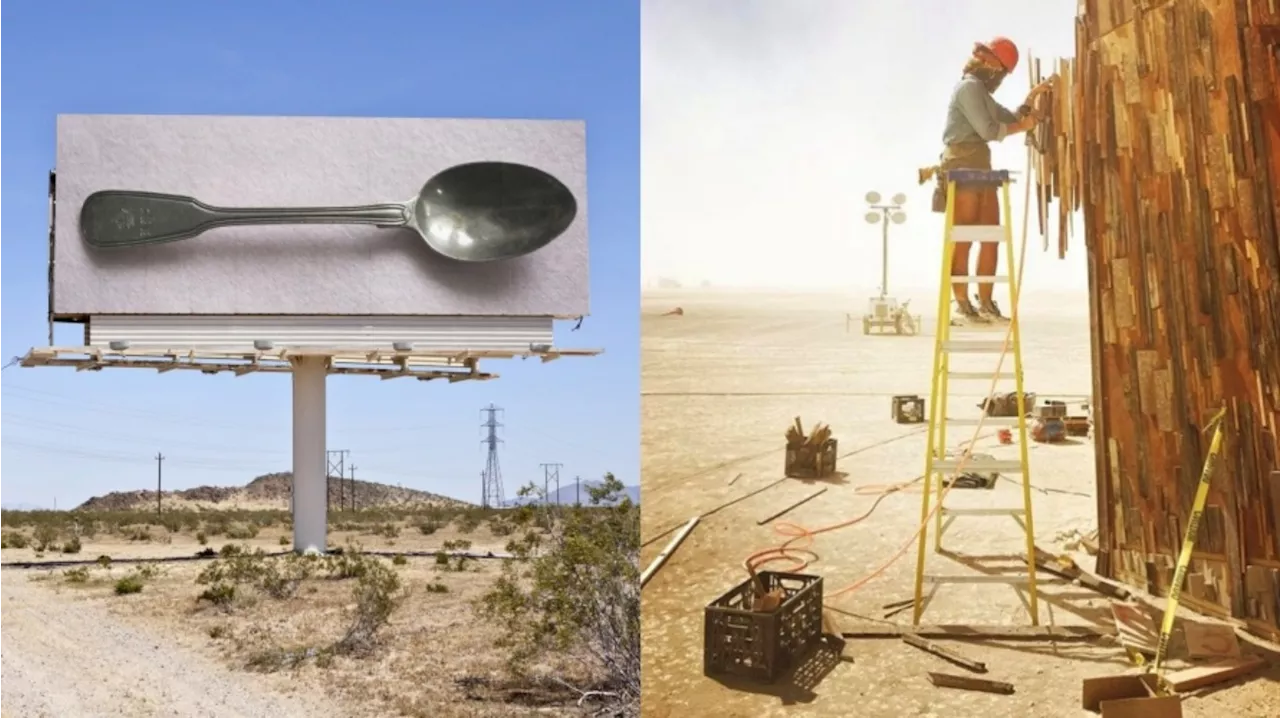 Explore Joshua Tree art studios over three free fall weekendsHWY 62 Open Studio Art Tours encompasses much of the high desert; nearly 200 local artists will participate.
Read more »
 Explore Joshua Tree art studios over three free fall weekendsHWY 62 Open Studio Art Tours encompasses much of the high desert; nearly 200 local artists will participate.
Read more »
 Joshua Darlington | ScreenRantJosh is a writer from the UK with an undergraduate degree in film studies, interested in writing about film and TV.
Read more »
 This Joshua Tree search and rescue team tries to head off calamity before it strikesJoshua Tree's Preventative Search and Rescue Program seeks to protect visitors from extreme heat, razor-sharp cacti, thirsty bees — and their own ignorance.
Read more »
 How to stay safe in Joshua Tree National ParkPlanning a visit to Joshua Tree National Park? Here's when to go, what to bring and how to avoid some common hazards and pitfalls.
Read more »