
The electric carmaker launched a driverless taxi service in Austin, Texas.
Chief executive Elon Musk has touted the "robotaxis" as a potential boon for the company and its customers, eventually offering car owners a way to make money off their vehicles when they aren't using them.
For now, the self-driving cabs come equipped with a safety monitor in the passenger seat ready to intervene, as well as internal systems that prevent the cars from traveling outside a narrow portion of the city. The rollout marks a milestone for the company's self-driving taxi aspirations, but limitations placed on the vehicles and a series of apparent miscues suggest the technology remains far from wide adoption, some analysts told ABC News."It's a step in the right direction," Seth Goldstein, an analyst at research firm Morningstar who studies the electric-vehicle sector, told ABC News. "At the same time, it also highlights that Tesla is still in the early stages."The self-driving taxi service, unveiled on Monday, involves 10 to 20 vehicles operating in a geofenced area of Austin. In addition to a real-life safety monitor, the cars feature other precautions: remote "teleoperators," plans to avoid bad weather conditions and time limits that keep them off the road from midnight to 6 a.m., Customers hail the service using an app, much like rideshare competitors. Rides are priced at a flat rate of $4.20. Tesla-friendly influencers were invited to be among the first passengers.Sawyer Merritt, a Tesla investor, said that he had taken 20 robotaxi rides, traveling 92 miles over a 36-hour period.Some passengers appear to have encountered mishaps, however, according to videos posted online by riders. In one case, a robotaxi appeared to drive on the wrong side of the road for a few seconds before correcting course and navigating into the appropriate lane. In another, a robotaxi appeared to unexpectedly press the brakes as it approached the shadow of a nearby tree. Some analysts downplayed the incidents as routine hiccups typical of a company testing a new product, while others viewed the miscues as a troubling sign for the capability of the technology, especially in light of favorable conditions sought out by Tesla. "The limited video evidence that we've seen shows why a safety driver is still necessary," Bryant Walker Smith, a law professor at the University of South Carolina who studies transportation technology, told ABC News. "That doesn't mean that every single trip will have an intervention. But the fact that any interventions of any kind have been necessary in mere days amply demonstrates why there needs to be and in fact is somebody in the car paying attention at all times ready to act if and when the car does the wrong thing," Walker Smith added. Kara Kockelman, a professor of transportation engineering at the University of Texas at Austin, said the mishaps suggest an accelerated launch. "Elon Musk rolls things out quickly -- too quickly for most businesses' tastes for sure," Kockelman said, while noting the mistakes would help Tesla identify areas of improvement.from federal and state officials over how it has advertised its self-driving technology, as well as concern over safety risks involved with the self-driving capability. The National Highway Traffic Safety Administration, a federal agency charged with investigating safety defects in vehicles, contacted Tesla on Monday after a video was posted online showing an incident involving a robotaxi, MORE: Trump admin live updates: White House sticks to megabill deadline despite Senate GOP's Medicaid setback Musk has promised to produce millions of robotaxis as soon as next year, but some experts questioned whether the company could attain its goal.Walker Smith voiced greater skepticism, saying Tesla had repeatedly failed to fulfill promises about the pace and extent of robotaxi development. Tesla may never offer self-driving cabs, he said.Kockelman acknowledged previous delays while saying Musk could still achieve next year's goal.
United States Latest News, United States Headlines
Similar News:You can also read news stories similar to this one that we have collected from other news sources.
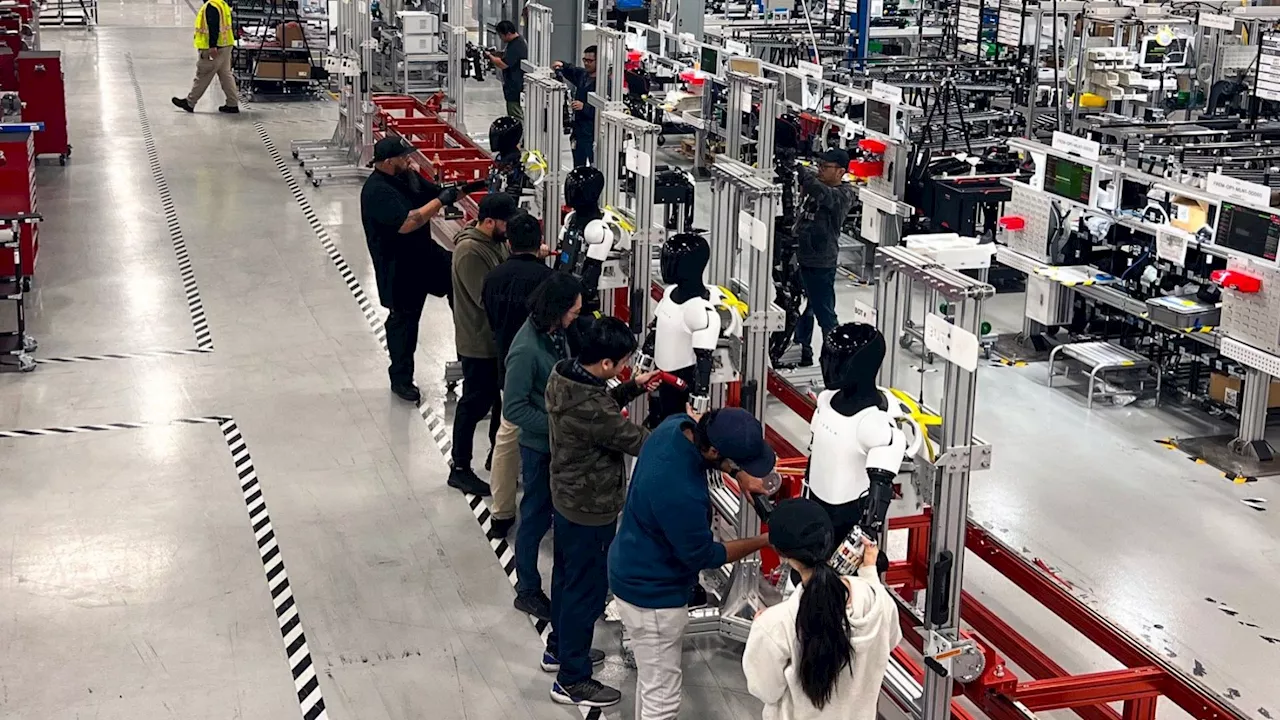 Humanoid vs robot: Tesla’s Optimus stirs debate on droid utility in industriesTesla's Optimus humanoid robot impresses with household task demo but experts question its factory usefulness.
Read more »
 Tesla Investors To Elon Musk: Please Work At Tesla Full-TimeShareholders are demanding at least 40 hours a week from Musk, who's been spending a lot of his time on politics despite Tesla's mounting issues.
Read more »
 Electrify America’s New Chargers Work With Tesla And Non-Tesla EVs At OnceThere’s no need for charging adapters, and each station can output up to 400 kilowatts, making charging stops easier and shorter.
Read more »
 The head of Tesla's Optimus humanoid robot program leaves the companyMariella Moon has been a night editor for Engadget since 2013, covering everything from consumer technology and video games to strange little robots that could operate on the human body from the inside one day. She has a special affinity for space, its technologies and its mysteries, though, and has interviewed astronauts for Engadget.
Read more »
 Elon Musk's Tesla sues former Optimus robot engineer for allegedly stealing trade secretsElon Musk’s Tesla is suing one of its former engineers for allegedly stealing trade secrets related to its highly anticipated Optimus humanoid robot.
Read more »
 Optimus humanoid robot’s hand secrets stolen, Elon Musk’s Tesla sues ex-engineerTesla has sued a former engineer for allegedly stealing Optimus robot secrets to launch a rival startup backed by Y Combinator.
Read more »