
A new era of 3D-printing 'microfactories' is helping to turn waste plastics into 'highly competitive' products fit for use in the construction industry.
A new era of 3D-printing "microfactories" is helping to turn waste plastics into "highly competitive" products fit for use in the construction industry. Veena Sahajwalla, professor and Founding Director of UNSW Sustainable Materials Research and Technology Centre, has made plastic filaments from 100% plastic waste.
The emerging technology could help drive costs and ramp up production of construction industry parts, known as "plants." A new era of 3D printing "microfactories" is helping to turn waste plastics into "highly competitive" products fit for use in the construction industry, according to Veena Sahajwalla, professor and founding director of UNSW Sustainable Materials Research and Technology Centre. Speaking to CNBC's Mandy Drury at Schneider Electric's Sydney Innovation Summit on Monday in Australia, Sahajwalla said manufacturers had to direct their thinking around sustainability toward profitability. "It's not about saying, well I'm making it because its green. Actually, that should be the last thing. The first thing has to be profitability, does it work? Is it showing the right performance?" she said. That thinking has pushed SMaRT to build plastic filaments made from 100% waste plastics, sourced from "all kinds of old printers." They are built in hyper-localized, heavily automated "microfactories" to produce personalized products. "If this can now be fed into a 3D printer, can you actually print a whole range of products?" she said."Imagine all the building and construction projects where you need plants and imagine if you had to wait a long time to source these parts and components," said Sahajwalla.SMaRT's 3D-printed alternative, built in a Sydney microfactory using plastic filaments made from older, plastic waste, could ultimately lower costs, says Sahajwalla. "You could literally talk to your local microfactory and say, can I make this at a comparative price and the right kind of performance?" "This is where microfactory technologies have come in. To really close the gap to between what is seen as a waste on one hand and on the other hand make something that is high performance, high tech and competitively closing the gap."Autonomous trucks and buses, powered by clean hydrogen-based energy, are on the cusp of hitting the roads, thanks to a technology still in its infancy. Scott Brown, managing director of pure hydrogen, told CNBC that his firm now has a hydrogen-powered garbage truck in the city of Adelaide emitting "no diesel pollution, which can be detrimental to your health if you breathe it in," as well as less noise pollution waking residents up during the morning garbage run."There's not a lot of material involved. It looks like a PC and you put it into — in our case — a truck or a bus," Brown said. Because of its increasingly cost-effective production, fuel cell prices have come down "about 50% in the last three years," he added. Brown predicts that clean energy battery cell prices will "fall dramatically" in the coming decade as Chinese companies adopt more hydrogen-powered vehicles.
Honda Motor Co Ltd Honda Motor Co Ltd Toyota Motor Corp Toyota Motor Corp Hyundai Motor India Ltd Breaking News: Technology Technology Environment Sydney Australia Autos Business News
United States Latest News, United States Headlines
Similar News:You can also read news stories similar to this one that we have collected from other news sources.
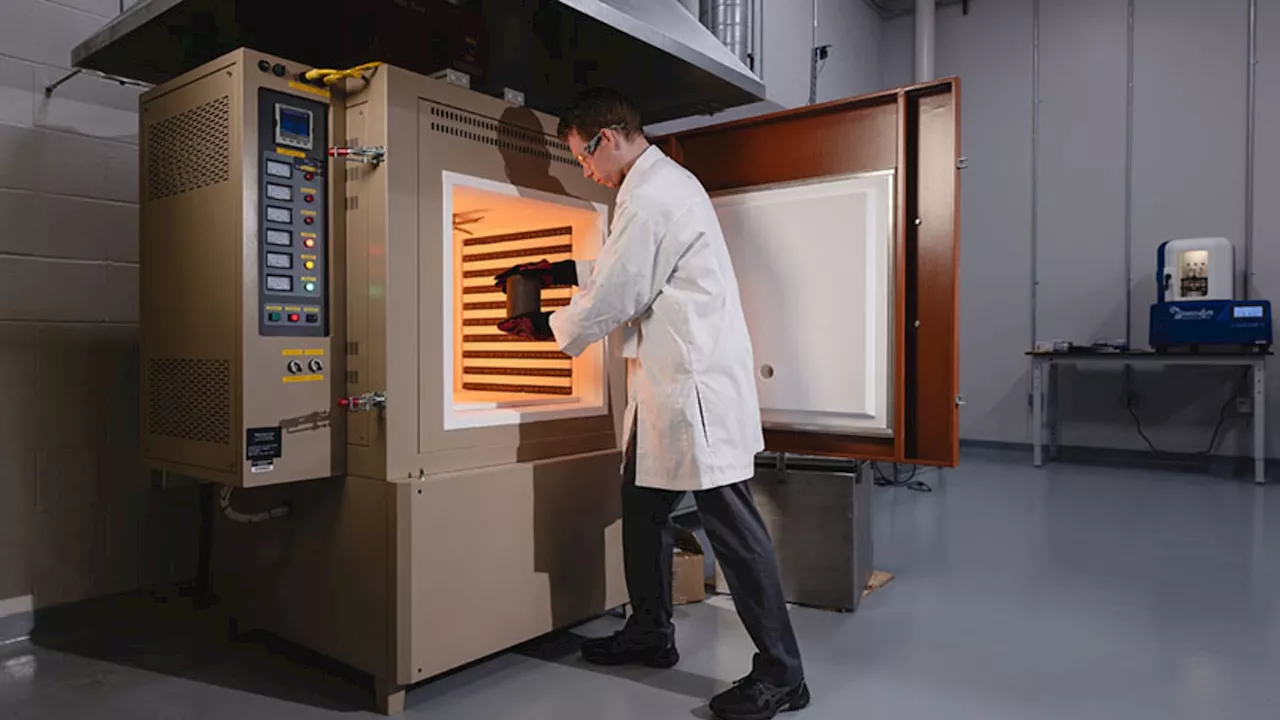 US scientists 3D print dark ceramics to boost hypersonic aircraft, weaponsThe PARI researchers are using the digital light processing (DLP) 3D printers at their Hypersonic Advanced Manufacturing Technology Center.
Read more »
 Blue Ivy Carter's Leopard Print Bag Was Made by 25-Year-Old Designer Ashley CiriacoAshley Ciriaco talks about the leopard print bag that Blue Ivy wore to the Superbowl and caught everyone's attention.
Read more »
 Leopard Print Bags Are 2025's It-BagThe article discusses the rising trend of leopard print bags, highlighting their versatility and ability to elevate any outfit. It features several styles, including options from affordable brands to luxury designers, and mentions Martha Stewart's recent endorsement of the trend.
Read more »
 MIT Engineers Print First 3D-Printed Electrospray Engine for CubeSat PropulsionA team of researchers at MIT has successfully developed and demonstrated the first fully 3D-printed electrospray engine, a breakthrough that could revolutionize CubeSat propulsion and space research.
Read more »
 Navigating a Chaotic World: The Cut's Second Solo Print EditionThe Cut's second solo print edition explores the complexities of contemporary life, from the realms of music and fashion to the personal stories of individuals navigating the challenges of our time.
Read more »
 Engineers 3D-Print Ultra-Fine Fibers Inspired by Spider Silk and Hagfish SlimeA team of international researchers has used a novel 3D-printing technique to create microfibers just 1.5 microns thick, surpassing limitations in printing soft and very thin materials. The technique, called embedded printing, allows for more complex structures and prevents the fibers from breaking during curing. This breakthrough opens up possibilities for mimicking the remarkable functionalities of natural microfibers.
Read more »