
The Department of Health and Human Services (HHS) will reevaluate programs to ensure taxpayer dollars aren't funding elective abortions. Simultaneously, a new rule from the Trump administration caps facilities and administrative costs (indirect costs) for NIH grants, aiming to increase the number of research projects funded. While some doctors praise the move, arguing it will optimize taxpayer funding for scientific research, others, including Democratic state attorneys general and universities, challenge the rule in court, claiming it will harm public health research.
But some doctors are praising the move, suggesting it will help “optimize” how taxpayer dollars are used when it comes to scientific research. A new rule from the Trump administration that went into effect Monday, capped facilities and administrative costs, also known as “indirect costs,”When a grant is awarded to a scientist by the NIH, an additional percentage, on top of the allocated research funding, goes to the facility housing their work to cover these “indirect costs.
” According to an announcement about the new funding cap from the Trump administration, that percentage has historically been around 27% to 28% for each grant. But in some cases, negotiated rates can be as high as 70% to 90%, according to doctors who spoke with Fox News Digital. “If that money is cut to 15%, what that means is there’s actually going to be more grants given out to do science. You get more money back to the NIH to give out more science,” said Dr. Vinay Prasad, a hematologist-oncologist and professor in the Department of Epidemiology and Biostatistics at the University of California, San Francisco.“It’s about time,” said Dr. Erika Schwartz, the founder of Evolved Science, which is a concierge medical practice in New York City with more than 1,500 active patients. “While infrastructure support is necessary, there’s room for more efficient cost management. A reformed funding model could redirect more resources to direct research activities while maintaining essential support services. This could potentially increase the number of funded research projects and accelerate medical breakthroughs, ultimately benefiting patients more directly.” Prasad posited that universities and research institutions have negotiated “sweetheart deals” that allow them to rake in funds that sometimes aren’t even necessary to the research at hand. To demonstrate his point, he explained the numbers for a research institution that has negotiated a 57% rate for indirect costs:“Let’s say I get $100,000 and I need a laboratory… I get $100,000, and then they still get the $57,000 to the university that goes to the administrators, and presumably the fact that I have a lab bench, and the lights, etc. But now let’s say I do the same $100,000 project, but my project is we’re going to analyze genomic sequences from an online repository. So, I just have a laptop… but they still get the $57,000 even though there’s literally no space being given to this person. There’s no bench, there’s no desk, there’s nothing.” Prasad added that another “fundamental problem” with these negotiated rates is that the money is not formally budgeted, so “the American people don’t know where that money is going.” “A famous researcher once said to me, an NIH dollar is more valuable than any other dollar because they can use it for whatever purpose they want. Although, nominally, they’re supposed to use it to keep the lights on and, you know, make the buildings run, but that’s not always the case,” he said.David Whelan, a former healthcare writer for Forbes who has spent time working in hospitals and now works in the healthcare consulting space, echoed this concern in a post on X that claimed universities have used indirect research grant payments “to pocket money.” “Indirects are just ways for wealthy academic hospitals to pocket money that their investigators won and then create slush for those who are incapable of getting funded on their own,” Whelan wrote. “It’s a huge grift and great place for cuts.” The Trump administration’s cap on indirect funding associated with NIH research grants was immediately challenged in court with lawsuits from 22 Democratic state attorneys general and a cohort of universities, which argued the move will “devastate critical public health research at universities and research institutions in the United States.” “Once again, President Trump and Elon Musk are acting in direct violation of the law. In this case, they are causing irreparable damage to ongoing research to develop cures and treatments for cancer, Alzheimer’s disease and related dementias, ALS, Diabetes, Mental Health disorders, opioid abuse, genetic diseases, rare diseases, and other diseases and conditions affecting American families,” said Rep. Rosa DeLauro, D-Conn., ranking member on the House Appropriations Committee. “The Trump Administration is attempting to steal critical funds promised to scientific research institutions funded by the NIH, despite an explicit legal prohibition against this action.” In response to the lawsuit from Democratic state attorneys general, a federal judge imposed a temporary restraining order prohibiting NIH agencies from taking any steps to implement, apply or enforce the new rule. The judge’s order also required Trump administration agencies that are impacted by the new rule to file reports within 24 hours to confirm the steps they are taking to comply with the ruling. Fitness freaks are wearing Apple Watches the wrong way for ‘mind-blowing’ results: ‘It’s the best hack ever’ Wellness junkies slather this ‘incredible’ oil on their belly buttons, armpits for better sleep, stress relief: ‘I can’t live without’Vividseats: Official Ticketing Partner of New York PostCause of deadly plane crash involving Mötley Crüe singer's private jet revealedTravis Kelce speaks out on 'hard reality' after Chiefs' crushing Super Bowl loss: 'I'm kicking myself'There's no Presidents Day like the present! The 46 best Presidents Day sales we found so far in 2025 Four score and great deals ago! Amazon's Presidents Day sales are here –– Shop deals on Beats to MacBooksWhy Kylie Kelce didn’t eat Taylor Swift’s home-cooked meal during double date with Travis, Jason KelceMediaNews Group via Getty Images
TAXPAYERS HEALTH RESEARCH NIH GRANTS INDIRECT COSTS ABORTION FUNDING
United States Latest News, United States Headlines
Similar News:You can also read news stories similar to this one that we have collected from other news sources.
 19 states pressure Costco to drop 'illegal' DEI policiesCostco shareholders recently voted to reject a proposal asking the chain to reevaluate its DEI practices.
Read more »
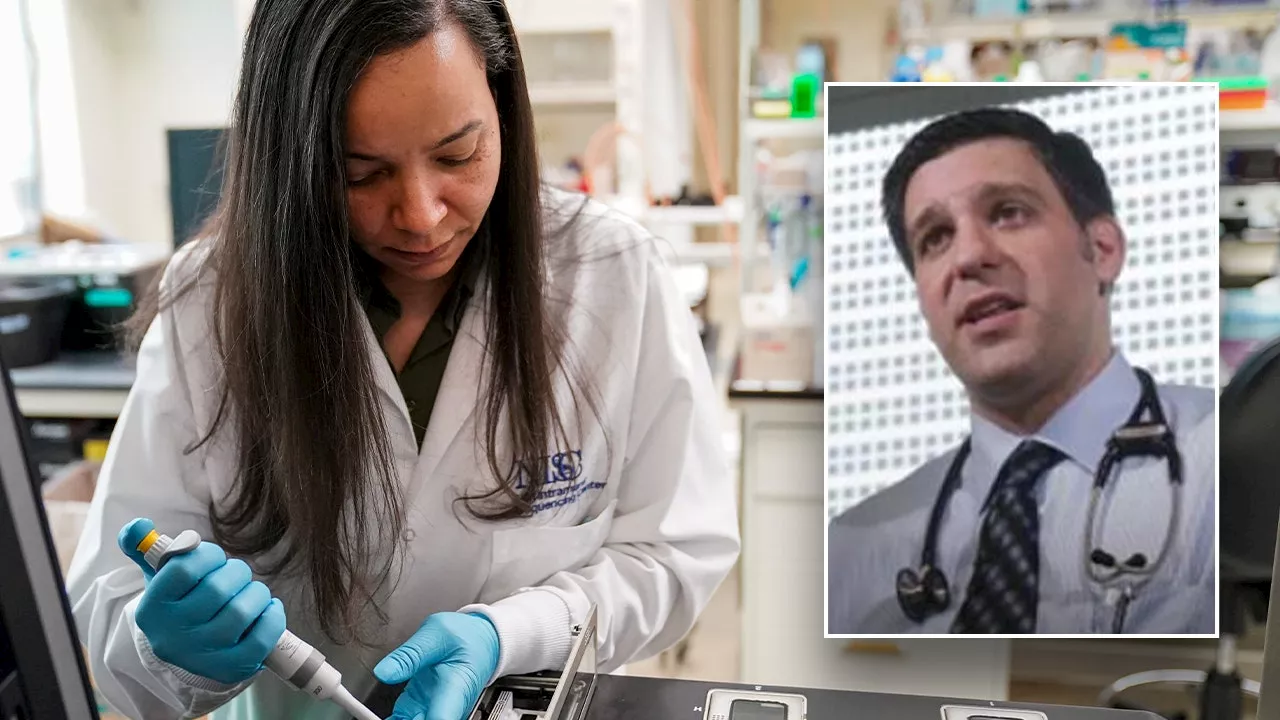 NIH director clarifies HHS communications freeze, confirms some essential functions can continueA memo from the NIH's acting director indicated research and clinical studies that began prior to Trump's inauguration can continue among the Trump administration's freeze on HHS activities.
Read more »
 US-Funded Aid Programs Worldwide Face Shutdown Amidst Trump's 90-Day FreezeU.S.-funded aid programs globally are facing disruptions as President Trump's 90-day freeze on foreign aid takes effect. This freeze impacts humanitarian, development, and security programs, forcing organizations to halt operations and lay off staff. The freeze has far-reaching consequences, from halting school lunch programs in Liberia to potentially disrupting support for Ukrainian veterans. While emergency food programs and military aid to Israel and Egypt are exempt, many vital civilian programs face uncertainty.
Read more »
CDC grant funding for 'gender ideology' programs is 'permanently terminated,' HHS saysThe CDC spent nearly $4.5 billion last year to aid state health departments.
Read more »
CDC grant funding for 'gender ideology' programs is 'permanently terminated,' HHS saysThe CDC spent nearly $4.5 billion last year to aid state health departments.
Read more »
 NIH Resumes Key Activities Amidst HHS Communications FreezeDespite an ongoing communications freeze at the Department of Health and Human Services (HHS), the National Institutes of Health (NIH) is gradually restarting essential meetings and travel related to its crucial grant-review process. While striving for normalcy, the agency acknowledges its operations haven't fully recovered to their pre-President Donald Trump administration state.
Read more »