
Supreme Court Justice Ketanji Brown Jackson was the lone dissent in a case invalidating a ban on conversion therapy in Colorado.
Supreme Court Justice Neil Gorsuch delivered a sharp rebuke to Justice Ketanji Brown Jackson on Tuesday, accusing her of “fundamentally misconceiv” Supreme Court precedent in a major ruling that struck down Colorado’s ban on conversion therapy for minors as applied to talk therapy.
Supreme Court case bars licensed counselors from engaging in “conversion therapy” with minors, broadly defined to include any talk therapy that seeks to change a person’s sexual orientation or gender identity, while expressly allowing counseling that affirms identity exploration or gender transition. In a major First Amendment ruling, the Supreme Court said that distinction amounts to unconstitutional viewpoint discrimination when applied to speech‑only therapy, holding that states may not dictate which perspectives counselors can express to willing clients—even in the name of regulating professional conduct—without meeting the Constitution’s most demanding free‑speech standards. Writing for the Court, Gorsuch rejected Jackson’s core argument that Colorado’s law merely regulates professional conduct and only incidentally burdens speech. Instead, he said, the statute squarely targets speech based on viewpoint—triggering the most demanding First Amendment scrutiny and placing it in direct conflict with decades of free‑speech precedent. “At bottom,” Gorsuch wrote, Colorado and Jackson"fundamentally misconceive" the Court’s “speech‑incident‑to‑conduct” cases. Those precedents, he said, do not ask whether a law “mostly” regulates conduct, but whether it restricts speech because it is integral to unlawful conduct or for reasons unrelated to its content. Colorado’s law, he concluded, does neither. “Colorado does not regulate speech incident to conduct,” Gorsuch wrote. “It regulates speech as speech.”In a lengthy dissent, Jackson argued that the majority dangerously weakens states’ long‑standing power to regulate medical care, particularly when that care is delivered through speech rather than physical procedures. Jackson framed Colorado’s law as a straightforward exercise of the state’s police power to protect minors from a medical practice widely regarded by professional organizations as harmful and ineffective. She emphasized that conversion therapy—whether aversive or non‑aversive—has been discredited by the medical community and linked to depression, anxiety, and suicidal ideation among LGBTQ youth. “Chiles is not speaking in the ether,” Jackson wrote. “She is providing therapy to minors as a licensed healthcare professional.”According to Jackson, the First Amendment does not prevent states from restricting treatment‑related speech when it is part of regulating medical practice. She relied heavily on precedents such asNational Institute of Family and Life Advocates v. Becerra , which recognized that professional conduct can be regulated even when it incidentally involves speech. Jackson warned that the Court’s decision could render “speech‑only therapies” effectively unregulatable, allowing licensed professionals to evade standards of care simply because their treatment is administered verbally. Jackson also said it's the justices in the majority who are misunderstanding precedents. "Ultimately, because the majority plays with fire in this case, I fear that the people of this country will get burned. Before now, licensed medical professionals had to adhere to standards when treating patients: They could neither do nor say whatever they want. Largely due to such State regulation, Americans have been privileged to enjoy a long and successful tradition of high-quality medical care," Jackson wrote."Today, the Court turns its back on that tradition. And, to be completely frank, no one knows what will happen now."Conversion therapy refers to practices aimed at changing a person’s sexual orientation or gender identity, often with the goal of making LGBTQ individuals heterosexual or cisgender. Historically, conversion therapy included aversive techniques such as electric shocks or induced nausea. While those methods have largely been abandoned, non‑aversive approaches—primarily talk therapy—remain controversial. Major medical organizations, including the American Psychological Association, have concluded that conversion therapy is ineffective and can cause serious psychological harm, particularly to minors. As a result, more than half of U.S. states have enacted bans or restrictions on the practice for minors. Supporters of those laws argue they are necessary to protect vulnerable youth. Critics contend they suppress free speech and prevent clients from pursuing counseling aligned with their personal beliefs.The Court’s ruling does not invalidate all conversion‑therapy bans. Gorsuch emphasized that Colorado—and other states—remain free to prohibit coercive or aversive practices and to regulate conduct that causes demonstrable harm. But when a law singles out speech based on viewpoint, even within a professional setting, the First Amendment applies with full force, the Court held. Justice Elena Kagan, joined by Justice Sonia Sotomayor, concurred but flagged that the outcome might have been different if Colorado’s law had been content‑based but viewpoint‑neutral. More than 20 states have similar laws, so the impact of the Court's ruling could be felt nationwide. However, if the laws are written in a more tailored way, Supreme Court justices say they'll likely be able to remain on the books., ours is different: The Courageous Center—it's not"both sides," it's sharp, challenging and alive with ideas. We follow facts, not factions. If that sounds like the kind of journalism you want to see thrive, we need you., you support a mission to keep the center strong and vibrant. Members enjoy: Ad-free browsing, exclusive content and editor conversations.
United States Latest News, United States Headlines
Similar News:You can also read news stories similar to this one that we have collected from other news sources.
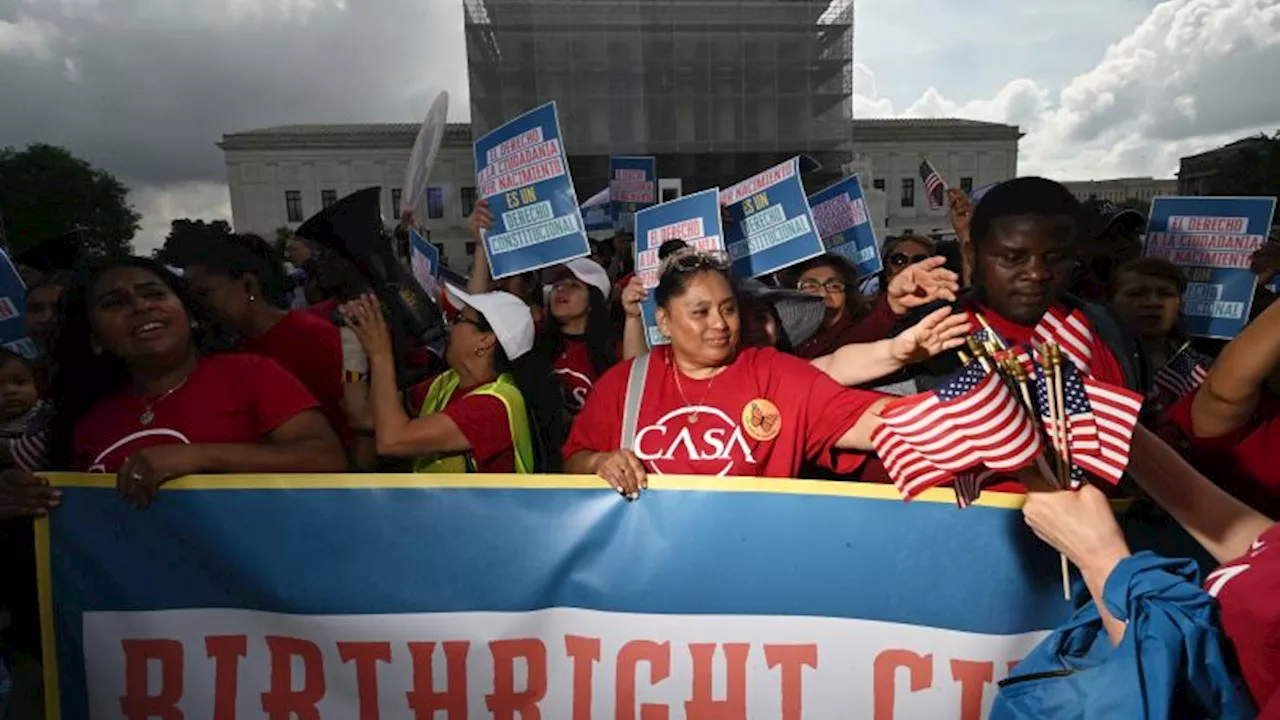 Supreme Court fight over birthright citizenship threatens ‘chaos’ in proving newborns’ statusJustice Brett Kavanaugh sounded like a fired-up prosecutor last year as he shot off a withering series of nuts-and-bolts questions about how President Donald Trump would carry out his plan to rewrite of the way birthright citizenship has been understood in the United States for more than a century.
Read more »
 Much is at stake for The City as Supreme Court takes up birthright citizenshipJustices will hear case Wednesday that has the potential to affect thousands of residents
Read more »
 As birthright citizenship goes to Supreme Court, here's how Americans feel about itThe Supreme Court will hear arguments Wednesday on whether all children born in the United States can continue to automatically receive citizenship.
Read more »
 The birthright citizenship case at the Supreme Court hits close to home for this immigrant motherAn Argentine emigre in Florida quickly got her newborn son a U.S. passport last year.
Read more »
 The birthright citizenship case at the Supreme Court hits close to home for this immigrant motherAn Argentine emigre in Florida quickly got her newborn son a U.S. passport last year.
Read more »
 Supreme Court Cases, Taylor Swift Lawsuit, Michael Jackson Estate Battle & More Top Music Law NewsTaylor Swift faces a lawsuit, Michael Jackson's estate battles over a biopic, the Supreme Court hears music, and more in this recap of music law news.
Read more »