
Google researchers have unveiled a novel 'hybrid' approach to quantum simulation that combines digital and analog techniques. This innovative method allows quantum computers to mimic the behavior of complex quantum systems more efficiently, potentially surpassing the capabilities of traditional supercomputers within the next five years.
The ultimate action-packed science and technology magazine bursting with exciting information about the universeEngaging articles, amazing illustrations & exclusive interviews Scientists at Google have revealed a new method of"quantum simulation" that uses computing power to mimic the behavior of a powerful quantum system.
This approach, they argue, could lead toQuantum simulation is a process in which computers simulate physical processes and large quantum systems, such as complex molecules. Essentially, engineers simulate physical processes that are dominated by the effects of quantum physics. But this is difficult to do with classical computers because you have to model every particle's interaction with every other particle. Because subatomic particles have a probability of being in multiple states at once and can be entangled with each other, the complexity of these calculations skyrockets quickly as you scale the number of particles involved.are entangled or linked together the right way, they can mimic bigger quantum systems without having to explicitly calculate every step in the evolution of the system. That is where"quantum simulation" comes into play. There are two types of quantum simulation. Digital simulation lets researchers selectively pivot between quantum states by entangling and disentangling different qubit pairings in series. Analog simulation, meanwhile, is much faster. This involves entangling all the qubits across a system at once — but since qubits can be error-prone, this raises the risk that the output of the simulation becomes meaningless noise. Google 'Willow' quantum chip has solved a problem the best supercomputer would have taken a quadrillion times the age of the universe to crackGet the world’s most fascinating discoveries delivered straight to your inbox.This"hybrid" approach begins with a digital simulation layer, where scientists use the flexibility of the system to prepare the initial quantum states of each qubit pair— choosing the most pertinent position to start from. Next, the process switches to analog simulation, which can evolve toward the specific quantum states the scientists want to study. Finally, the process switches back to a digital simulation to fine-tune and probe the quantum states to solve the most interesting problems in the physics being simulated. The new research means that quantum computers will likely outperform conventional supercomputers in practical settings within the next five years,, the founder and lead of Google Quantum AI, said in an emailed statement. The time estimates vary greatly, with some suggesting this may be as far away as 20 years or achievable in the next couple., can outperform the most powerful supercomputers — but so far only in benchmarking. To achieve supremacy in a practical scenario, the scientists said they must make further improvements in calibration and control accuracy, as well as improving the hardware. They also need to identify problems that both can be solved by quantum simulation and are too complex to address using classical computers. Quantum computers that are actually useful 1 step closer thanks to new silicon processor that could pack millions of qubits World's 1st mechanical qubit uses no light or electronics. It could lead to ultra-precise gravity-sensing tech However, the new hybrid research enables today's quantum computers to boost the capabilities of the fastest supercomputers. And this hybrid approach is already being harnessed to make new scientific discoveries, which the Google scientists achieved in testing their new approach. For example, in the behavior of magnets, the Google scientists addressed questions on how a magnet behaves when it's cooled to extremely low temperatures, and how energy flows from a hot to a cold part. — a widely regarded model that predicts where defects form in a material — did not always hold true. Instead, the new hybrid simulation revealed entirely new physics. This is an example of the kind of discoveries that the hybrid approach quantum simulation can address, the scientists said. Keumars is the technology editor at Live Science. He has written for a variety of publications including ITPro, The Week Digital, ComputerActive, The Independent, The Observer, Metro and TechRadar Pro. He has worked as a technology journalist for more than five years, having previously held the role of features editor with ITPro. He is an NCTJ-qualified journalist and has a degree in biomedical sciences from Queen Mary, University of London. He's also registered as a foundational chartered manager with the Chartered Management Institute , having qualified as a Level 3 Team leader with distinction in 2023.Surprisingly simple coding trick can slash data center energy usage by 30% 'Like a family photo of our solar system': The James Webb telescope is watching 2 alien planets being born before our eyes
QUANTUM SIMULATION HYBRID APPROACH GOOGLE SUPERCOMPUTERS QUANTUM COMPUTERS
United States Latest News, United States Headlines
Similar News:You can also read news stories similar to this one that we have collected from other news sources.
 Chinese Scientists Develop Underwater Sensor to Detect AircraftChinese researchers have made a breakthrough in underwater detection technology by developing a new sensor capable of detecting aircraft from miles away. This innovative technology, which utilizes a specially designed acoustic sensor array, could significantly enhance the capabilities of the People's Liberation Army navy, particularly its submarine fleet.
Read more »
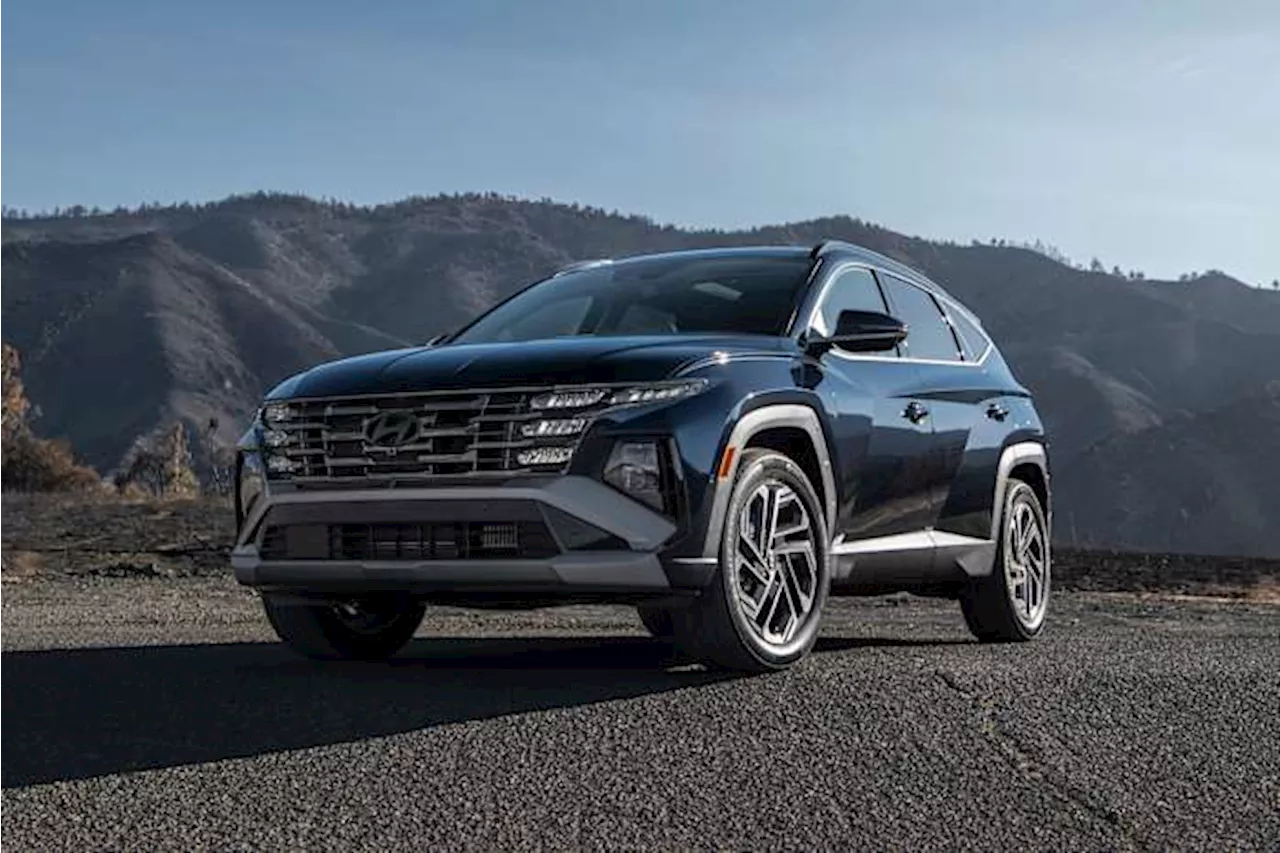 Edmunds' hybrid SUV test: 2025 Hyundai Tucson Hybrid vs 2025 Toyota RAV4 HybridIf you’re in the market for a hybrid SUV, don’t miss out on this comparison.
Read more »
 RAV4 Hybrid vs. Tucson Hybrid: Which Compact SUV Reigns Supreme?Edmunds pitted the popular Toyota RAV4 Hybrid against the Hyundai Tucson Hybrid in a head-to-head comparison to determine which compact SUV offers the best value and performance. The article explores their power, fuel economy, features, and driving experience.
Read more »
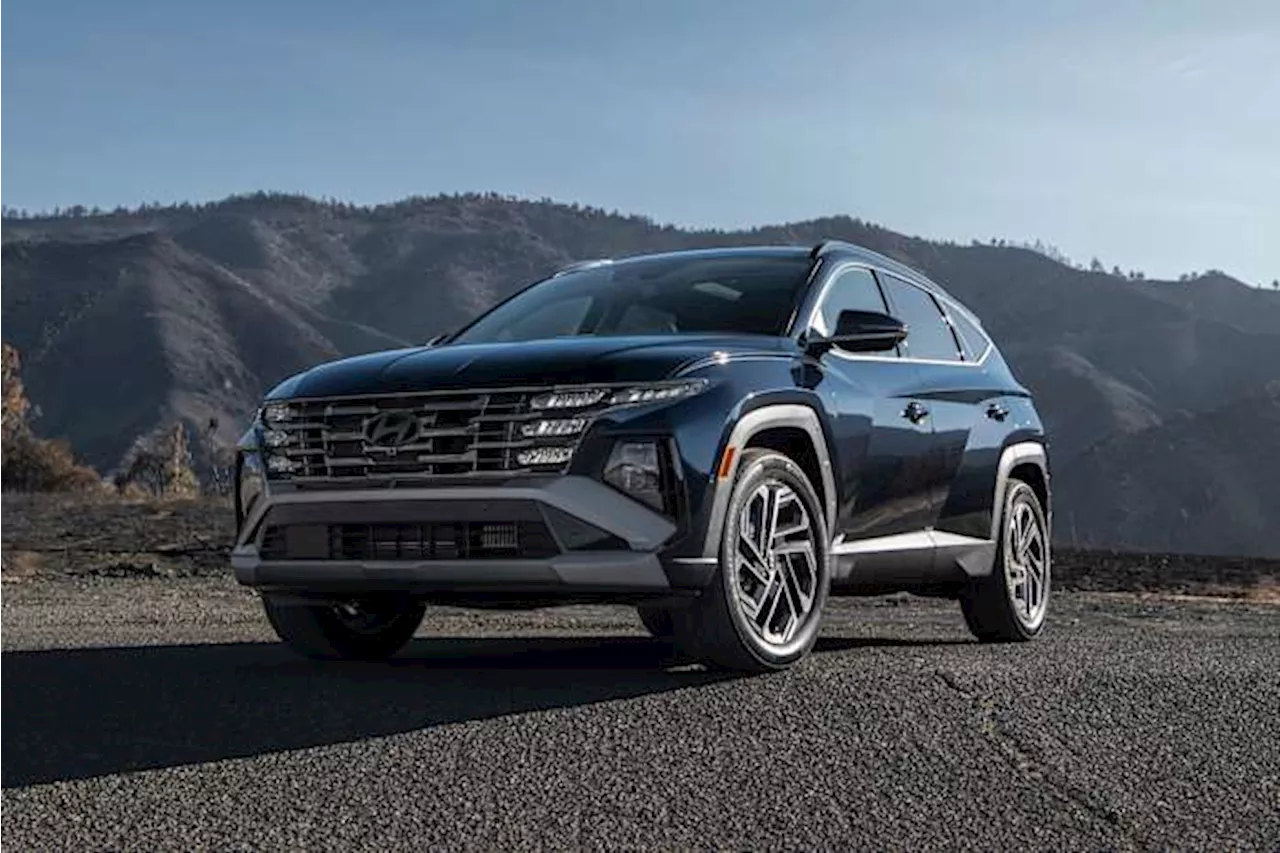 Toyota RAV4 Hybrid vs. Hyundai Tucson Hybrid: Which Compact Hybrid SUV Reigns Supreme?Edmunds compares the popular Toyota RAV4 Hybrid and the Hyundai Tucson Hybrid to determine the best compact hybrid SUV. The comparison covers performance, fuel economy, technology, features, and pricing.
Read more »
 Scientists develop realistic 'micro-gut' model to study the relationship between gut microbes and human diseasesIn a breakthrough for the advanced study of gut health, scientists have developed a 3D microscopic version of the human intestines condensed into a small chip about half the size of a five-cent coin.
Read more »
 Scientists Develop Bendable Antenna for Smart Clothing, Enabling 5G and Wi-Fi ConnectivityA groundbreaking antenna designed for integration into smart clothing has been developed, offering seamless 5G and Wi-Fi connectivity. This miniature, bendable antenna, capable of transmitting and receiving data from both 5G and Wi-Fi networks, opens up exciting possibilities for the future of wearable technology.
Read more »