
The U.S. Justice Department and a coalition of state attorneys general on Tuesday will begin a blockbuster antitrust trial in Washington, alleging that Alphabet's Google unlawfully abused its dominance in the search-engine market to maintain monopoly power.
Here is an explainer on the key issues in the case.The U.S. and its state allies contend Google unlawfully stifled competition by paying billions of dollars to Apple and other business partners to ensure its search engine would be the default on most phones and web browsers.
The government's lawsuit, filed in 2020 in federal court, alleges these deals were intended by Google to be "exclusionary," denying rivals access to search queries and clicks, and allowing Google to entrench its market dominance. Google has grabbed a 90% market share in search in the U.S. in recent years, according to government estimates. The government said the browser agreements — steering billions of web queries to Google every day — have resulted in less choice for consumers and less innovation.Google sees things much differently. The company, which maintains that it did not violate antitrust law, said in a January court filing that its browser agreements were "legitimate competition" and not "illicit exclusion."from developing their own search engines or stop companies such as Apple and Mozilla from promoting them, Google argues. Rather, the makers of phones and web browsers set Google search as their default because they wanted to deliver the "highest quality" experience for their customers, Google claimed in its January filing.WHAT DOES THE LAW SAY? It's generally not illegal for a business to make an arrangement with one customer that excludes others. Such exclusive deals indeed are common, and they don't garner much regulatory scrutiny when a company lacking market power can't meaningfully affect competition. But exclusive deals can violate antitrust law if a company is so big or powerful that it prevents rivals from entering the market, and can't prove that its curbs on industry competition are outweighed by a positive effect on consumers. The Justice Department has the burden to show that Google's business deals harmed competition for search. Google will have its own chance at the non-jury trial, after the government makes its case, to argue its deals benefit consumers.The U.S. and state allies are not seeking a monetary penalty, but rather an injunction barring Google from continuing the alleged anticompetitive practices. Such an order could have significant business implications for Google. For example, the government said in its lawsuit that the court could break up the company as a fix. More broadly, the Justice Department may argue that it wants to stop Google from leveraging its alleged search monopoly to making exclusive deals in newly emerging markets, including artificial intelligence. The case is widely seen as one of the biggest challenges to tech industry power since the DOJ sued Microsoft in 1998 over its market dominance for personal computers. The trial court in that case found Microsoft unlawfully tried to block rival browser Netscape Navigator. Microsoft later reached a settlement that left the company intact. The Google trial at the U.S. District Court for the District of Columbia is expected to last about 10 weeks. The judge would not be expected to rule until sometime in 2024.U.S. District Judge Amit Mehta was appointed to the bench in 2014 by then- President Barack Obama after a career as a private lawyer in Washington. He has overseen several major antitrust disputes. In 2015, Mehta blocked Sysco Corp's $3.5 billion merger with U.S. Foods. Mehta recently presided over the trial of Peter Navarro, the former Donald Trump adviser who was convicted on Sept. 7 of contempt of Congress. Mehta in May sentenced Oath Keepers founder Stewart Rhodes to 18 years in prison for his role in the Jan. 6, 2021, assault on the U.S. Capitol.
United States Latest News, United States Headlines
Similar News:You can also read news stories similar to this one that we have collected from other news sources.
 I Watched the Animated Titanic Musical So You Don’t Have ToWhy oh why does this movie exist?
Read more »
 Google’s Antitrust Trial, The Technology Oligarchy & Why None Of It MattersThe results of the trial will be a settlement that requires Google to make it easier to switch search engines – even though it’s pretty easy to do so today.
Read more »
 Explainer: Inside North Korean leader Kim Jong Un's armoured trainNorth Korean leader Kim Jong Un used a dark green train to travel to Russia, state media showed on Tuesday, relying on a slow but specialised form of transportation that the reclusive country's leaders have used for decades.
Read more »
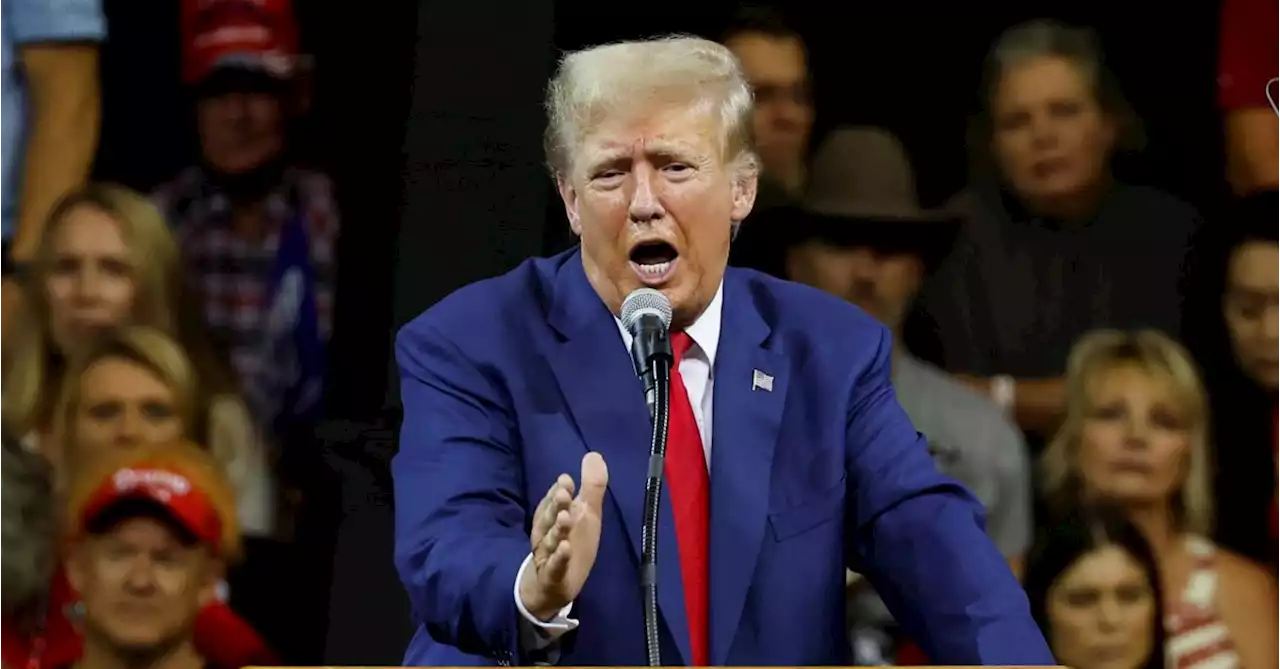 Explainer: Can Trump be disqualified from the presidency over Jan. 6?Former President Donald Trump is barred from returning to the White House, say some opponents who argue his role in the Jan. 6, 2021, Capitol attack amounts to supporting an 'insurrection' as defined by the 14th Amendment of the U.S. Constitution.
Read more »
 Opening arguments in US v. Google just ended! Only ten weeks left to go.I’ve just finished lunch after the Department of Justice, a group of state attorneys general, and Google made their opening arguments in today’s antitrust trial. The Department of Justice wants Judge Amit Mehta to focus on “what Google did” — which, in its evaluation, is sign a bunch of restrictive Google Search exclusivity agreements with Apple, Mozilla, and Android manufacturers. Google is arguing that the whole trial is a gift to Microsoft, which (again, in its evaluation) has dismally failed to compete with Google on Search. There’s no public feed after opening statements, but I’ll be back in court soon to watch the Department of Justice question Google’s chief economist Hal Varian about default search settings. Oh, and there’s a guy in a fake mustache and monocle wandering the halls.
Read more »