
A new study by USC scientists reveals that the Earth's inner core, previously thought to be a solid sphere, is actually undergoing structural transformation. The edges of the inner core are softer than previously realized and are changing shape as they press against the liquid iron and nickel in the outer core. The molten outer core is believed to be deforming the shape of the inner core, pushing it a kilometer or two in areas where they rub together.
A new study from USC scientists reveals the Earth ’s inner core is undergoing structural transformation. LOS ANGELES — USC scientists have made a groundbreaking discovery about the nature of the Earth ’s enigmatic inner core, revealing for the first time that this 1,500-mile-wide ball of iron and nickel is changing.
The planet’s inner core was previously thought of as a hard, solid sphere. But a new study has found that its edges are softer than realized and actually changing shape as they press against the liquid iron and nickel in Earth’s outer core. “The molten outer core is widely known to be turbulent, but its turbulence had not been observed to disrupt its neighbor the inner core on a human timescale,” said USC Earth Sciences professor John Vidale, who led the study. “What we’re observing in this study for the first time is likely the outer core disturbing the inner core.” Vidale said it’s likely the outer core is deforming the shape of the inner core, pushing it a kilometer or two in areas where they rub together with force. These findings were published Monday in a study conducted alongside researchers from the University of Chinese Academy of Sciences, Cornell University and the University of Utah. When his team members embarked on their research, they did not expect to document structural changes to the Earth’s inner core. Instead,they were focused on learning more about the slowing of its rotation. Previous research has found that the rotation of the inner core is slowing down relative to the rotation of the external crust, which may cause minute changes in Earth’s rotation and subtly affect the length of a day. Although these time changes are only estimated to be a matter of milliseconds a year, they can accumulate over eons. Vidale said he was busy studying graphs that record ground vibrations caused by seismic waves when one data set “curiously stood out from the rest.”“Later on, I’d realize I was staring at evidence the inner core is not solid,” he added. His team was studying seismic data from 121 repeating earthquakes at 42 locations near Antarctica’s South Sandwich Islands that occurred between 1991 and 2024. Repeating earthquakes are quakes with the same magnitude and location. If a pair of repeating earthquakes happen while the Earth’s inner core is at the same location in its rotation, scientists would assume that the seismic data recorded would be the same in both earthquakes. However, the curious data set that Vidale came across defied this logic, prompting his team to realize that the differences they observed were likely caused by changes in the shape of the inner core. “We see these subtle differences,” he said. “And if they’re not the inner core turning, the most likely possibility is there’s some deformation in the soft outermost inner core.” The scientific implications of this revelation are not yet clear, but Vidale hopes it can help researchers untangle further mysteries related to the inner core and lead to better understanding of Earth’s thermal and magnetic fields. “We hope it has broader implications,” he said. “The reason we do this is we like to solve riddles, and the stranger and harder the riddle that we can solve, the happier we are.”Federal investigators to look at the role weather data played in Bering Air crash that killed 10Paul Sullivan: White Sox return to Camelback Ranch in the age-old tale of the haves and have-nots ‘It’s just really a family affair’: Dimond’s Marek Hajdukovich relishes opportunity to compete alongside those closest to him
INNER CORE EARTH TRANSFORMATIONS GEOPHYSICS SEISMIC
United States Latest News, United States Headlines
Similar News:You can also read news stories similar to this one that we have collected from other news sources.
 Earth's Inner Core May Be Changing Shape and RotationNew research suggests that the Earth's inner core may be undergoing both shape and rotational changes. Analyzing seismic waves from repeating earthquakes, scientists discovered differences in the waves passing through shallow regions of the inner core, indicating possible shape alterations. This, combined with previous findings of a slowed rotation rate, provides a deeper understanding of the complex dynamics occurring deep within our planet.
Read more »
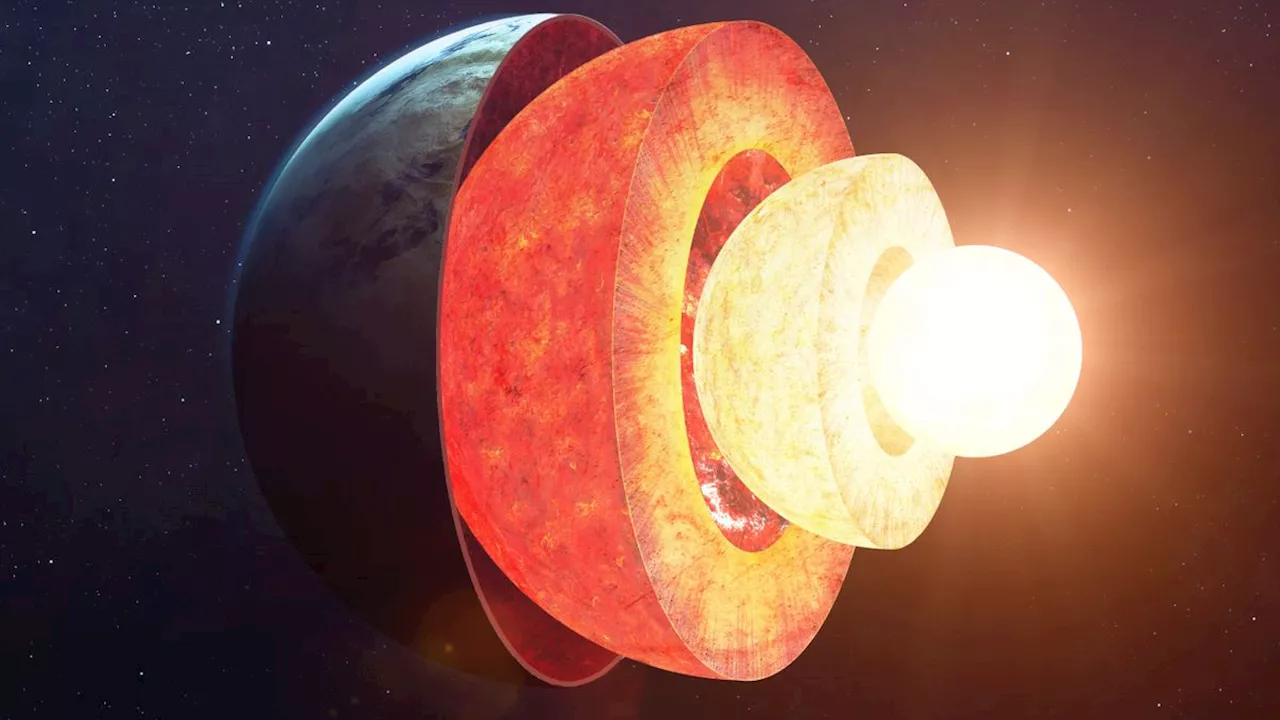 Earth's Inner Core May Be Shape-ShiftingNew research suggests that the surface of Earth's inner core may be changing shape over short periods. Scientists studied earthquake waves and found subtle differences in their patterns, indicating a dynamic outer layer of the inner core.
Read more »
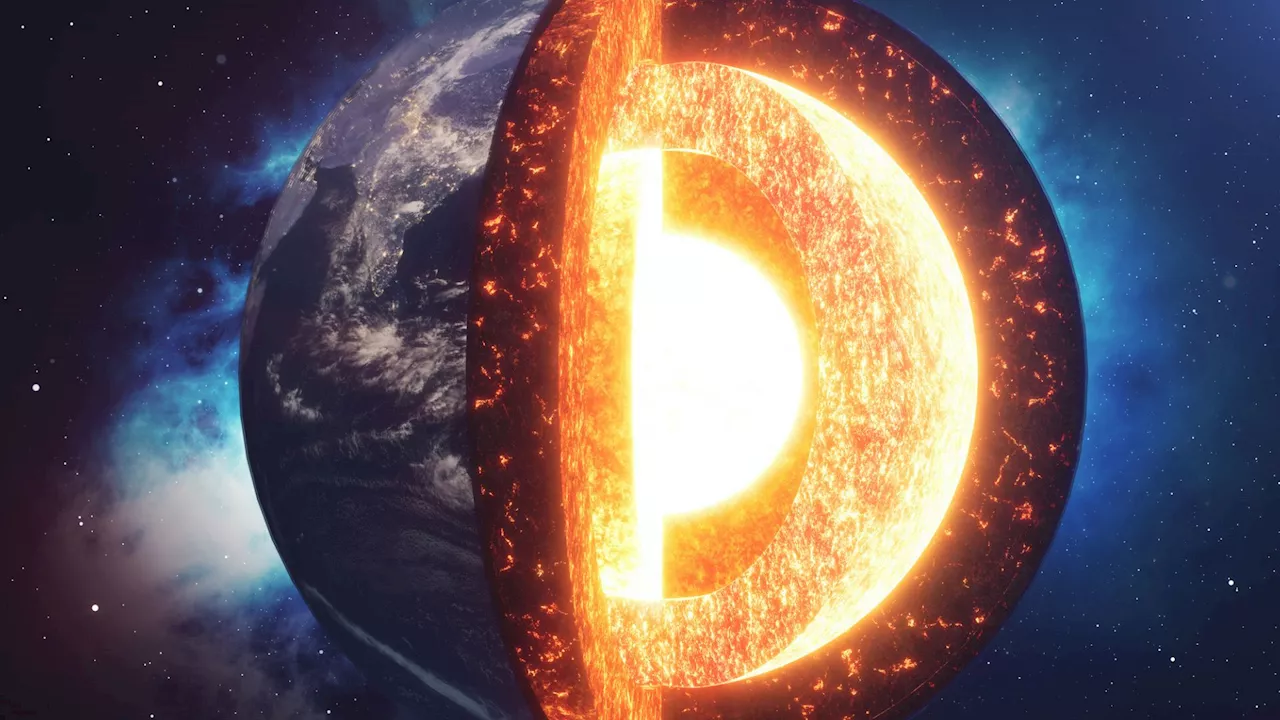 Earth's Inner Core Is Changing Shape, Study FindsA groundbreaking study reveals that the Earth's inner core is not as solid as previously thought and its surface is undergoing structural changes likely caused by interactions with the turbulent molten outer core.
Read more »
 Earth's Inner Core May Be Changing ShapeNew research suggests that the Earth's inner core, a solid sphere at the center of our planet, may not be static as previously thought. It appears to change shape in addition to its known fluctuations in rotation speed.
Read more »
 Earth's Inner Core Is Changing Shape, Scientists DiscoverFor the first time, scientists have discovered that Earth's inner core, previously thought to be a solid sphere, is actually changing shape. A new study reveals that the edges of the inner core, composed of iron and nickel, are softer than previously believed and are being deformed by the turbulent liquid outer core. This finding, published in a study led by USC Earth Sciences professor John Vidale, challenges previous understanding of the Earth's inner core and opens up new avenues for research.
Read more »
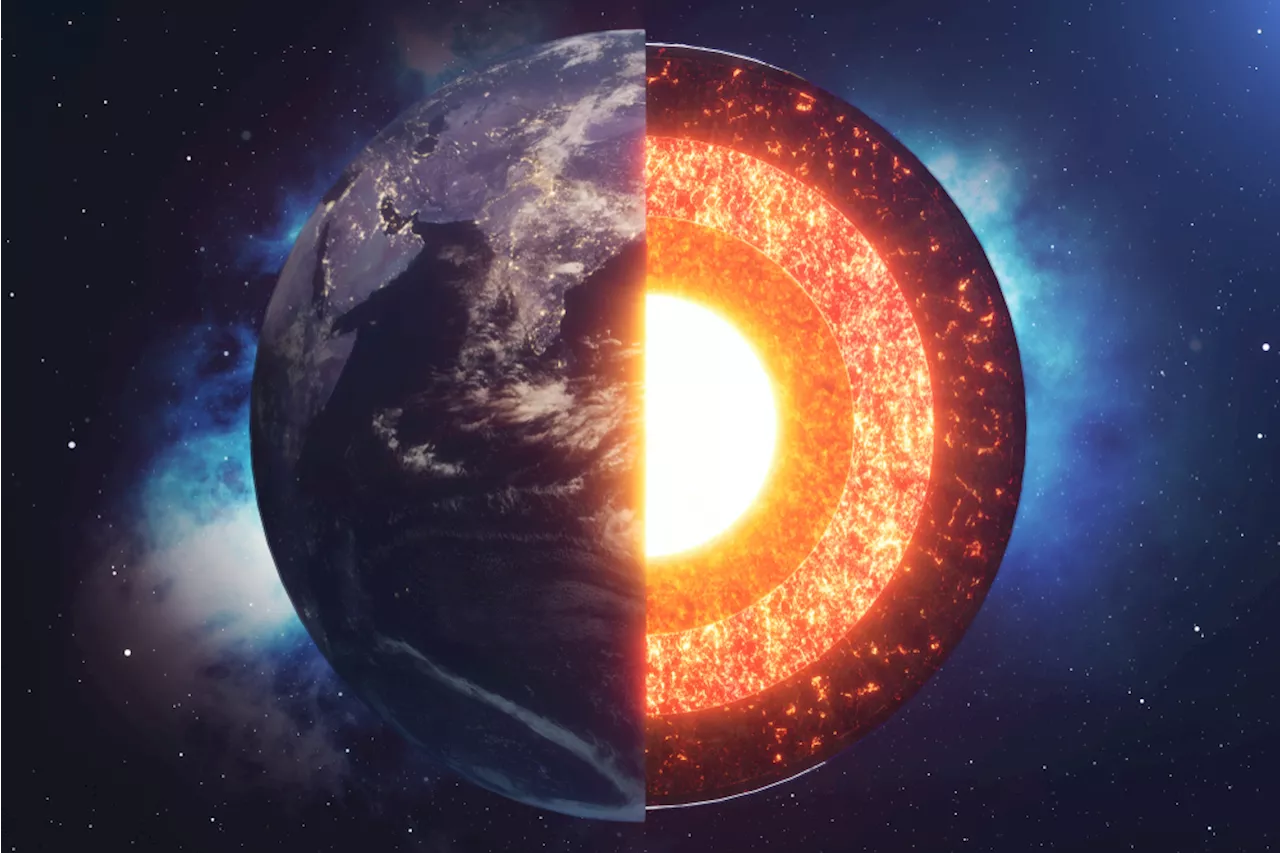 Earth's Inner Core Is Not Solid and Is Slowing DownA recent study revealed that Earth's inner core is slowing down and is not entirely solid. Scientists from the University of Southern California (USC) analyzed data from earthquakes and identified unexpected changes in the core's composition. They suggest that interactions with the molten outer core and gravitational forces from the mantle contribute to the slowing of the inner core. Further analysis revealed viscous changes near the inner-core boundary, likely caused by interactions between the inner and outer core due to variations in mantle density and convection currents.
Read more »