
The most important stories for you to know today
Some Southern California university employees who support student diversity programs want a stronger stand from campus leaders against attacks by the Trump administration.from new leaders at the U.S. Department of Education sent shockwaves through K-12 and higher education institutions.
The department gave schools until the end of February to stop using race to admit students or for any other consideration, including any kind of targeted programs, including graduation services or dormitories.Some Southern California college educators are waiting for leaders of their campuses to give them clear direction as to whether diversity programs and efforts will be curtailed or shut down — or whether the institutions will resist the Trump administration’s directions in court.Diversity programs such as racial climate surveys, and cultural centers that target populations of students, help students graduate, their supporters say.A letter earlier this month from new U.S. Department of Education leaders sent shockwaves through K-12 and higher education institutions. In a, the department directed schools to stop using race to admit students or for any other consideration, including scholarships, housing, and"all other aspects of student, academic, and campus life."In the face of uncertainty, some Southern California college educators are waiting for leaders of their campuses to give them clear direction as to whether diversity programs and efforts will be curtailed or shut down — or whether the institutions will resist the Trump administration’s directions in court. “There are a group of us across institutions, especially in California, who are saying it's time to actually double down on doing diversity, equity and inclusion work,” said Liane Hypolite, a professor of educational leadership at Cal Poly Pomona. “This isn't the time to just comply … out of fear."“These institutions’ embrace of pervasive and repugnant race-based preferences and other forms of racial discrimination have emanated throughout every facet of academia” and led to discrimination, including of white and Asian students, the department said.Those surveys can be taken by students or employees to “assess what's going on, see how everybody's feeling," she said."And then based upon that, we'll, you know, write up a summary and give it to the leadership and let them know, this is what's going on in your institution.” The goal is to improve inclusion of people of different races, ethnicities, religious, sex, and gender in schools and the workplace. Graduating students take their seats at the Fresno State Chicano/Latino Commencement Celebration in the Save Mart Center in Fresno on May 18, 2024.“Everyone in academia is taking this letter very seriously,” DeCuir-Gunby said. “We are looking to leadership to help us to better understand their interpretations of the letter.”The Department of Education letter says “many American schools and universities even encourage segregation by race at graduation ceremonies and in dormitories and other facilities.” It’s calling for those policies to stop. end up being these spaces where students can find refuge that they often cannot find on the rest of their college campus.“ end up being these spaces where students can find refuge that they often cannot find on the rest of their college campus,” said Hypolite of Cal Poly Pomona. “They are places where students get connected to services. They actually welcome in, for example, culturally relevant therapists that might work in the counseling center, but students don't feel comfortable going there." That helps students' social and emotional well-being, she said, which raises the likelihood that they’ll stay enrolled in college and earn their degrees. “I just haven't seen that kind of really solid communication saying, essentially, ‘We stand with our most marginalized students right now,’ which is what our students need to hear,” Hypolite said.about a week before the U.S. Department of Education letter that the Trump administration’s executive orders would not change the school's commitment to students. “I write to assure you that, in this moment, the CSU will do what all great institutions — and great people — do in times of uncertainty and change. We will turn to and uphold our core values. We will honor our purpose. We will fulfill our mission,” García wrote. The California Community College chancellor’s office did not specify how it will respond to President Trump’s directives. “We are encouraging college leaders to continue their critical work in alignment with state and federal laws, regulations, and our shared goal of expanding educational opportunities, strengthening student pathways, and supporting workforce development to meet California’s economic needs,” said Melissa Villarin, a spokesperson for the California Community Colleges chancellor's office.is to offer a “biblically centered education, scholarship and service — equipping men and women in mind and character to impact the world for the Lord Jesus Christ.”We asked local faculty for examples of reading to better understand how diversity, equity, and inclusion programs developed, and why. Here are some of the resources they shared.Biola’s Office of Hispanic Services is within the university’s Division of Diversity and Inclusion. The office seeks “to create an environment at Biola where Hispanic students feel welcomed, celebrated and supported.”“Biola is reviewing how this letter's requirements will affect the institution…” said university spokesperson Sarah Dougher. “Biola is still determining what exactly on campus will be affected.” "There's a fine line between removing programs that are considered to be discriminatory by race and removing programs that speak to a cultural or ethnicity support for students," Cynthia Jackson Hammond, president of the Council for Higher Education Accreditation, told NPR The California Department of Education and the State Board of Education issued a joint statement Friday saying that the law:"Executive orders and memos cannot modify or override statutory requirements or regulations or unilaterally impose new terms on existing agreements." But they did suggest that colleges and universities"consult legal counsel regarding the impact of any potential federal actions." Leaders of the University of California and California State University systems have not announced whether they will comply with or challenge the Trump administration directives. Together, those universities enroll more than 750,000 students.“As this type of action is unprecedented, we are consulting with the California Attorney General and higher education partners across the country to better understand the statewide impact of this letter,” said CSU spokesperson Amy Bentley-Smith in an email.Thursday that the university's mission and values have not changed, UC leaders have not specified how they will respond to the Trump administration's directives. “The Dear Colleague letter issued by the Department of Education’s Office of Civil Rights provides guidance on the Department's interpretation of existing anti-discrimination laws and does not name any specific institution,” said UC spokesperson Omar Rodriguez. “It indicates how OCR intends to enforce these legal requirements,” he said via email. He also noted that state law already restricts the use of race in college settings. “Given the UC’s compliance with Prop 209, we do not use race-based preferences in our practices.” The stakes are high. How colleges and universities react to this order could shape generations to come. “There's no other entity that is more influential in shaping American society and arguably the global society than the college and university,” said Eddie R. Cole, who researches the history of higher education at UCLA. “Nobody knows what to do and no one wants to do something preemptive."
United States Latest News, United States Headlines
Similar News:You can also read news stories similar to this one that we have collected from other news sources.
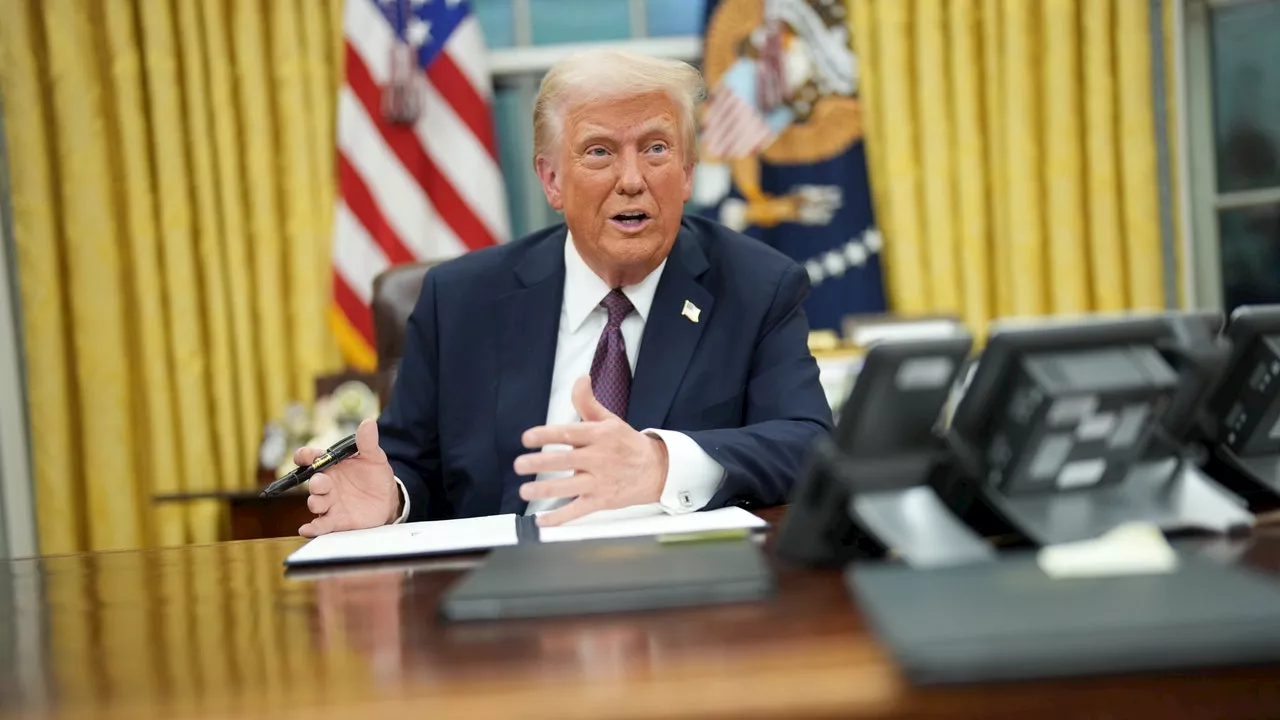 Trump's Anti-DEI Purge Sweeps Across Corporate AmericaFollowing a wave of controversial executive orders, the Trump administration is embarking on a purge of diversity, equity, and inclusion (DEI) programs across the federal government and beyond. Trump has labeled DEI initiatives as 'illegal and immoral discrimination,' echoing a broader right-wing backlash against such programs. This trend has seen numerous states consider anti-DEI laws, major companies like Ford and Boeing roll back their DEI efforts, and universities facing pressure to curtail their initiatives. Even some companies in Trump's immediate circle, like McDonald's and Walmart, have scaled back or ended their DEI programs, citing a shifting legal and political climate.
Read more »
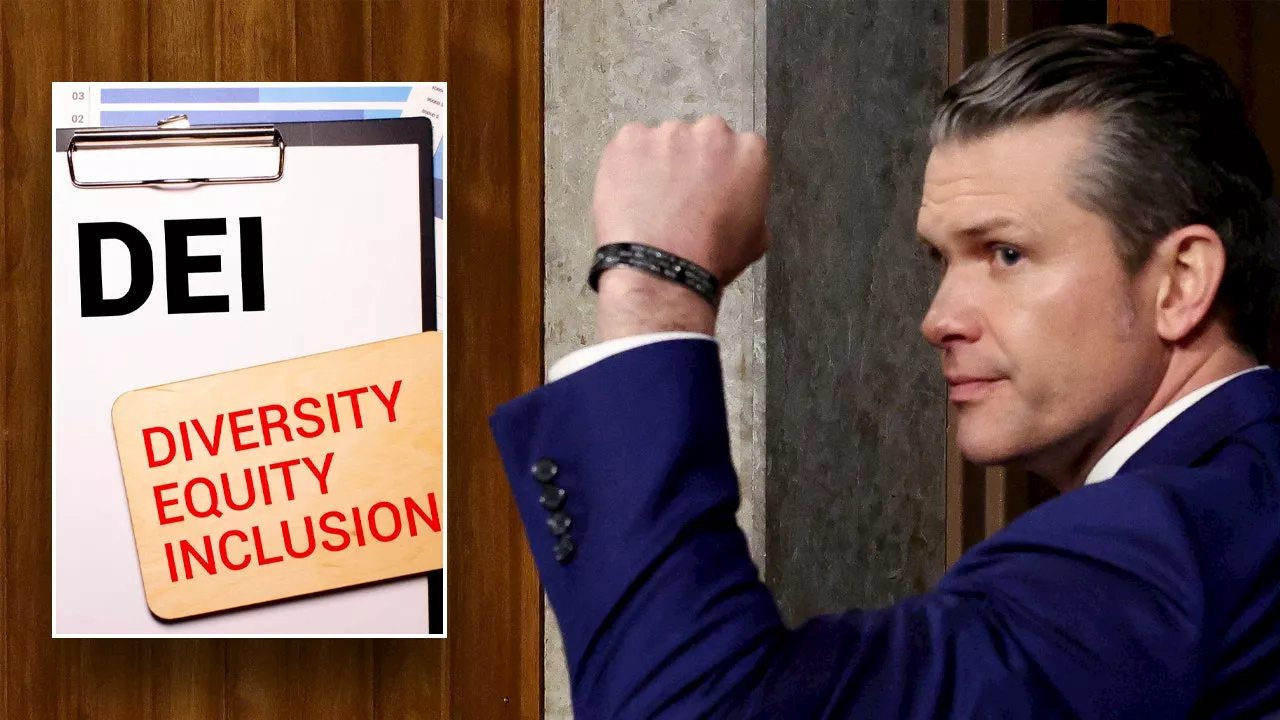 DoD Disbands DEI Programs Following Trump's Executive OrderThe Department of Defense (DoD) has disbanded all diversity, equity, and inclusion (DEI) programs, complying with President Donald Trump's executive order terminating federal DEI initiatives. Defense Secretary Pete Hegseth issued a directive for immediate compliance, stating that those who do not follow will no longer be employed by the DoD. This move echoes a broader federal push against DEI, with the Department of Government Efficiency (DOGE) canceling contracts related to DEI programs and the Office of Personnel Management (OPM) ordering all DEI offices to shut down by the end of the day Wednesday.
Read more »
 Trump's DEI Ban Sparks Debate Over Workplace Diversity and InclusionPresident Trump's executive order banning diversity, equity, and inclusion (DEI) programs across the U.S. government reignites the debate surrounding DEI's purpose and effectiveness. The order, criticized by DEI advocates as 'illegal and immoral', highlights contrasting views on whether DEI initiatives benefit workers and companies. The article explores the history of DEI, its various practices, arguments for and against its implementation, and the potential impact of the recent backlash on corporate inclusion policies.
Read more »
 The Quiet Death of DEI: Companies Subtly Retreat From Diversity EffortsDespite the initial fanfare surrounding diversity and inclusion (DEI) initiatives, many corporations are quietly scaling back their commitments. Companies like Target, Walmart, and Google have announced major rollbacks of their DEI programs, while others are subtly removing DEI-related language from their annual reports and communications. This shift comes amidst growing political and legal scrutiny of DEI efforts, with some companies fearing backlash from anti-DEI sentiments. Although some companies remain steadfast in their DEI commitments, the trend suggests a potential decline in corporate diversity initiatives.
Read more »
 Trump's Funding Freeze and DEI Push Threaten California's Small BusinessesPresident Trump's executive orders, including a federal funding freeze and anti-diversity initiatives, are causing uncertainty and potential harm to California's small businesses. The funding freeze, though temporarily halted by a court order, has already disrupted projects and raised anxieties among business owners. Experts warn that reduced access to capital and government programs could lead to fewer job opportunities, stifled growth, and a negative impact on communities. The article highlights the concerns of small business owners and advocates, emphasizing the crucial role small businesses play in California's economy.
Read more »
 Trump's Comments on Russia, DEI Programs, and California Politics Top AirTalkAirTalk discusses President Zelenskyy's criticism of Trump's comments on the Russia-Ukraine war, the impact of Trump's ultimatum to schools on DEI programs, the changing political landscape of the California Latino Legislative Caucus, and the potential effects of Trump's trade decisions on California agriculture. Additionally, the show explores the challenges facing Los Angeles' breakfast and brunch restaurants amid rising egg prices.
Read more »