
Caltech scientists convert CO2 into tough industrial plastics using a dual-loop system powered by renewable electricity.
What once choked the skies could soon shape the future of plastic production .In a breakthrough that edges carbon capture closer to circular economy goals, scientists at Caltech have developed a system that converts carbon dioxide from the air into durable, industrial-grade plastics.
The process uses renewable electricity to first transform CO₂ into simple building blocks like ethylene and carbon monoxide.Machines mimic natural photosynthesisThese compounds are then fed into a second catalytic loop, where they’re converted into polyketones, high-strength plastics known for their durability and thermal stability. These materials are used in everything from adhesives and car parts to sports equipment and industrial piping.“I think that is something that we, as a society, would be interested in. After all, in addition to being a greenhouse gas, carbon dioxide is an abundant and inexpensive feedstock,” says Theo Agapie, the John Stauffer Professor of Chemistry and the executive officer for chemistry at Caltech.“With our new work, we have taken a significant step in that direction.”This two-step approach mimics photosynthesis, but with machines instead of plants.Unlike earlier attempts that relied on fossil-derived ethylene, the new method uses sustainably sourced carbon dioxide, water, and electricity. The result is a plastic-making process with the potential to slash emissions and reduce dependence on petroleum-based feedstocks.“We have shown that one can use CO2 to make a material that is useful, without using plants as a mediator,” says lead author Max Zhelyabovskiy.While the system is still at the lab scale, it’s already producing higher concentrations of the desired molecules than most previous setups. It produces 11 percent ethylene and 14 percent carbon monoxide, making downstream production more viable.“It has been difficult, at least on the lab scale, to obtain high concentration, high purity streams of reagents that can then be converted into something like a plastic or a fuel,” Zhelyabovskiy said.But that is not the only challenge. Connecting the CO2 reduction system with the catalytic process that follows is far from simple, he said.“Most work in the literature focuses on either the first or the second step, separately and with pure feedstocks. Not both.”Building plastic in loopsRecognizing the different conditions each step requires, the Caltech team designed a system with two separate loops to handle each reaction efficiently.The first loop begins with gas diffusion electrode cells made from hydrophobic polymers coated with a thin layer of copper. Carbon dioxide is pumped into a gas cylinder connected to these cells, while a potassium bicarbonate electrolyte flows through the system. A voltage is applied to trigger the electrochemical reaction. By cycling the gases through this setup multiple times, the researchers were able to generate relatively high concentrations of ethylene and carbon monoxide.After about an hour, these gases are transferred to the second loop—a sealed reactor where they bubble through a solution containing a palladium copolymerization catalyst.Much like a fish tank bubbler, this step saturates the solution with the necessary gases. The palladium catalyst—known as a co-polymerization catalyst—then drives the formation of polyketones, a strong and durable plastic made from the two monomers.Catalysts are usually tested in ideal lab conditions that don’t reflect the realities of electrochemical CO2 reduction. In practice, the process introduces various contaminants, especially water vapor, which is essential for CO2 conversion but known to degrade many polymerization catalysts.In their new study, the researchers showed that the palladium catalyst remains effective even under these less-than-perfect conditions. It tolerates not just water vapor but also hydrogen, residual CO2, alcohol vapors, and other chemical byproducts generated during the reaction.While the system is promising, Zhelyabovskiy notes it still needs refinement. The polyketones produced do not yet match the molecular weights achieved through conventional methods.“By demonstrating that it’s possible, we might increase the amount of interest in this field, and maybe people can build upon this principle,” he says.Agapie adds that for the process to be truly sustainable and commercially viable, it must rely on low-cost, renewable electricity that can compete with petroleum-based production.The study appears in Angewandte Chemie International Edition.
Caltech Carbon Capture Carbon Dioxide Circular Economy CO2 Conversion Plastic Production Polyketones Renewable Energy Sustainable Plastics
United States Latest News, United States Headlines
Similar News:You can also read news stories similar to this one that we have collected from other news sources.
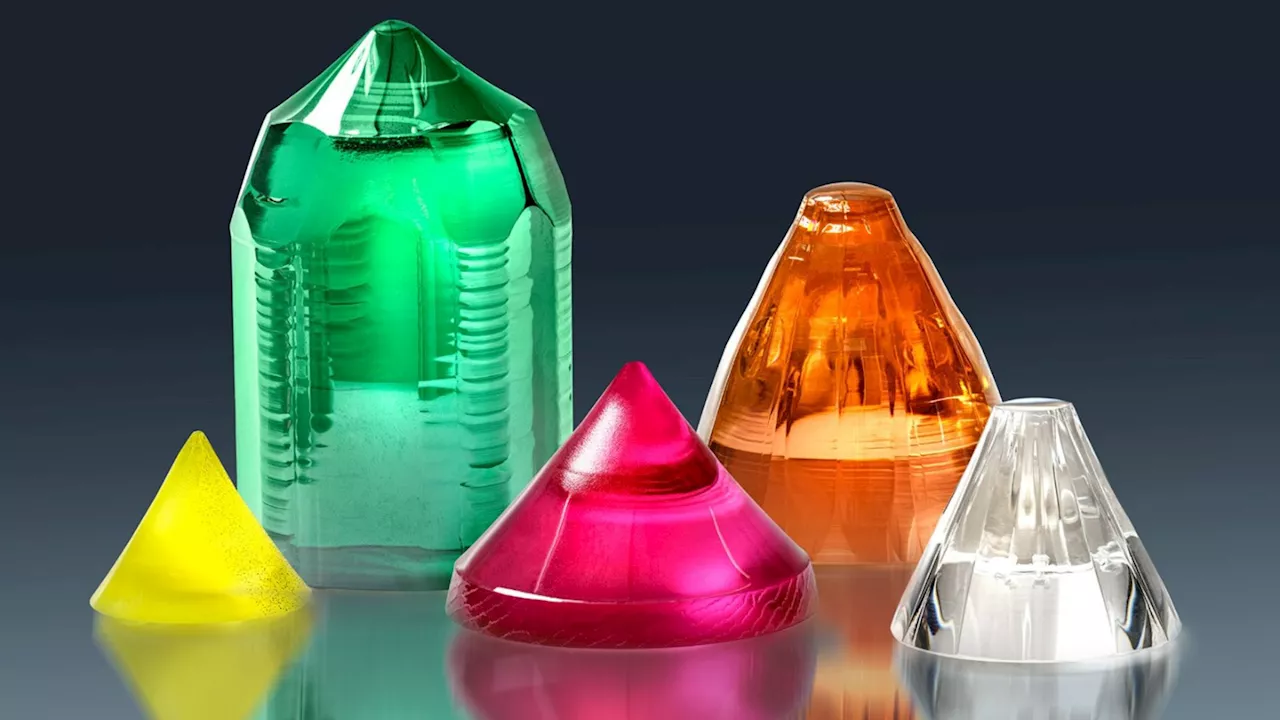 Breakthrough laser crystals power quantum computing and imaging without rare earthsAs China clamps down on rare earths, Germany backs Fraunhofer's push to build lasers without critical imports.
Read more »
 New 36% efficient micro-CPV breakthrough from Germany boosts solar power, slashes costsThis micro-concentrator photovoltaic (micro-CPV) module breakthrough is set to revolutionize sustainable energy with minimal footprint and reduced costs.
Read more »
 Simple acid tweak supercharges carbon capture tech, extends CO2 device life 50-foldBreakthrough in CO2 conversion keeps carbon capture devices running salt-free, without expensive redesigns.
Read more »
 Breakthrough system turns fossil fuels into plastics and medicine using only lightScientists have developed a light-powered method to transform fossil fuels at room temperature, slashing energy use and industrial emissions.
Read more »
 6-second solution: US breakthrough turns polluted water into 92% pure fertilizer, fuelThis innovation holds the potential to create a future with cleaner water and reduced pollution, while also providing sustainable fuels.
Read more »
 Quantum computer’s energy thirst tamed by breakthrough 90% power-cut amplifierResearchers at Chalmers University unveil a groundbreaking amplifier that significantly reduces power consumption.
Read more »