
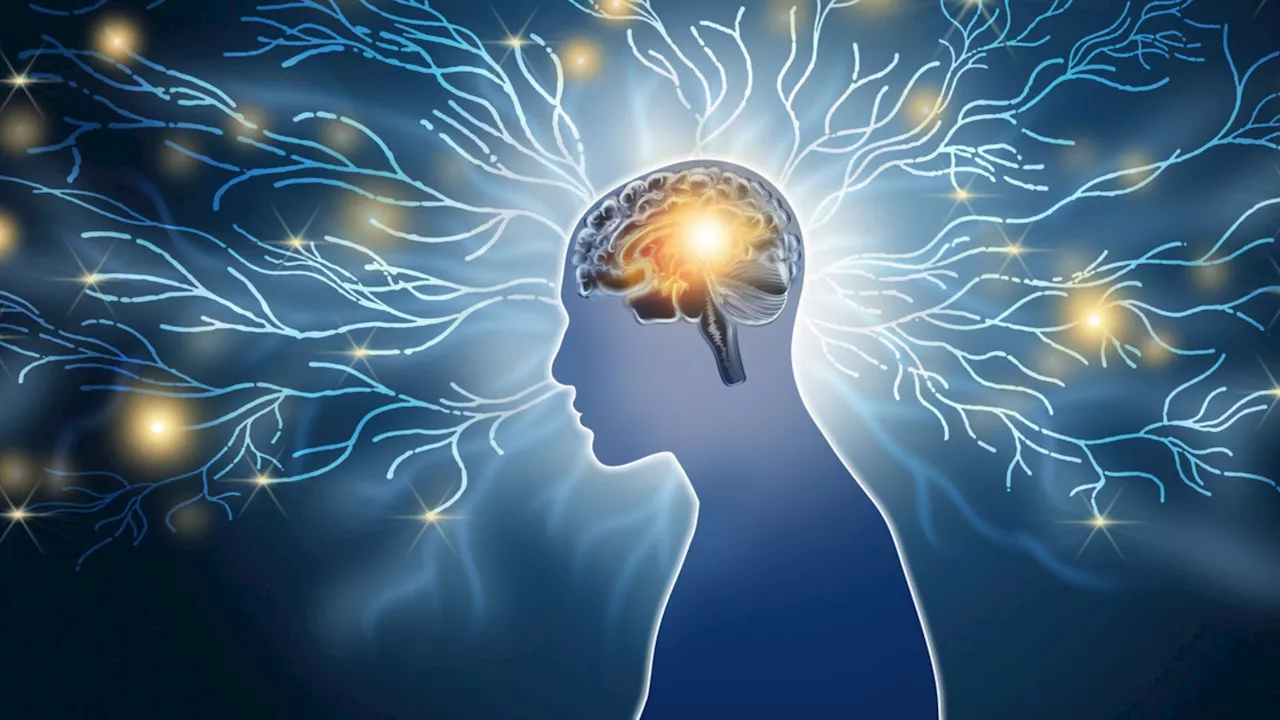
A new study reveals a common brain circuit associated with creativity, suggesting that damage to this circuit may lead to increased or decreased creativity in individuals with brain injuries or neurodegenerative diseases.
Researchers analyzed data from 857 patients across 36 fMRI brain imaging studies and mapped a common brain circuit for creativity. A new study led by researchers at Mass General Brigham suggests that different brain regions activated by creative tasks are part of one common brain circuit.
By evaluating data from 857 participants across 36 fMRI studies, researchers identified a brain circuit for creativity and found people with brain injuries or neurodegenerative diseases that affect this circuit may have increased creativity. Their results are published in"We wanted to answer the questions, 'What brain regions are key for human creativity and how does this relate to the effects of brain injuries?'" said co-senior author Isaiah Kletenik, MD, a neurologist in the Center for Brain Circuit Therapeutics at Brigham and Women's Hospital, a founding member of the Mass General Brigham healthcare system. The study was led by Julian Kutsche, MA, first author on the paper, who completed a research fellowship at the Center for Brain Circuit Therapeutics, and in collaboration with researchers at the Center for Brain Circuit Therapeutics, Boston Children's Hospital, University College London, University of Georgia, Max Planck Institute for Human Cognitive and Brain Sciences and Charité Berlin. "We found that many complex human behaviors such as creativity don't map to a specific brain region but do map to specific brain circuits," said co-senior author Michael D. Fox, MD, PhD, who founded and leads the Center for Brain Circuit Therapeutics, and helped develop the techniques of coordinate and lesion network mapping employed in this work. The team first looked at fMRI data to identify brain regions activated by different creative activities such as drawing, creative writing and making music. They then assessed data from patients who had changes in creativity due to brain injury and neurodegenerative diseases. "Some people with neurologic diseases experience a new onset of creative behavior and show specific patterns of damage that align with our creativity circuit," Kutsche said. Kutsche said the most interesting finding to him is that different brain regions activated by creative tasks were all negatively connected to the right frontal pole. This part of your brain, Kutsche says, is important for monitoring and rule-based behaviors. Kletenik said reduced activity in the right frontal pole could align with the hypothesis that creativity requires shutting down a function. For example, creativity may depend on inhibiting self-censoring assessments that could then allow free association and idea generation to flow more freely."To be creative you may have to turn off your inner critic to allow yourself to find new directions and even make mistakes." "These findings could help explain how some neurodegenerative diseases might lead to decreases in creativity while others may show a paradoxical increase in creativity," Kletenik said."It could also potentially add a pathway for brain stimulation to increase human creativity." Kletenik said it is important to note that these findings do not represent the entire neural circuitry involved in creativity, adding that many different parts of the brain are involved in completing different creative tasks. "We are learning more about neurodiversity and how brain changes that are considered pathological may improve function in some ways," he said."These findings help us better understand how the circuitry of our brains may influence and unleash creativity."Julian Kutsche, Joseph J. Taylor, Michael G. Erkkinen, Haya Akkad, Sanaz Khosravani, William Drew, Anna Abraham, Derek V. M. Ott, Juliana Wall, Alexander Li Cohen, Andreas Horn, Wolf-Julian Neumann, Isaiah Kletenik, Michael D. Fox.Since the development of functional magnetic resonance imaging in the 1990s, the reliance on neuroimaging has skyrocketed as researchers investigate how fMRI data from the brain at rest, and ... Mathematical research is aiding in the analysis of fMRI data. fMRI is the preeminent class of signals collected from the brain in vivo and is irreplaceable in the study of brain dysfunction in many ... Using datasets from neurosurgical patients and those with brain lesions, researchers mapped lesion locations associated with spiritual and religious belief to a specific human brain ... Researchers have developed a method to combine three brain-imaging techniques to more precisely capture the timing and location of brain responses to a stimulus. Their study is the first to combine ...Working Dogs Take a Day to Adjust to Daylight Savings Time, but Pets Are More Flexible
CREATIVITY BRAIN CIRCUIT Fmri NEUROLOGY BRAIN INJURY
United States Latest News, United States Headlines
Similar News:You can also read news stories similar to this one that we have collected from other news sources.
 Bacteria Found Thriving in Fish Brains, Raising Questions About Human MicrobiomeRecent research has provided compelling evidence that bacteria can exist in the brains of healthy vertebrates, specifically fish. This challenges the long-held belief that the brain is protected from outside microbial invasion by the blood-brain barrier. The study, published in Science Advances, found diverse communities of bacteria in the brains of salmon and trout, with some species showing adaptations to survive in brain tissue and cross the blood-brain barrier. While fish physiology differs from humans, this discovery raises intriguing possibilities about the existence of a human brain microbiome and its potential impact on neurobiology.
Read more »
 Targeting a Specific Brain Circuit to Alleviate Anxiety with No Side EffectsWeill Cornell Medicine researchers identify a brain circuit whose inhibition reduces anxiety in mice without side effects, offering a new target for anxiety treatment.
Read more »
 Brain hack: Scientists find ‘off switch’ for anxiety without side effectsCornell researchers have identified a specific brain circuit that could lead to anxiety treatments without cognitive side effects.
Read more »
 Microplastics and Nanoplastics Found in High Concentrations in Human Brain TissueA new study published in February 2023 reveals the alarming presence of microplastics and nanoplastics in human brain tissue, raising concerns about the potential health implications of these tiny plastic particles. Researchers found significantly higher concentrations of MNPs in brain tissue compared to other organs, challenging the notion that the blood-brain barrier effectively protects the brain from these pollutants. The study also highlights the unexpected shapes and types of plastic found in the brain, suggesting that the long-term effects of microplastic exposure remain largely unknown.
Read more »
 Brain Circuit Dysfunction in the Hippocampus Linked to PsychosisA new study provides the first direct evidence that lesions causing psychosis map to a common brain circuit centered on the hippocampus, particularly the posterior subiculum. Researchers identified 153 cases of secondary psychosis due to brain lesions, and found that these lesions mapped to a specific functional brain circuit. This circuit was consistent across different psychotic symptoms, suggesting a shared neural substrate for psychosis.
Read more »
 How a novel brain circuit drives sugar cravings after a satisfying meal.A novel brain circuit that drives craving for sweets after meals, explaining why we always have room for dessert. Blocking it may help reduce sugar intake and overeating.
Read more »