
For the first time in 125 years, a Black woman publisher has received a prestigious award, marking a significant milestone in journalism. The honoree, whose father also served as a publisher, emphasizes the importance of providing no-paywall journalism to the Black community, the largest Black and Brown community in the country. This achievement coincides with Black History Month, which originated as Negro History Week in 1926, founded by the renowned scholar and educator Carter G. Woodson.
‘ Publisher and my father, Wilbert “Bill” Tatum, before me. We’ve been reporting the news of the day from a Black perspective since 1909 –, the first time in the 125 years of this award it has been given to a Black woman publisher – We are proud to provide no paywall journalism for the Black community we serve, the largest Black and Brown community in the country.
‘ Publisher and my father, Wilbert “Bill” Tatum, before me. We’ve been reporting the news of the day from a Black perspective since 1909 –, the first time in the 125 years of this award it has been given to a Black woman publisher –February is Black History Month. The observance began as Negro History Week and was started in 1926 by a gifted scholar and educator named Carter Godwin Woodson as a way to focus on the often-untold history and achievements of people of African descent.' Publisher and my father, Wilbert"Bill" Tatum, before me. We've been reporting the news of the day from a Black perspective since 1909 -Up until the dawn of the 20th century, it was the untrue yet widely held belief among both whites and Blacks that African-Americans had no history of any significance of importance beyond slavery, even though there was concrete evidence that people of African descent had made significant contributions to world history on every level–socially, politically and economically. But these contributions would remain largely unknown, unsung and unnoticed until the diligent work of Woodson. This scholar and champion of African history had humble beginnings. Woodson was born in New Canton, Va., on Dec. 19, 1875. His parents, James and Eliza Riddle Woodson, were former slaves. His family was large and poor, making it impossible for him to attend school. Young Carter’s days were spent working on the family farm and, later, in the Kentucky coal mines, but nothing would stop him from learning. By age 17, he had taught himself the fundamentals of basic school subjects. By age 20, he began his formal education. But the late start didn’t stop Woodson from excelling. The brilliant student graduated from high school in less than two years. Soon after, Woodson began teaching high school and writing articles. He attended colleges in West Virginia, Kentucky, Pennsylvania and Illinois, earning a Bachelor of Arts from the University of Chicago in 1907 and a master’s degree in 1908. He earned his Ph.D. from Harvard in 1912, the second Black after W.E.B. DuBois to do so. He traveled to Europe and Asia and attended the Sorbonne in France. Woodson began teaching in the Washington, D.C., public school system and at Howard University. He realized that African-Americans had a rich, untold history that they should be proud of and that all Americans should understand. He believed that education and knowledge of one’s history was the key to success. With that, he dedicated his career to teaching other scholars about the importance of Black history. “History,” he said, “was not the mere gathering of facts. The object of historical study is to arrive at a reasonable interpretation of the facts. It must include some description of the social conditions of the period being studied. African-Americans had suffered because their true history was not being told correctly.” Woodson worked with the Washington, D.C., branch of the NAACP, but was not satisfied with the way things were going. In 1915, he wrote a letter to Chairman Archibald Grimke in which he made two proposals. His first suggestion was that the branch should have an office where people could come and report concerns and have those issues dealt with. His second proposal was that a canvasser be assigned to solicit members and subscribers for the Crisis, which was the NAACP’s magazine, edited by DuBois. DuBois added that the association should not support businesses that did not treat Blacks equally. The NAACP was not impressed with Woodson’s suggestions. His tenuous relationship with Grimke forced the end of his relationship with the organization. That same year, Woodson, along with Alexander L. Jackson and three other colleagues, founded the Association for the Study of Negro Life and History, which is now called the Association for the Study of African-American Life and History . ASALH created the periodical the Journal of Negro History, which Woodson edited. The publication remained an important historical reference on the subject for more than 30 years. The Journal of Negro History in 1916 and the Negro History Bulletin in 1937 became important publications for Black scholars. In 1926, Woodson made his most enduring contribution. He started Negro History Week, which took place during the second week of February. Why February? No, not because it’s the shortest month of the year. Woodson chose it because it’s the birth month of abolitionist Frederick Douglass, President Abraham Lincoln and writer Langston Hughes. The NAACP was also founded in February. Woodson devoted his life to historic research and working to preserve the history of African people. He collected thousands of artifacts and publications that proved how the contributions of Black people had been long ignored, overlooked and suppressed by historians and teachers. He hoped that, in time, all Americans would recognize the contributions of Blacks and that Negro History Week would no longer be needed. In the meantime, he hoped the observance would be a source of pride for Blacks and a source of understanding for whites. Woodson wrote more than 125 articles and authored more than 30 books, the most famous of which is “The Mis-Education of the Negro,” written in 1933. He forged a path for critical thinking and a thirst for knowledge that scholars like Arthur Schomburg and John Henrik Clarke and others would continue to follow. “The ‘educated Negroes’ have the attitude of contempt toward their own people because in their own, as well as in their mixed schools, Negroes are taught to admire the Hebrew, the Greek, the Latin and the Teuton and to despise the African,” wrote Woodson in “The Mis-Education of the Negro.” “Race prejudice,” he concluded, “is merely the logical result of tradition, the inevitable outcome of thorough instruction to the effect that the Negro has never contributed anything to the progress of mankind. Those who have no record of what their forebears have accomplished lose the inspiration which comes from the teaching of biography and history.” Thanks to his lifelong dedication to the education and of African-Americans, we do.In 1976, the observance of Negro History Week was extended to the entire month of February and the name was officially changed to Black History Month. Though just 28 days long, Black History Month is a time to learn about and celebrate the accomplishments and contributions made by people of African descent, not only to the history and building of this country, but to world history.Look it up: Use the Internet or another reference source to learn more about Carter Godwin Woodson and the observance of Black History Month. Visit your local library and read his book, “The Mis-Education of the Negro.” Talk About It: Have a discussion with your classmates about the life and work of Carter G. Woodson and the importance of Black History Month. Why is this an important observation for all races of people? What challenges do you think Woodson faced? After reading “The Mis-Education of the Negro,” discuss what you’ve learned from the book with your classmates. Write it Down: Pick three Black history subjects. These could be people, places or events. Try to choose subjects that are not commonly known. Research your choices and write an essay on each subject, including its relationship to and effect on world history. Use this as an opportunity to learn something new and share your findings with your classmates.Feb. 25, 1971: President Nixon meets with the Congressional Black Caucus and appoints a White House panel to address their concerns.Feb. 28, 1984: Michael Jackson’s “Thriller” wins eight Grammy Awards and breaks all previous sales records. To date it remains one of the top grossing albums of all time. Feb. 29, 1940: Hattie McDaniel becomes the first African-American to win an Academy Award for her role as “Mammy” in the movie “Gone With the Wind.”' Publisher and my father, Wilbert"Bill" Tatum, before me. We've been reporting the news of the day from a Black perspective since 1909 -, the first time in the 125 years of this award it has been given to a Black woman publisher — We are proud to provide no paywall journalism for the Black community we serve, the largest Black and Brown community in the country.
Black History Month Carter G. Woodson Journalism Publisher Award Black History
United States Latest News, United States Headlines
Similar News:You can also read news stories similar to this one that we have collected from other news sources.
 Jason Carter Honors Grandfather Jimmy Carter at Carter Center CeremonyJason Carter delivered a moving eulogy at a ceremony honoring his grandfather, former President Jimmy Carter, at the Carter Center.
Read more »
 Jason Carter Eulogizes Grandfather Jimmy Carter at the Carter CenterJason Carter, grandson of former President Jimmy Carter, delivered a powerful eulogy at the Carter Center, emphasizing the institution's importance as a living legacy of his grandfather's life's work.
Read more »
 Celebrate Black History Month at these events across Northeast FloridaBlack history is made daily but because of Carter G. Woodson — nicknamed the father of Black History Month — the celebration of Black culture is commemorated during the second month of the year.
Read more »
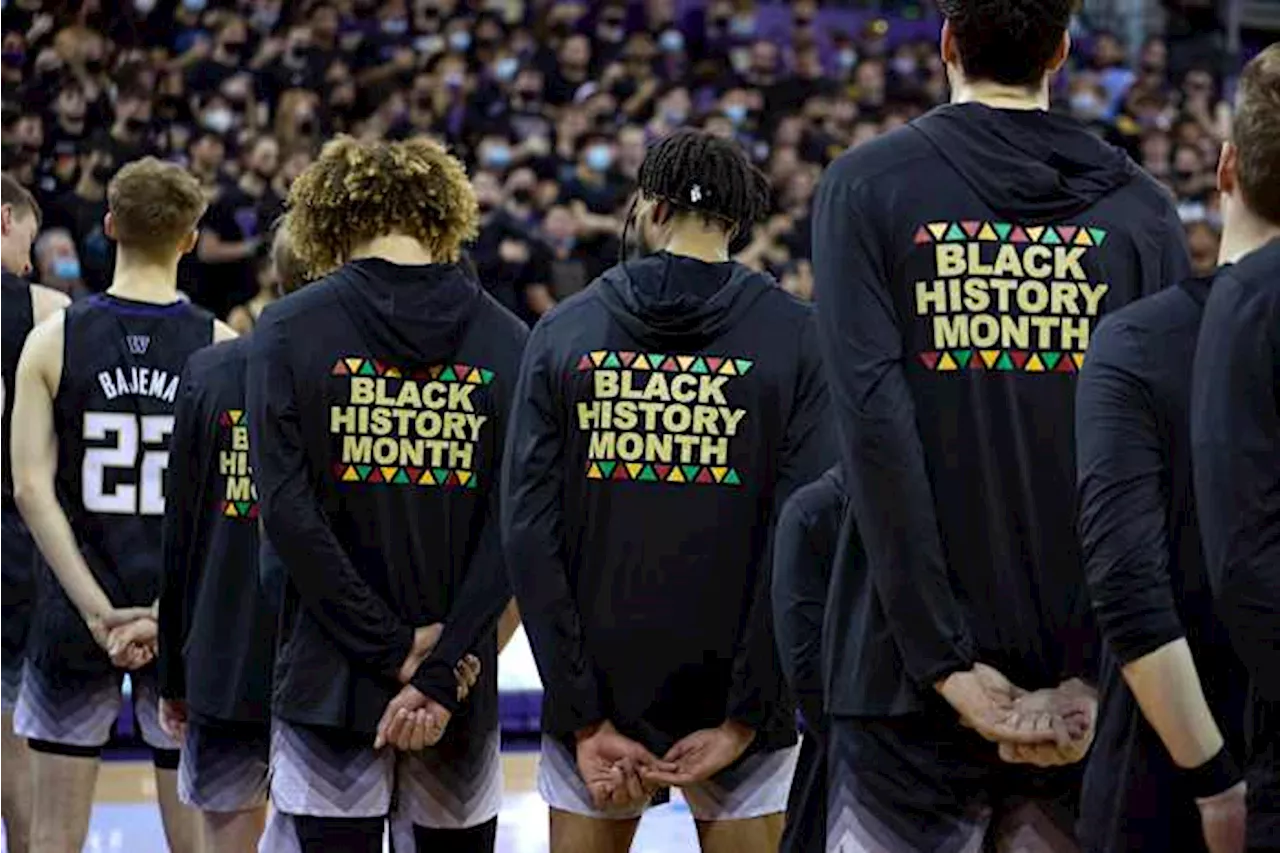 Black History Month explained: Its origins, celebrations and mythsBlack History Month, a celebration of Black history, culture and education, kicks off on Feb. 1.
Read more »
 Black History Month: A Century of Celebration and EvolutionThis article explores the history of Black History Month, tracing its roots from Negro History Week founded by Carter G. Woodson in 1926 to its recognition as a national celebration. It highlights the efforts of organizations like the Association for the Study of African American Life and History (ASALH) and the Omega Psi Phi fraternity in expanding the observance. The article also discusses the significance of Black History Month in schools, communities, and families, emphasizing its importance in understanding the integral role of Black history in the American narrative.
Read more »
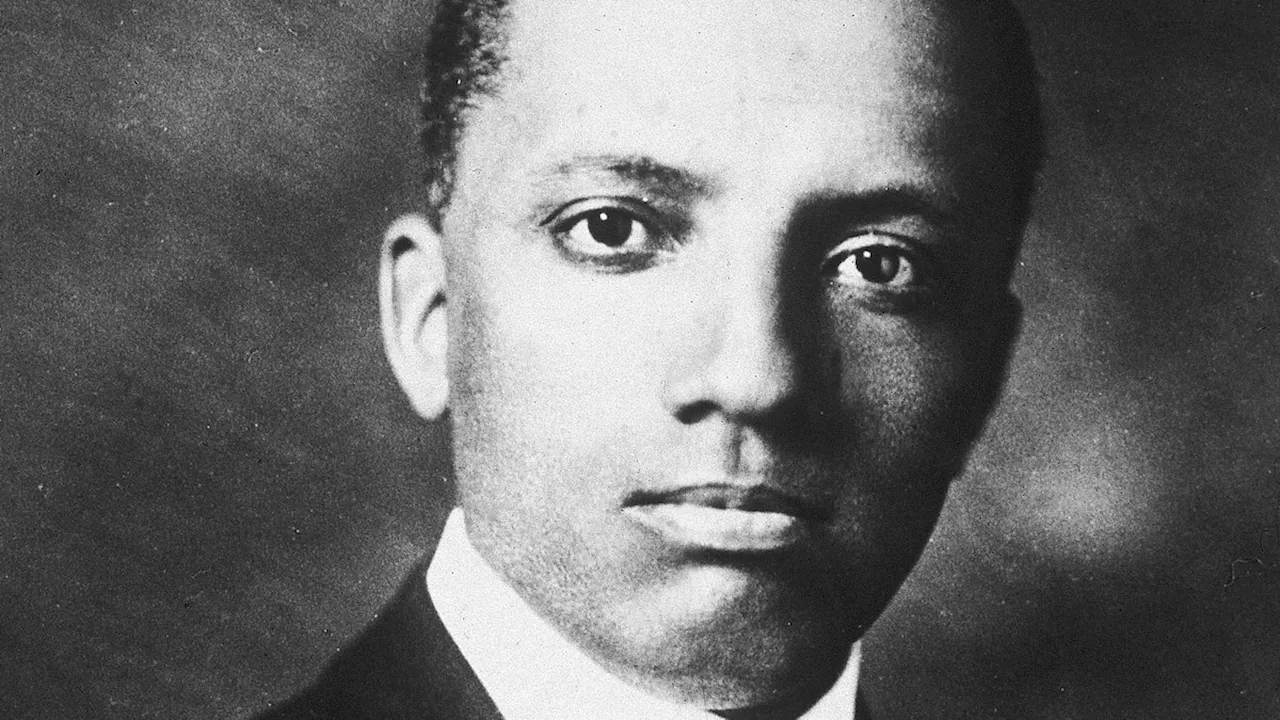 Carter G. Woodson: The Father of Black History MonthAmerican historian Carter G. Woodson is widely recognized as the founder of Black History Month. Driven by a desire to counter racist stereotypes and illuminate the rich history and accomplishments of Black Americans, Woodson dedicated his life to promoting Black history and education. He established the Association for the Study of African American Life and History (ASALH) and spearheaded the observance of Negro History Week in February, which eventually evolved into the month-long celebration we know today.
Read more »