
This article analyzes the evolution of American foreign policy, highlighting the shift from a transatlantic focus towards a more pronounced Pacific orientation. The author examines the decline of the transatlantic alliance, citing examples of Europe's perceived shortcomings in technological innovation, defense spending, and freedom of speech. It then contrasts this with the rise of Asia, particularly China, and argues that the US should prioritize strengthening its defense capabilities and forward posture in the Pacific region to deter Chinese aggression towards Taiwan.
but a sophisticated and knowledgeable official who was German Chancellor Angela Merkel’s national security adviser from 2005 to 2017. He had a front-row seat to Merkel’s epochal decisions — to shut down nuclear plants in 2011, admit 1 million Muslim male “refugees” in 2015, and hold defense spending far below the 2% level sought by the second Obama and first Trump administrations.
His previous appearance on social media came when, as head of Germany’s United Nations delegation in 2018, he led his colleaguesVance’s speeches in Munich and earlier in Paris criticized Europe generally and Germany in particular for stifling technological innovation, for suppressing speech, especially opposition to mass migration, and for spending well below NATO targets on defense. The European elites have had things their way and have led their societies on a path to decline..” Trump’s decision to conduct negotiations to end the Russia-Ukraine war with Russian President Vladimir Putin but not with Ukraine’s Volodymyr Zelensky or any European leaders furthers that impression. This is cause for regret for those with memories of the many dazzling successes of America’s trans-Atlantic alliance in response to Soviet aggression after World War II. America revived Western Europe’s war-torn economy with the Marshall Plan in 1947, deftly prevented possible communist victories in elections in Italy and France in 1948, kept West Berlin free with the airlift in 1948-49, and established the NATO alliance in 1949. The result was a prosperous and free Western Europe in the next three decades — les trente glorieuses, in French — and the fall of the Soviet empire from 1989 to 1991. Peace has mostly prevailed in Europe for 80 years, almost as long as the 99 years of Metternich’s Congress of Europe and Bismarck’s balance of power between 1815 and 1914. American postwar statesmanship was less successful in Asia. American leaders found it impossible to prevent the communist takeover of China in 1949, and 37,000 Americans died preventing one in South Korea from 1950 to 1953. Some 58,000 Americans died in Vietnam, which fell in 1975. In the meantime, Japan’s economy boomed, followed by similar growth in Korea, Taiwan, Hong Kong, and Singapore — and then, accelerating in the 1990s, in China itself. Today, we live in a world quite different economically from the one the builders of the trans-Atlantic alliance brought into being in the three postwar decades. As Elbridge Colby, Trump administration nominee for the No. 3 post in the Pentagon, argues in his 2021 book, the United States produces more than a fifth of the world economic product, Europe almost the same proportion, and Asia, including China and India, upward toward half. And, as Vance noted last week, while America and China produce innovative technology, Europe, the fount of creativity from the 17th to the early 20th century, now smothers it in overregulation. Europe’s criminal prosecutions of speech, including accurate reports of migrants’ criminal attacks and even of politically incorrect abortion statements made by citizens in their own houses, are repugnant to traditional American mores. And while Eastern Europe has increased defense spending in response to Russia’s threats, the large nations of Western Europe have been lagging. Trump administration foreign policy seems to be following Colby’s blueprint. His strategy seems to be to leave Europe to cabin in its hostile regional hegemonic power, Russia, and to leave Israel to deal with its hostile regional hegemon, Iran. That’s caused some Republicans, especially Sen. Tom Cotton , to voice doubts about his nomination. But the strong negative reaction to the loss of 7,000 Americans in Iraq and 2,500 in Afghanistan made the Obama, Trump, and Biden administrations averse to sending any U.S. military forces into Ukraine, where casualties could be much higher, or against Iran after perceived failure in Iraq. Moreover, Colby argues, the U.S. no longer has the defense capability of waging two or even 1 1/2 wars simultaneously, and the development of relatively cheap defensive weapons, such as drones and hypersonic flights, may leave our relatively small number of very sophisticated and expensive aircraft carriers and fighter planes vulnerable to attack. The central task of American foreign policy, this argument goes, should be to build our defense capabilities and increase our forward posture to make it clear to China’s leaders that they have no chance to seize Taiwan. This should build on previous steps to cooperate with regional allies, particularly Japan, India, and Australia. The amount of death and destruction that would be caused by any war in that region is unthinkable — or it would be if we did not have the history of the warfare between Japan and China from 1937 to 1945 to consult. In the meantime, as in even the best years of the American-led trans-Atlantic partnership, there are some ugly things that need to be done. The failure of Ukraine’s offensive in 2023 and America’s unwillingness and Europe’s inability to send their own military forces or larger and more effective weapons to Ukraine in 2023 and 2024 have reduced the alternatives to continued violent war and morally unsatisfying peace.when, in February 2022, he said he “doesn’t really care what happens to Ukraine” and Trump’s suggestion that Ukraine “it.” You can look back at former President Barack Obama’s and former U.K. Prime Minister David Cameron’s failure, when Russia seized Crimea in 2014, to act on America’s and Britain’s guarantee to Ukraine in the
FOREIGN POLICY TRANSATLANTIC ALLIANCE EUROPE CHINA TAIWAN DEFENSE SPENDING PACIFIC FOCUS
United States Latest News, United States Headlines
Similar News:You can also read news stories similar to this one that we have collected from other news sources.
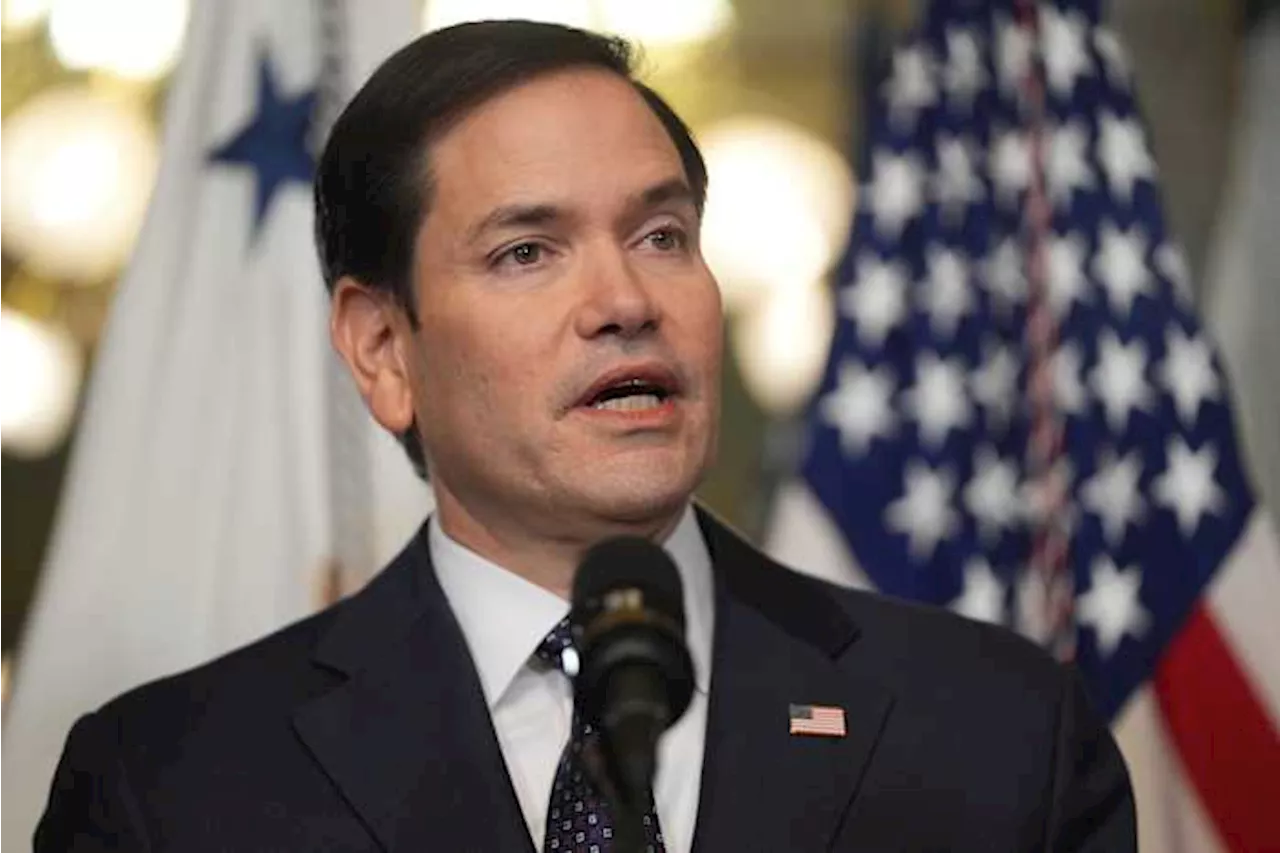 Rubio kicks off Trump foreign policy engagements in meetings with Indo-Pacific 'Quad'Secretary of State Marco Rubio has met with his counterparts from Australia, India and Japan as the Trump administration kicks off its formal foreign policy engagements in discussions with the Indo-Pacific “Quad.”.
Read more »
 Nolte: ‘Captain America’ Star Tells Europe Captain America Shouldn’t Represent AmericaSource of breaking news and analysis, insightful commentary and original reporting, curated and written specifically for the new generation of independent and conservative thinkers.
Read more »
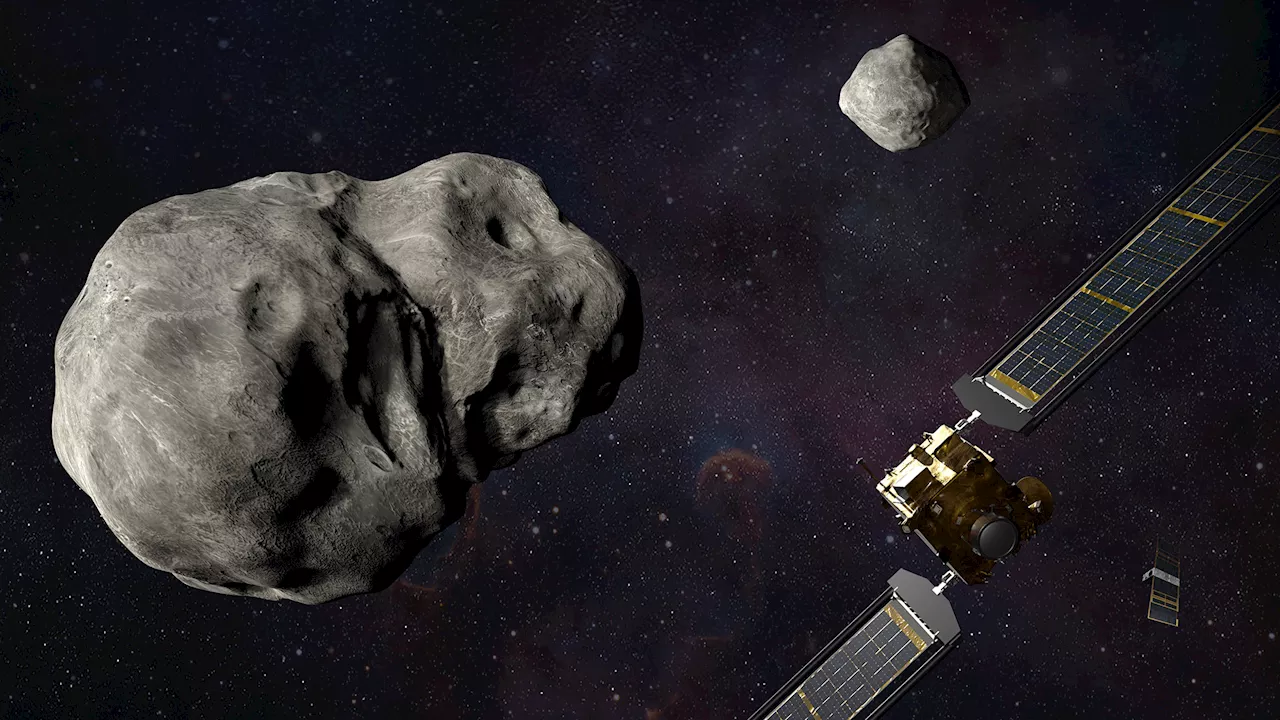 America's Planetary Defense: Uncertain Future Amidst Shifting PrioritiesThis article explores the future of America's planetary defense program, highlighting both the encouraging progress made in asteroid detection and deflection technology and the potential threats posed by shifting government priorities. While NASA has achieved significant milestones in identifying and mitigating potential asteroid impacts, the imminent arrival of the DOGE (Department of Government Efficiency) under Elon Musk's leadership raises concerns about the funding and future direction of these crucial initiatives. The article examines the bipartisan support for planetary defense in the past, emphasizing the need for continued investment in this global imperative.
Read more »
 America's Growing Divide: Red America vs. Blue AmericaPolitical theorist Robert Talisse joins Utterly Moderate to discuss the increasing polarization in America, where liberals and conservatives inhabit vastly different social realities, shaped by their political affiliations. From neighborhoods and consumer choices to language and even dietary preferences, the 'red' and 'blue' divide extends far beyond political stances.
Read more »
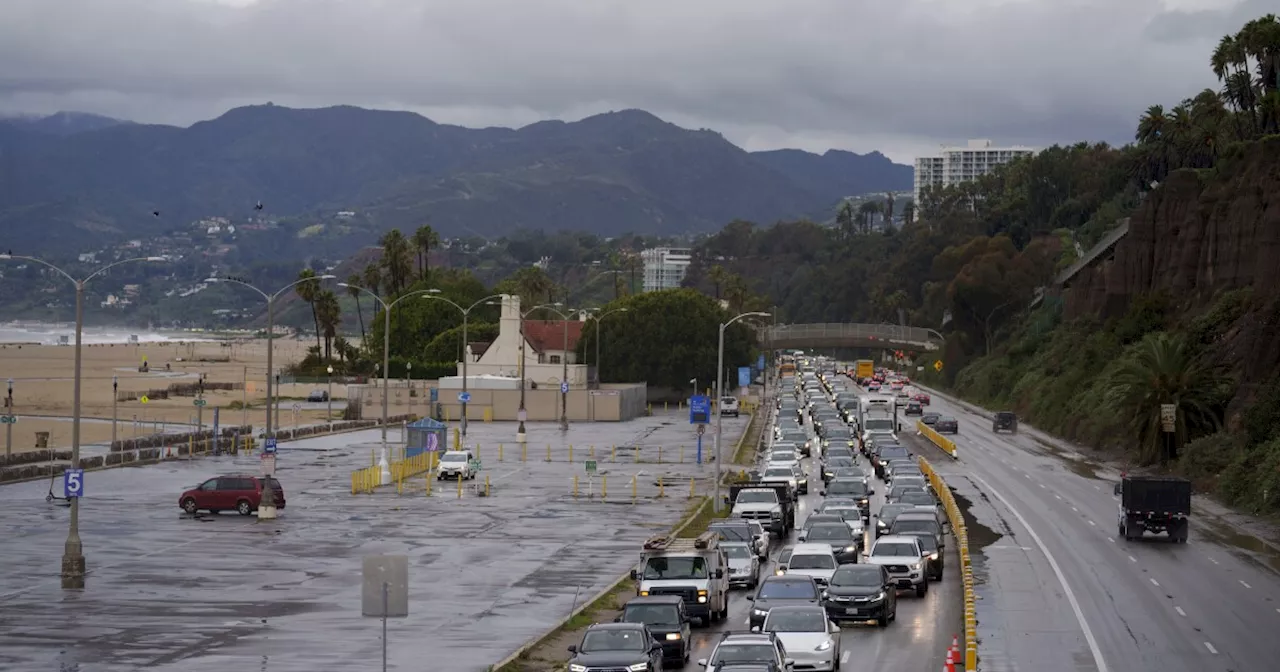 Pacific Coast Highway in Malibu and Pacific Palisades Remains Closed After Debris FlowsA stretch of Pacific Coast Highway (PCH) through Malibu and Pacific Palisades is closed indefinitely due to debris flows caused by recent rainstorms. The closure spans from Will Rogers Beach State Park in Los Angeles to Carbon Beach in Malibu, an area already vulnerable due to the previous Palisades Fire. Caltrans crews are working to assess the damage and determine when the road can safely reopen.
Read more »
 Corporate America Rethinks DEI Programs Amid Legal Challenges and Shifting Political LandscapeMajor companies like Goldman Sachs, Target, Meta, and Amazon are scaling back their diversity, equity, and inclusion (DEI) programs in response to legal challenges and executive orders aiming to limit such initiatives.
Read more »