AP23111849558863.jpg
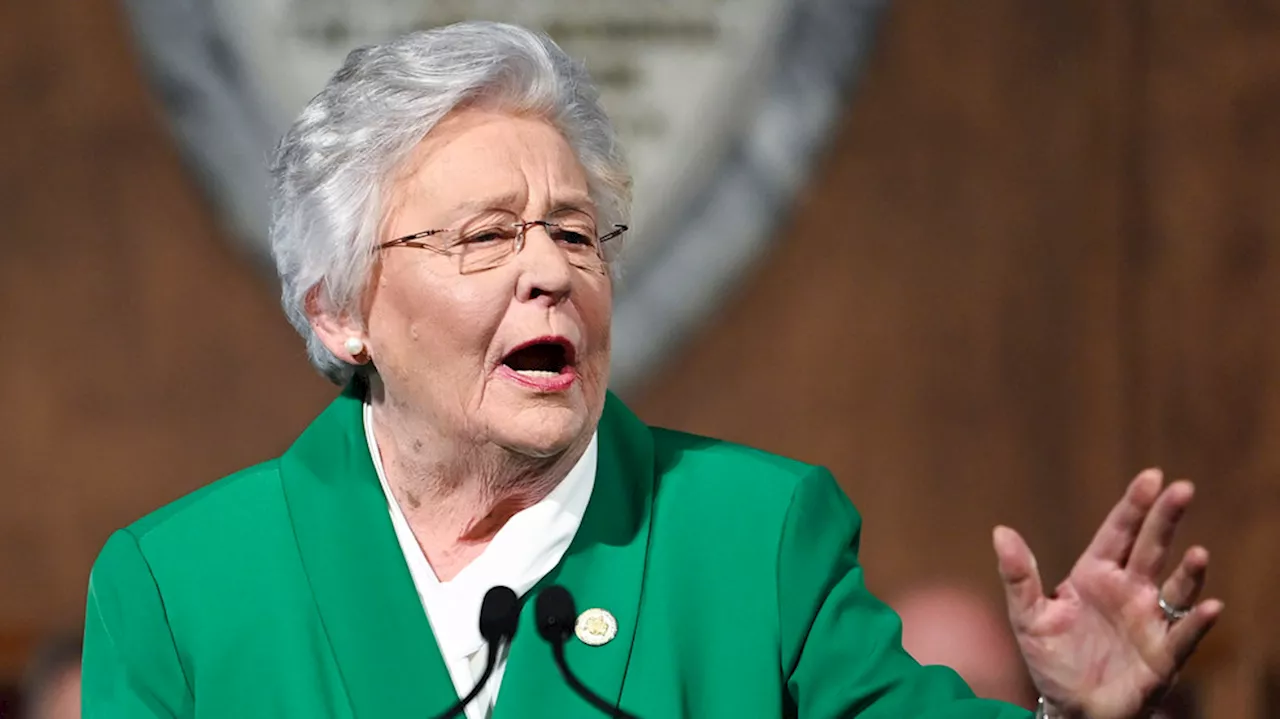
Gov Ivey proposes new amendments for AL public libraries to receive state fundingGovernor Kay Ivey demands policy revisions from Alabama Public Library Service .Governor Ivey is not confident that our local libraries are fulfilling their mission.
The governor says there are books located in the children’s section that have inappropriate or explicit content. Tonight, she is saying the State's Public Library Service Director, Dr. Nancy Pack, is not doing enough to fix the problem. "I do believe that they should be taking books like that out of the library," says Brittany Chambliss, a woman who was leaving from the Mobile Public Library. Governor Ivey however doesn't want to fully ban books, she just wants to move them out of the reach of children. She says, "the common-sense approach would be to require local libraries to adopt their own policies governing the location and promotion of content that they deem inappropriate for children.""I personally believe it's up to the parents because everyone is different. Every family has different morals and beliefs," says Alyssa Penney, a woman who was outside of the Mobile Public Library. "Who does decide what's quote inappropriate and appropriate? Or even with sexually explicit to someone may be not so to somebody else," says Anne Johnson, the Chairman of the Board of Trustees for the Fairhope Public Library. Johnson says her library and many others already have policies in place that do not allow children up to a certain age to check out a book without parental supervision.Johnson says simply moving books is another form of censorship. "Moving books from one place to the other to make them less accessible to their primary audience is definitely a form of censorship and they've been sort of vague on where do you want those in the library?” asks Johnson. “Where do you think we should put them?" In her letter, Governor Ivey proposed 4 new amendments to a document that allows public libraries to receive state aid funds. The first one is “physical location and relocation of sexually explicit or other material deemed inappropriate for children or youth.” The second proposed amendment is to “advance approval of materials recommended, displayed, or otherwise actively promoted to children or youth.” The third is “exercising discretion in the location of sexually explicit material or other material deemed by the public library board to be inappropriate for children or youth does not constitute a denial of service on the basis of age. Taking age into account when recommending, displaying or otherwise actively promoting library materials does not constitute a denial of service on the basis of age.” The fourth proposed amendment is “any expenditure of public funds to the American Library Association must be approved by the governing board of the public library or public library system in an open, public meeting following advance public notice.” In a statement from the Mobile Public Library Director, Margie Calhoun, she says, "Should the proposed changes to the state law regarding libraries become law, the library board would have to take that into consideration. Some of the changes like advance approval of materials seems to be over reach and would not be in the best interest of libraries, parents, or children." Governor Ivey recommended 3 ways that the Alabama Public Library Service can address those concerns. Below are her full comments:Make state aid for local libraries contingent on the adoption of sensible policies to facilitate greater parental supervision of their children. Each year, the Legislature appropriates funds to the Library Service for distribution to local public libraries; in Fiscal Year 2024, that amount will be $6.6 million. The Library Service, in tum, distributes those funds subject to local libraries' compliance with requirements designed to "support and improve existing libraries and library systems." For example, to receive this "supplemental state aid," local libraries must submit to the Library Service written policies covering such topics as "patrons," "materials selection," and "special services groups." Going forward, the Library Service should amend its requirements for state aid to include the submission of w1itten policies covering "physical location of material deemed inappropriate for children or youth" and "advance approval of materials recommended, displayed, or otherwise actively promoted by library staff." Taking this action will leave the precise details up to local library boards. But it will ensure that every public library in the State newly considers these important ways to create a welcoming library environment.Require all expenditures of public funds to the American Library Association be approved by the relevant governing authority in an open, public meeting. As explained above, I cannot defend the ALA's position on "intellectual freedom" insofar as it would entitle any child to access any book, however sexually explicit or otherwise inappropriate. For this reason, I am entirely sympathetic to calls to disaffiliate our Alabama libraries from the ALA. At the same time, however, I recognize that the disaffiliation question requires a careful balancing between the ALA's clear shortcomings and whatever advantages it may offer Alabama libraries in ways that do not facilitate the exposure of children and youth to harmful content. Especially because the policy changes I recommend will address the most pressing current problems, I believe the appropriate entity to perform this cost-benefit analysis is the relevant library board, in the first instance, and the Alabama Legislature, if necessary. In any event, the Library Service should amend its requirements for state aid to ensure that any expenditure of public funds to the ALA will be approved by the local library board in an open, public meeting. The Executive Board of the Library Service should similarly require board approval of any expenditures of public funds to the ALA. Taking these actions will allow public libraries to continue to access useful resources on a case[1]by-case basis while ensuring greater input by the taxpayers who fund them.Reaffirm local libraries' ability to respond to parental concerns about sexually explicit or other inappropriate materials. This request contains two parts. First, the Library Service should amend its rules to clarify that exercising discretion about the location or promotion of age-inappropriate library materials does not constitute a "denial of service" on the basis of "age" in violation of existing Library Service rules. Second, as soon as possible-that is, even before the Executive Board can amend its rules-I ask that you send a memorandum to local libraries clarifying their ability to respond to parental concerns about sexually explicit or otherwise inappropriate material. Ideally, the memo would offer suggestions for libraries along the lines of those contained in this letter for ways they can better support families and children. At a minimum, the memo should disclaim reliance on the ALA's Library Bill of Rights to the extent it prohibits libraries from "discriminating" between children and adults in the location and promotion of library materials. The memo should also clarify that limiting children's access to inappropriate content is not impermissible "censorship."” We also reached out to Dr. Nancy Pack, the Director of the Alabama Public Library Service. We didn't hear back.to APLS Director Nancy Pack, as well as proposed amendments to the Library Service’s administrative rules:Thank you for the information you provided in response to my concerns about public libraries in Alabama. I appreciate the hard work you and the Library Service Executive Board have done to help get to the bottom of this important problem. Your submission emphasized the good work done by Alabama libraries, and I am proud of library efforts to promote literacy, help with homework, and offer resources to parents and other members of the public. It's obvious that local libraries do important work in our communities throughout the State. After reading your submission, however, I still lack confidence that our libraries are most effectively fulfilling their mission. In my previous letter to you, I described the core problem as the exposure of children and youth to inappropriate materials without adequate means of parental supervision. Unfortunately, your response does not persuade me that Alabama libraries have policies in place to strike the right balance in responding to this problem. In my view, the common-sense approach would be to require local libraries to adopt their own policies governing the location and promotion of content that they deem inappropriate for children. Yet your submission makes clear that currently it is up to parents alone with no support from libraries-to prevent their children from being exposed to these materials. Regrettably, the local library policies you submitted generally fail to support parents hoping to protect their children from inappropriate content. The typical policy notes that many library materials are "controversial" and "offensive," that responsibility for children's reading selection "rests with parents and legal guardians," and that selection will not be "inhibited" by the possibility that children may view them. Of the almost thirty example local policies accompanying your response, just one includes a process that could result in a "change in location or reading level" of a challenged book. Indeed, one library policy apparently prohibits library staff even from labeling books based on age level. To be clear, I agree that parents bear ultimate responsibility for supervising their children's reading material. But the question here goes beyond that: What can libraries do to support parents in helping their children avoid harmful materials? Without more, invoking "parental responsibility"-and only "parental responsibility"-in response to parents' legitimate concerns sends the wrong message, that libraries are not a place for families or children. To the contrary, parents should be confident that the materials available in children 's sections are, in fact, suitable for children. And children should have the freedom to wander freely in a children's section without being exposed to harmful materials. Based on your submission, I also still harbor serious misgivings about the American Library Association and its influence over Alabama libraries. Your response clarified that the Library Service adopted a version of the ALA's "Library Bill of Rights" that does not require confidentiality for minors' library records. But your response did not offer any further defense of the ALA Bill of Rights that was adopted by the Library Service and that has been adopted by local libraries throughout the State. As I said in my previous letter, when the ALA Bill of Rights prohibits "age" discrimination, the ALA apparently means that children should have a right to access all library content, no questions asked. According to reports, librarians have cited this policy as a reason not to relocate inflammatory exhibits in a library's children's section, but such a policy is indefensible and has no place in Alabama libraries. Your response also included a purported "critical analysis" of the ALA 's relationship with the Library Service, but very little in that analysis engages with the ALA's shortcomings. Moreover, several of the ALA's purported benefits are not benefits at all. For example, the "critical analysis" praised the ALA's "intellectual freedom efforts" as a reason to remain affiliated with the ALA. But according to the ALA's "Office of Informational Freedom," libraries must not use "age restrictions" in response to "objections from parents or anyone else." As indicated above, that position is untenable here in Alabama. Based on these remaining concerns, the Library Service should, at a minimum, take the following actions: 1. Make state aid for local libraries contingent on the adoption of sensible policies to facilitate greater parental supervision of their children. Each year, the Legislature appropriates funds to the Library Service for distribution to local public libraries; in Fiscal Year 2024, that amount will be $6.6 million. The Library Service, in tum, distributes those funds subject to local libraries' compliance with requirements designed to "support and improve existing libraries and library systems." For example, to receive this "supplemental state aid," local libraries must submit to the Library Service written policies covering such topics as "patrons," "materials selection," and "special services groups." Going forward, the Library Service should amend its requirements for state aid to include the submission of written policies covering "physical location of material deemed inappropriate for children or youth" and "advance approval of materials recommended, displayed, or otherwise actively promoted by library staff." Taking this action will leave the precise details up to local library boards. But it will ensure that every public library in the State newly considers these important ways to create a welcoming library environment. 2. Require all expenditures of public funds to the American Library Association be approved by the relevant governing authority in an open, public meeting. As explained above, I cannot defend the ALA's position on "intellectual freedom" insofar as it would entitle any child to access any book, however sexually explicit or otherwise inappropriate. For this reason, I am entirely sympathetic to calls to disaffiliate our Alabama libraries from the ALA. At the same time, however, I recognize that the disaffiliation question requires a careful balancing between the ALA's clear shortcomings and whatever advantages it may offer Alabama libraries in ways that do not facilitate the exposure of children and youth to harmful content. Especially because the policy changes I recommend will address the most pressing current problems, I believe the appropriate entity to perform this cost-benefit analysis is the relevant library board, in the first instance, and the Alabama Legislature, if necessary. In any event, the Library Service should amend its requirements for state aid to ensure that any expenditure of public funds to the ALA will be approved by the local library board in an open, public meeting. The Executive Board of the Library Service should similarly require board approval of any expenditures of public funds to the ALA. Taking these actions will allow public libraries to continue to access useful resources on a case-by-case basis while ensuring greater input by the taxpayers who fund them. 3. Reaffirm local libraries' ability to respond to parental concerns about sexually explicit or other inappropriate materials. This request contains two parts. First, the Library Service should amend its rules to clarify that exercising discretion about the location or promotion of age-inappropriate library materials does not constitute a "denial of service" on the basis of "age" in violation of existing Library Service rules. Second, as soon as possible-that is, even before the Executive Board can amend its rules-I ask that you send a memorandum to local libraries clarifying their ability to respond to parental concerns about sexually explicit or otherwise inappropriate material. Ideally, the memo would offer suggestions for libraries along the lines of those contained in this letter for ways they can better support families and children. At a minimum, the memo should disclaim reliance on the ALA's Library Bill of Rights to the extent it prohibits libraries from "discriminating" between children and adults in the location and promotion of library materials. The memo should also clarify that limiting children's access to inappropriate content is not impermissible "censorship." Enclosed, you will find a proposed amendment to the Library Service's rules. I ask that you present this proposed amendment, or something substantially similar to it, at the Board's next called meeting. To reiterate, I agree that the decision of which books to obtain is a distinctly local issue, and I agree that books should not be "banned" from libraries based on unpopular opinions or content. Libraries should be a place for exploring a wide variety of viewpoints and ideas. At the same time, however, libraries must not be a place to expose children to inappropriate content without the knowledge and consent of their parents. Libraries should listen to parents when it comes to what content is openly available in children's sections of libraries. As always, I am grateful for the important work done by Alabama libraries. I am confident that by making the policy changes set forth above, Alabama libraries can continue that important work in a way that is more responsive to the needs of their communities.520-2-2-.03 Library Establishment, Policy and Service Requirements To qualify for state aid, public libraries and public library systems must comply with the appropriate requirements as follows. A public library and a public library system must be legally established according to Code of Ala. 1975, 11-90-. A copy of the ordinance or resolution establishing the public library and copies of public library system contracts must be on file with the Alabama Public Library Service . notify APLS of official board appointments and the terms to be served within 30 days of the appointment; meet a minimum of four times a year; approve written policies for the public library which cover the following:3. Personnel, including memberships in professional organizations, attendance at professional meetings, grievance procedures, job description, performance evaluations, etc.7. Regular services and special services to groups, the handicapped, nonresident borrowers, shut-ins, etc.11. Physical location of sexually explicit or other material deemed inappropriate for children or youth 12. Advance approval of materials recommended, displayed, or otherwise actively promoted to children or youth approve a written five-year, long-range program of public library service which will be reviewed each year and updated as needed. The program should include as a minimum but not limited to:5. Technology development All Directors, Board members, and/or designated staff of public libraries must attend at least two APLS-sponsored meetings per year either on-site or by videoconference. Eligible meetings include quarterly Administrators’ Meetings and the Children and Teen Services Annual Conference . Other eligible meetings are at the discretion of the APLS Director. The public library must not deny service to anyone on the basis of age, race, sex or creed. Exercising discretion in the location of sexually explicit material or other material deemed by the public library board to be inappropriate for children or youth does not constitute a denial of service on the basis of age. Taking age into account when recommending, displaying, or otherwise actively promoting library materials does not constitute a denial of service on the basis of age. A public library must be open to serve the public at least the specified number of hours per week If a public library system headquarters provides direct patron services onsite , the system headquarters must be open the number of hours required in above, based on the population of the county in which the system headquarters is physically located. Each library must strive to have a well-balanced collection or not less than one volume per capita and not less than 1.5 currently useful items per capita. The term “item” is intended to include print and non-print materials. Any expenditure of public funds to the American Library Association must be approved by the governing board of the public library or public library system in an open, public meeting following advance public notice
Trending
 A gorgeous April afternoon in store across the Denver metro area
  ‘Artemis Mission Cannot Lead To Interplanetary Wild West,’ Astronomer Warns
  Trump says US forces will ‘finish the job’ soon in first prime-time speech since starting Iran war
  Former Wisconsin football player, who left the sport amid mental health struggles, dead at 24
  Drew McIntyre Gives Honest Take About His Recent WWE Title Reign
  U.S. Sen. Bernie Sanders introduces bill that could keep the Padres in San Diego
 United States Latest News, United States Headlines
Similar News:You can also read news stories similar to this one that we have collected from other news sources.
 36609Screen Shot 2023-10-04 at 4.54.40 PM.png
Read more »
 36609Screen Shot 2023-10-04 at 6.23.07 PM.png
Read more »