
A shrinking thermosphere means less drag, which could hinder the natural removal of space debris impacting satellites, as per MIT.
A new MIT study suggests that greenhouse gas emissions are altering the space where satellites operate.Most satellites orbit in the thermosphere, a layer of Earth’s upper atmosphere. Naturally, this layer expands and contracts with the sun’s activity.
But this new study reveals a more concerning trend. Despite their heat-trapping effect in the lower atmosphere, greenhouse gases have a cooling effect on the thermosphere, resulting in its shrinkage.A shrinking thermosphere means less drag, which could hinder the natural removal of space debris.MIT team found that orbital capacity is projected to drop 50-66 percent by 2100. This means that popular orbits could become unusable due to overcrowding. “The upper atmosphere is in a fragile state as climate change disrupts the status quo,” said William Parker, lead author and a graduate student in AeroAstro. “At the same time, there’s been a massive increase in the number of satellites launched, especially for delivering broadband internet from space. If we don’t manage this activity carefully and work to reduce our emissions, space could become too crowded, leading to more collisions and debris,” Parker added. Use of computer simulations Over 10,000 satellites currently occupy low-Earth orbit . These satellites provide vital services such as the internet and navigation. The rapid increase in satellites has led to frequent collision-avoidance actions. Collisions create long-lasting debris, which increases the risk of further smashes.The thermosphere’s size fluctuates naturally every 11 years due to the sun’s activity. During periods of low solar activity, it cools and shrinks, and during periods of high solar activity , it warms and expands.MIT studied the effect on safe satellite capacity. “More satellites have been launched in the last five years than in the preceding 60 years combined. One of the key things we’re trying to understand is whether the path we’re on today is sustainable,” said Parker. MIT researchers simulated different greenhouse gas emission scenarios and their impact on the “satellite carrying capacity of low-Earth orbit.”They simulated greenhouse gas emissions to analyze their effects on atmospheric density and drag. “We’re taking that carrying capacity idea and translating it to this space sustainability problem, to understand how many satellites low-Earth orbit can sustain,” Parker noted in the press release.Space becoming crowded with satellitesThe MIT team compared future orbit capacity under different greenhouse gas emission scenarios: a baseline of year 2000 levels and scenarios aligned with IPCC projections. They concluded that increasing emissions significantly reduced the carrying capacity of low-Earth orbit.By 2100, the number of satellites safely operating between 200 and 1,000 kilometers could decrease by 50-66 percent compared to a scenario with constant year-2000 emissions. Exceeding capacity in any area could trigger a “runaway instability,” leading to a cascade of collisions and making the region unsafe for satellites.While the study projects to 2100, the researchers note that some orbital regions are already becoming overcrowded. “The megaconstellation is a new trend, and we’re showing, because of climate change, we’re going to have a reduced capacity in orbit. And in local regions, we’re close to approaching this capacity value today,” said Richard Linares, associate professor at MIT. The atmosphere naturally removes space debris, but climate change is altering this process. The team concludes that controlling greenhouse gas emissions is crucial for managing the long-term problem of orbital debris.The findings were published in the journal Nature Sustainability.
Energy &Amp Environment Greenhouse Gase MIT Near-Earth Orbit Orbit Satellite Space US
United States Latest News, United States Headlines
Similar News:You can also read news stories similar to this one that we have collected from other news sources.
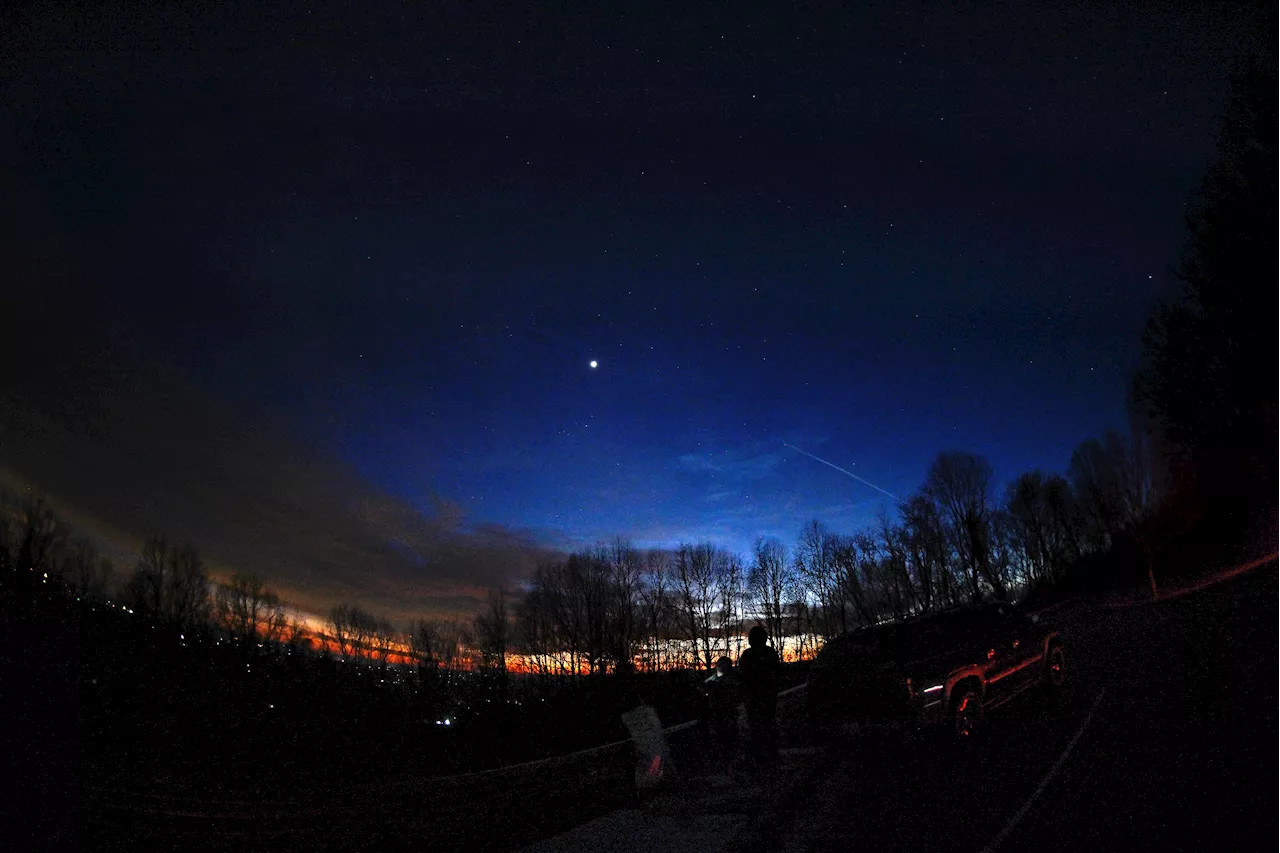 Five Planets Light Up Night Sky in FebruaryFive bright planets—Venus, Mars, Jupiter, Saturn, and Mercury—are visible to the naked eye throughout February in the Northern Hemisphere. Two more planets, Uranus and Neptune, can be seen with binoculars or a telescope. This celestial spectacle offers skywatchers a chance to enjoy the cosmos.
Read more »
 Studio Ghibli’s Castle in the Sky Has a Delicious Surprise for FansStudio Ghibli is known for its food and you can make your own thanks to this Castle in The Sky surprise.
Read more »
 Searching the entire sky for the secrets to our universeA new telescope could launch as early as late February. SPHEREx will look into deep space and also search for organic molecules.
Read more »
 Searching the entire sky for the secrets to our universeA new telescope could launch as early as late February. SPHEREx will look into deep space and also search for organic molecules.
Read more »
Damage Control Brewing: Ripley Forces Title Match With SkyRhea Ripley and Raquel Rodriguez accidentally cost Michin Sky her Elimination Chamber qualifying match on WWE Raw. After a backstage confrontation, Ripley insisted she owed Sky nothing but agreed to defend her title against her. Ripley then revealed she worked with Adam Pearce to make the match official. Meanwhile, Royal Rumble winner Charlotte Flair is still deciding her WrestleMania opponent, with the winner of the Women's Elimination Chamber match being in line for a title shot against whoever Charlotte doesn't face.
Read more »
 Sky Launches New Gen 2 Sky Glass TVs, With Cheaper Sky Glass Air Series To FollowMore brightness, color, contrast and backlight control all claimed for the second Sky Glass generation — at no extra cost.
Read more »