
Disaster risk algorithms could play a huge role in your next home or renter's insurance policy.
Boston’s snowy streets and sidewalks suggest it’s the last place you’d find a discussion about wildfires and insurance. And yet, a little-known company here says it’s trying to solve California 's insurance crisis with a revolution of sorts.
Verisk is a company that assesses risk for insurance companies using catastrophe computer models. They are “simulated wildfires, simulated tornadoes, hurricanes, earthquakes,” Newbold explained. Verisk frequently estimates damage costs after disasters and makes those estimates public. door to let homeowners’ and renters’ insurance companies use catastrophe models to set the price of your next homeowners or renter's policy. The state said Verisk and three other companies have applied for approval.Woman who lost home is reunited with her cat 32 days after the Eaton FireVerisk opened its doors for us. Chief research officer Jay Guin was our tour guide. “Everything in catastrophe modeling starts with people,” said Guin. He explained that he oversees a huge team of 150 people. “The majority of them have Ph.D. credentials in their field of expertise, climate scientists; meteorologists; engineers; fire specialists; and people who understand the ground, the surface, and vegetation.” Guin says his staff pours data from real disasters and research alike into Touchstone modeling software. At its heart is a humongous disaster library of sorts, Guin said. “We simulate millions of potential fires that have not occurred, but can occur in any year.” But the software also gets nitty gritty. “The relationships and simulations are done at the one-home-at-a-time level,” Guin explained. So, we entered my home’s info. Within one minute, Touchstone displayed a detailed analysis simulating thousands of catastrophes at my address. and the cost. Guin said insurance companies can input data about a large area, like a full zip code of neighborhoods and run simulations to assess their future risk and possible payouts. Some of the resulting numbers were huge: we saw a possible $4.9 billion loss for a simulated firestorm that wiped out a town. “In any given year, your home has a one percent chance that your home will have damage worth $334,000,” Guin said. If California regulators approve Touchstone Guin said that insurance companies would use that number plus other factors to determine my policy premium, whether to insure me at all, or what steps I should take to get a discount. “Absolutely,” he said, noting that Verisk can go far beyond my block. “The entire country,” he said."Home by home."“California, in our opinion, is taking the right steps," he said."They are a little late. But these forward-looking catastrophe models are the only way of managing the risks that California faces.” The group Consumer Watchdog has criticized California’s move toward catastrophe models as a way to just “rubber stamp” rate hikes. Newbold called that criticism unfair. He says Verisk is constantly re-calibrating the model. . “We have a team in California right now, who’s on the ground looking at what actually happened,” Newbold said. “They’re looking, neighborhood by neighborhood, at ‘what did the model say?’ versus what actually occurred. All of that just comes in and makes the models better.” After Boston, we traveled back west to sacramento. We were eager to see how the California Department of Insurance will ensure those private catastrophe models give the public a fair shake. “Oh, I expect it to be very fair,” said Deputy California Insurance Commissioner Mike Peterson. He’s overseeing the state’s review of catastrophe models, including Verisk’s. “We have put a lot of effort into designing the process.” The state recently laid out dozens of pages of criteria to be met before it’ll let insurance companies use a model to price your next insurance policy. Peterson acknowledged California is behind other states. But, he says California is the first state to pick apart the models with a formal review. “Our staff, we’re looking at a series of steps that come from wildfire science in general and how it applies in a California context,” he explained. Despite that new scrutiny, Verisk is confident California’s future will include catastrophe models. Newbold again points to the L.A. He said that his team compared the billions in actual losses to the model’s predictions. At a high level, Newbold said the numbers matched. Verisk said some of the data it uses comes from you. Namely: the model might use the details about your home that are included in your insurance policy, such as your home’s age, roof, frame, etc. In that, we see yet another reason to check your policy for accuracy, especially when you haven’t checked it in a long time, recently made changes, or both. What’s true about data in general is true for your insurance models: garbage in; garbage out. A computer algorithm may soon help decide -- your next insurance policy. This is for homeowners or renters. Raj Mathai speaks with Consumer Investigator Chris Chmura about "catastrophe modeling."
Nbc Bay Area Responds Responds
United States Latest News, United States Headlines
Similar News:You can also read news stories similar to this one that we have collected from other news sources.
 Kelsey Grammer says California lawmakers 'took their eye off the ball' in wildfires catastrophe'Wish You Were Here' star Kelsey Grammer says California officials weren't as prepared as they could have been for the recent wildfires that swept through Los Angeles.
Read more »
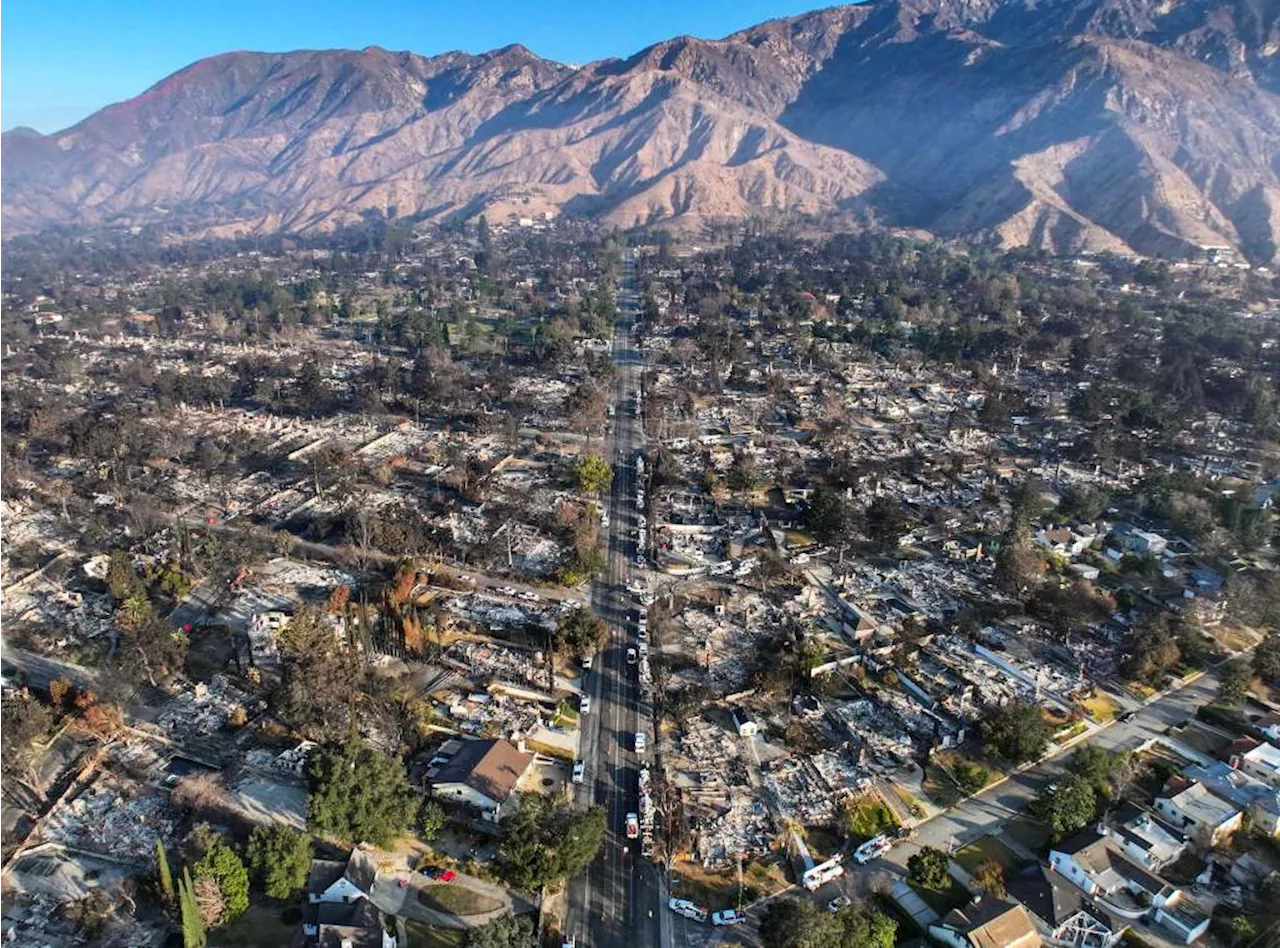 California's Housing Crisis: A Recipe for Disaster?The article criticizes California's affordable housing policies, arguing that they prioritize high-density development despite the risks of increased fire danger and unaffordability. It warns of a potential scenario where a future fire in a high-density area could lead to mass casualties and destruction.
Read more »
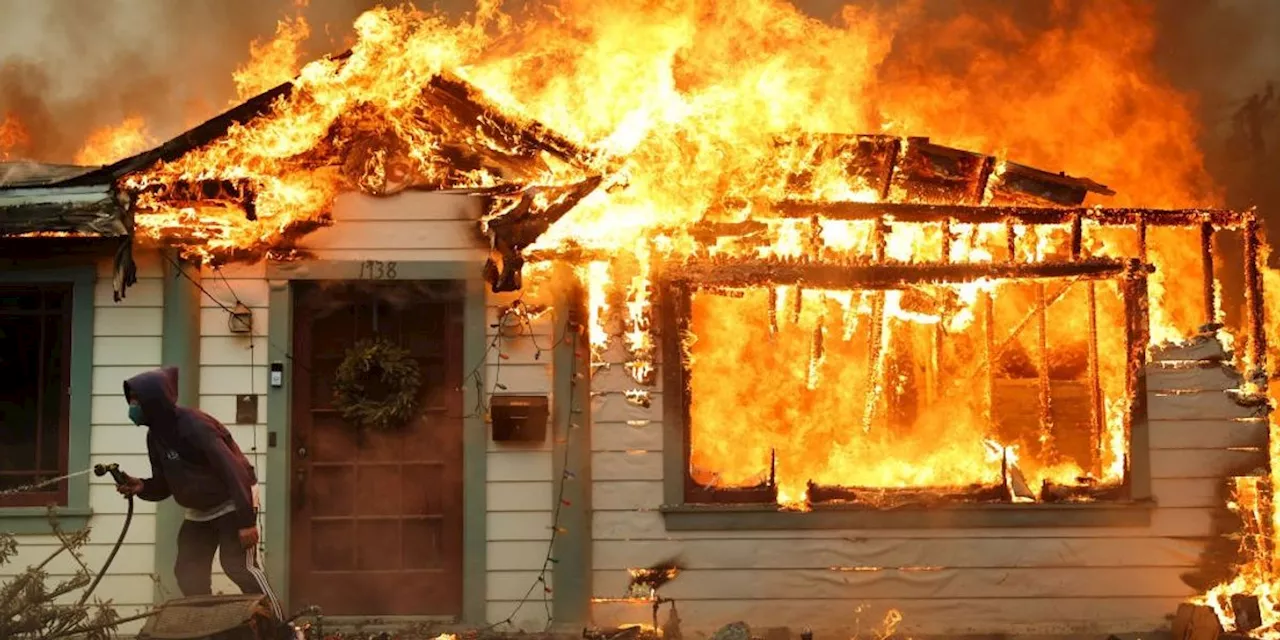 California Cracks Down on Big Oil Over Climate Disaster CostsNew legislation and a public awareness campaign target fossil fuel companies for their role in fueling climate change and its devastating impacts, particularly in California. The campaign, 'Make Polluters Pay,' aims to hold these companies accountable for costs associated with wildfires and other climate disasters.
Read more »
 California Pays More in Taxes Than It Receives, Congressman Highlights in Disaster Aid DebateRep. Adam Schiff argues that California's significant federal tax contributions warrant consideration during disaster aid discussions, particularly in light of recent wildfires. He cites a study showing California paid $83.1 billion more in federal taxes than it received in 2022, more than any other state.
Read more »
 Newsom Urges Unconditional Disaster Aid for California Wildfire Survivors in Oval Office Meeting with TrumpCalifornia Governor Gavin Newsom met with President Donald Trump to discuss the urgent need for federal assistance in the wake of devastating wildfires that ravaged Los Angeles County in January. Newsom emphasized the importance of 'unconditional disaster aid' for wildfire survivors and highlighted the ongoing recovery efforts in Southern California.
Read more »
 California's 'Regulatory Failure' Blamed for Wildfire Insurance DisasterThe California insurance crisis laid bare by the Los Angeles fires was fueled by 'regulatory failure,' economist Nancy Wallace told Newsweek.
Read more »