
Seoul, South Korea’s dynamic capital, blends ancient royal palaces and traditional houses with modern skyscrapers and vibrant neighborhoods. Discover how to explore the city's historical legacy and contemporary culture, including its impact on global K-culture.
Painted palaces and traditional houses converge with rejuvenated neighbourhoods and modern skyscrapers in South Korea's buzzing capital. Here's how to explore Seoul's dynastic splendour and contemporary opulence, as well as its abundant natural beauty.
South Korea’s thriving, open-all-hours capital is also a place of major historical pedigree, having served as the heart of the Joseon dynasty for over half a millennium. Five royal palaces are laid out like precious heirlooms at its centre, together with ancient shrines and gates. A city wall once encircled them, but Seoul burst beyond these confines long ago to become one of the world’s most populous urban centres, home to around 10 million people. It's also the epicentre of the Korean Wave — also known as the K-culture Wave or Hallyu — the cultural export that’s swept across the globe. So, whether you're fascinated by its history or are keen to experience its modern side, here’s how to get the best out of this exciting city.Seoul is steeped in history, with five Joseon-era palaces to explore. The most popular with visitors are 14th-century, home to the splendidly secluded Secret Garden. Both palaces have tree-lined trails and beautiful reflective ponds. You’ll see many palace visitors, both Korean and non-Korean, wearing, South Korea’s traditional two-piece clothing. Do the same, and you can visit all the palaces for free — there are plenty of rental spots around the city. Other Joseon dynasty sights include the giant city gates of Sungnyemun and Dongdaemun, which stand proudly at what were once the edges of ancient Seoul. They look mighty by day, but they’re perhaps even better when illuminated at night. Connecting the two gates are the city walls, which weave through parks and across mountains. If you’re feeling energetic, you can walk around old Seoul section by section — or even try to complete the whole loop. Just south of Gyeongbokgung and Changdeokgung palaces, the neighbourhood of Insa-dong offers a real taste of Korean tradition, plus great examples of traditional wooden housing . Art galleries have popped up all over the neighbourhood, too, along with plenty of art supply shops.is similarly made up of a zigzag of alleyways, but this eclectic neighbourhood showcases everything that’s on-trend with the city’s youth — cool cafes, craft breweries, studios for printing selfies, and shops selling irresistible croissant-like salt bread. A young generation of locals have transformed some of the city’s once overlooked corners into fashionable hotspots. One of the first areas to be rejuvenated in this manner was Mullae-dong, in western Seoul, where cafes, galleries and co-working spaces opened among factories and metalworks. Hannam-dong and Yeonnam-dong — formerly run-down suburbs of the Itaewon and Hongdae neighbourhoods, respectively — followed suit. The greatest refresh has arguably been in the Euljiro area, especially the old printing district around the Sewoon Sangga complex, near Myeong-dong. While the printing houses still add their atmospheric steamy hisses, local and international visitors now crowd the streets each evening, enjoying an ever-changing roster of hip restaurants, trendy brewpubs and speakeasy bars.For all of Seoul’s tradition, it’s very much a modern, high-rise city characterised by clusters of mighty skyscrapers. At 1,821ft high, the, located by the river in southern Seoul, is currently the world’s sixth-tallest building. Visitors looking for a five-star experience can stay in thehotel, which has rooms on the tower’s 76th to 101st floors. For an even better view, consider heading up Namsan — central Seoul’s mini-mountain — on foot or by cable car and visit theSeoul’s original skyscraper district rose up in Yeouido, an island in the Han River. In addition to being a hub of business and politics, Yeouido is home to the golden, 817ft-high, a moon-shaped tethered balloon , to gaze down on the Han River from high above. For the best view, go in the evening, when Seoul’s array of skyscrapers will be shining bright.Bukhansan, the most-visited national park in the country, is just a short ride north by bus, subway or taxi from the capital’s palace district. Of course, part of Bukhansan’s popularity stems from it having a mega-city like Seoul on its doorstep, but the park’s myriad trails are great for hiking. Make your way up through avenues of pine to admire the city from granite crags, passing secluded Buddhist temples and hermitages along the way. Visitors can rent hiking equipment, such as boots and jackets, for a small fee at either of the twoAlternatively, head south from the palace district and you’ll eventually come to Seoul’s major river, the Hangang. Over half a mile wide and with little river traffic, it lends itself to many water-based activities, such as kayaking and yachting. Park-like fringes on both its north and south banks are popular with joggers and cyclists, too. The Hangang is crossed by more than 30 bridges, but one particularly popular with visitors is. Between April and October, it plays host to spectacular ‘rainbow fountain’ shows — an ideal way to spend an evening in the city.in Seongsu-dong for a personal colour analysis to help you create your own foundation and lipstick. To find all the K-beauty products that are currently trending, visit K-beauty gianthas teahouses dotted around Seoul that are well worth a visit. Each location serves teas as well as lattes, cakes and plenty more — and many of the options are made with green tea grown on Osulloc’s own plantation, found further south on Jeju island. Experience an authentic Korean afternoon tea or, for something more hands-on, join a class to blend your own.K-pop has become a global phenomenon, and a huge portion of Seoul’s international visitors travel to the city for this very reason. There are plenty of places in which to learn some K-pop dance moves, including, east of central Seoul in Seongsu-dong. K-fans can also catch a glimpse of some of their K-pop idols outside their agencies, such asThis paid content article was created for Seoul Tourism Organisation. It does not necessarily reflect the views of National Geographic,
ROYAL PALACES MODERN CITY TRADITIONAL HOUSES K-CULTURE SEUL
United States Latest News, United States Headlines
Similar News:You can also read news stories similar to this one that we have collected from other news sources.
 Discovering Ohio’s rich presidential history in 2-day road trip (photos)Ohio has a rich history when it comes to Presidents -- with 7 from the Buckeye State; see some of the many locations around Ohio where this history lives.
Read more »
 USC Trojans Honor Rich History in Homecoming Game vs. Nebraska CornhuskersThe USC Trojans are hosting the Nebraska Cornhuskers for the school's homecoming game, and the Trojans are honoring their rich history with throwback alternate uniforms and special paint on the field of the Los Angeles Memorial Coliseum.
Read more »
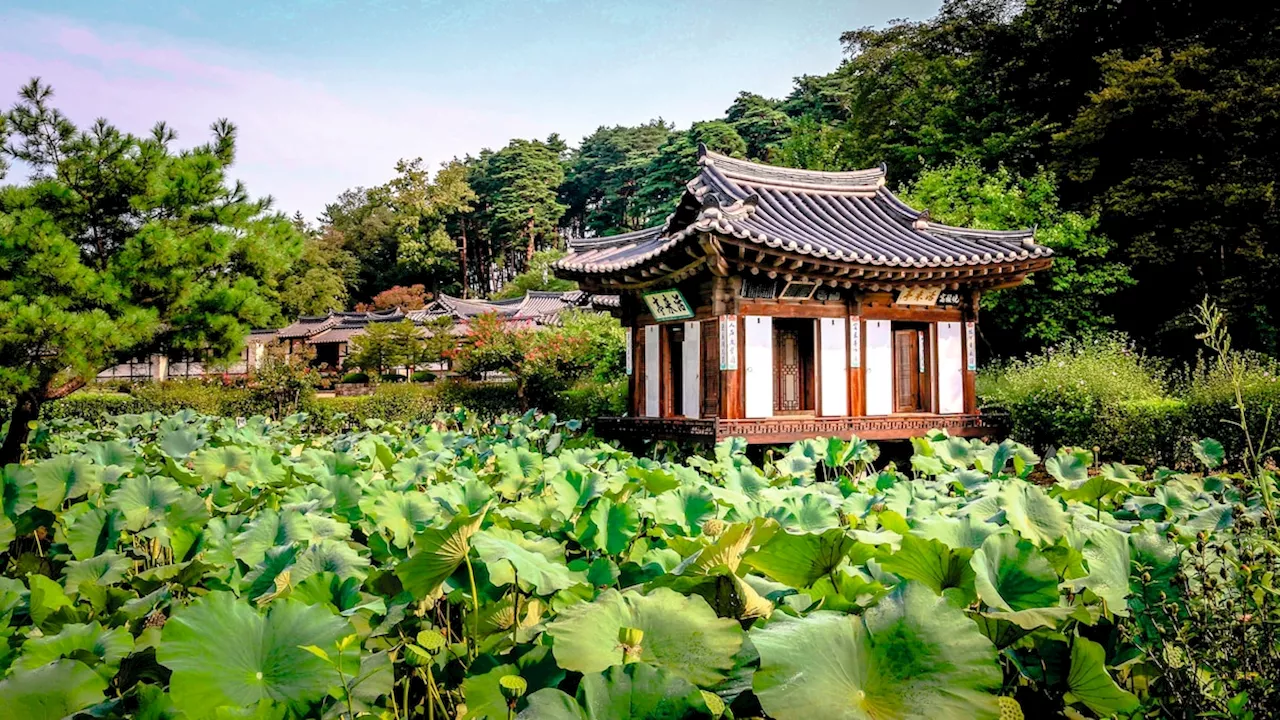 Beyond Seoul: 5 South Korean cities worth exploringSeoul may attract the most international visitors, but explore further afield and you’ll discover alternative cities with just as much character.
Read more »
 'Rich Dad Poor Dad' Author Reveals Key Quality for Being Rich as Thanksgiving NearsKiyosaki issued a post to highlight the approaching Thanksgiving Day and also what makes a good entrepreneur
Read more »
 Exploring the 60-year history of the Iron Bowl on TVHow the Iron Bowl has slowly evolved from a local event to a national spectacle
Read more »
 Moana 2's Auliʻi Cravalho's multicultural heritage reflects Hawaii's rich historyArturo Conde is an editor and a bilingual freelance journalist. He writes for La Opinión A Coruña and has been published in Fusion, Univision and City Limits.
Read more »