Paul Rusesabagina was kidnapped and thrown into a Rwandan prison. Now the San Antonio transplant is speaking out.
Paul Rusesabagina flew from Dubai thinking he would be doing good works in the days ahead — speaking out at churches in the East African nation of Burundi against government oppression and human rights abuses.
But as he boarded a charter plane for the trip nearly four years ago, he was walking into a trap set by the regime of President Paul Kagame, who's ruled Rwanda since 2000 and has repeatedly clashed with Rusesabagina. Rusesabagina saved more than a thousand people from genocide in his native Rwanda in 1994 by hiding them in a luxury hotel he managed in Kigali, the capital city. His heroism brought him international acclaim, which grew exponentially with the 2004 release of the movie 'Hotel Rwanda,' starring Don Cheadle as Rusesabagina. He fled Rwanda in 1996, fearing for his safety. The 69-year-old, who became a Belgian citizen but also holds permanent residency status in the United States, settled in San Antonio's far Northwest Side in 2009. But he has remained a force in Rwanda's politics as one of Kagame's most dogged critics. From abroad, he founded an opposition party in Rwanda in 2006. Kagame, in turn, has accused Rusesabagina of plotting and financing terrorist attacks carried out in Rwanda, which borders Burundi to the south. On board the jet purportedly en route to Bujumbura, the capital of Burundi, a flight attendant offered Rusesabagina a glass of champagne. “I tasted the champagne and immediately slept,” he said. 'I kind of jumped up when the plane landed, the tires on the ground. And when I woke up, I saw the control tower of the airport of Kigali.' 'When I saw it, I immediately kind of — my heart was almost stopping — but I said to myself that if I jump up, then they are going to kill me immediately.' The date was Aug. 31, 2020, and it was the start of a period of fear and uncertainty that ended with his release from a Rwandan prison in 2023, the result of intense American and international political pressure on Kagame's government. Rusesabagina recently talked about the episode and its aftermath in several interviews with the San Antonio Express-News. After he regained consciousness and was dragged off the plane, he yelled, “I’m kidnapped! I’m brought back to Rwanda! They have kidnapped me!” Nobody came to his rescue. On the tarmac, masked men with guns hog-tied him, pulled a hood over his head and threw him in the back of a pickup. He could barely breathe. Rusesabagina doesn't know where his captors drove him, but he wound up in a dark room where he was beaten on his stomach and legs for four days. One of the men repeatedly shocked him with a cattle prod and pressed his military-style boot against his neck. He was 66 at the time and denied access to his blood pressure medication. His health was deteriorating. 'I was almost dead,' he said, adding that he was hospitalized three times during his imprisonment. He said he suffered what appeared to be a stroke that left one arm partially paralyzed. Four days after taking him from the plane, the masked men moved him to another location — a police station — where the beatings continued for 18 more days. 'I call it the slaughterhouse, or the butchery, because that is where you hear other people who have been kidnapped or are being tortured like you from the neighboring room,' Rusesabagina said. 'Just shouting, talking very loudly, for one hour, for two hours, for three hours. And after a certain time, maybe three hours, you hear the voices slowing down, getting lost, and those people are dead. And you say to yourself, who is next? 'Is it not me?' From the police station, he was moved to a huge prison in a Kigali suburb. He would remain in captivity a total of 939 days. 'Obsessed with Paul' Rusesabagina was tried and convicted on nine terrorism-related counts. He was sentenced Sept. 20, 2021, to 25 years in prison for offenses ranging from financing terrorism to recruiting child soldiers. Nearly 20 other defendants were also convicted on related charges in the case. After his sentencing, Human Rights Watch said Rusesabagina had been unlawfully detained and that Rwandan officials had committed 'multiple violations of the right to a fair trial.' Rusesabagina had been brought to this low point by a Burundi bishop named Constantin Niyomwungere, who told a Rwandan court in March 2021 that he collaborated with the Rwandan Investigation Bureau to trick the human rights activist into boarding the charter plane, the Associated Press reported. Niyomwungere said in court that he'd befriended Rusesabagina in Brussels in 2017 — and that the 'Hotel Rwanda' exile had allegedly admitted that rebels backed by his opposition party had carried out an attack inside Rwanda, the AP reported. Rusesabagina told the Express-News the pastor had tricked him into believing he would be on a speaking tour of Burundi churches. He recalled Niyomwungere saying, ''I have heard you talking about justice. I have heard you talking about the truth. I have heard you talking about reconciliation through dialogue. Me as a man of God, as a pastor, as a bishop, I'm inviting you to come to Burundi and talk to my churches. Please.'' Niyomwungere could not be reached for comment, and the Rwandan Embassy in Washington, D.C., did not return phone calls. Rusesabagina said he suspects the only reason he wasn't killed upon landing in Rwanda was that his wife, Tatiana Rusesabagina, had called Niyomwungere and knew they were together. That Kagame's government would go to such lengths to imprison Rusesabagina wasn't a surprise to Kathleen Tobin Krueger, a longtime friend and supporter of his and a New Braunfels resident. She's the widow of Sen. Bob Krueger, a Texas Democrat who died of congestive heart failure two years ago at 86. Sen. Krueger served as ambassador to war-torn Burundi from June 1994 to September 1995, and Kathleen Krueger saw firsthand the sectarian violence that roiled the region then. She said the fighting sometimes unfolded within earshot of the ambassador's residence. 'Kagame has been obsessed with Paul for over two decades,' Krueger said. 'The time and effort he expends to monitor, harass, threaten and finally kidnap, torture and imprison Rusesabagina are nothing short of bizarre and maniacal.' Words as weapons If Kagame was unstoppable in his pursuit of Rusesabagina, it was because of the latter's international standing. He'd become famous for his heroism during one of the 20th century’s worst acts of genocide. In 2005, the year after the release of 'Hotel Rwanda,' President George W. Bush presented him with the Presidential Medal of Freedom for saving 1,268 Hutu and Tutsi refugees during the slaughter carried out from April 6 to July 4, 1994. As many as 1 million Rwandans were killed in that period as Hutus, the country's majority ethnic group, fought Tutsis, the minority group, and the Rwandan military targeted Hutus. Rusesabagina — a Hutu married to a Tutsi — used his job as general manager of Hotel des Mille Collines in Kigali to hide and shelter potential victims. Rusesabagina had been groomed in European management schools, could tell a Bordeaux from a Burgundy and a good scotch from a great one, managed a large payroll and handled the five-star hotel's most difficult guests. He had lived a quiet, contented life with Tatiana and their four children. They later adopted the two daughters of his brother-in-law and his wife, both of whom were killed in the genocide. As the massacre intensified, Rusesabagina said, he watched trucks filled with bodies passing in front of the hotel, and he decided to act. 'I was already involved, but I could see those trucks carrying dead bodies,' he said, adding that he'd been hiding neighbors in his home. In his memoir, 'An Ordinary Man,' Rusesabagina explains how he saved people he'd hidden in the hotel, saying it came down to words. 'I used words in many ways during the genocide — to plead, intimidate, coax, cajole, and negotiate,' he wrote. 'I was slippery and evasive when I needed to be. I acted friendly toward despicable people. I put cartons of champagne into their car trunks. I flattered them shamelessly. I said whatever I thought it would take to keep the people in my hotel from being killed.' Words also had poisoned Rwandan politics, whipping up ethnic animosities and creating an environment ripe for violence. Listening to a popular radio station, he wrote, 'I began to hear the racial slur 'cockroach' so frequently that it lost whatever power it had to shock. I heard myself being lumped in with those who were considered less than human.' When the worst of the massacre was over, he found the bodies of his wife's mother, siblings, nieces and nephews. The youngest victim was 4 years old. He broke down. It was the only time he cried during that period. 'He had made a vow to God on the hillside overlooking his in-laws’ bodies butchered and thrown into a pig sty — adding deep insult to grotesque injury — that he would fight injustice and genocide no matter where it occurred or who was doing it,' Krueger said. Surviving But little in his history had prepared Rusesabagina for the two and a half years he spent in the Kagame regime's clutches. He said his torture ended when he arrived at Mageragere Prison, but his psychological suffering continued. The prison teems with thousands of inmates in Rwanda's capital. Rusesabagina lived there in solitary confinement, mostly in darkness — until his jailers turned on a single light bulb in the center of his cell for brief periods. He was under constant surveillance, a pair of video cameras recording his every move. He couldn't talk with other inmates. 'I was going out one hour a day between 10 and 11. And whenever I was taken out, all the other prisoners in my block were locked in,' Rusesabagina said. 'And the directorate of military intelligence guys who were following me. I had seven of them, plus their leader, who was a major in the army. 'So you can imagine living that kind of life — not talking to anybody, not seeing anybody, no one talking to you,' he said. Rusesabagina's prison meal of corn and beans came once a day. But his family sent money for extra meals that included potatoes and casaba melons, a popular fruit in Rwanda. Still, he lost 22 pounds in captivity. He talked with his family once a week, the phone call lasting five minutes. Tatiana arranged to get all six of their children on the call, and she added others as the weeks and months turned into years. His family also sent him books to devour. He built a library from the dozens of books, including biographies of Nelson Mandela and Barack Obama. He also had five Bibles, one written in French. Pressure campaign works International pressure for Rusesabagina's release mounted quickly. The Biden administration said Rusesabagina had been “wrongfully detained” and convicted, and it made sure Rwanda's government knew the matter was a priority for the U.S. Secretary of State Antony Blinken personally raised the case with Kagame during a visit to Kigali. In Washington, Rep. Joaquin Castro, D-San Antonio, and Sen. John Cornyn, R-Texas, repeatedly called for his release. A resolution introduced by Castro and Rep. Young Kim, R-Calif., said Rusesabagina should be freed on humanitarian grounds. It was passed overwhelmingly by the House in July 2022. Rusesabagina said he eventually realized that Kagame would not kill him because of the international attention his kidnapping and imprisonment had garnered. But there was no guarantee he'd be released from the prison before completing his 25-year sentence. Before carrying out the scheme to bring him to Kigali, Kagame's regime had attempted 'to buy Paul's silence — even offering him an ambassadorship,' Krueger said. 'But Paul refused.' The efforts to bribe him continued in Kigali. At one point, Rusesabagina said, two men wearing masks entered his cell, lit a candle and asked if he knew who they were. He didn't. One identified himself as the secretary general of the Rwanda Investigation Bureau, and the other said he was the prosecutor general. 'They told me, 'We have come to see you, tell you that if you want to cooperate and tell us how you came to know all of those foreign politicians, that in a matter of time we are going to release you. Tell us how you came to get in touch with those foreign politicians and what you have been doing with them,'' Rusesabagina recalled. 'I said, 'OK, let me think about that.'' They left after 15 or 20 minutes, snuffing out the candle and leaving him again in the dark. Despite the isolation and uncertainty, Rusesabagina said he didn't lose hope. 'I did not give up, and also the international community, my family, everybody was speaking up,' he said. 'More than speaking up, fighting, and that's what scared Kagame.' The Rwandan government announced March 24, 2023, that it had commuted Rusesabagina's sentence as well as those of 18 other prisoners who were convicted alongside him. Soon after his release, he spent a short time in Brooke Army Medical Center's rehabilitation program for former prisoners of war. Balancing security and freedom The Rwandan regime's willingness to go to great lengths to track and stifle its enemies is never far from Rusesabagina's mind. Even as Rusesabagina sat in prison and diplomats worked to free him, allegations exploded in San Antonio that the Rwandan Embassy in Washington, D.C., had eavesdropped via Zoom on a St. Mary's University class discussion April 6, 2021, about Rusesabagina's abduction and imprisonment. The speakers included Rusesabagina’s son Trésor, daughter Anaise Kanimba, Tatiana and Krueger. Krueger said one of the participant's IP address was traced back to the Rwandan Embassy. 'This intrusion by a member of President Kagame’s diplomatic corps into a St. Mary’s class shows the paranoia of President Kagame’s administration in seeking to quell a rising chorus of international outrage over its kidnapping of Mr. Rusesabagina,' university President Thomas Mengler said in a statement after the incident. Rwanda's ambassador, Mathilde Mukantabana, rejected the claim that her embassy had listened in on the talk. “Why would we want to spy in a classroom?” she asked during a DreamWeek panel discussion in San Antonio in January 2023. Rusesabagina doesn't feel entirely safe, even though he and his family live in what appears to be a secure community — an upscale, gated subdivision in San Antonio. The gates close too fast for a car to slip into the subdivision after another one enters it. At a guard post, security personnel run checks on visitors before allowing them to drive in. He said he and his wife decided to move to the area partly because of their close friendship with Krueger. After being freed from prison, Rusesabagina decided to not make any speeches or pen any commentaries for about a year. He broke his silence April 6, the 30th anniversary of the Rwandan genocide, with a guest column in the New York Times. His message: Rwanda, seen in some places as a modern, inclusive society, is actually home to a ruthless regime that kidnaps, imprisons and murders its foes. 'Independent journalists, human rights advocates and opposition political parties are nearly absent from the landscape of Rwandan civil society today,' he wrote. 'This is not a reconciled or inclusive society; it is an authoritarian state. The rest of the world should stop looking the other way.' Rusesabagina said he's ready to go back on the speech circuit, though he won't return to Africa anytime soon. He plans to participate at an event in Oslo, Norway, and would welcome invitations to speak at universities in the U.S. In the meantime, he's writing a book on his kidnapping ordeal. He's thinking of calling it 'From Hell Back to Life.'
Rwandan Embassy Rwandan Investigation Bureau Associated Press Human Rights Watch St. Mary's University Rwanda Investigation Bureau New York Times Zoom House Paul' Rusesabagina Kathleen Tobin Krueger Paul Kagame Tatiana Rusesabagina Paul Mathilde Mukantabana Bob Krueger Constantin Niyomwungere Democrat Don Cheadle George W. Bush Anaise Kanimba God Antony Blinken Thomas Mengler Hutu Tutsi Joaquin Castro John Cornyn Young Kim An Ordinary Man Trésor R Barack Obama Nelson Mandela Biden D Rwandan Kigali San Antonio U.S. Bujumbura Burundi Dubai East African Belgian Northwest Side Washington D.C. Mageragere Prison Texas Hotel Des Mille Collines European Burgundy Brussels New Braunfels Brooke Army Medical Center Bordeaux St. Mary's Africa Norway Oslo French German Calif. Presidential Medal Of Freedom From Hell Back To Life Dreamweek English Swahili Hotel Rwanda
United States Latest News, United States Headlines
Similar News:You can also read news stories similar to this one that we have collected from other news sources.
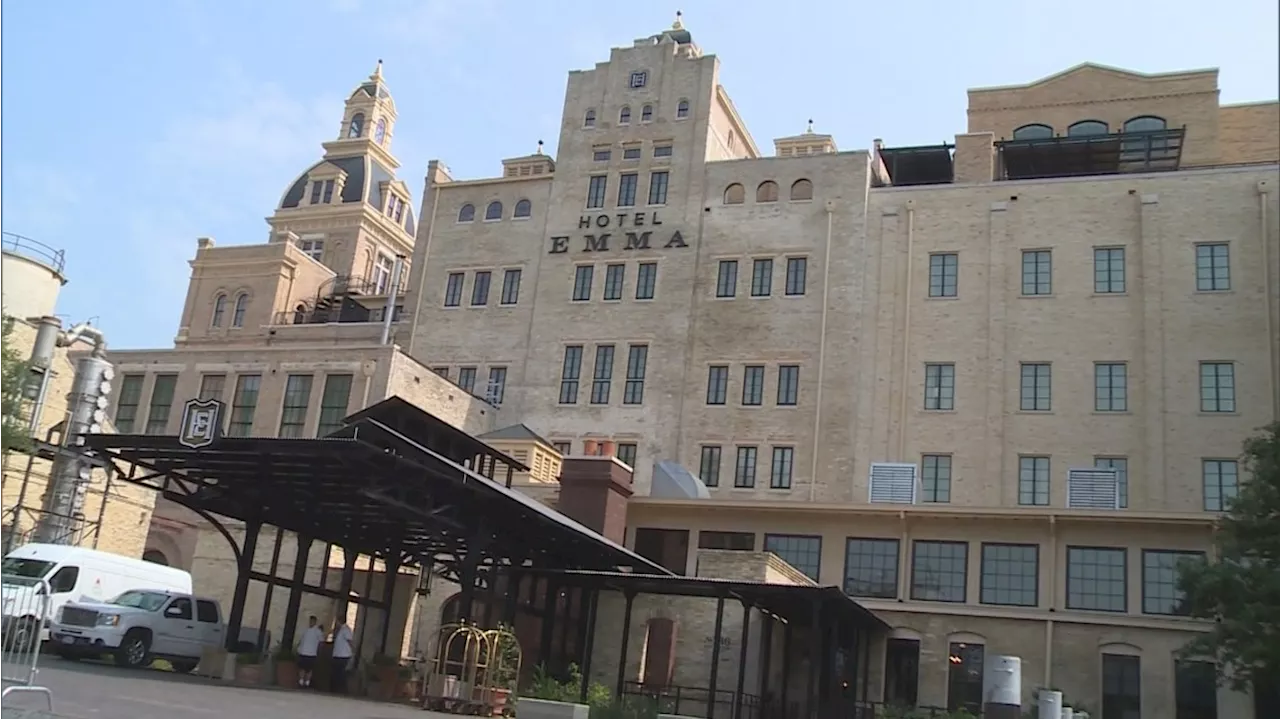 San Antonio hotel named 'Best Luxury Hotel in the U.S.' on TripAdvisorMay is National Wildfire Awareness Month. We take a look at controlled burns, impacts of climate change and the costly destruction from wildfires.
Read more »
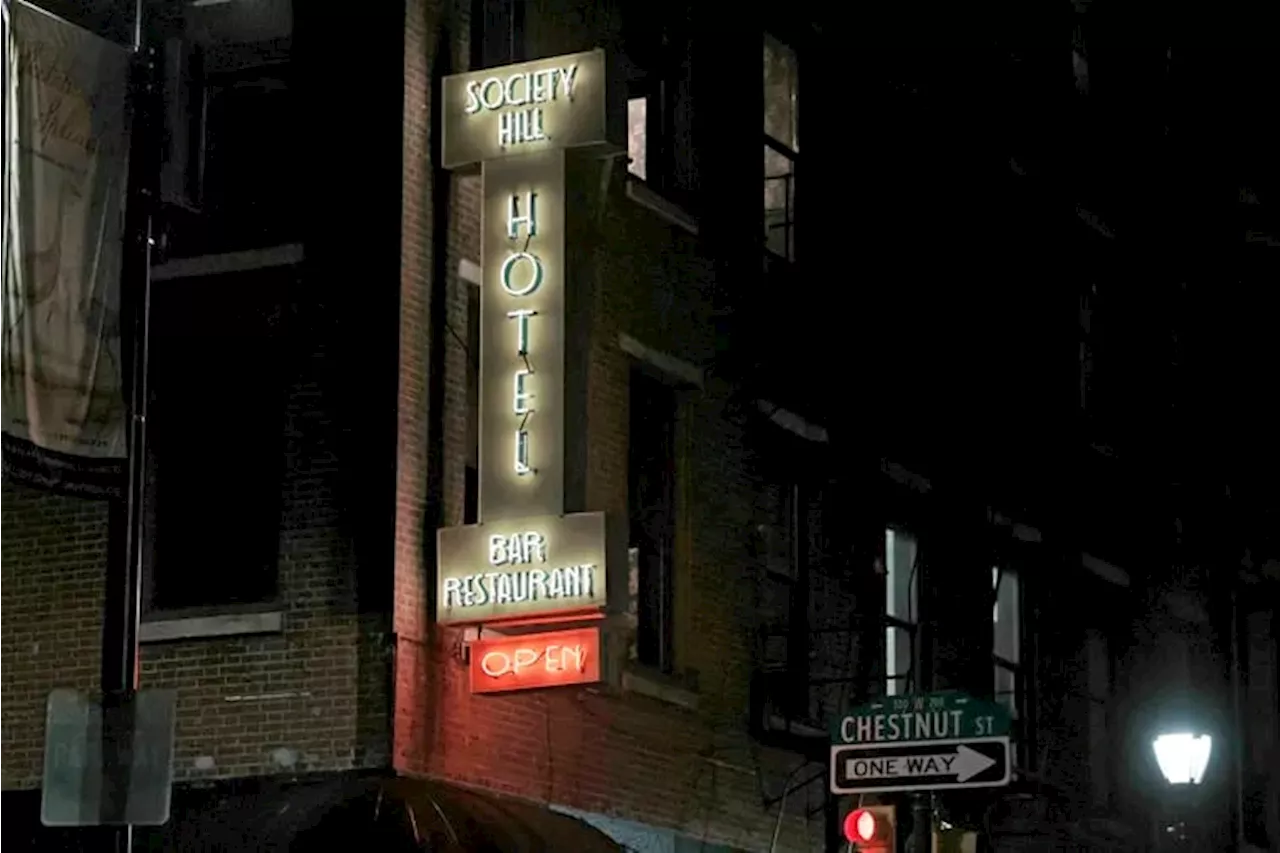 Society Hill Hotel will reopen this month as a boutique hotel, restaurant, and whiskey barOpening May 31, with 15 rooms, a cafe, whiskey bar, and restaurant, the old world hotel now gleams with Art Deco style.
Read more »
 Genetic genealogy IDs suspect at large in 1989 rapes that has 'haunted' comunity for decades: DAHe's used aliases including: Stephen Pisarcik, John Rossi, Paul Costa, Paul DeRosa, Paul DiCarli, Paul Joseph DeCarlo, Steve Miner, Paul Williams and Paul Ptaszynski, according to prosecutors.
Read more »
 Genetic genealogy IDs suspect at large in 1989 rapes that has 'haunted' comunity for decades: DAHe's used aliases including: Stephen Pisarcik, John Rossi, Paul Costa, Paul DeRosa, Paul DiCarli, Paul Joseph DeCarlo, Steve Miner, Paul Williams and Paul Ptaszynski, according to prosecutors.
Read more »
 Genetic genealogy IDs suspect at large in 1989 rapes that 'haunted' community for decades: DAHe's used aliases including: Stephen Pisarcik, John Rossi, Paul Costa, Paul DeRosa, Paul DiCarli, Paul Joseph DeCarlo, Steve Miner, Paul Williams and Paul Ptaszynski, according to prosecutors.
Read more »
 Genetic genealogy IDs suspect at large in 1989 rapes that 'haunted' community for decades: DAHe's used aliases including: Stephen Pisarcik, John Rossi, Paul Costa, Paul DeRosa, Paul DiCarli, Paul Joseph DeCarlo, Steve Miner, Paul Williams and Paul Ptaszynski, according to prosecutors.
Read more »