
The moon will appear to take bites out of the sun during a partial solar eclipse in the Northern Hemisphere. The eclipse will be visible Saturday across Europe, western Africa, eastern North America and northern Asia. The sun will shrink the most for the northeastern United States, Greenland and eastern Canada.
Ukraine is ready to observe a ceasefire on energy targets following US-brokered deal, Zelenskyy saysSupreme Court upholds Biden rule requiring serial numbers and background checks for ghost gunsThe Atlantic releases the entire Signal chat showing Hegseth's detailed attack plans against HouthisRussell Wilson is heading to the New York Giants, AP source saysDepardieu is on trial, and so is France.
It's a cultural reckoning in an era of #MeTooAP Entertainment WireUS adds Chinese tech firms to its export control list, says they sought US knowhow for military useFACT FOCUS: Posts falsely claim federal judiciary members are in secret club, undermining TrumpEscaped otters cavort in the snow as the zoo's search continuesA new thermal steam vent is grabbing attention in ever-changing Yellowstone National ParkDo you eat a meal in 20 minutes or less? It might be time to slow downDevoted nap-takers explain the benefits of sleeping on the jobResidue from human waste has long wound up as farm fertilizer. Some neighbors hate itRFK Jr. is targeting ultraprocessed foods. What are they, and are they bad for you?Do you eat a meal in 20 minutes or less? It might be time to slow downWhat is Signal, the chat app used by US officials to share attack plans?Spiritual adviser to man executed by firing squad: 'We're more than the worst thing we've done.'HRW documenta asesinatos selectivos contra población al noreste de Colombia por disputa de armadosLíderes de Brasil y Japón destacan la importancia de la democracia y el libre comercioScience An annular solar eclipse rises over the skyline of Toronto, June 10, 2021. The eclipse will be visible Saturday across Europe, western Africa, eastern North America and northern Asia. The sun will shrink the most for the northeastern United States, Greenland and eastern Canada., the moon passes between the sun and Earth. The moon casts a shadow on Earth and only partly blocks the sun, making it appear like a crescent. Unlike a“Eclipses are just a game of light and shadow that are played by the sun, moon and Earth,” said Auriane Egal with the Planetarium in Montréal. Solar and lunar eclipses happen anywhere from four to seven times a year, according to NASA. Due to the moon’s tilted orbit around Earth, they tend to come in pairs: ato see when it begins in your area. The spectacle is slotted during sunrise for most of the Americas, late morning for western Europe and Africa and afternoon for eastern Europe and northern Asia.Watch the moon turn red during a total lunar eclipse During the eclipse, the sun will slowly slim to a crescent as the moon appears to cover it and the day may get dimmer. “It will feel like a particularly cloudy day,” said Juan Carlos Muñoz-Mateos with the European Southern Observatory. Check weather conditions before heading outside. Clear skies away from tall buildings and city lights are best, especially in the Americas where the sun may be rising during the eclipse. Grab eclipse glasses ahead of time to spot the sight safely through a local science museum or ordering online from a seller cleared on the American Astronomical Society’s website. Viewers can also enjoy the spectacle through indirect ways such as making a pinhole projector using household materials. Holding up a colander will produce a similar effect. Peering at the ground under a shady tree can yield crescent shadows as the sunlight filters through branches and leaves. Another total lunar eclipse and partial solar eclipse will return in September with the best solar eclipse views in Antarctica and New Zealand.The Associated Press Health and Science Department receives support from the Howard Hughes Medical Institute’s Science and Educational Media Group and the Robert Wood Johnson Foundation. The AP is solely responsible for all content.Ramakrishnan is a science reporter for The Associated Press, based in New York. She covers research and new developments related to space, early human history and more.Pope Francis’ doctors considered stopping treatment to ‘let him go’ after serious breathing crisisTrump signs order seeking to overhaul US elections, including requiring proof of citizenship
Greenland Astronomy Juan Carlos Muoz-Mateos Europe Solar Eclipses Science Africa North America
United States Latest News, United States Headlines
Similar News:You can also read news stories similar to this one that we have collected from other news sources.
 Partial Solar Eclipse to Grace North America, Europe, Africa on March 29A partial solar eclipse will be visible across North America, Europe, and parts of Northwest Africa on March 29. While totality won't be observed, the celestial event will still be a spectacular sight, especially for early risers in eastern North America where up to 94% of the sun will be obscured.
Read more »
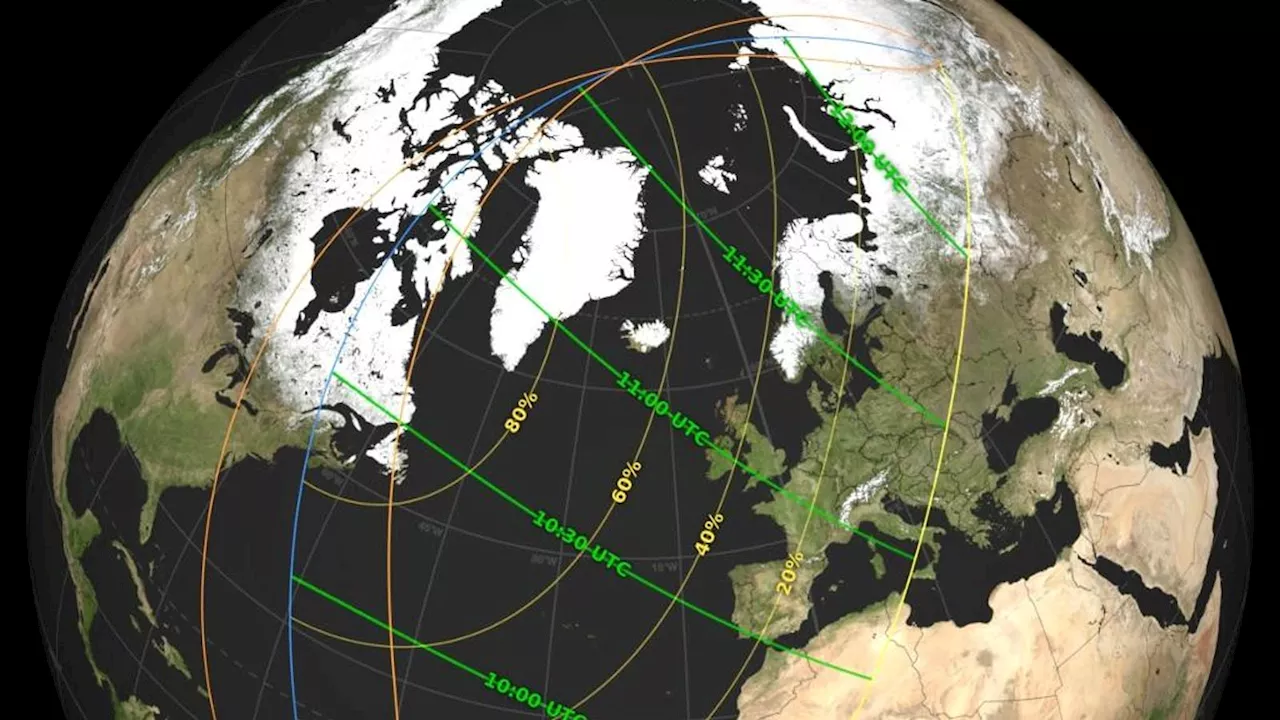 Where To See 2025’s First Solar Eclipse, From North America To Europe And AfricaThe first solar eclipse in 2025 will be visible from Canada, the northeastern U.S., Europe and Africa. Here’s where and when to see it at its best.
Read more »
 Where To See 2025’s First Solar Eclipse, From North America To Europe And AfricaThe first solar eclipse in 2025 will be visible from Canada, the northeastern U.S., Europe and Africa. Here’s where and when to see it at its best.
Read more »
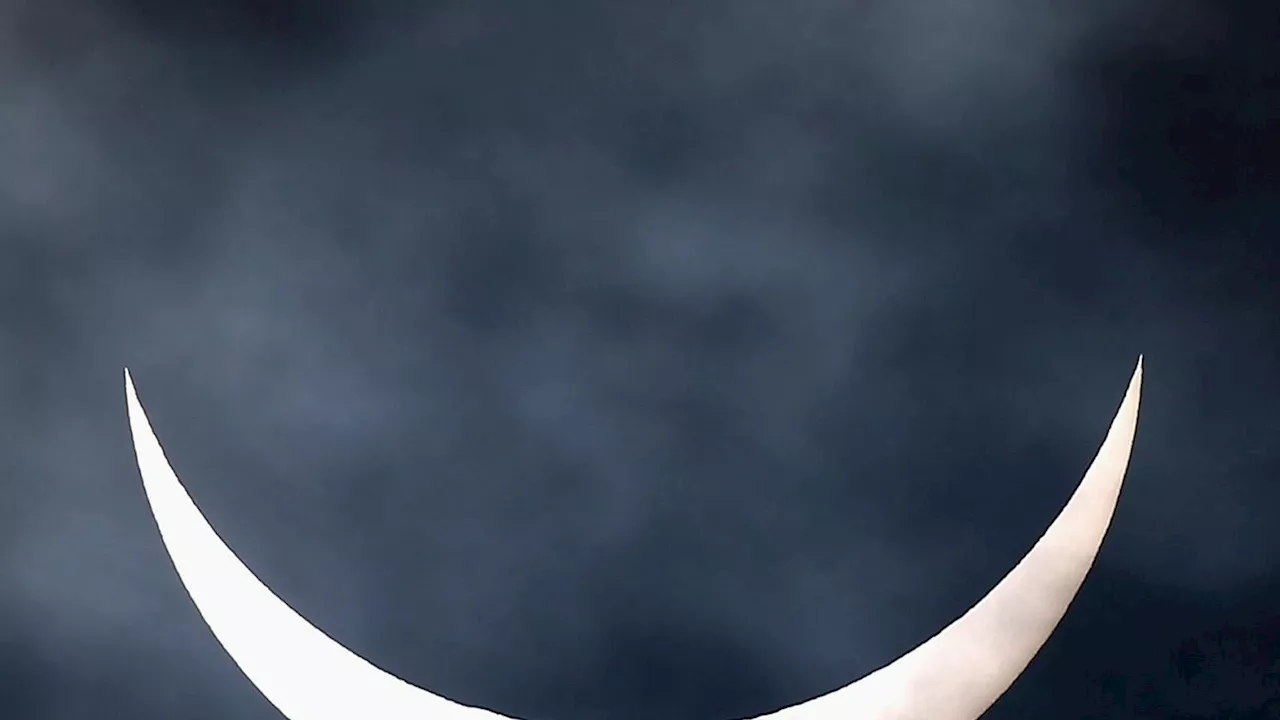 ‘Double Sunrise’ 2025: Ultimate Guide To North America’s Solar EclipseA partial solar eclipse will be visible from North America on March 29, 2025. Here’s when, where, and how to safely watch it at sunrise and beyond.
Read more »
 ‘Double Sunrise’ 2025: Ultimate Guide To North America’s Solar EclipseA partial solar eclipse will be visible from North America on March 29, 2025. Here’s when, where, and how to safely watch it at sunrise and beyond.
Read more »
 ‘Double Sunrise’ 2025: Ultimate Guide To North America’s Solar EclipseA partial solar eclipse will be visible from North America on March 29, 2025. Here’s when, where, and how to safely watch it at sunrise and beyond.
Read more »