
Scientists cut E. coli’s genetic code from 64 to 57 codons—creating a powerful platform for synthetic biology breakthroughs.
In a landmark feat of genetic engineering, researchers at the MRC Laboratory of Molecular Biology in Cambridge have created a strain of Escherichia coli that functions with just 57 codons, down from the 64 used by virtually all known life.
The synthetic bacterium, named Syn57, has the most radically compressed genetic code ever built, opening the door to future organisms that can create unnatural materials, virus-resistant biofactories, and advanced polymers.The genetic code is the universal system life uses to build proteins. It reads DNA and RNA in three-letter sequences called codons, which specify amino acids or signal when to stop making a protein.Rewiring the genetic playbookLife typically uses 64 codons to encode just 20 amino acids and three stop signals, meaning there’s built-in redundancy.By removing some of these duplicated codons, scientists can reclaim space in the genome to reassign new biochemical functions.Jason Chin’s team at LMB previously created Syn61, a fully synthetic E. coli strain using only 61 codons. That earlier version has already been reprogrammed to include non-canonical amino acids—chemical building blocks not found in nature—to create entirely novel polymers.Now, Syn57 takes the concept further, eliminating seven additional codons: four for serine, two for alanine, and one stop codon. In total, the team replaced over 101,000 codon instances across the bacterium’s 4-megabase genome.To manage the scale of this rewrite, the genome was divided into 38 synthetic DNA fragments, each around 100,000 bases long.These fragments were built using homologous recombination and assembled using a tool called uREXER , a technique that combines CRISPR-Cas9 and viral enzymes to swap out DNA precisely in a single step.Problematic genome regions that resisted recoding or stunted bacterial growth were identified during stepwise testing. The team addressed these issues by refactoring overlapping genes, tweaking codon choices, and optimizing the N-terminal coding sequences to improve gene expression.Synthetic cells, real impactThe resulting fragments were merged using bacterial mating into a sequence of semi-synthetic strains, which were then convergently assembled into the final, fully synthetic Syn57 organism.Despite its radically altered code, Syn57 grows and functions. Freed-up codons can now be repurposed to introduce even more non-canonical amino acids, enabling the synthesis of custom synthetic polymers, macrocycles, and potentially new materials with programmable properties.Crucially, Syn57 may also be immune to many viruses, which rely on the host’s standard genetic code to replicate. That could make industrial drug-making safer and cheaper by eliminating a major source of biomanufacturing disruption.“It’s a radically recoded genome,” said lead researcher Wes Robertson. “With today’s technology, this is likely the most compressed code life can use.”The work, published in Science, was funded by UKRI, the European Research Council, the Wellcome Trust, and others.
E. Coli Genetic Code Compression Jason Chin Non-Canonical Amino Acids Recoded Genome Syn57 Synthetic Biology Virus Resistance
United States Latest News, United States Headlines
Similar News:You can also read news stories similar to this one that we have collected from other news sources.
 Healthy babies born in Britain after scientists used DNA from three people to avoid genetic diseaseResearchers report that eight healthy babies were born with the help of an experimental technique that uses DNA from three people to help mothers avoid passing rare diseases to their children.
Read more »
 Healthy babies born in Britain after scientists used DNA from three people to avoid genetic diseaseResearchers report that eight healthy babies were born with the help of an experimental technique that uses DNA from three people to help mothers avoid passing rare diseases to their children.
Read more »
 Healthy babies born in Britain after scientists used DNA from three people to avoid genetic diseaseResearchers report that eight healthy babies were born with the help of an experimental technique that uses DNA from three people to help mothers avoid passing rare diseases to their children.
Read more »
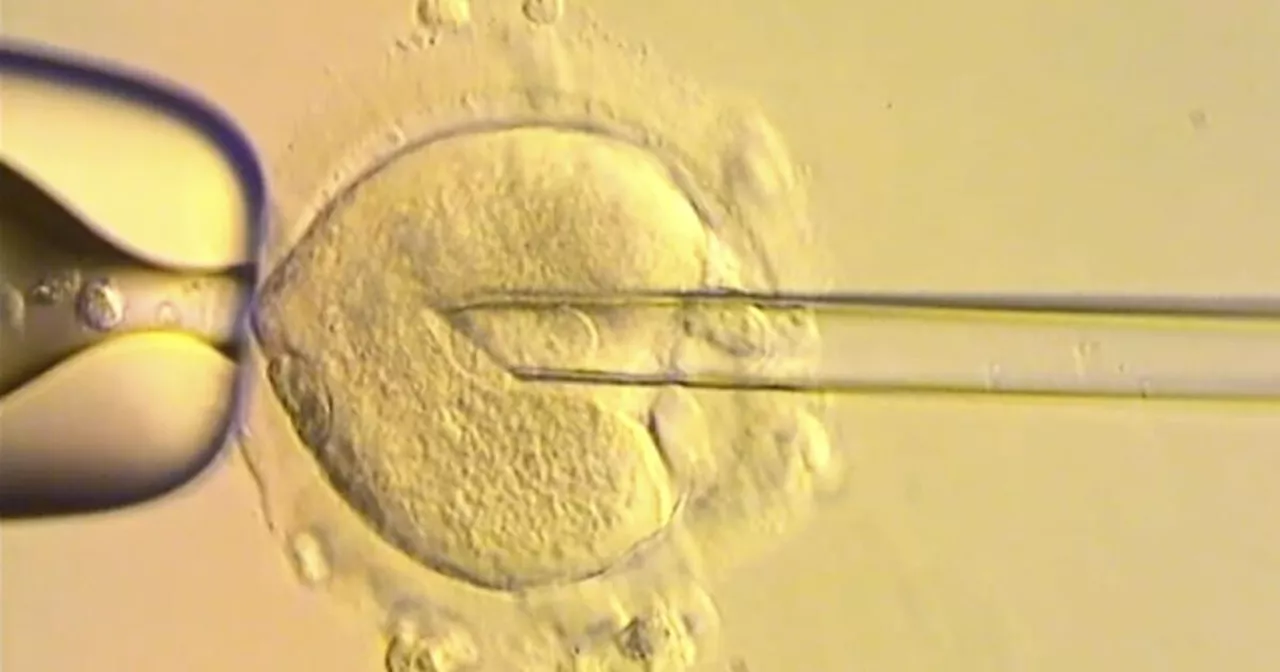 Healthy babies born in Britain after scientists used DNA from three people to avoid genetic diseaseResearchers report that eight healthy babies were born with the help of an experimental technique that uses DNA from three people to help mothers avoid passing rare diseases to their children
Read more »
 Healthy babies born in Britain after scientists used DNA to avoid genetic diseaseEight healthy babies were born in Britain with the help of an experimental technique that uses DNA from three people to help mothers avoid passing devastating rare diseases to their children.
Read more »
 Scientists create glowing artificial cells that pulse to 24-hour biological clockUC Merced scientists build glowing synthetic cells that mimic circadian rhythms with clock-like precision.
Read more »