
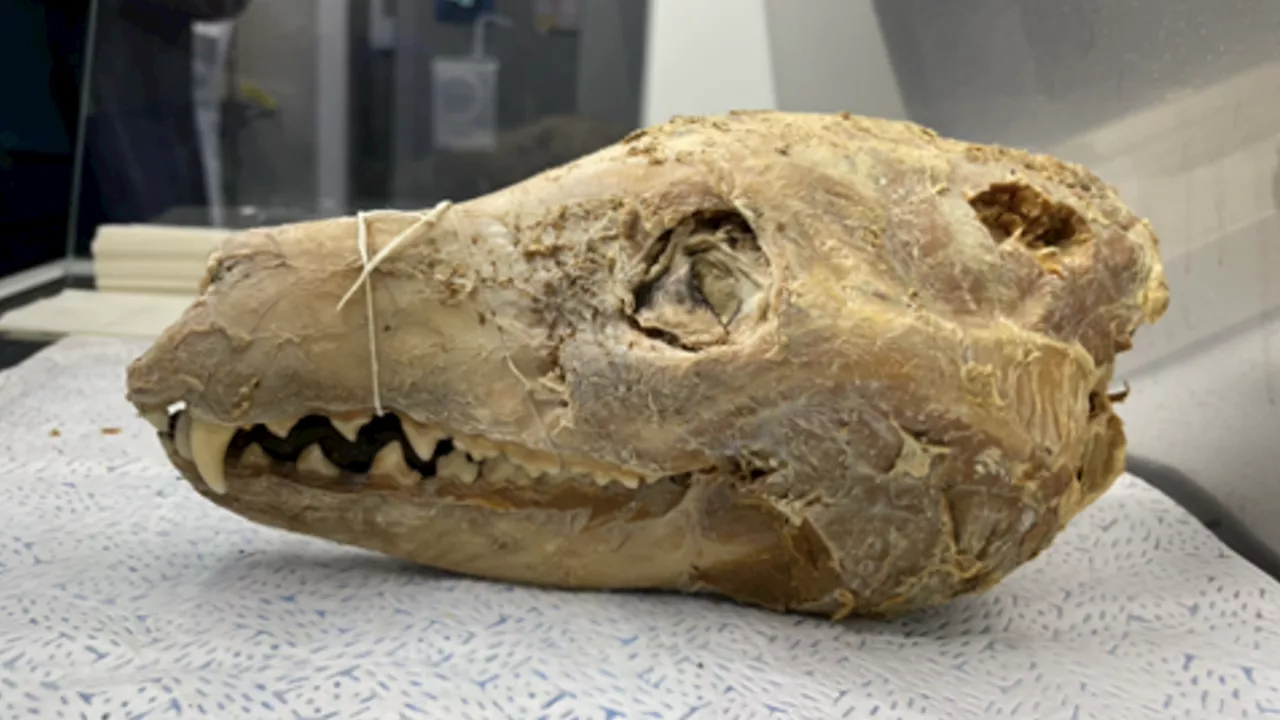
The reconstructed genome, which is over 99.9% accurate, was developed from a 110-year-old preserved, pickled head of a thylacine.
In a recent achievement, scientists have successfully assembled the most complete Tasmanian tiger genome to date. These findings could play a major role in potentially de-extincting the species. The reconstructed genome, which is over 99.
9% accurate, was developed from a 110-year-old preserved, pickled head of a thylacine, commonly known as the Tasmanian tiger, preserved in ethanol. “Bringing extinct animals back from the dead is no longer the realm of science fiction but is fast becoming a scientific reality,” says Andrew Pask, head of the University of Melbourne’s Thylacine Integrated Genetic Restoration Research Lab, who has been at the forefront of these efforts since 2022.The meticulously reconstructed DNA, combined with RNA fragments , offers unprecedented insights into the biology of the thylacine, which went extinct in 1936. The RNA fragments allow researchers to understand which genes were active in the animal’s tissues, shedding light on its sensory capabilities, such as taste and smell, and even brain function. The thylacine, a carnivorous marsupial and apex predator, played a crucial role in Tasmania’s ecosystem before human interference led to its extinction. Efforts to bring the species back to life have gained momentum, thanks to breakthroughs in genetic science. Andrew Pask and his team, in collaboration with Colossal Biosciences, aim to revive the thylacine and advance conservation technologies for marsupials. “If we look at the modern-day habitat in Tasmania, it has remained relatively unchanged. This means it provides the perfect environment to re-introduce the thylacine, enabling it to reoccupy its niche,” The assembled genome is similar in size to that of a human, containing 3 billion base pairs of nucleotides. Although there are still 45 gaps in thePask emphasized the importance of the genome, stating that having such a high-quality blueprint will significantly accelerate efforts to revive the species. While it might take time, this achievement brings de-extinction closer than ever before. “These technologies will, for example, improve the breeding capacity of critically endangered species in captive populations—such as the closely related Tasmanian devils being bred to help fight against theirThe image depicts a group of Tasmanian tigers in a lush, green forest near a waterfall. Image Credit: Colossal BiosciencesWhile there is no doubt that the near-complete reconstruction of the genome of an extinct species is nothing short of incredible, some scientists believe that ideas and claims of true, genuine de-extinction must be taken with a pinch of salt. Independent researchers, such as Professor Kristofer Helgen of Australian Museums Research, acknowledge the significance of genome reconstruction but emphasize that this is only a small part of a much larger puzzle.is not a simple manual for bringing back extinct species. Many complex biological processes must be understood and replicated before a living thylacine can be produced. Others, like Parwinder Kaur, founder and director of DNA Australia, echoed this sentiment, calling for peer-reviewed data to back up the claims. While acknowledging the difficulty of such a feat and praising the team’s accomplishments, Kaur urged caution. “Working in this space, we know how difficult it is to get things together and big kudos to everyone involved here, but it would be lovely to release these claims, following the data,” Professor Kaur told), the broader implications are becoming clear. The success of this project could pave the way for future efforts to restore biodiversity and reverse some of the damage done by human-caused extinctions. The reconstruction of the thylacine genome constitutes a major advancement in genetic research and conservation technology. The research has considerably furthered and complexified the conversation around humanity’s role in restoring life, especially one that has gone extinct due to direct human contact. Whether the thylacine will one day roam Tasmania again is a question for the future, and a loaded, complex one at that, but what cannot be denied is that the journey toward that possibility is real and is advancing genetic science in unprecedented ways.Srishti studied English literature at the University of Delhi and has since then realized it's not her cup of tea. She has been an editor in every space and content type imaginable, from children's books to journal articles. She enjoys popular culture, reading contemporary fiction and nonfiction, crafts, and spending time with her cats. With a keen interest in science, Srishti is particularly drawn to beats covering medicine, sustainability, gene studies, and anything biology-related.
Extinction Genome Reconstruction Tasmanian Tiger Thylacine
United States Latest News, United States Headlines
Similar News:You can also read news stories similar to this one that we have collected from other news sources.
 More than 110 pounds of crystal meth seized in $600K Manhattan drug bust: ProsecutorsIn all, the weight of the packages was just over 110 pounds with a street value of more than a half-million dollars, making it one of the largest meth seizures…
Read more »
 More than 110 pounds of crystal meth seized in $600K Manhattan drug bust: ProsecutorsIn all, the weight of the packages was just over 110 pounds with a street value of more than a half-million dollars, making it one of the largest meth seizures…
Read more »
 More than 110 pounds of crystal meth seized in $600K Manhattan drug bust: ProsecutorsIn all, the weight of the packages was just over 110 pounds with a street value of more than a half-million dollars, making it one of the largest meth seizures…
Read more »
 Over 110 Pounds Of Crystal Meth Seized In Massive New York BustMore than 110 pounds of crystal meth, worth over $600,000, was seized from a vehicle in Lower Manhattan during a bust being called one of the biggest in New York history. The DEA’s New York Drug Enforcement Task Force (NYDETF) apprehended two men, Fernando Penaloza-Reyes and Raul Cruz-Torres, from Reading, Pennsylvania, who were charged with possession of a controlled substance.
Read more »
Shohei Ohtani on Track to Do Something Not Seen in More Than 110 Years of HistoryThe Los Angeles Dodgers beat the Miami Marlins on Wednesday as Shohei Ohtani stepped up his pursuit of baseball immortality once again.
Read more »
 Most complete Tasmanian tiger genome yet pieced together from 110-year-old pickled headSascha is a U.K.-based trainee staff writer at Live Science. She holds a bachelor’s degree in biology from the University of Southampton in England and a master’s degree in science communication from Imperial College London. Her work has appeared in The Guardian and the health website Zoe.
Read more »