
This article explores the concept of gravitational wave communication (GWC) as a potential next-generation communication technology. It discusses the limitations of current electromagnetic communication and the advantages GWC offers, such as robustness in extreme environments and long-distance transmission. The article also highlights the challenges associated with generating and detecting artificial gravitational waves, and the need for advanced detectors and modulation techniques to make GWC a reality.
The concept of gravitational wave communication (GWC) is a fascinating one, though currently beyond our technological reach. Nonetheless, exploring this hypothetical scenario holds value as the future often arrives sooner than anticipated. Led by researchers Houtianfu Wang and Ozgur B.
Akan from the Internet of Everything Group at the University of Cambridge, the idea proposes utilizing gravitational waves, ripples in spacetime generated by massive accelerating objects, as a novel communication method. This approach addresses the limitations of traditional electromagnetic communication (EMC), which suffers from signal weakening over distance, atmospheric interference, line-of-sight restrictions, and susceptibility to solar weather and space activity. GWC, on the other hand, boasts robustness in extreme environments, minimal energy loss over vast distances, and the ability to circumvent diffusion, distortion, and reflection problems inherent to EMC. The authors highlight the potential of harnessing naturally occurring gravitational waves, thereby reducing the energy required to generate them. To realize this technology, researchers must create artificial gravitational waves in a laboratory setting. This is a primary focus of current gravitational wave research. However, generating detectable gravitational waves presents a formidable challenge due to their extreme weakness. Only objects of immense mass moving at extraordinary speeds can produce them. While the theoretical foundation of GWC is strong, practical advancements lag behind. The paper outlines a research roadmap to bridge this gap, emphasizing the need for detectors capable of operating across a broader range of frequencies and amplitudes.The authors acknowledge that GWC, despite its advantages, faces its own set of obstacles. Gravitational waves, capable of traveling vast distances, can encounter attenuation, phase distortion, and polarization shifts when interacting with dense matter, cosmic structures, magnetic fields, and interstellar matter. These interactions introduce unique noise sources, including thermal gravitational noise, background radiation, and overlapping gravitational wave signals. Developing comprehensive channel models is crucial to ensure reliable and efficient detection in these complex environments. Furthermore, researchers must explore methods for modulating gravitational waves, a key element in any communication system. Modulation techniques, like AM and FM in radio communication, allow for encoding information onto the waves, enabling transmission and reception
Gravitational Wave Communication Gravitational Waves Electromagnetic Communication Communication Technology Future Communication
United States Latest News, United States Headlines
Similar News:You can also read news stories similar to this one that we have collected from other news sources.
 JWST Reveals Over 40 Stars in Distant Galaxy Using Gravitational LensingUsing the James Webb Space Telescope, astronomers have detected over 40 individual stars in a galaxy 6.5 billion light-years away, marking a significant discovery in observing distant galaxies.
Read more »
Jason Kelce Suggests Adding a Stadium Wave to Iowa's Touching Hawkeye Wave TraditionJason Kelce, former NFL player and current media personality, proposes adding a traditional stadium wave to Iowa's heartwarming 'Hawkeye Wave' during children's hospital visits.
Read more »
 BlackCAT: A Cubesat Designed to Detect Multimodal Signals from Gravitational Wave EventsBlackCAT, a new 6U Cubesat, will launch early this year to detect soft X-ray emissions from gravitational wave events. This mission aims to address the limitations of aging X-ray telescopes like Swift and Fermi in identifying the electromagnetic counterparts of gravitational waves. BlackCAT utilizes an array of CMOS X-ray cameras and a coded mask imager to capture and isolate these soft X-ray signals, enabling astronomers to map specific EM emissions to their gravitational wave sources.
Read more »
 Ucluelet's Freak Wave: A Record-Breaking Rogue WaveA rogue wave, towering 17.6 meters high, was recorded off the coast of British Columbia in November 2020. This unprecedented event, confirmed as the most extreme rogue wave ever recorded, highlights the unpredictability and destructive potential of these massive waves.
Read more »
![Mastering the B-wave: A live trading case study using volume and Elliott Wave theory [Video]](https://i.headtopics.com/images/2025/1/10/fxstreetnews/mastering-the-b-wave-a-live-trading-case-study-usi-mastering-the-b-wave-a-live-trading-case-study-usi-7AB28FB6E7650D12C693B7677D408BC8.webp?w=640) Mastering the B-wave: A live trading case study using volume and Elliott Wave theory [Video]Understanding market dynamics through Elliott Wave theory and volume analysis can transform your trading.
Mastering the B-wave: A live trading case study using volume and Elliott Wave theory [Video]Understanding market dynamics through Elliott Wave theory and volume analysis can transform your trading.
Read more »
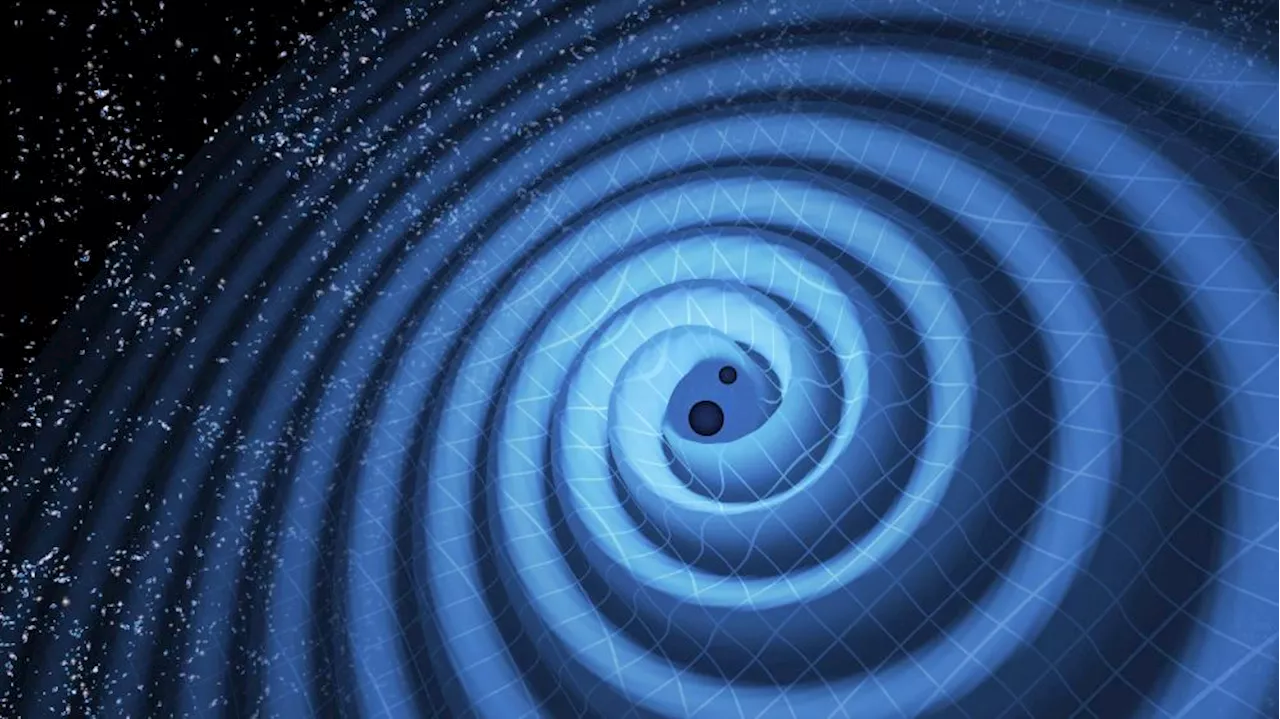 Could Gravitational Waves Be Used for Communication?This article explores the potential of using gravitational waves for communication, highlighting the advantages it could offer over traditional electromagnetic communication. It discusses the challenges and opportunities in generating and detecting artificial gravitational waves, outlining the current state of research and future directions.
Read more »