
Researchers at the Daegu Gyeongbuk Institute of Science and Technology have made a significant breakthrough in quantum computing by discovering a new quantum state within two-dimensional (2D) semiconductor chips. This discovery offers a promising path for controlling quantum information with enhanced reliability, potentially leading to more powerful and efficient quantum computers.
Scientists have made a groundbreaking discovery in the realm of quantum computing, uncovering a novel quantum state within two-dimensional (2D) semiconductor chips. This groundbreaking finding holds immense potential for controlling quantum information with unprecedented reliability.
The research, spearheaded by scientists at the Daegu Gyeongbuk Institute of Science and Technology, reveals that this new quantum state, termed the 'exciton-Floquet synthesis state,' offers a unique platform for manipulating and extracting quantum information from subatomic particles. Traditionally, maintaining coherence – the delicate state where quantum properties are preserved – has been a significant challenge in quantum computing. 3D structures are highly susceptible to thermal influences and electromagnetic disturbances, leading to rapid decoherence, the loss of quantum properties. However, 2D materials demonstrate superior resilience against these disruptive factors, allowing for longer coherence times. This inherent stability makes 2D semiconductors ideal candidates for building robust quantum computers.The scientists achieved this breakthrough by utilizing photoelectron spectroscopy to observe the formation of excitons – quasi-particles composed of an electron and a positively charged hole – within the 2D semiconductor. They further observed the excitons interacting with Floquet states, which are quasi-stationary states generated by periodic time-driving fields. The coalescence of these two phenomena resulted in the discovery of the novel exciton-Floquet synthesis state, exhibiting intriguing properties distinct from conventional systems. This discovery not only opens up exciting possibilities for quantum information processing but also paves the way for developing reconfigurable devices capable of storing data in quantum computers.
QUANTUM COMPUTING 2D SEMICONDUCTORS QUANTUM ENTANGLEMENT COHERENCE FLOQUET STATES
United States Latest News, United States Headlines
Similar News:You can also read news stories similar to this one that we have collected from other news sources.
 Scientists Discover New Type of Cartilage Tissue: LipocartilageA new type of cartilage tissue, called lipocartilage, has been discovered by scientists. This tissue, which contains both structural and cushioning properties, could revolutionize plastic surgery and the creation of biocompatible implants.
Read more »
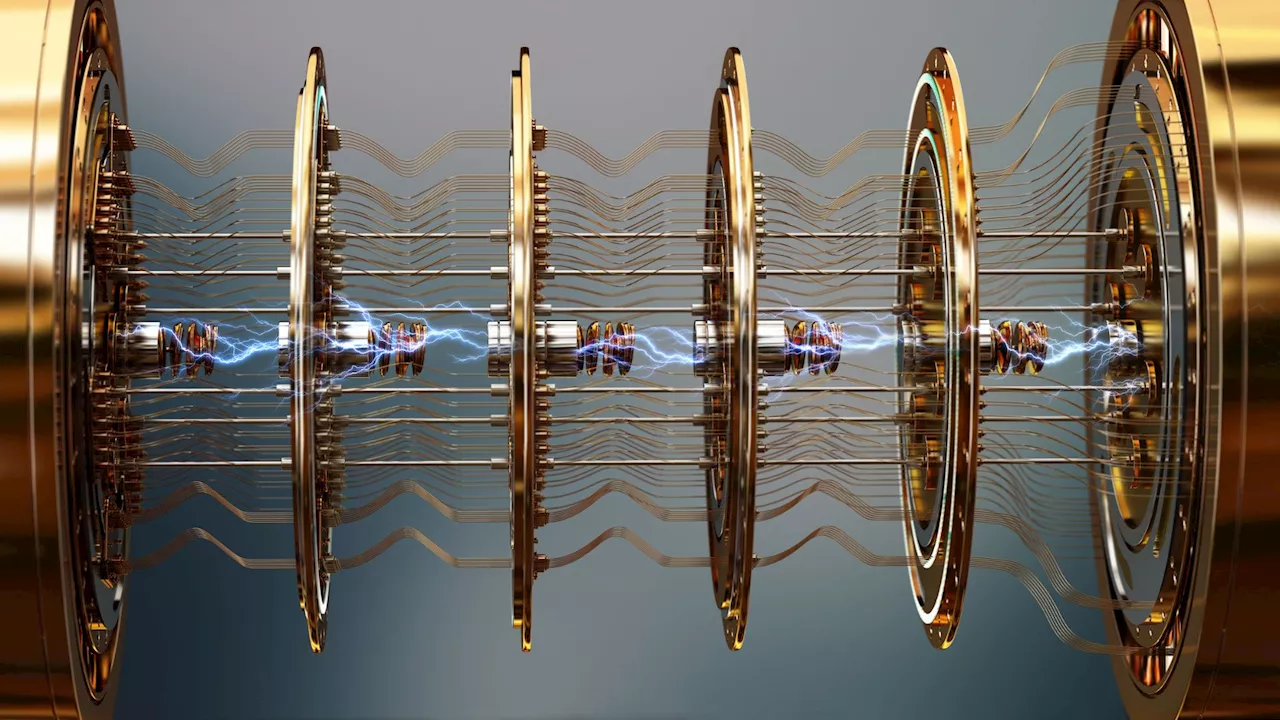 Scientists Achieve First-Ever Entanglement of Molecules, Opening New Doors for Quantum TechnologiesFor the first time, scientists at Durham University have successfully entangled molecules, a major breakthrough in quantum mechanics research with significant implications for future technologies.
Read more »
 Scientists Discover New Species of Deadly Funnel-Web SpiderAustralian scientists have identified a new species of funnel-web spider, significantly larger and more venomous than its relatives, dubbed 'Big Boy.' Research reveals three distinct species of Sydney funnel-web spiders, with 'Big Boy' measuring up to 3.54 inches long. While considered highly dangerous, the existing antivenom is effective against bites from this new species.
Read more »
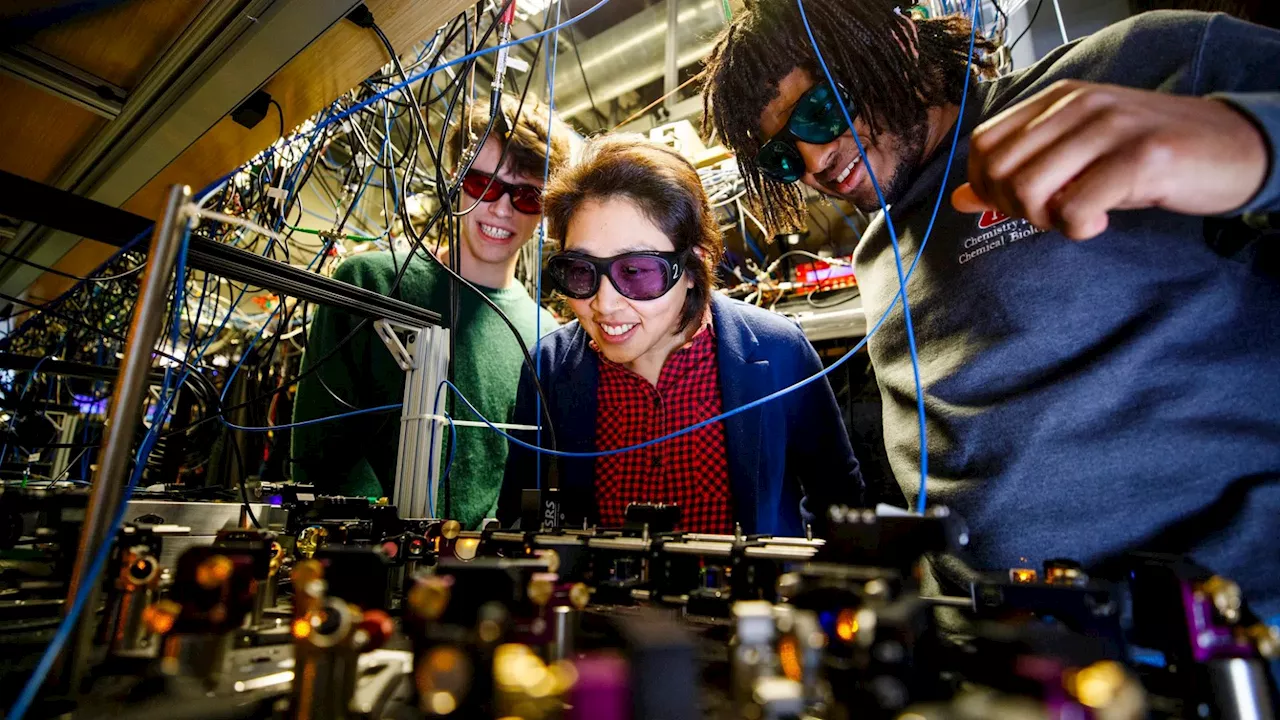 Harvard Scientists Trap Molecules for Quantum Operations, Ushering in a New Era of Quantum ComputingFor the first time, scientists have successfully trapped molecules and used them to perform quantum operations, marking a significant leap forward in the field of quantum computing. This breakthrough opens up new possibilities for building more powerful and versatile quantum computers.
Read more »
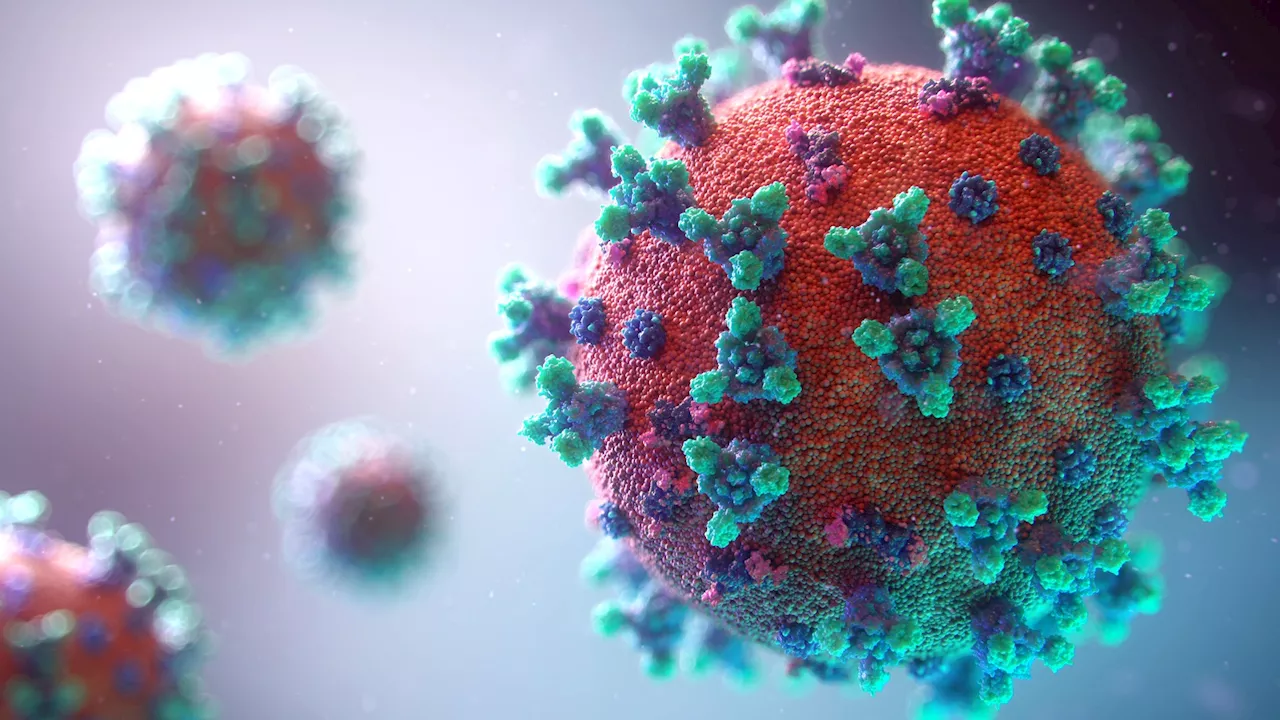 Scientists Discover a New Class of Life in the Human Digestive SystemResearchers have identified a novel group of life forms called Obelisks within the human digestive system. Initially mistaken for viruses, Obelisks possess unique genetic characteristics unlike any known biological agent. They appear to be colonists of human microbiomes, coding for a new protein class called Oblins. While their origin remains unclear, their protein-coding ability distinguishes them from other RNA loops like viroids, lacking the genetic makeup for viral protein shells.
Read more »
 US scientists spot new class of quantum particles in world-first breakthroughIn a first, US researchers have observed fractional excitons, a new class of quantum particles, that were only theoretically known to exist so far.
Read more »