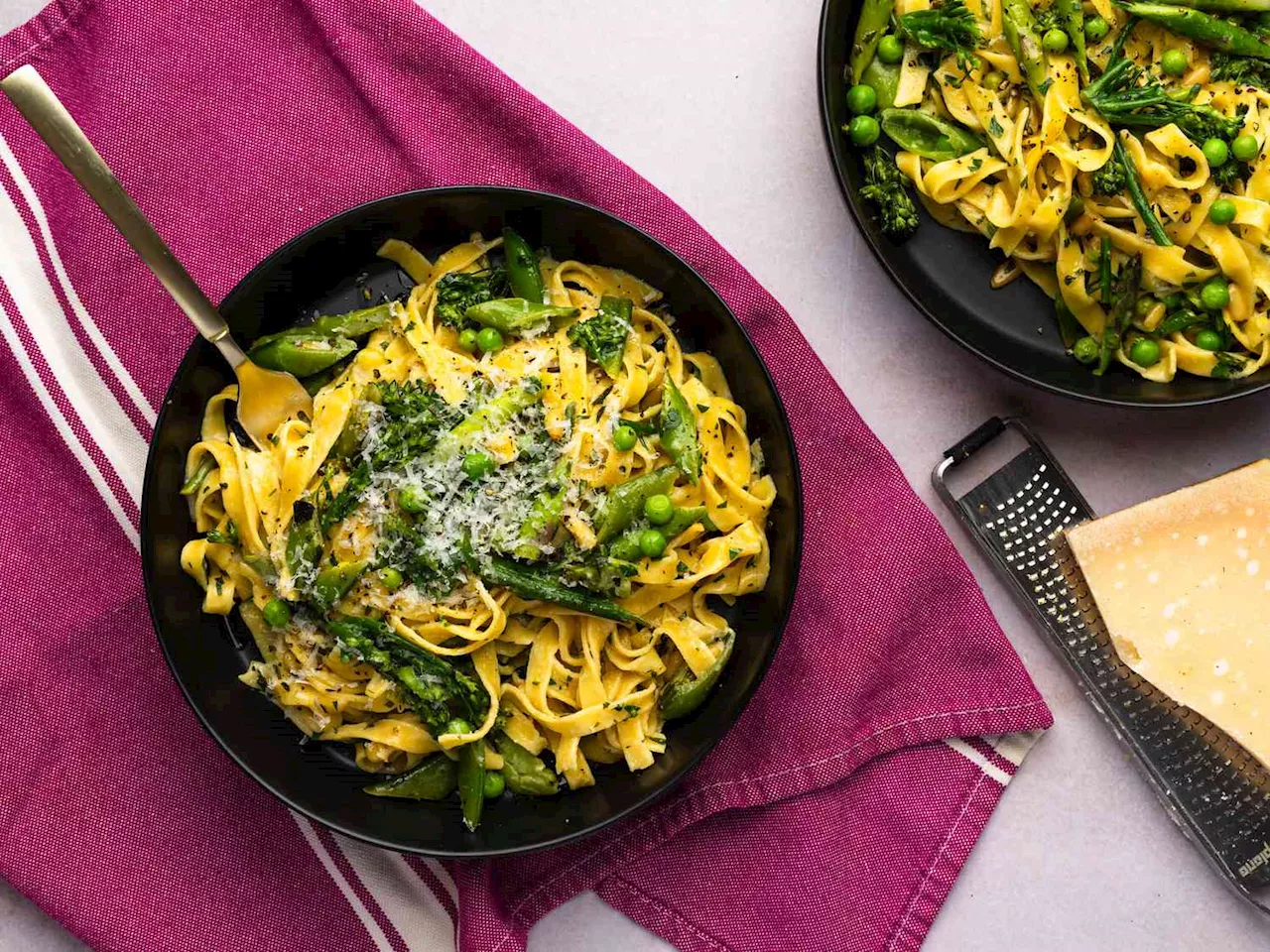
Combining a mixture of bright spring produce and a light but creamy sauce, pasta primavera is the ideal dish for a warm May evening.
Combining a mixture of bright spring produce and a light but creamy sauce, pasta primavera is the ideal dish for a warm May evening. Kenji is the former culinary director for Serious Eats and a current culinary consultant for the site.
He is also a New York Times food columnist and the author of The Food Lab: Better Home Cooking Through Science. Blanching green vegetables in a pot of salted water helps set their color and delivers bright flavor and crisp texture.Using crème fraîche in place of traditional heavy cream lends a brightness that complements the fresh vegetables instead of distracting from them. I find it very hard to imagine that prior to 1975, nobody in the history of the universe had thought to combine fresh spring vegetables and pasta in a creamy sauce, but, if , chef of New York's famed Le Cirque, it's the truth. At least, nobody famous enough to take a good idea and turn it into an international sensation. Sirio put it on the menu, and pasta primavera—"spring pasta"—quickly became part of our cultural lexicon. Since then, pasta primavera has become a staple menu item across the spectrum of restaurants, from fancy places using handmade pasta and seasonal spring vegetables to chains that serve it year-round alongside bottomless baskets of breadsticks.The original Le Cirque version of the dish is a complicated affair, as all fancy restaurant food tends to be. I've found two printed versions online. In 1991, Florence Fabricant published another version that's even more complicated, requiring a half dozen different pots and pans to complete. Ah, the old days, back when a newspaper's idea of"adapting" a restaurant recipe for a home cook was translating the Italian into English. Both versions contain spring vegetables, along with mushrooms, garlic, tomatoes, basil, cheese, and cream, plus some toasted pine nuts. I made a sort of hybridized version of the Le Cirque dish, and found that I actually wasn't particularly enamored of it. I did really love the idea of pine nuts, which are not common in other popular, modern recipes. Tomatoes seemed out of place in a spring dish, and I thought the mushrooms, while tasty, distracted a bit from the green vegetables. My version would have to be a little simpler and cleaner. are simple enough , but there's absolutely nothing spring-like about them, with a jumbled mix of dried herbs, carrots, tomatoes, zucchini, and other anything-but-spring-grown additions.To make a dish that screams spring, I decided to load mine up with all the green vegetables I could find.Whole English peas and fava beans, short lengths of asparagus, trimmed snap peas, and young, crunchy broccolini were what I found at the market, though fiddleheads, fresh garbanzos, and snow peas could easily have fit in as well. I prepared all the vegetables : blanched them in a pot of salted water, then shocked them in an ice bath before carefully drying them on paper towels. I found that blanching produced a better, fresher flavor in the finished dish than sautéing the vegetables did, and, as we've discovered in the past, Once the vegetables were blanched, I dumped out the pot and refilled it with fresh water to cook my pasta. It's possible to cook the pasta right in the same pot without changing the water, but if you do that, the pigments released by the vegetables cause the pasta to come out dull in color. With a dish like this, bright colors are just as important as intense flavors. For the sauce, I wanted a touch of garlic flavor, but not the overload you get from adding actual minced garlic to the dish. Instead, I smashed a couple of cloves of garlic with the side of my knife, then gently cooked them in butter to infuse it, discarding the actual cloves before adding the pasta and vegetables. In order to streamline the process, I also added the pine nuts directly to the pot with the garlic, toasting them lightly as the garlic infused. I was a little worried that the butter would brown before the nuts could toast properly, but it all worked out just fine in multiple tests, provided I stirred and kept things moving.As the garlic and pine nuts finished toasting, I cooked up my pasta. This recipe works fine with dried pasta, but I prefer the chewier texture of fresh egg pasta here. Traditionally, long, thin noodles are the pasta of choice for pasta primavera, but since all of my vegetables were cut into slender slices, it made much more sense for me to use a pasta of similar length and width. Penne, gemelli, and rotini all fit the bill. I know that pasta primavera is supposed to have a rich, cream-based sauce, but no matter how much I adjusted the ratios of cream and cheese, I couldn't get over the fact that the bright spring vegetables felt smothered and muted when served with a creamy sauce. The revelation came when I looked at a I tossed the pasta and vegetables with the garlic butter, pine nuts, crème fraîche, and some reserved pasta water until everything was nice and creamy.The tangy acidity of crème fraîche, paired with a shot of lemon juice and a little lemon zest, provided the same creamy, pasta-coating consistency that you'd get from heavy cream, but with a flavor that complemented, rather than muted, the bright vegetables. The only other thing the dish needed was a handful of chopped fresh parsley and basil, and a shower of Parmigiano-Reggiano added off heat.For a dish with a history of less than half a century, it sure tastes like it was always meant to be. Can you think of anything you'd rather eat on a warm May evening? Nothing...springs to mind.If using fava beans and peas in their pods, shuck beans and peas from pods, keeping beans and peas separate. Discard pods. Bring a large pot of salted water to a boil and prepare an ice bath. Working with one vegetable at a time, blanch favas, peas, asparagus, snap peas, and broccolini in boiling water for 1 minute each, transfer to ice bath to cool, then transfer to a paper towel–lined tray and pat dry. Remove and discard skin from each individual fava bean. Set vegetables aside. Empty pot, refill it with fresh water, season generously with salt, and return to a boil.Meanwhile, in a 3- to 4-quart saucier or a 12-inch skillet, heat butter, olive oil, garlic, and pine nuts over low heat until gently sizzling. Cook, swirling pan constantly, until pine nuts just start to brown and garlic aroma is very strong. Do not let butter brown; remove it from heat occasionally if it starts to sizzle too rapidly. Discard garlic cloves. Add blanched vegetables to pan and toss to combine. Remove from heat.When water is boiling, add pasta and cook until just shy of al dente, about 1 minute total for most fresh pasta . Drain pasta, reserving 1 cup cooking liquid. Transfer pasta to pan with vegetables and add crème fraîche, lemon zest, lemon juice, basil, and parsley. Set over high heat and cook, stirring and tossing constantly and adjusting the consistency as necessary with a few splashes of the starchy pasta water, until liquid reduces to a creamy sauce. The sauce should coat the pasta and leave a creamy trail on the bottom of the pan when you drag a wooden spoon through it.Off heat, stir in a generous shaving of fresh Parmigiano-Reggiano and season to taste with salt and pepper. Serve immediately, drizzling with olive oil and sprinkling with freshly ground black pepper and grated Parmigiano-Reggiano at the table.. Of course, you can always substitute dried pasta in this recipe: Cook 12 ounces of dried pasta for 1 to 2 minutes less than the package directions indicate before adding it to the pan with the vegetables in step 3.*The % Daily Value tells you how much a nutrient in a food serving contributes to a daily diet. 2,000 calories a day is used for general nutrition advice.
Fava Italian American Pasta Pasta Primavera Pea
United States Latest News, United States Headlines
Similar News:You can also read news stories similar to this one that we have collected from other news sources.
 7 Spring Shoes That Will Put a Spring in Your StepStep into spring in these sneakers, sandals and skates that will keep you comfy and stylish at the same time — shop our favorites
Read more »
 Healthy Meal Plan: Spring Pasta Bake, Fish Tacos, Stuffed Peppers and moreSamantha Cassetty, MS, RD, is a nutrition and wellness expert, author and columnist. Her latest book is 'Sugar Shock.' You can follow Samantha's practical balanced eating advice on Instagram at nutritionistsam.
Read more »
 Spring Vegetable Pasta Casserole RecipeThis is additional taxonomy that helps us with analytics
Read more »
 Matt Rhule Previews Saturday’s ‘Red-White Shootout’Nebraska football spring game will cap Huskers’ 2024 spring drills
Read more »
 TCU Football Wraps Up Spring Practices with Spring GameTCU football wrapped up its spring season with the annual spring game on Saturday. Head coach Sonny Dykes spoke with the media following the practice about how
Read more »
 Photos: Feeling the pull of spring at Alyeska Resort’s Spring CarnivalAlyeska Resort in Girdwood wrapped up its 47th annual Spring Carnival on Sunday with a tug-of-war, Dummy Downhill event, Alaskan Gladiator contest and other activities.
Read more »