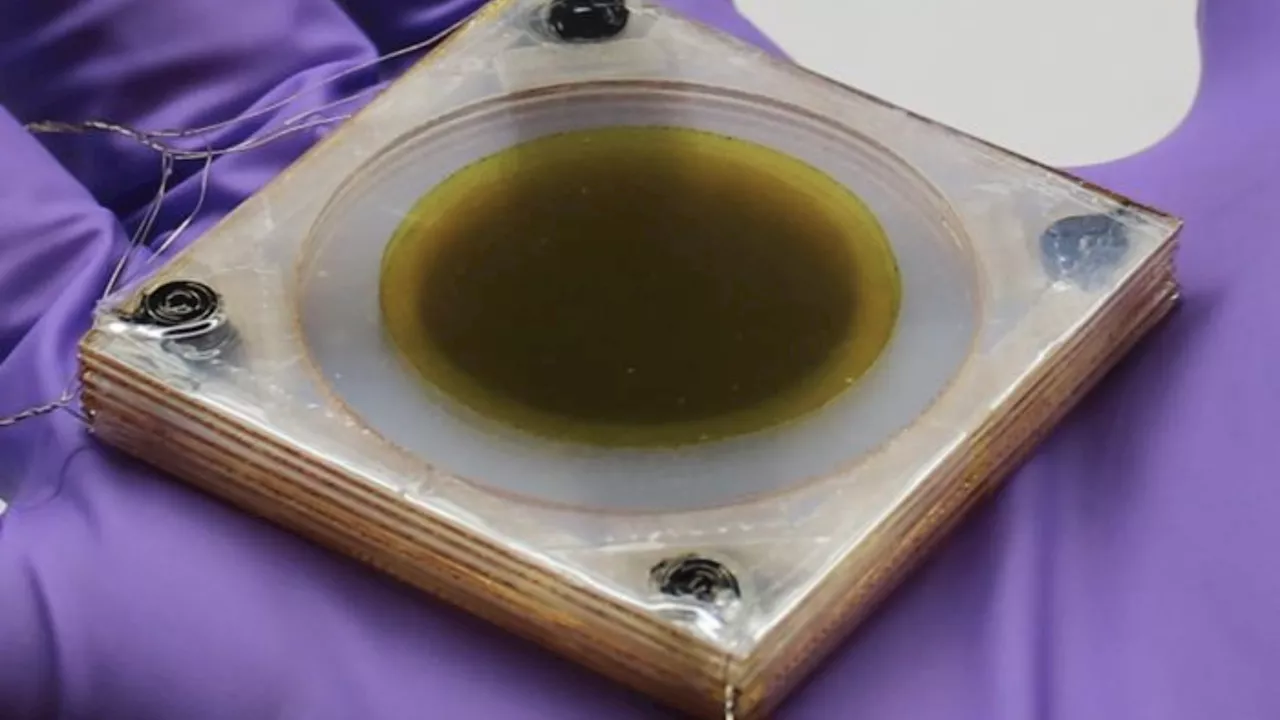
Researchers at UCLA have created a new cooling technology that utilizes the electrocaloric effect to continuously lower temperatures. The innovative design employs layers of flexing thin films that pump away heat when subjected to an electric field. In lab experiments, the prototype successfully reduced ambient temperatures by 16 degrees Fahrenheit continuously and up to 25 degrees at the heat source within 30 seconds.
A new cooling innovation developed by scientists pumps away heat continuously using layers of flexing thin films . The design is based on the electrocaloric effect , in which an electric field causes a temporary change in a material’s temperature, according to researchers.
Developed by UCLA materials scientists, the prototype could lower ambient temperatures of its immediate surroundings by 16 degrees Fahrenheit continuously and up to 25 degrees at the source of the heat after about 30 seconds during lab experiments.Qibing Pei, a professor of materials science and engineering at the UCLA Samueli School of Engineering, stated that their long-term goal is to develop this technology for wearable cooling accessories that are comfortable, affordable, reliable and energy-efficient — especially for people who work in very hot environments over long hours.Material is composed of a circular stack of six thin polymer films“As average temperatures continue to rise with climate change, coping with heat is becoming a critical health issue. We need a variety of solutions to the problem and this could be the basis for one,” added Pei.Scientists revealed that the experimental material is composed of a circular stack of six thin polymer films, just under an inch in diameter and one-quarter of an inch thick for the entire stack. Each layer is coated with carbon nanotubes on both sides. The resulting material is ferroelectric, which means it changes shape when an electric field is applied.When the device’s electric field is switched on, the stacked layers compress against each other in pairs. When the electricity switches off, the stacked pairs come apart to then press against the other neighboring layers. As this alternating process repeats itself, the self-regenerative, accordion-like cascading action continually pumps heat away, layer by layer, according to a press release.Polymer films use a circuit to shuttle charges Hanxiang Wu, one of the study’s co-lead authors and a postdoctoral scholar working in Pei’s lab, stated that the polymer films use a circuit to shuttle charges between pairs of stacked layers, which makes the flexible cooling device more efficient than air conditioners.Scientists maintained that traditional cooling technology relies on air conditioning and refrigeration, which require vapor compression that not only consumes a great deal of energy but also uses carbon dioxide as a coolant. The new device is a simpler design that does not require greenhouse-gas-generating coolants or liquids. It operates solely with electricity, which can be sustainable when generated through renewable energy sources such as solar panels, as per the release.Wenzhong Yan, a postdoctoral scholar in mechanical engineering, stated that this cooling device integrates advanced materials with an elegant mechanical architecture to deliver energy-efficient cooling by embedding functionality directly into its structure, reducing complexity, energy use and computational demands.Pei highlighted that electrocaloric cooling would be most-ideal for next-generation wearables that can keep us cool under strenuous conditions. “It could also be used to cool electronics with flexible components,” said Pei.
Electrocaloric Effect Cooling Technology Thin Films Wearable Devices Energy Efficiency
United States Latest News, United States Headlines
Similar News:You can also read news stories similar to this one that we have collected from other news sources.
 Scientists develop 3D concrete printing method that captures carbon dioxideScientists have developed a 3D concrete printing method that captures carbon, demonstrating a new pathway to reduce the environmental impact of the construction industry.
Read more »
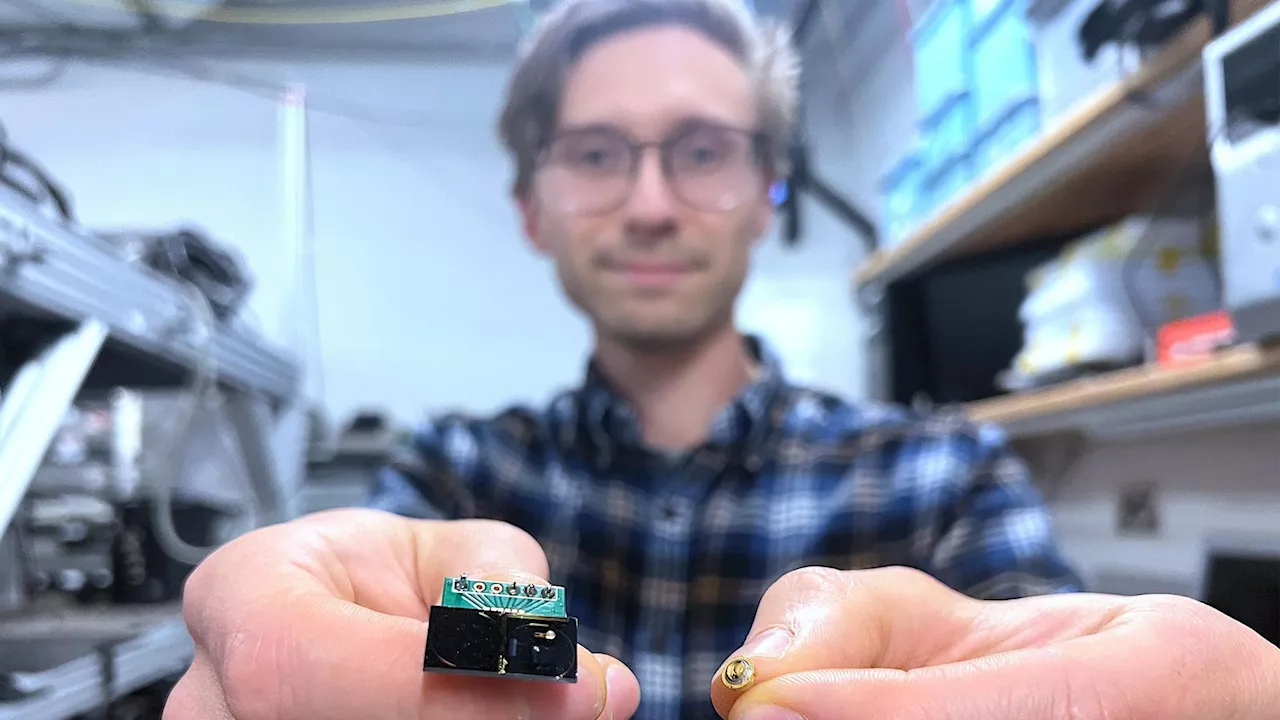 Scientists develop matchbox-sized laser in a bid to boost quantum researchA tiny chip-powered device has the power to replace the bulky lasers scientists use to study quantum applications and atomic clocks.
Read more »
 South Korean Scientists Develop a Wearable Robot to Help Paraplegic Users WalkResearchers at the Korea Advanced Institute of Science and Technology (KAIST) have created a lightweight, wearable robot that can assist paraplegic individuals in walking, maneuvering obstacles, and climbing stairs. The robot, which can lock onto the user, aims to seamlessly integrate into their daily lives.
Read more »
 Scientists Unveil Mystery Volcano Behind 1830s Global CoolingVolcanologists have finally identified the volcano responsible for a major eruption in the 1830s that caused global cooling. By analyzing ash trapped in the Greenland ice sheet, researchers pinpointed the culprit to a volcano in the Kuril Islands, a remote chain between Russia and Japan.
Read more »
 Scientists Develop Precise Method to Study Plasmonic WavesA new study combines time-resolved electron microscopy and multi-polarization lasers to create a highly accurate method for analyzing plasmonic waves, offering insights into their behavior and potential applications.
Read more »
 Scientists Develop Groundbreaking Device for Water Desalination Using Solar Power and Recycled TiresA new invention from Dalhousie University could provide a sustainable solution to global water scarcity.
Read more »