
A recent study explores the potential of using a powerful space-based laser array, DE-STAR, to deflect potentially hazardous asteroids from colliding with Earth. The study discusses the technology's capabilities and addresses concerns about its potential misuse.
Recently, Astronomers spotted three near-Earth asteroids hiding in the glare of the Sun. These NEAs are part of an elusive population that lurks inside the orbits of Earth and Venus. One of the asteroids is the largest object that is potentially hazardous to Earth to be discovered in the last eight years.
Could we use space lasers to protect Earth from these hazards? Image Credit: DOE/FNAL/DECam/CTIO/NOIRLab/NSF/AURA/J. da Silva/SpaceengineAs time passes, ideas that were once confined to the realm of science fiction become more realistic. It’s true of things like using robots to explore other worlds. Space lasers are a well-used element in science fiction, and we’re approaching the time when they could become a reality.In science fiction, lasers are predominantly used as powerful weapons. While some countries have investigated the idea of using lasers as space weapons, anfor spacecraft. In a new paper, a researcher examines where a giant laser array could be positioned in space to be of most use to humanity while at the same time minimizing risk..” The paper is in pre-print, and Adam Hibberd from the Initiative for Interstellar Studies in London, UK, is the sole author. While space lasers could also be used to utilize resources or in satellite laser ranging systems to control space traffic, Hibberd’s focus is on using them to protect Earth from impacts.. Of all the space laser ideas that have been discussed, DE-STAR is probably the most well-studied and developed. It would consist of a modular phased array of lasers powered by solar cells. It could heat the surface of potentially hazardous objects to approximately 3,000 Kelvin. That’s hot enough to melt all known constituents of PHOs. DE-STAR could also be used to propel spacecraft. ” In their paper, they outlined the idea for DE-STAR, a stand-off laser array. In 2016, some of the same authors published another paper titled “Directed Energy Missions for Planetary Defensethat would be sent to the vicinity of an approaching object to ward it off with lasers. This artist’s illustration shows DE-STARLITE firing its lasers at a hazardous object. Image Credit: Lubin et al. 2016. In either case, the system would be based on the Sun’s energy. “DE-STAR is a square modular design which exploits the energy created by banks of solar cells in space to generate and amplify the power of a laser beam,” Hibberd explains in his new paper. In literature, DE-STAR is typically referred to as DE-STAR n, where n is usually between 0 and 4 and denotes the size of the bank of lasers. The larger the array, the more powerful it is. The more powerful DE-STAR is, the more effective it will be at deflecting asteroids from greater distances. While the merit of this idea is immediately clear, the problems follow soon after. A bank of powerful space lasers is every supervillain’s dream. Its destructive power could be immense. “With a DE-STAR 4clearly, there is the potential for such an asset to be deployed as a weapon by targeting locations on Earth,” Hibberd writes. How can this risk be mitigated so that the system can be used to protect Earth rather than as a weapon? The simple solution is to not deploy them in Earth’s orbit. The lasers lose energy with range, so they could be deployed at distances where they pose no threat. “Results indicate that given they should lie 1 au from the Sun, there are feasible locations for DE-STAR 0-2 arrays where there is no danger to Earth,” Hibberd writes. This table from the paper shows the specs adopted in this paper for different-sized DE-STAR arrays. The clip ratio affects beam quality, energy efficiency, how well it propagates through space, and how well it handles heat generation. Smaller is generally better, and 0.9 is the ratio adopted by other researchers. Optimizing the clip ratio is an important part of designing an effective array. Image Credit: Hibberd 2024.For DE-STAR 4 or even 5, that distance wouldn’t be enough. Instead, these lasers would need to be much further away or at positions in the Solar System with no direct line of sight to Earth. These systems would need to correct their positions regularly with an on-board propulsion system “or preferably using push-back from the laser itself,” Hibberd explains. The minimum safe distance also changes depending on the wavelength of the DE-STAR system. Hibberd defines minimum safe distance as a single laser with a maximum intensity on Earth’s surface of 100 Wm. “Or on the order 10 % of the Solar Constant at Earth ,” Hibberd writes. For an infrared system, the minimum safe distance is just beyond geosynchronous Earth orbit . At the more powerful end of the scale, a UV laser would need to be beyond cis-lunar space. This figure from the research shows the Dependence of the Minimum Safe Distance of any Unphased DE-STAR Array with the Wavelength of the Laser. Image Credit: Hibberd 2024. There’s another factor to consider. Since DE-STAR gets its energy from the Sun, its power decreases the further away from the Sun it is. “This reduction is a consequence of the decrease in solar flux intensity on the photovoltaic cells, where an This figure shows how the laser’s power diminishes with distance from the Sun for four different array sizes. “We find that a DE-STAR n at 90 au from the Sun is approximately equivalent to a DE-STAR n-1 at 10 au and a DE-STAR n-2 at 1 au,” Hibberd writes. Image Credit: Hibberd 2024. For DE-STAR 1 and 2 Arrays, the minimum safe distances are not that great. Hibberd points out that for a DE-STAR 2 Array, Sun/Earth Lagrange 4 and 5 points would be suitable and require no propulsion. L4 and L5 are about 400,000 km from Earth. These figures show the minimum safe distance for DE-STAR 1 and 2 Arrays by wavelength. Image Credit: Hibberd 2024. However, as the arrays become larger, the minimum safe distance quickly increases. Conversely, the available solar energy decreases. A DE-STAR 3 would have to be placed somewhere beyond the asteroid belt. If it were ultraviolet, it would have to be beyond Jupiter. A DE-STAR 4 phased array would have to be much further away. It would have to be about 30 ? 40 au away, and even further for an ultraviolet system, about 70 au from the Sun. These figures show the minimum safe distance for DE-STAR 3 and 4 Arrays by wavelength. Image Credit: Hibberd 2024. The tables above assume a direct line of sight to Earth. But there are locations where there is no direct line, and they could be used as locations for powerful arrays. Hibberd explains that the Earth/Moon Lagrange 2 point and the Sun/Earth Lagrange 3 point both lack direct lines of sight but, unfortunately, are unstable. “In both cases, the instability of these points will result in the DE-STAR wandering away and potentially becoming visible from Earth, so an on-board propulsion would be needed to prevent this,” Hibberd writes. It’s possible that an array could be built that is physically prevented from pointing at Earth, but the author doesn’t tackle that aspect of the problem.Nobody’s building a DE-STAR phased array, but that doesn’t mean it’s too soon to think about it. This type of technology is on the horizon, and it’s difficult to predict which nation or nations might be the first to build one. Treaties are in place to prevent the weaponization of space, but not everybody signed them. Some nations are known to sign treaties and then break them, in any case. Also, an argument could be made that this isn’t a weapon. It likely won’t be long before serious talk about such a system begins to surface in wider public discussions. That will surely generate a lot of political difficulty and wrangling as nations argue over what constitutes a weapon and what doesn’t. If civilization is to survive, we will eventually need a way to protect the entire globe from asteroid strikes, whether it’s phased laser arrays or some other system.
Space Lasers Asteroid Defense DE-STAR Planetary Protection Science Fiction
United States Latest News, United States Headlines
Similar News:You can also read news stories similar to this one that we have collected from other news sources.
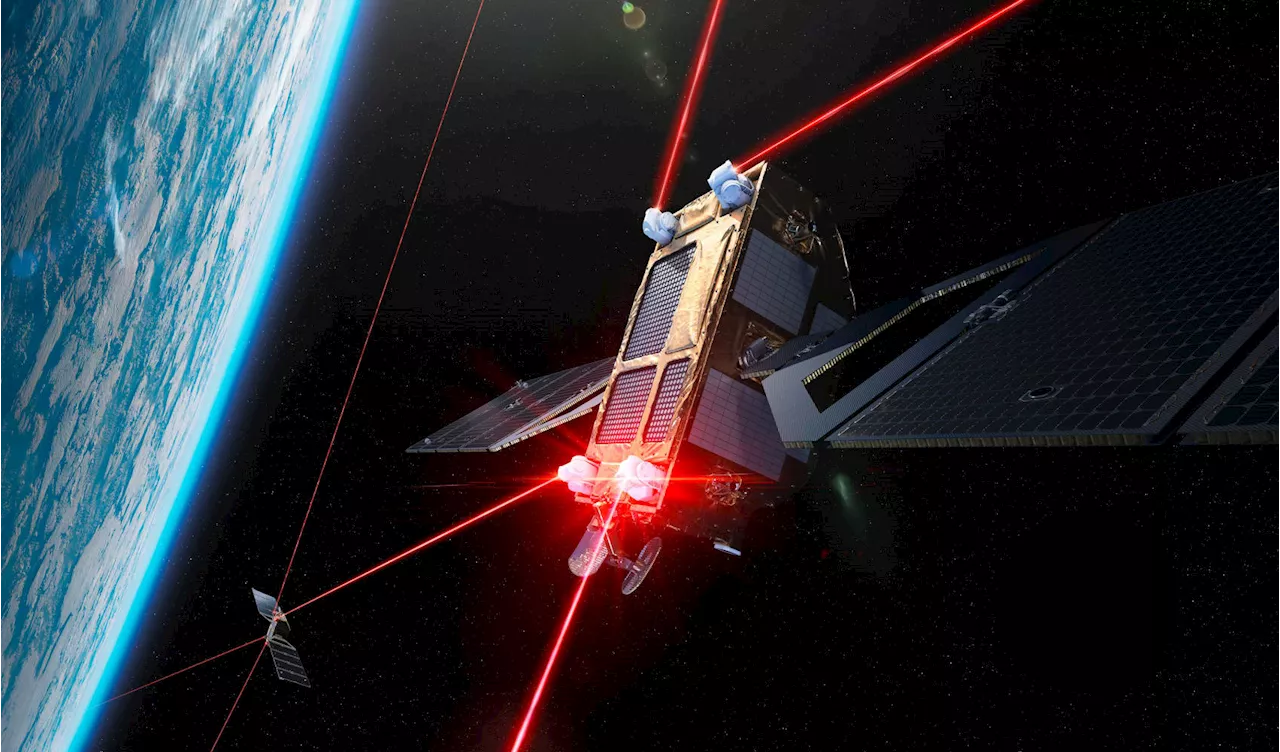 Mynaric stock tanks after space lasers company slashes revenue guidance, announces CFO departureNasdaq-listed space stock Mynaric tanked in trading after announcing heavy cuts to its previous revenue forecast and the departure of its CFO.
Read more »
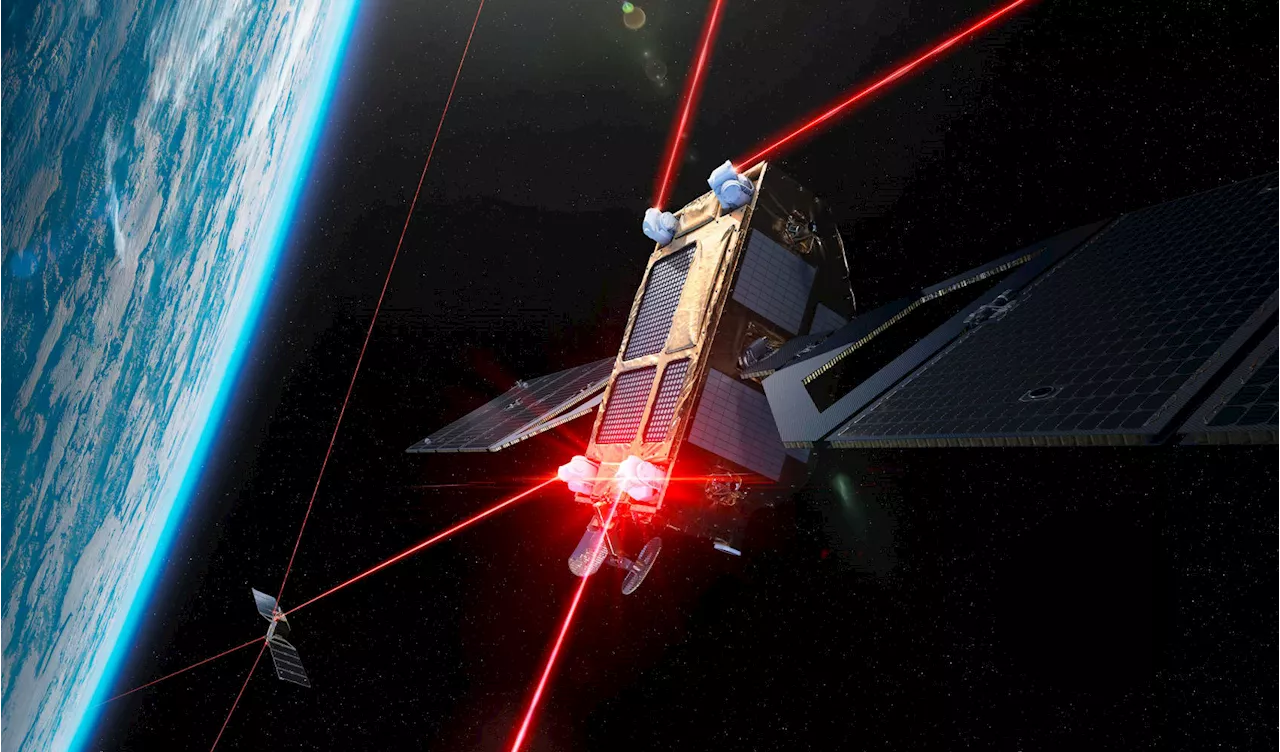 Mynaric stock tanks after space lasers company slashes revenue guidance, announces CFO departureNasdaq-listed space stock Mynaric tanked in trading after announcing heavy cuts to its previous revenue forecast and the departure of its CFO.
Read more »
 Uncovering “Snowball Earth”: Hidden Rock Record Unveils Secrets of Earth’s Deep FreezeScience, Space and Technology News 2024
Read more »
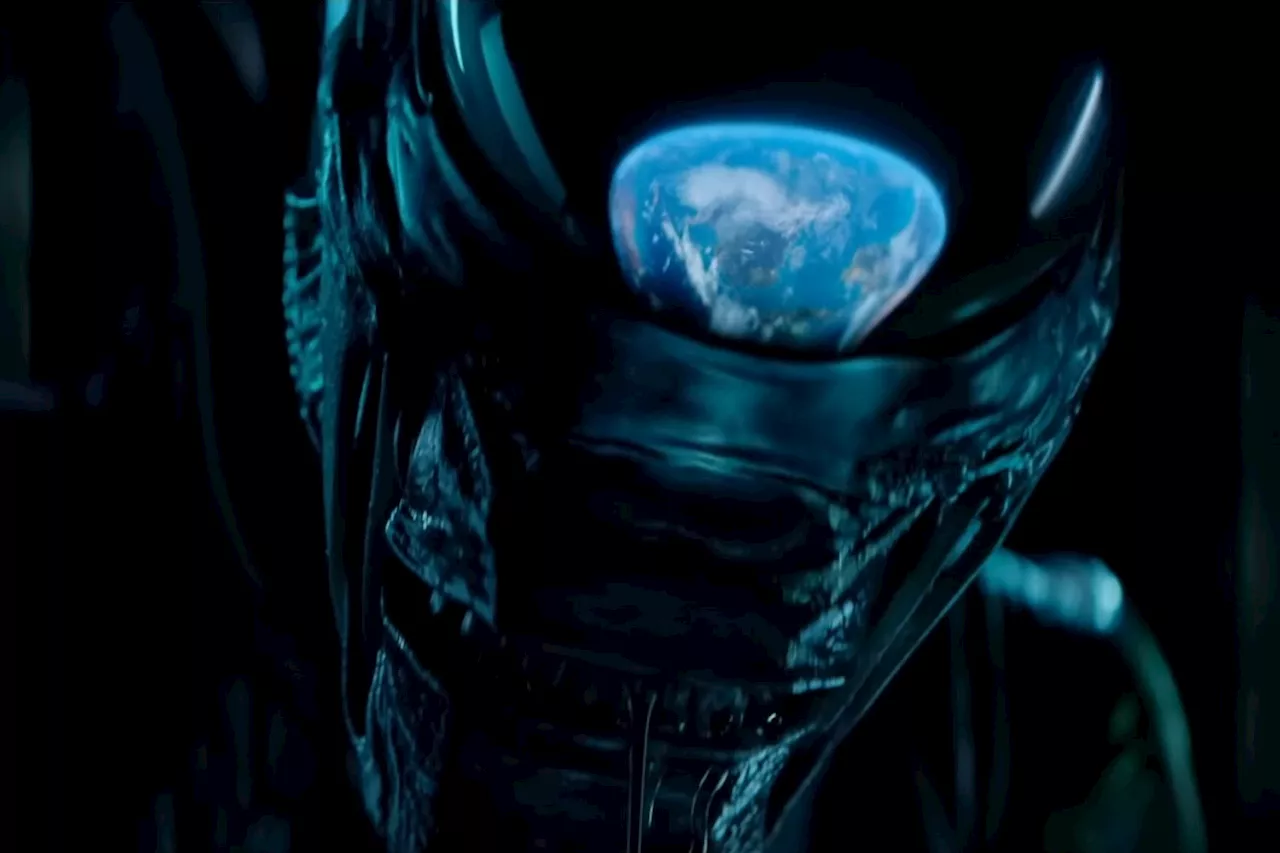 Alien: Earth‘s First Teaser Sure Does Show an Alien and EarthAlien: Earth is a prequel show set before Ellen Ripley's sci-fi misadventures.
Read more »
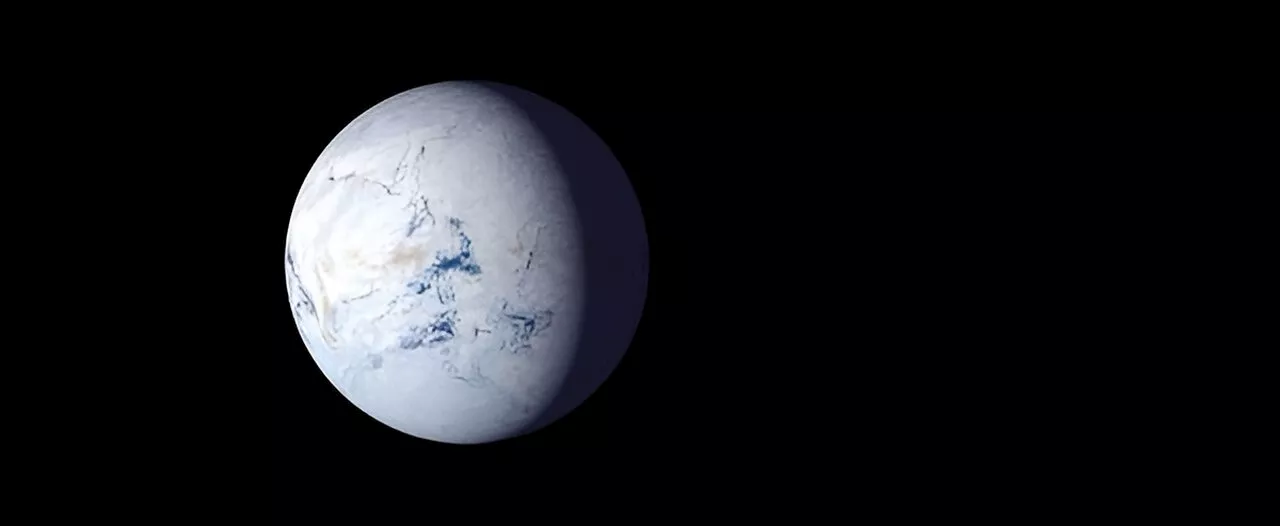 Snowball Earth: Researchers discover unique Scottish rocks record when Earth was first encased in iceMore than 700 million years ago, the Earth was plunged into a state that geologists call 'snowball Earth', when our planet was entirely encased in ice. This happened when the polar ice caps expanded so far that they joined up around the equator.
Read more »
 Space lasers!The Deep Space Network is aging and needs to be replaced. Our ability to travel to Mars will depend on a reliable communications system. Can lasers do the trick?
Read more »