
If your PC has slowed down, high CPU usage may be the cause. In this guide, we will show you how to check your CPU usage and how to fix it when it's too high.
PC freezing, going slow, or running into hitches where it shouldn’t? Even if you have one of the best processors, high CPU usage could be to blame. Contents Unfortunately, if you aren’t too computer savvy, what this means, what part of your computer causes the issue, and CPU failure symptoms are all sort of a mystery.
Recommended Videos So, what is CPU usage? Here, we’ll investigate high CPU usage, the factors that affect CPU utilization, and more. What is CPU usage? The processor, also known as the central processing unit is arguably the most important component inside any computer. Whether you’ve got one of the best processors on the market or you’re running an entry-level machine, your processor always serves as the brain of the operation. It sends instructions to all the other pieces of hardware in your device and is responsible for executing each and every task. Get your weekly teardown of the tech behind PC gaming Check your inbox! Privacy Policy If you’d like to read a more in-depth explanation about the CPU itself, check out our guide to what a CPU is. Every processor has a limited capacity at which it can execute commands and run various programs. The better the CPU, the more tasks you can simultaneously perform without a hitch. However, no matter how powerful the CPU is, every chip will eventually hit its maximum capacity and begin slowing down. This will depend on your current CPU usage: In other words, the number of things your processor is being made to do at the same time. When you’re not running many applications, your CPU usage should be low, and in an ideal scenario, everything should run smoothly. However, if you open a CPU-intensive program you may notice that the response times increase as your CPU usage goes up. Fluctuations in CPU usage are normal and nothing to worry about — as long as your PC continues running smoothly. If you’re unsatisfied with the performance of your PC, the first step is to check its CPU usage. How to check CPU usage Checking CPU usage on Windows comes down to simply opening the Task Manager. If you already know how to do that, you can skip ahead to our next steps.With Task Manager open, navigate to the Performance tab and select CPU from the left-hand side menu. This will produce a curve diagram that displays real-time updates about the performance of your CPU. You can also check the Open Resource Monitor option at the bottom to see more detailed information about your processor. What is a normal CPU usage? Before you jump right in and start trying to fix the problem, it’s important to learn whether the CPU usage you’re currently experiencing is abnormal in the first place. Remember that depending on your processor, it could be that your computer is just utilizing the resources available to it in an efficient manner under heavy workloads. High-end CPUs are able to handle all manner of multitasking, but budget processors may not be able to run multiple resource-heavy programs at once. If you are currently not running any additional programs, your CPU usage should be anywhere between 1% and 10% just through Windows processes alone. Anything higher than that on an idle PC means that something might be wrong. However, if you’re playing a game or even have multiple browser windows open, the CPU usage will climb accordingly.There are some programs that commonly consume a lot of processing power. Check out our suggestions below if you’re not sure whether your software is one of them. How to fix high CPU usage It’s important to monitor CPU usage and act if something seems amiss. If the amount of software you’re running doesn’t warrant slower loading times or high CPU usage, check out our quick steps below to resolve this problem. Restart your computer Sometimes all your PC may need is just a quick restart. This will clear out temporary files, shut down any programs you didn’t know were running, and give your computer more of a fresh slate. If a while has passed since you last restarted your computer, save all your work and reboot. After the restart, launch the programs you’ve previously had open and check if your CPU usage is now back to normal. Check open processes If the problem comes back after re-launching previous software, it’s time to check which program is the culprit. Launch Task Manager and click the Processes tab at the top. You will be presented with a list of processes that are currently running on your computer. This is a long list, and it’s important that you don’t close any programs without knowing what they do. To make the list easier to navigate, click on Name to sort by software type. Programs found under Apps are usually safe to close if needed. Check their CPU usage. If it’s a program that typically consumes a lot of CPU power, it might be that your high CPU usage is not abnormal. In any case, you can close the program to make sure your PC is running smoothly without it. Save all your work before you proceed. Pick the program with the highest CPU usage and click End Task in the bottom right corner. Start it back up and check whether your CPU usage has improved. Try to close all the programs you don’t currently need — if the program or background process that consumes the most CPU power is unknown to you, write down its name and give it a quick Google search. It could be a virus that you need to get rid of.If any of the processes on your computer are CPU-heavy and you’re not sure what they are, write down their names and make sure they’re safe. Scan your computer for viruses and malware Unfortunately, malware and viruses are often the culprits behind high CPU usage. You may sometimes notice them by browsing through the Task Manager, but oftentimes they will be concealed and won’t be that easy to spot. Getting rid of malware and viruses can be tricky and highly situational, but there are a few steps you should take that can resolve your problem. If the software finds any harmful programs on your computer, it will likely help you get rid of them. This may lower your CPU usage. Update your drivers Your CPU can take quite a beating if you’re using old drivers or unoptimized software. Sometimes, fixing high CPU usage may be as easy as simply updating your drivers. In this step, try to update all of your drivers. This includes motherboard drivers, GPU drivers, audio drivers, and more. Check out our dedicated guides on updating all of your drivers and updating your graphics card drivers if you’d like a step-by-step tutorial on how to do this. A word of warning: Do not use third-party software for updating drivers. A lot of the commonly advertised software on the internet may be dangerous to your computer. Whether it’s out-right malware or it simply downloads all the wrong things, you don’t want to deal with that. It’s best to learn how to update your drivers yourself and rely on secure methods of doing so. Update your software The software you’re using may simply be an older version of an already updated program. In such cases, the CPU usage may be abnormally high and it may have been fixed in a patch that you haven’t downloaded yet. Following the Task Manager, update your most CPU-heavy software to the latest version and see whether that will do the trick. Update your BIOS This is more of an advanced option, but in some cases, updating your BIOS may help fix the issue with high CPU usage, but you need to know how to use the BIOS before you change any settings. Updating your BIOS will require knowing the exact model of your motherboard. If you’re not sure which motherboard you’re using, we’ve got you covered. Check our guide to find out all of the specifications of your PC, including the motherboard. Once you know the model of your motherboard, simply search for it in Google and add “BIOS.” Download the latest BIOS directly from the manufacturer’s website — do not trust other sources. Follow the instructions provided by the manufacturer in order to update your BIOS. Check your power settings Certain power settings in Windows may affect your CPU performance. This applies to both laptops and desktops. You may currently be using a low power setting without even knowing it, so changing it might help.Clean your PC Keeping your PC clean is important, not just on the software side, but on the dust-free side. That’s right — our computers gather a lot of dust every single day. The more dust your PC or laptop has accumulated, the worse it will run, and that’s all thanks to the rising temperatures within the chassis. If you haven’t given your PC a good clean for a while, it might be the time to do so. This process will usually require the use of compressed air. You can pick up a can of compressed air on Amazon and from many other stores. Remember that before you ever attempt to clean your computer’s vents, you need to fully turn it off and unplug it. Check out our in-depth guide on the topic if you want to learn how to clean your PC. Run System Restore If your high CPU usage is a recent development and everything was running smoothly just a few days ago, fixing the problem may be as easy as running System Restore on Windows. Windows 10 users can refer to our separate guide on reinstalling and restoring Windows here.You will then be prompted to select a restore point that you want to go back to. Choose one from before these issues started and follow the instructions provided by Windows. Keep in mind that you may lose any new files and programs you’ve installed since the restore point. Unfortunately, many users cannot utilize System Restore. This is because Windows doesn’t automatically create restore points, which is why your list may be empty. If that’s the case, you may need to take more drastic measures. Reinstall Windows This option should be treated as a last resort. If all the other steps failed and you still cannot pinpoint the reason why your CPU usage is so high, giving your Windows a clean install may be the solution to your problems. Before you pull the trigger, keep in mind that reinstalling Windows will delete all of your installed programs. You are allowed to keep your files, but you may also opt to do a completely clean install and let Windows delete all of them. Whether you choose to keep your files or not, it’s good to back up your data before you begin. Reinstalling Windows 10 If you need to reinstall windows and don’t know where to start, our guide explaining how to reinstall Windows 10 will lead you through the steps required to do so. Reinstalling Windows 11 In order to reinstall Windows 11, click on the Windows logo at the bottom-left side of the screen and type in: “Reset this PC.” Once you’re in the correct section, select Reset PC. Windows will then prompt you to choose from several reinstall options. You can choose whether to keep your personal files, keep any changes you’ve made to Windows settings, and keep pre-installed apps that came with your Windows 11 PC. Pick the option that suits you best and allow Windows to reinstall itself. When the reinstallation is complete, you will have to install all your drivers and trustworthy programs again. Once your system is back up and running, check your CPU usage again — you should be able to see a marked improvement. Further troubleshooting If you have tried every one of our recommended steps and found no improvement, the issue may be more complex than can be covered in any given guide. Fortunately, all you need is an internet connection in order to troubleshoot your computer.Searching for these terms will give you more specific advice from users who have gone through the same kinds of issues. Read the advice carefully and follow it as best as you can. However, never download any third-party programs: You may put your PC at much greater risk instead of fixing it. CPU usage FAQ Which programs cause high CPU usage? Many kinds of programs can cause high CPU usage. If you’re running one of them, your computer may slow down. In such cases, make sure you close all other programs to give your processor the breathing space it needs in order to run these resource-heavy tasks.Is high CPU usage bad? Every PC will go through cycles of high CPU usage — there is nothing wrong with that. However, If your CPU usage is constantly high or even at 100%, there is definitely a reason for concern. Your CPU heats up when under heavy loads. This may cause your computer to overheat, but even in the best-case scenario, it contributes to wear and tear. Your PC may freeze when running at 100% CPU usage as soon as you add an extra application into the mix. Freezes and crashes are common, and each one may cause another problem to pop up. In short: Yes, it’s bad, although as long as you’re expecting your CPU usage to be high, it’s fine and fully expected to happen at times.
AMD CPU CPU Usage Drivers DT-EM-B2 EM2V1 How-To Guides Intel Processor Troubleshooting
United States Latest News, United States Headlines
Similar News:You can also read news stories similar to this one that we have collected from other news sources.
 AMD’s new CPU could silently replace the Ryzen 7 7800X3DDT Video
Read more »
 This next CPU generation is starting to feel skippable for gamersAs an avid gamer, I haven't felt less compelled to buy a new CPU in a very long time.
Read more »
 Endorfy Fortis 5 CPU Cooler Review: Quiet, Great Cooling And Just $42Antony is a PC hardware enthusiast and full time reviewer and technology journalist and has written for Forbes for over 10 years, most of this a as a senior contributor. He’s also written for prominent PC hardware websites and magazines and also runs the CrazyTechLab YouTube channel, which features guides, reviews and interviews.
Read more »
 Intel’s CPU lineups might get even more confusingNew leaks are giving us a better idea of all the Core 200 CPUs that are on the way in the near future, and it's not just Arrow Lake.
Read more »
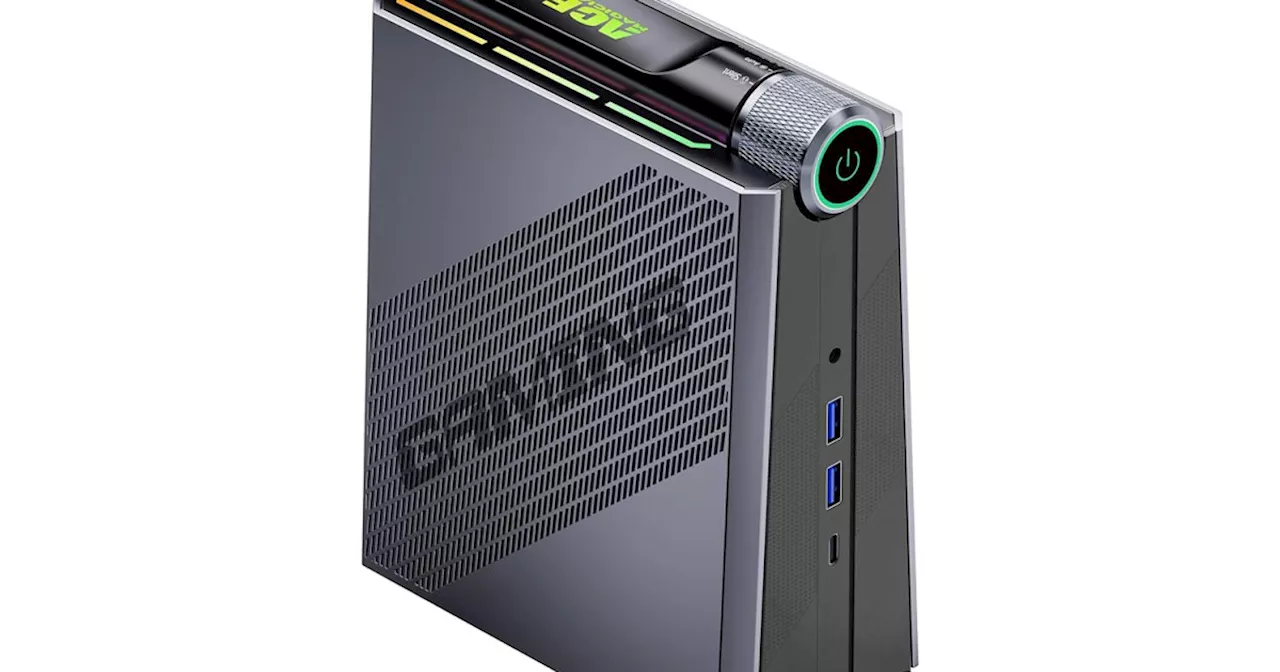 This mini gaming PC with a Ryzen 9 CPU is on sale for under $500Want a cool looking mini gaming PC for occasional sessions? This Acemagician mini gaming PC is the solution and it's $100 off at Amazon.
Read more »
 Intel’s desktop CPU roadmap may have changedAccording to a new leak, Intel may be changing its plans for what will come after Arrow Lake-S desktop processors.
Read more »