
I've covered science, technology, the environment and politics for outlets including CNET, PC World, Inc., Wired, AOL and NPR. I'm passionate about decentralizing all the things, from journalism to energy to Artificial Intelligence.
The more we look into space with increasingly sensitive tools like NASA’s James Webb Telescope and other tech advances here on Earth , the more interesting objects we find floating through what looks less and less like an endless void.
A few recent findings have me thinking more about how the old saying about things being “out of sight, out of mind” ought to actually be top of mind as we ponder the cosmos.it has used advanced computational methods to discover 27,500 new, high-confidence asteroid candidates. At the same time, on a completely different scale, the astronomy community continues to be fascinated and baffled by a new crop of free-floating, “rogue” planets spotted by JWST that drift between solar systems, untethered to any particular star.Just as the Kepler Space Telescope made it clear a decade ago that galaxies are filled with planets — including many that don’t seem that different from Earth in terms of size and temperature — JWST is filling more of the gaps in our broken mosaic view of the universe.There’s some room for debate about whether these planets are untethered rogue worlds or actually very dim, so-called “brown dwarf” stars. Adding to the mystery is the fact that some of the objects seemed to be. What the team behind the observations found was a dark, chilly world that might even be in the habitable temperature range according to one model. But as astronomer Phil Plait points out, what’s remarkable is that we can even observe such a dark object at all. JWST’s sensitive infrared instruments make this possible. “And it makes me wonder… I used to speculate that there might be a brown dwarf closer to us in space than even the Alpha Centauri system,”. “Maybe there’s a rogue planet out there, smaller and cooler, that is fainter and escaped our attention. It’s possible, I’d wager.” Plait notes that JWST probably won’t find it, because of the relatively narrow slice of the cosmos it observes, but a future telescope might be up to the job.Meanwhile, earth-bound algorithms are making all new discoveries closer to home without having to incorporate any new observations from telescopes. A partnership between the Asteroid Institute, which is part of the, and Google Cloud ran billions of old potential asteroid detections through some sophisticated code and cloud tech to yield thousands of previously unfound main belt asteroids and over 100 near-Earth asteroids. "We always like hard computational challenges, and Asteroid Institute provided us with complex unstructured data that required heavy computational processing, large tracking requirements and novel AI capabilities," said Massimo Mascaro, Technical Director in Google Cloud's Office of the CTO.What leading edge telescopes such as JWST and compute from the likes of Google can achieve are just the beginning. The Asteroid Institute hopes to use data from the new"Asteroid Institute results are more than exciting for the Vera C. Rubin Observatory: they may help us reoptimize our observing strategy and obtain gains for some science programs, such as cosmologically important supernovae explosions, equivalent to cloning another Rubin observatory," said Dr. Zeljko Ivezic, Rubin Observatory Construction Director. Bottom line: the combination of computational technology on Earth and next-generation telescopes holds a lot of promise for allowing us to paint a picture of our universe in unprecedented new detail.
JWST Earth Phil Plait Asteroid Institute
United States Latest News, United States Headlines
Similar News:You can also read news stories similar to this one that we have collected from other news sources.
 Where Are All These Rogue Planets Coming From?There's a vast population of rogue planets begging to be understood. This new study is giving astronomers a new way to do it.
Read more »
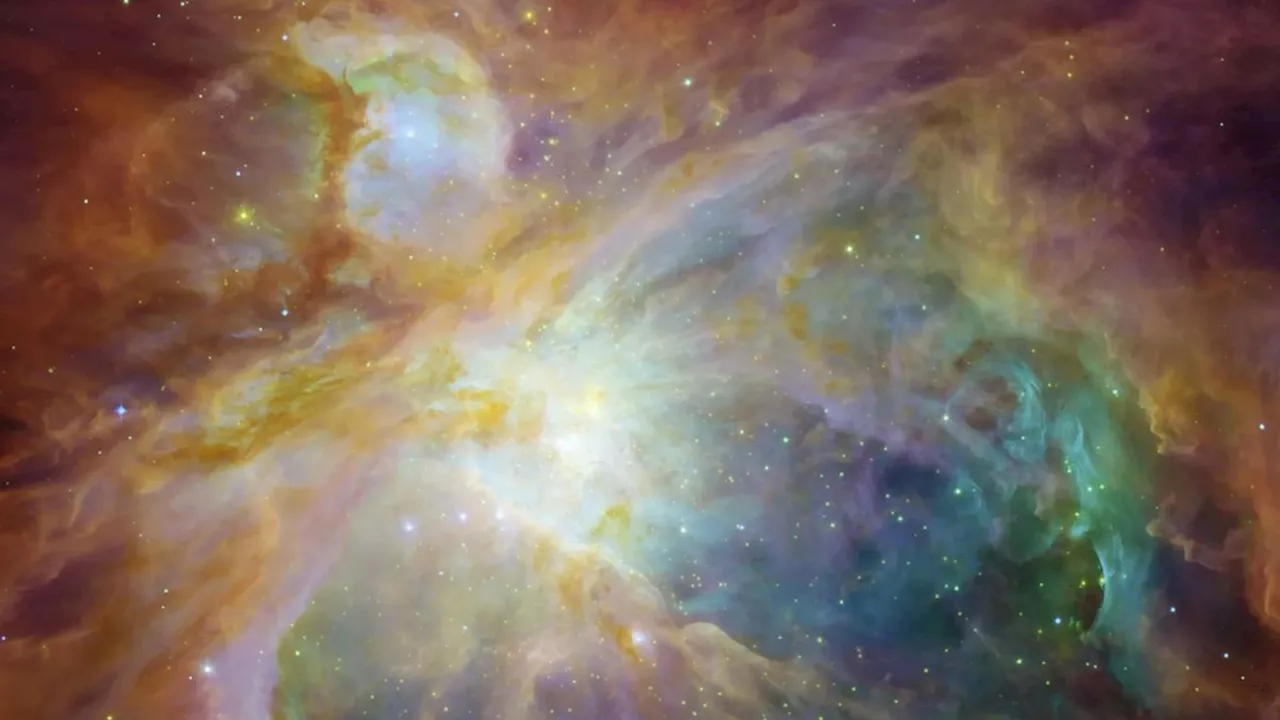 Hundreds of mysterious 'rogue' planets discovered by James Webb telescope may finally have an explanationAbha Jain is a freelance science writer. She did a masters degree in biology, specializing in neuroscience, from the Indian Institute of Science, Bengaluru, India, and is almost through with a bachelor's degree in archaeology from the University of Leicester, UK.
Read more »
 If we want to visit more asteroids, we need to let the spacecraft think for themselvesMissions to asteroids have been on a tear recently. Visits by Rosetta, Osirix-REX, and Hayabusa2 have all visited small bodies and, in some cases, successfully returned samples to the Earth. But as humanity starts reaching out to asteroids, it will run into a significant technical problem—bandwidth.
Read more »
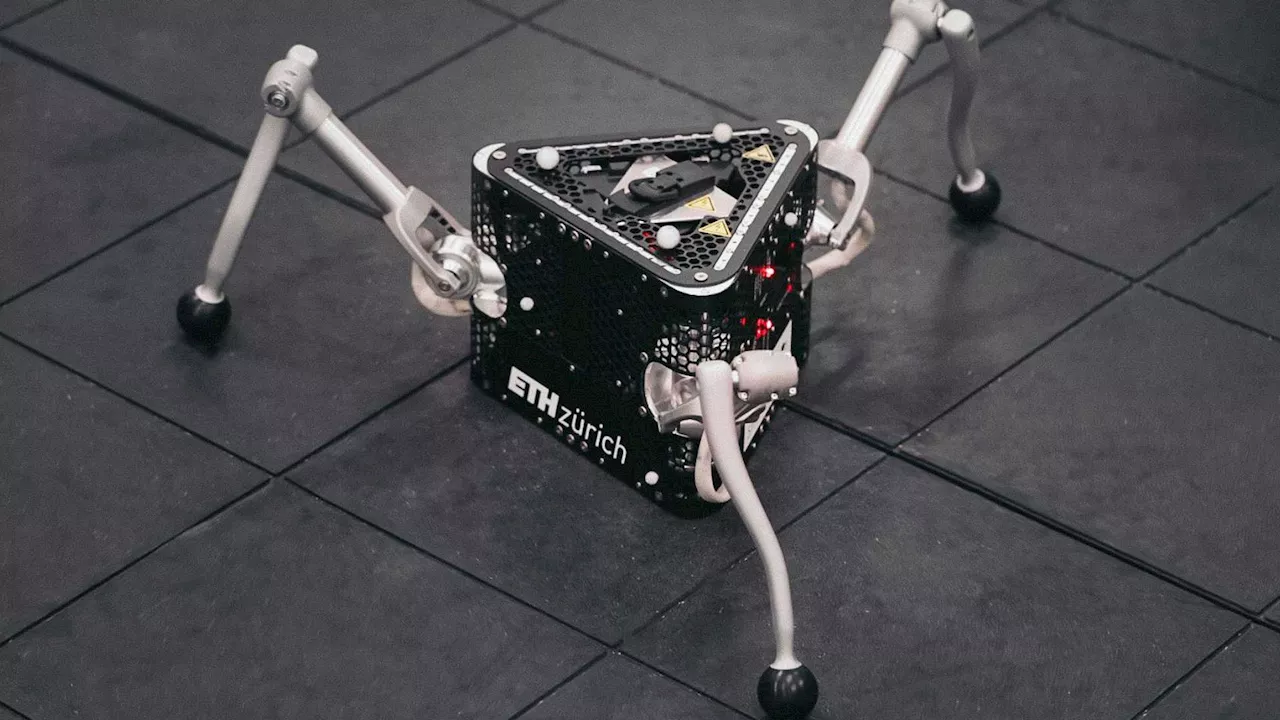 Spacehopper: Three-legged jumping robot to study asteroids in spaceETH Zurich students are developing a robot that can hop like humans for exploring challenging terrains featuring ultra-low gravity.
Read more »
 The Giant Planets Migrated Between 60-100 Million Years After the Solar System FormedBy studying meteorites and asteroids, scientists have determined that the giant planets migrated earlier than thought.
Read more »
 X-Men '97 Finally Gave Rogue The Majorly Powerful Moment Every X-Men Movie Refused ToRogue from X-Men &39;97 next to Anna Paquin&39;s Rogue from X-Men
Read more »