
Aspergillus fumigatus is developing greater resistance to its first-line treatment, and many patients are infected with multiple strains.
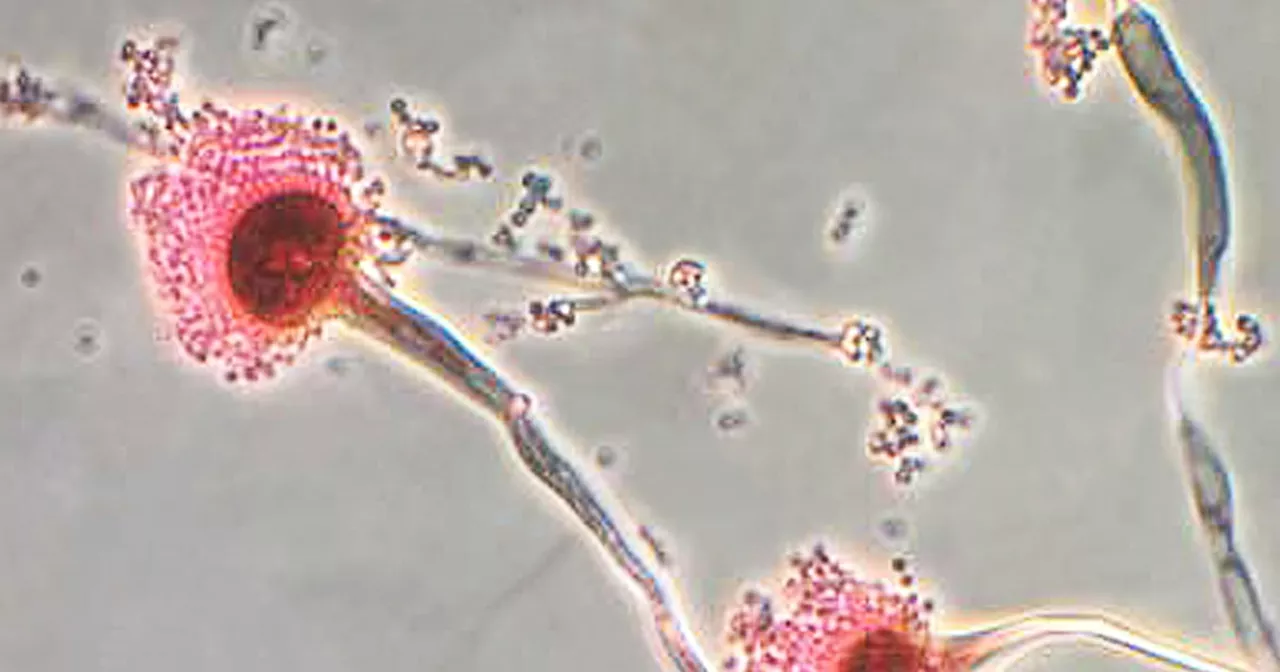
, and most individual infections involved include multiple genotypes, based on data from a new study of variations over a 29-year period.is a potentially pathogenic environmental mold and the leading cause of invasive aspergillosis, an infection of the sinuses and lungs.
Triazoles are the recommended first-line therapy, but treatment failure is common, Yinggai Song, MD, Peking University First Hospital, Beijing, China, and colleagues wrote. Reports of triazole-resistantbased on isolates from homes as well as environmental hot spots are increasing, but specific phenotypes and genotypes associated with the virus mutations have not been identified, the researchers wrote. The domain of antimicrobial resistance has primarily focused on bacteria, while fungi have been overlooked, corresponding author Paul E. Verweij, MD, professor of clinical mycology at Radboud University Nijmegen Medical Center, Nijmegen, the Netherlands, said in an interview.Aspergillus fumigatus, Candida auris, C tropicalis, and C parapsilosis ,” he said. The most important driver of the resistant strains appears to be the dual use of antifungals as medicine and in agriculture for crop protection, and medical azoles become ineffective, he added.isolates collected at hospitals in the Netherlands over a 29-year period from January 6, 1994, to December 31, 2022, and tested them for triazole resistance. The results weregene, which has been identified in previous research as a dominant mechanism in triazole resistance, and found that 15.6% of the screened isolates hadtriazole resistance mutations. The most common mutations were tandem repeats of 34 bases and 46 bases: TR34/Leu98His and TR46/Tyr121Phe/Thr289Ala . A total of 59 cases of confirmed or possible invasive aspergillosis were identified, 13 of which were triazole resistant. The findings were limited by several factors including the use of cultures as a denominator that may have excluded patients with aspergillosis diagnosed by other means, the researchers noted. Other limitations included the variation in methods of resistance detection over the long study period and the impact of multiple isolates from the same patient on resistance frequency and variation, they said.that were involved in triazole-resistant invasive aspergillosis, they wrote in their discussion. Looking ahead, new strategies will be needed to detect treatment-resistant variants in clinical specimens to inform practice, they added.. Although the changes themselves are not surprising, more than 17% of resistant isolates had a change in resistance profile, and it becomes more difficult to predict which drugs can be used to treat patients given this increase in variation, he said. The takeaway for clinicians is to be vigilant to the increasing variation in resistance profiles and to the fact that patients have multiple genotypes of the fungus, said Verweij. “Often we may culture only a few colonies so we need to check all colonies to be confident that among azole-susceptible colonies there may be a resistant one,” he said. A key study limitation was the analysis of cultures rather than the disease caused by the fungus, but this is a challenge given the need to classify the presence of aspergillus disease, said Verweij. “Further research should look at the genotype variants to determine if the mutations contribute to resistance, and if so, these could be incorporated into molecular resistance tests” he said. In addition, other new treatments are being developed beyond the azoles in both medicine and agriculture, including the dihydroorotate dehydrogenase inhibitors olorofim and ipflufenoquin , Verweij noted. The dual use has caused a global resistance problem with azoles, it is important to manage this for these new modes of action, he said.“Antifungal resistance is a growing issue; tracking the evolution of resistance helps us to understand trends, and how it affects treatment strategies for patients,” said Shirin Mazumder, MD, an infectious diseases specialist in Memphis, Tennessee, in an interview. “Understanding the change in resistance patterns is crucial to help guide treatment options and to provide insight in the development of new antifungal agents,” she said. The increase in azole-resistant aspergillus infections noted in the current paper was not surprising, said Mazumder. Increased use of azoles in clinical medicine, prolonged azole treatment, and environmental pressure from widespread use of azoles in agriculture are among the factors that have contributed to the emergence of azole-resistant strains, she noted. In clinical practice, “Treatment-resistant aspergillus has a direct impact on treatment strategies and patient outcomes,” Mazumder said. “Medications used to treat aspergillus infections are limited to begin with, and the development of azole-resistant strains further reduce treatment options which can lead to increased mortality rates especially for immunocompromised patients,” she said.. Research into additional diagnostic techniques to detect genotype variations, additional mechanisms of resistance, and the development of novel antifungal treatments are necessary as well, as the landscape for aspergillus resistance continues to change, she added. The study was supported by the National Key Research and Development Program of China, the National Natural Science Foundation of China, and the Wellcome Trust. Verweij disclosed receiving grants for research, lectures, and consultancy from Gilead Sciences, Mundipharma, Shionogi, and F2G.Comments on Medscape are moderated and should be professional in tone and on topic. You must declare any conflicts of interest related to your comments and responses. Please see our
Respiratory Infections Antimicrobial Resistance Resistance To Antimicrobials Otolaryngology ENT Specialty ENT Speciality Agriculture/Farming Antifungal Aspergillosis Bacteria Bacterial Infection Candida Genetics Hospitals Lung Microbicides Antimicrobials Sinus Genomics Genomic Medicine
United States Latest News, United States Headlines
Similar News:You can also read news stories similar to this one that we have collected from other news sources.
 Bacille Calmette-Guérin Revaccination Fails to Prevent Sustained Tuberculosis InfectionBacille Calmette-Guérin revaccination shows no efficacy in preventing sustained Mycobacterium tuberculosis infection compared with placebo in adolescents in a phase 2b study.
Read more »
 Fungal infections are getting harder to treatKaitlin Sullivan is a contributor for NBCNews.com who has worked with NBC News Investigations. She reports on health, science and the environment and is a graduate of the Craig Newmark Graduate School of Journalism at City University of New York.
Read more »
 'Mycopunk' is what happens when 'Borderlands' gets a nasty fungal infection (Interview)Fran Ruiz is our resident Star Wars guy. His hunger for movies and TV series is only matched by his love for video games. He got a BA of English Studies, focusing on English Literature, from the University of Malaga, in Spain, as well as a Master's Degree in English Studies, Multilingual and Intercultural Communication.
Read more »
 Climate change may be pushing fungal allergy season earlierRising temperatures and changing rainfall patterns may be lengthening fungal allergy season, which starts 3 weeks earlier than it did two decades ago.
Read more »
 Serious liver disease shows ‘astonishing’ growth among heavy drinkers, study showsOver the last two decades, the share of heavy drinkers who have advanced liver scarring jumped from 1.8% to 4.3%.
Read more »
 Mall walking: Staying active while staying out of the heatCaitlin is a trending intern for Deseret News. She covers travel, entertainment and other trending topics.
Read more »