
Researchers have developed new wearable technologies that utilize amphiphilic materials to generate electricity from human movement while simultaneously enhancing user comfort. These materials, known for reducing friction in consumer products, are incorporated into wearable fabrics to create slippery surfaces that feel good against the skin. When these fabrics rub against each other or other surfaces, they generate electricity due to the electron-donating properties of certain amphiphilic molecules.
Researchers have demonstrated new wearable technologies that both generate electricity from human movement and improve the comfort of the technology for the people wearing them. The work stems from an advanced understanding of materials that increase comfort in textiles and produce electricity when they rub against another surface.
At issue are molecules called amphiphiles, which are often used in consumer products to reduce friction against human skin. For example, amphiphiles are often incorporated into diapers to prevent chafing. “We set out to develop a model that would give us a detailed fundamental understanding of how different amphiphiles affect the surface friction of different materials,” says Lilian Hsiao, corresponding author of a paper on the work and an associate professor of chemical and biomolecular engineering at North Carolina State University. “The model helps us understand the molecular basis for friction reduction and can be used by engineers to tailor a material’s properties for different applications.” “We then began a series of experiments to explore whether we could use amphiphiles to modify materials and incorporate them into haptic energy harvesters,” says Saad Khan, co-corresponding author and INVISTA Professor of Chemical and Biomolecular Engineering at NC State. “Specifically, we wanted to know if we could create energy from friction in amphiphile-modified materials. It turns out we could not only generate electricity, but we could do so while also reducing the friction that people wearing these materials experience.” In other words, the researchers found they could use amphiphiles to create wearable fabrics with slippery surfaces that feel good against human skin. The researchers also found that some amphiphiles have electronic properties that allow them to “donate” electrons. And when the researchers incorporated those electron-donating amphiphiles into the wearable materials, the end result was a material that was both comfortable and capable of generating electricity through friction produced by rubbing against human skin or other materials. “The technology for harvesting static energy is well established but devices that can be worn for long periods of time are still missing.” Hsiao says. “In our proof-of-concept testing, we found these amphiphile materials not only feel good on the skin but could generate up to 300 volts, which is remarkable for a small piece of material.” “An optimal balance between friction needed to generate power and maintaining the comfort of the wearer is paramount in designing haptic technologies and amphiphile chemistry offers a facile way to do so,” Khan says. “We’re interested in doing more to make use of these materials, such as exploring how they can be incorporated into existing haptic devices. And we’re open to working with industry partners on identifying new applications.” The paper, “Compressing Slippery Surface-Assembled Amphiphiles for Tunable Haptic Energy Harvesters,” will be published Sept. 15 in the journal. First author of the paper is Pallav Jani, a Ph.D. graduate of NC State. The paper was co-authored by Kushal Yadav, another Ph.D. student at NC State, Maryanne Derkaloustian and Charles Dhong of the University of Delaware, and by Hilmar Koerner, who leads the Polymer Matrix Composites Program at the Air Force Research Laboratory. This work was done with support from the Nonwovens Institute under project 18-224SB; the National Science Foundation under CAREER award number 2042635; the AFRL under the Summer Faculty Fellowship Program; the Sloan Research Fellowship under grant number FG-2022-18336; the Dreyfus Foundation, under grant number TC-22-038; the National Institutes of Health under grant R01EY032584-02; and the National Eye Institute under grant 5R01EY032584-03. Pallav K. Jani, Kushal Yadav, Maryanne Derkaloustian, Hilmar Koerner, Charles Dhong, Saad A. Khan, Lilian C. Hsiao.Imagine a sweater that powers electronics to monitor your health or charge your mobile phone while running. This development faces challenges because of the lack of materials that both conduct ... Imagine tires that charge a vehicle as it drives, streetlights powered by the rumble of traffic, or skyscrapers that generate electricity as the buildings naturally sway and shudder. These energy ... Thermoelectric materials could play an important role in the clean energy transition, as they can produce electricity from sources of heat that would otherwise go to waste. Researchers report a new ... In a breakthrough for the field of bioelectronics, researchers have enhanced the ability of E. coli bacteria to generate electricity. The innovative approach only offers a sustainable solution for ...Researchers Make Comfortable Materials That Generate Power When Worn
Science WEARABLE TECHNOLOGY ELECTROGENERATION AMPHIPHIILES COMFORT FRICTION REDUCTION
United States Latest News, United States Headlines
Similar News:You can also read news stories similar to this one that we have collected from other news sources.
 What the Tech: See the small tech gifts that can be stocking stuffersMontgomery, Alabama
Read more »
Georgia Tech Football: Tennessee Tech Linebacker Cayman Spaulding Commits to the Yellow JacketsThe Yellow Jackets continued their big day tonight with another transfer commitment. Tennessee Tech linebacker Cayman Spaulding became the 5th player from the t
Read more »
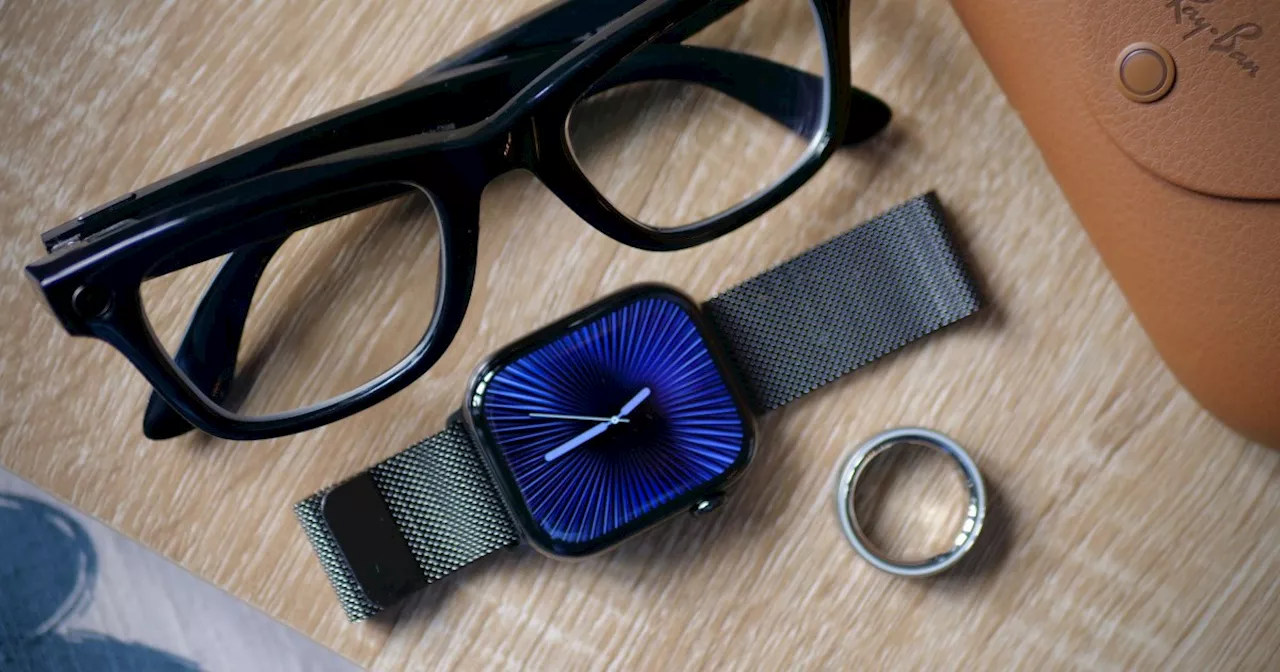 These 3 gadgets prove wearable tech reached its peak in 2024There are three standout wearables that have made 2024 a fantastic year for smartwatches, smart rings, and smart glasses.
Read more »
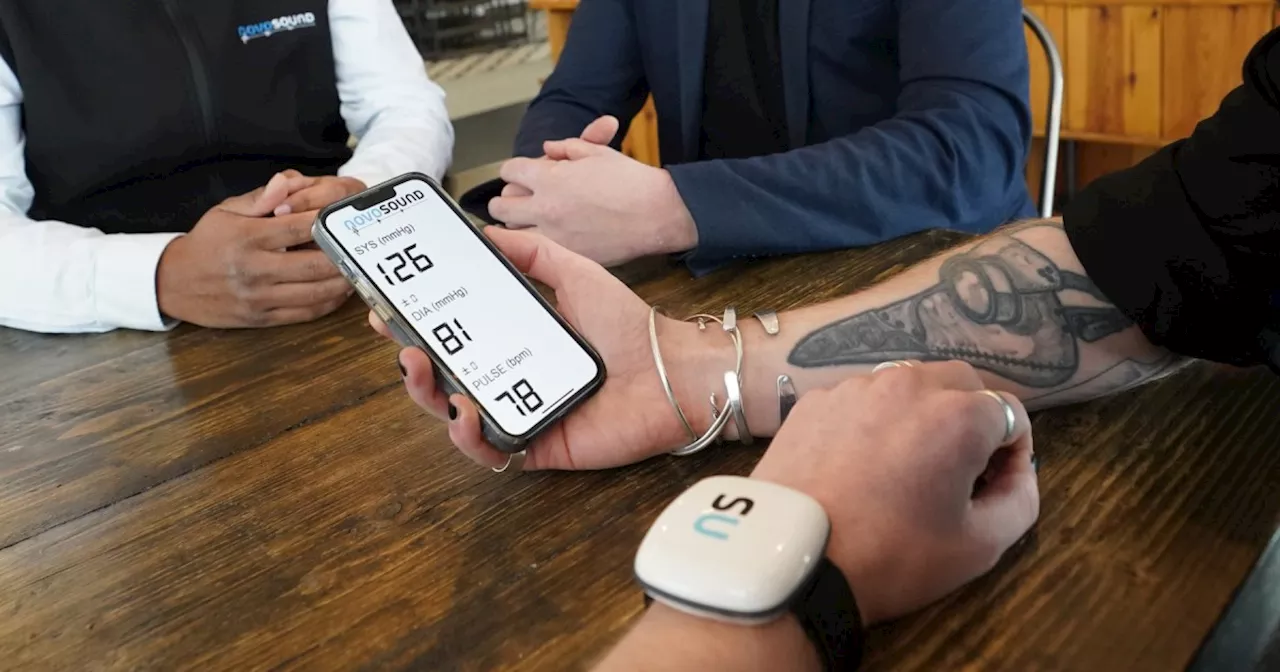 Novosound's Wearable Ultrasound Tech Promises Accurate Blood Pressure Monitoring at CES 2025Novosound, a Scottish company, is showcasing its groundbreaking ultrasound blood pressure monitoring device at CES 2025. The device, named Slanj, utilizes thin-film ultrasound technology and claims to achieve accuracy comparable to traditional cuff-based methods. This innovative wearable sensor promises real-time blood pressure monitoring without the need for cuffs or wires.
Read more »
 Generating income using a 'buy-write' options strategy on a tech stock with improving prospectsMike Khouw reviews a 'buy-write' strategy on TD Synnex.
Read more »
 Can a new class of wearable tech actively boost your mental health?A range of brainwave-reading devices and other gadgets aim to monitor our nervous systems and intervene to improve our well-being. Do they work?
Read more »