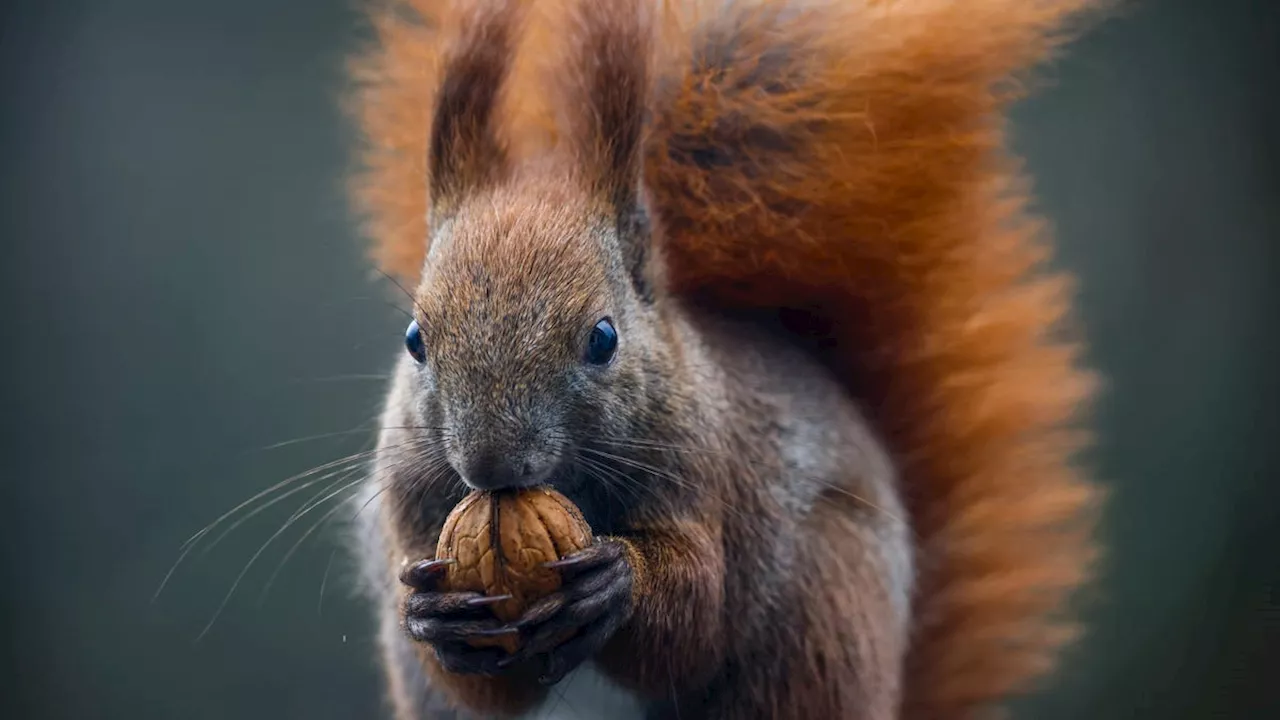
Archaeological evidence suggests the fluffy rodents were hosts of leprosy-causing bacteria.
Medieval residents of Winchester, England, probably got their leprosy from red squirrel s in the area, according to a team of archaeologists and geneticists that studied remains from two archaeological sites in the city.
Leprosy—officially Hansen’s disease—is a highly contagious disease that can cause nerve damage, paralysis, and blindness if not treated, according to the Centers for Disease Control and Prevention. Leprosy is mainly caused by Mycobacterium leprae, a type of bacteria that uses a few species as hosts, including humans, nine-banded armadillos, and red squirrels. In their research—published today in Current Biology—the researchers studied 25 human samples and 12 squirrel samples from two sites in Winchester, enabling them to reconstruct four medieval genomes of M. leprae, one of which came from a squirrel. Winchester is in Hampshire and became the capital of Wessex in 871, at the beginning of the reign of King Alfred the Great. One of the archaeological sites the team investigated in Winchester was St Mary Magdalen’s leprosarium, a hospital for leprosy patients. The team found a close relationship between the strains in the squirrel and the humans. “With our genetic analysis we were able to identify red squirrels as the first ancient animal host of leprosy,” said Verena Schuenemann, an archaeologist at the University of Basel in Switzerland and the senior author of the study, in a Cell release. “The medieval red squirrel strain we recovered is more closely related to medieval human strains from the same city than to strains isolated from infected modern red squirrels.” Schuenemann specializes in the genomics of ancient pathogens. In the study, the team found that the bacterial strain in the medieval squirrels is more closely related to some of the strains in the medieval residents of Winchester than the strains present in modern red squirrels. As noted by the team in the study, squirrels were regularly kept as pets in England in medieval times and squirrel fur was widely used in garments across Europe during the Middle Ages, many of which made their way to England through trade. In 1384, the English customs accounts reported some 15,000 animal skin imports that weren’t squirrels. Meanwhile, 377,200 squirrel skins were imported. If English customs was playing a numbers game to reduce the amount of leprosy in the country, they weren’t doing themselves any favors. Though the transmission between the two species couldn’t be made explicitly certain, the strains in the squirrel and in the humans were closely related and “its presence in both species from the same city and time suggests cross-species infection,” the team wrote. “This research, along with recent findings of leprosy in modern wild armadillos in the Americas, wild red squirrels in the UK, and potential insect vectors, could open the medical debate to more seriously consider the possible role of animal hosts in leprosy persistence today,” the team added. Animals still host zoonotic diseases that can wreak havoc in humans . There’s now a flurry of concern about H5N1—a strain of bird flu that has recently been found in goats, cows, and humans. Understanding the transmission of such diseases in even centuries-old instances can help scientists understand how transmission occurs, whether in squirrels or other critters. More: How Worried Should We Be About Bird Flu Right Now?
Red Squirrel Zoonosis Bacterial Diseases American Red Squirrel Leper Colony Alfred Mycobacterium Leprae Squirrel Sciurus Verena Schuenemann Acid-Fast Bacilli Hansen M. Leprae Influenza A Virus Subtype H5N1 Mycobacterium Gizmodo
United States Latest News, United States Headlines
Similar News:You can also read news stories similar to this one that we have collected from other news sources.
 Kingdom Come: Deliverance II Trailer Reveals Medieval Action RPG SequelWarhorse Studios shared a first-look showcase of the upcoming realistic action RPG sequel Kingdom Come: Deliverance II.
Read more »
 Massive DNA study reveals mating customs of mysterious medieval horse ridersAnalysis of hundreds of burials in Hungary traces longest known family tree—and absent daughters
Read more »
 Breaking Bad Becomes Medieval Fantasy In Bizarre VideoBryan Cranston as Walter White in Breaking Bad
Read more »
 Here's What People Called Their Dogs During Medieval TimesA 700-year-old book, recently sold into a closed private collection, revealed the most-popular dog names in the Middle Ages, and some may surprise you.
Read more »
 New Medieval RPG Joins Manor Lords in Steam Top Sellers ChartIt is a great time to be a fan of medieval games.
Read more »
 In medieval England, leprosy spread between red squirrels and people, genome evidence showsEvidence from archaeological sites in the medieval English city of Winchester shows that English red squirrels once served as an important host for Mycobacterium leprae strains that caused leprosy in people, researchers report in the journal Current Biology.
Read more »