
The waste could be used for nuclear fusion, say researchers.
The cooling tower of the Davis-Besse Nuclear Power Station in Oak Harbor, Ohio.Although nuclear fission, which powers nuclear reactors, can provide plenty of energy, it also produces potentially dangerous radioactive waste as a by-product.
Now, researchers say they may have found a way to use that waste to help produce a cleaner nuclear energy. Nuclear fusion – the process by which atomic nuclei are combined into heavier elements to generate energy – has the potential to provide "vast energy supplies" while releasing minimal greenhouse gas emissions, according to the But commercial fusion, which is in the early stages of development, requires a very rare, very expensive form of hydrogen known as tritium. Researchers believe they have discovered a new way to manufacture tritium by using the thousands of tons of nuclear waste currently being stored in the U.S., according to Terence Tarnowsky, a physicist at Los Alamos National Laboratory in New Mexico, who will present his findings at the ACS fall meeting, which began Saturday and ends Thursday. Nuclear power plants currently generate energy through nuclear fission, a process in which plutonium or uranium atoms are split to release neutrons, which then go on to split more atoms in a potentially endless chain reaction. Nuclear reactors house and control the nuclear fission process, using the heat it generates to turn water to steam that powers turbines which generate electricity, according to theThe cooling tower of the Davis-Besse Nuclear Power Station in Oak Harbor, Ohio. Unlike fission, nuclear fusion creates energy by forcing atomic nuclei together in the same manner that stars, like our sun, generate energy. While nuclear fusion also creates radioactive waste, it's far less dangerous and far more short-lived than the waste produced by fission,Gravity does the trick for stars, forcing the nuclei together, but fusion is much more difficult on Earth: The first man-made fusion reaction to produce more energy that it took to initiate itjust two-and-a-half years ago. It also required deuterium and tritium – both forms of hydrogen – to fuel the process. Deuterium is readily available, but tritium is a different story."The total tritium inventory on the planet is about 55 plus-or-minus 31 pounds," said Los Alamos physicist Terence Tarnowsky, in the ACS statement. That makes the value of commercial tritium about $15 million per pound. Tarnowsky estimates that 55 pounds of tritium has the capacity to power more than 500,000 homes for six months, if used for fusion. However, the U.S. currently doesn't have any domestic capability to create it, unlike Canada, which produces tritium as a by-product of their fission reactors,There are thousands of tons of nuclear waste produced by commercial nuclear power plants in the U.S., according to the ACS, which could be used to create tritium. Tarnowsky said he's conducted multiple computer simulations to evaluate the potential production and energy efficiency of tritium reactors, which use a particle accelerator to initiate a process that ultimately produces tritium. MORE: Climate change could unearth, disturb Cold War-era nuclear waste buried by the US, officials say Using a particle accelerator also would allow operators to turn the reactions on or off, making the process safer than the fission chain reactions that take place in a nuclear power plant, according to researchers. According to the simulations, the reactors could produce about 4.4 pounds of tritium per year, an amount on par with the total yearly output from all of the fission reactors in Canada, according to the ACS. The system would run on about one gigawatt of energy, equivalent to the annual energy needs of about 800,000 U.S. homes, Tarnowsky estimates. Tarnowsky said he plans on generating a dollar cost for tritium following more sophisticated calculations regarding the efficiency of the proposed tritium reactors.
United States Latest News, United States Headlines
Similar News:You can also read news stories similar to this one that we have collected from other news sources.
 Scientists re-create a legendary golden fabric from clam wasteSea silk, once spun from endangered clams, may make a comeback — thanks to discarded fibers from a farmed species. The find could sustainably revive a fading art.
Read more »
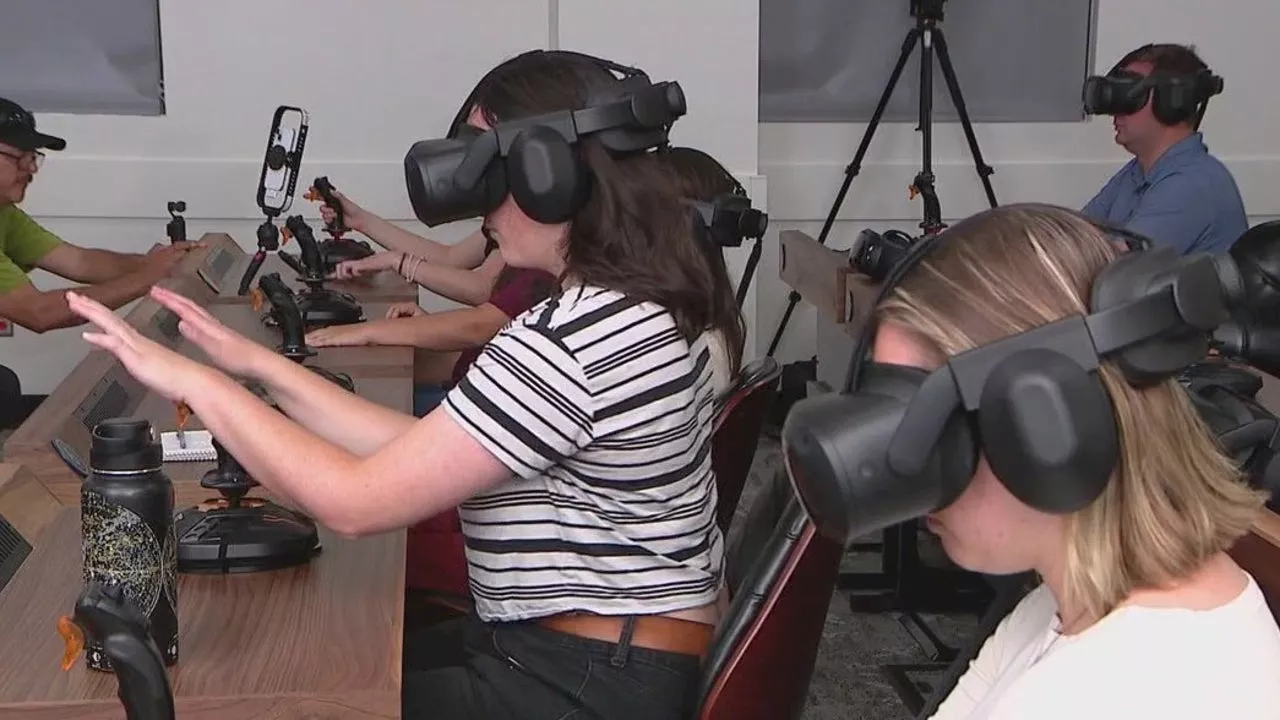 ASU uses virtual reality to train future scientistsArizona State University is using virtual reality to engage students and train the next generation of scientists.
Read more »
 Scientists Pitch Bold Plan to Turn Nuclear Waste Into Nuclear FuelTapping into discarded nuclear waste could help generate a self-sufficient source of a key ingredient for nuclear fusion, a new plan proposes.
Read more »
 Scientists Confirm What Every Beachgoer Secretly Fears About SeabirdsYes, that seabird soaring above your head will poop on you—for very scientific, evolutionary reasons.
Read more »
 La Jolla scientists make ‘unexpected’ discovery in muscle-building proteinWith further studies, ‘we can look at the level of what we can correct … in muscle health,’ a Sanford Burnham Prebys researcher says
Read more »
 These Seabirds’ Pooping Habits Shock ScientistsThe first detailed observation of the bathroom habits of Streaked Shearwaters at sea leave scientists with a surprising load of questions
Read more »