
Organizations in Navajo Nation are fighting energy injustice with solar power.
The home of Eleanor Paddock in Navajo Nation after being connected with electricity for the first time by the organization Navajo Power.ABC News is taking a look at solutions for issues related to climate change and the environment with the series, "The Power of Us: People, The Climate, and Our Future.
"is pushing back against a legacy of energy injustice and attempting to rectify it for those who call the tribal lands home. "The Navajo Nation served as the battery for the West for decades," Brett Issac, founder and executive chairman of Navajo Power, told ABC News. "Cities like Las Vegas and Los Angeles wouldn't be in existence without the coal resources that were extracted on the Navajo Nation." Issac said the "massive infrastructure investment" required to build major western cities using Navajo resources is still out of reach for many that live on Navajo land."You have massive transmission lines running across a vast landscape, houses living underneath, that are still using generators and kerosene lamps even today," he said. ABC News Chief Meteorologist and Chief Climate Correspondent Ginger Zee traveled to the Navajo tribal lands in northeastern Arizona to examine the work of Issac, and others, who are trying to bring power to the Navajo people. The home of Eleanor Paddock in Navajo Nation after being connected with electricity for the first time by the organization Navajo Power."Within Navajo Nation, there are still thousands of people that do not have power?" Zee asked.Navajo Power is focused on bringing clean energy, like solar power, to tribal lands for Navajo families who have never had electricity. The company hopes to get up to 500 off-grid homes connected each year.One of the homes Navajo Power outfitted with solar power belongs to Eleanor Paddock. She moved back to her family's land 11 years ago, and in the years since has used a car battery to power her cell phone, propane to cook and sometimes drives over an hour to plug in and make lesson plans for her job as a substitute teacher. Paddock said before the project was completed that she "cannot explain the feeling" she'll have when her home gets electricity. Eleanor Paddock looks inside her refrigerator, newly connected to electricity by Navajo Power in Navajo Nation.The lack of electricity on Navajo lands can be traced, in part, back to a development ban called, "," named for Commissioner of Indian Affairs Robert Bennett, who was in office when the ban took effect. From 1966 through 2009, the law held that the Hopi, Navajo and federal government had to agree before any development — meaning any water lines, electricity and even fixing a roof was illegal. "This is also the era of federal Indian policy that largely academics refer to for the assimilation era," Issac replied. "This is when they were trying to create incentives for native people to move to urban areas and assimilate into it."ABC News also spent time with, an organization that emphasizes the cultural and spiritual significance of the sun while bringing solar energy to Hopi and Navajo lands. "We are helping people who live on this earth and we are helping them by using the sun," Native Renewables Deputy Director Chelsea Chee said. "And so we are in a way, exercising and practicing the things that our ancestors have been doing." Back at Paddock's home, her food went from the barn to her first refrigerator after her Navajo Power connected her new solar power. Eleanor Paddock sits under a light in her home in Navajo Nation after being connected to solar power.Issac said these new connections to solar power are part of the ongoing battle to find solutions. "The limitations have always been either we don't have the supply chain or we don't have access to the financial tools. Creating that, for me, has been game changing because we're solving issues using our own resources," Issac said. "It's derived by people from here, built by people from here, and for people that are living here."
United States Latest News, United States Headlines
Similar News:You can also read news stories similar to this one that we have collected from other news sources.
 Navajo women breaking barriers: 'Anything is possible'Nick Ciletti is a seven-time Emmy award-winning journalist who joined ABC15 in July 2014. Currently, you can catch Nick every weekday anchoring ABC15 Mornings from 4:30 a.m. to 7 a.m.
Read more »
 Monopoly nation: How Big Tech's global power has lifted the U.S. stock marketThe world's biggest tech monopolies are overwhelmingly American.
Read more »
 Navajo Nation solar power plant, meant to help with electrification, gets federal financingThe U.S. Department of Agriculture will provide $76.5 million to finance construction costs of the 72-megawatt Red Mesa Tapaha Solar Farm in southeast Utah.
Read more »
 Navajo tribe members explains their views on the eclipseThe Navajo tribe views the eclipse as a taboo, seeing the sun as a father figure and an eclipse as its death, according to the Museum of Native American History in Bentonville.
Read more »
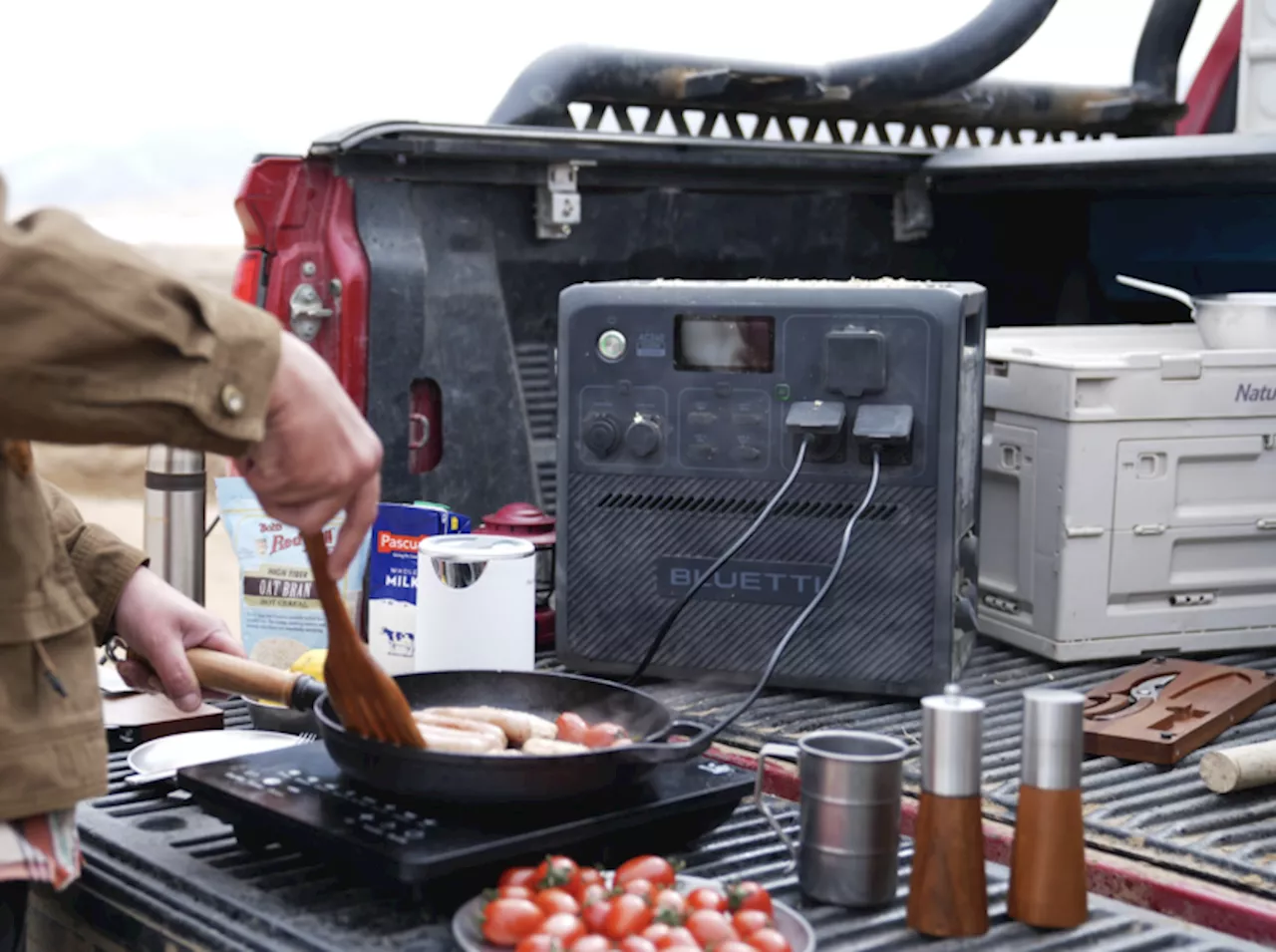 Power Beyond Limits With New BLUETTI AC240 IP65 Weatherproof Portable Power StationBLUETTI is gearing up to revolutionize outdoor adventures once again with its latest innovation, the AC240 IP65 Water Resistant Portable Power Station.
Read more »
 Russia Destroys Major Ukrainian Power Plant In Missile Strike, Power Shortages ExpectedSource of breaking news and analysis, insightful commentary and original reporting, curated and written specifically for the new generation of independent and conservative thinkers.
Read more »