
Guidelines for when women should start getting mammograms have been changing. A new study makes the case for explaining to women the risks and benefits of screening for breast cancer.
The most recent recommendation of the U.S. Preventive Services Task Force is that all women 40 to 74 get mammograms every other year. A previous recommendation said screening should start at 50. One doctor suggests that people “test smarter, not test more.
” New research makes the case for educating women in their 40s — who’ve been caught in the crossfire of a decades-long debate about whether to be screened for breast cancer with mammograms — about the harms as well as the benefits of the exam. After a nationally representative sample of U.S. women between the ages of 39 and 49 learned about the pros and cons of mammography, more than twice as many elected to wait until they turn 50 to get screened, aMost women have absorbed the widely broadcast message that screening mammography saves lives by the time they enter middle age. But many remain unaware ofof routine screening in their 40s — in false-positive results, unnecessary biopsies, anxiety and debilitating treatment for tumors that left alone would do no harm. “In an ideal world, all women would get this information and then get to have their further questions answered by their doctor and come up with a screening plan that is right for them given their preferences, their values and their risk level,” said social psychologistOf 495 women surveyed, only 8% initially said they wanted to wait until they turned 50 to get a mammogram. After researchers informed the women of the benefits and the harms, 18% said they would wait until 50.Learning about the downsides of mammograms did not discourage women from wanting to get the test at some point, the study showed. The benefits and the harms of mammography came as a surprise to nearly half the study’s participants. More than one-quarter said what they learned from the study about overdiagnosis differed from what their doctors told them.“I think most people are completely unaware of the risks associated with screening because we’ve had 30, 40 years of a public health messaging campaign: Go out and get your mammogram, and everything will be fine,” she said in an NPR interview. Esserman sees women who are diagnosed with slow-growing tumors that she believes in all likelihood would never harm them. In addition, mammography can give women a false sense of security, she said, like it did forand a negative test for cancer genes shortly before her doctor calculated her score for lifetime breast cancer risk, setting off an alarm that led to her being treated for fast-moving, aggressive breast cancer in both breasts.Esserman advocates for a personalized approach to breast cancer screening like the one that led to Munn’s diagnosis. In 2016, she launched the, which aims to tailor screening to a woman’s risk and, in her words, “to test smarter, not test more.”that more than 300,000 women will be diagnosed with breast cancer and 42,250 will die in the U.S. this year. Incidence rates have been creeping up about 1% a year, while death rates have been falling a little more than 1% a year.From 1996 until 2002, the independent panel of volunteer medical experts who help guide physicians, insurers and policymakers said women should begin screening at 50. In 2002, the task force said women in their 40s should be screened every year or two. In 2009, it said that 40-something women should decide whether to get mammograms based on their health history and individual preferences. The new study was conducted in 2022, when the task force guidelines called for women in their 40s to make individual decisions.returned to saying that all women between the ages of 40 and 74 should be screened with mammograms every other year. Rising breast cancer rates in younger women, as well as models showing the number of lives that screening might save, especially among Black women, drove the push for earlier screening.accompanying the new study stresses the need for education about mammography and the value of shared decision-making between clinicians and patients. “For an informed decision to be made,” states the editorial written by Dr. Victoria Mintsopoulos and Dr. Michelle B. Nadler, both of the University of Toronto in Ontario, “the harms of overdiagnosis — defined as diagnosis of asymptomatic cancer that would not harm the patient in the future — must be communicated.”Food prices have largely leveled off, but many people are still frustrated when they go to their local grocery store. In Arizona, a program called Kith and Kin teaches mothers, grandmothers, aunts, friends and neighbors who watch other people's children the skills they need to provide high quality care. Bartlett’s board says if it can’t secure funding by the end of October, some services will be eliminated.
NPR News Breast Cancer Mammography Your Health
United States Latest News, United States Headlines
Similar News:You can also read news stories similar to this one that we have collected from other news sources.
 Women’s Sportswear Co. Backed by Riley Gaines Banned from TikTok for Defending Women’s SportsSource of breaking news and analysis, insightful commentary and original reporting, curated and written specifically for the new generation of independent and conservative thinkers.
Read more »
 When Women Mean Business For WomenShaheena is an expert in diversity, high performance and leadership. She is an Associate Professor at HEC Paris Business School in Doha and works extensively with clients on leadership capabilities. Her latest book: Futureproof your career is available to buy.
Read more »
 Women In Engineering Day Celebrates Women’s Technical RolesI am the President of Coughlin Associates and a storage analyst and consultant. I have over 40 years in the data storage industry with multiple engineering and management positions. I have many publications and six patents to my credit.
Read more »
Left Needs to Face Truth, Letting Women Be WomenAccording to the left, we need to support women and provide them their own safe spaces and accommodations such as women's sports, where men aren't allowed — unless those men are transgender.
Read more »
 When should women begin getting mammograms?Women of a certain age should get a mammogram, and it may not be as old as you might think.
Read more »
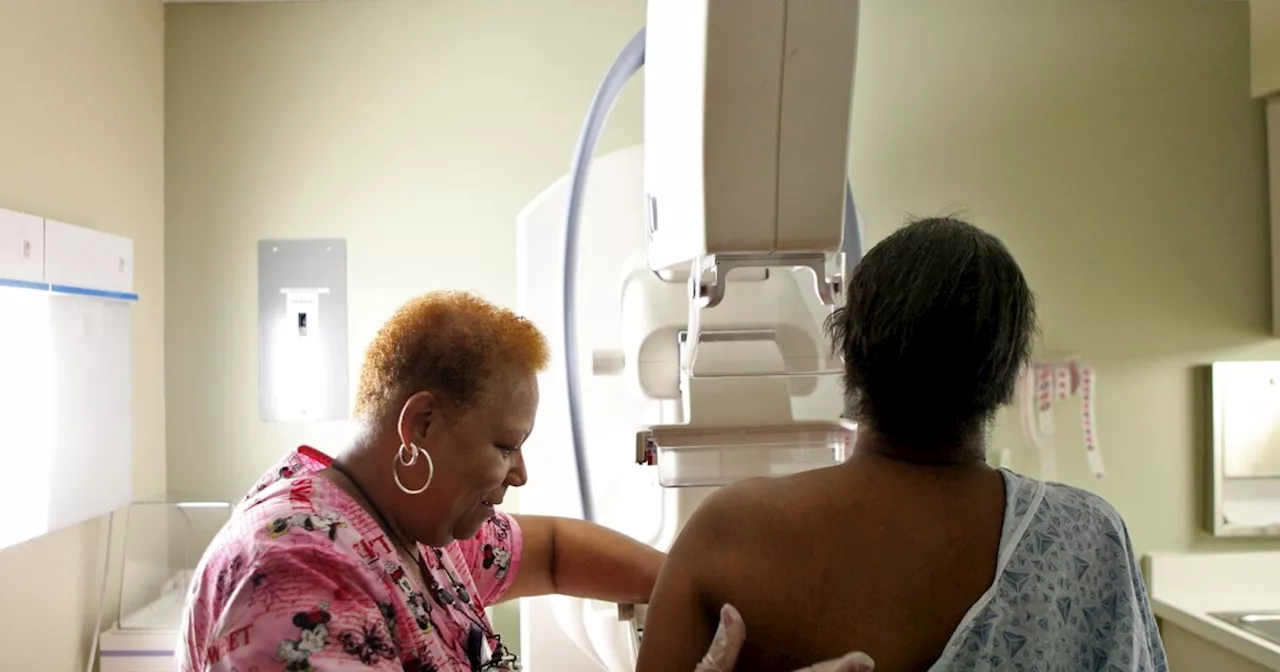 Mammograms have pros and cons. Women can handle the nuance, study arguesGuidelines for when women should start getting mammograms have been changing. A new study makes the case for explaining to women the risks and benefits of screening for breast cancer.
Read more »