


 +34

Four new cases of bird flu have recently been reported among farm workers in Washington state. With the total rising to 31 cases across six states, flu experts warn that the risk of a wider human outbreak will persist if the virus remains unchecked in animals.
H5 bird flu, a type of avian influenza, has been causing concern for months after infecting dozens of people in the U.S. this year. Now a new human case in Canada — that country’s first — is deepening the worry, especially over whether the virus could lead to another pandemic or lockdown.
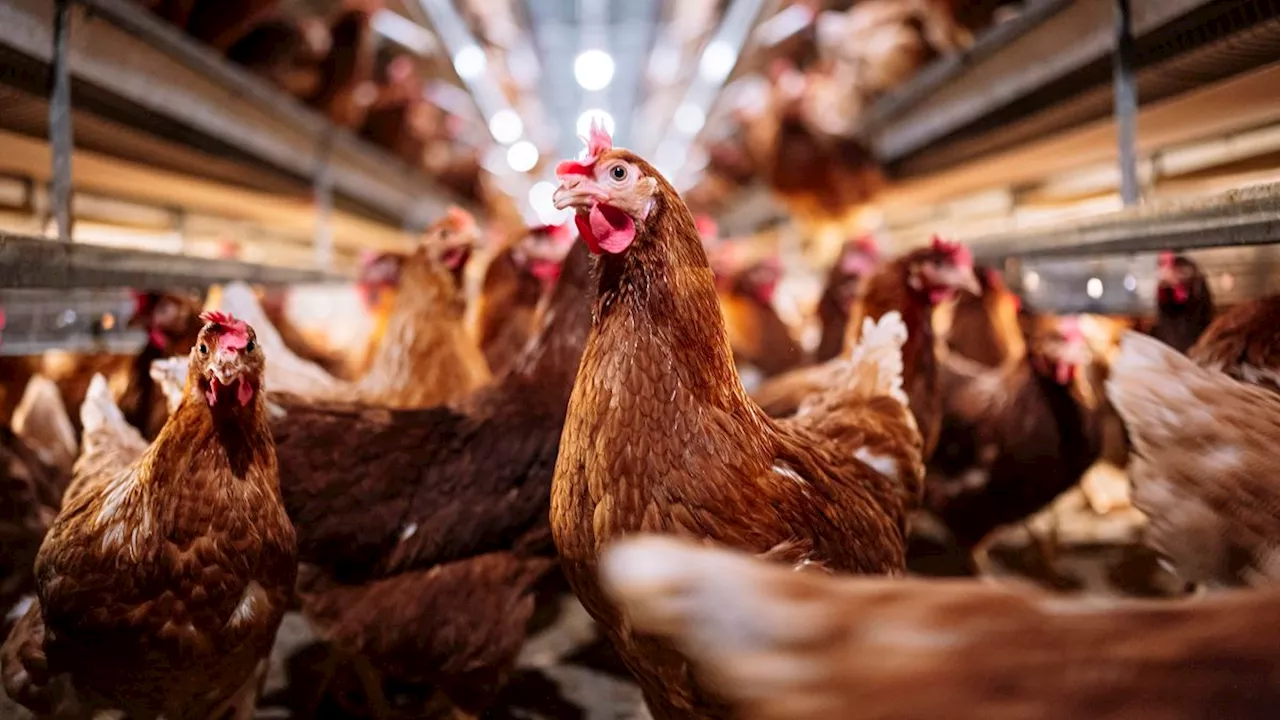
A teenager is in critical condition and being treated for acute respiratory distress at a children’s hospital in British Columbia after testing positive for bird flu, the CBC reported. The patient — whose gender, age and identity have not been released — “was a healthy teenager prior to this” with no underlying conditions, the province’s health officer, Dr. Bonnie Henry, said in a news conference. The teen had not been exposed to birds or other farm animals, but had been around dogs, cats and reptiles, she added. The source of infection is under investigation. Tests have confirmed the patient has H5N1, the Public Health Agency of Canada announced, the strain that's been infecting birds, poultry, mammals and humans. Could it ultimately cause the next pandemic? Here’s what to know: What is bird flu? Like people, birds can get the flu, and the avian influenza viruses that make birds sick can sometimes infect other animals like cows and, rarely, people, the National Library of Medicine explains. H5 is one family of bird flu viruses. It has caused widespread flu in wild birds worldwide and is causing outbreaks in poultry and U.S. dairy cows, the Centers for Disease Control and Prevention notes. Some farm workers exposed to those animals have also gotten sick. H5 has nine subtypes, including H5N1, the strain responsible for the recent illnesses. Is there a bird flu outbreak? There have been 46 confirmed human cases in the U.S. during the 2024 outbreak, according to the CDC. They were reported in California, Colorado, Michigan, Missouri, Texas and Washington State. “We do have an outbreak of human infections of H5N1,” says Dr. Amesh Adalja, a senior scholar at the Johns Hopkins Center for Health Security and a spokesperson for the Infectious Diseases Society of America. Almost all patients had contact with infected cattle or poultry. The single exception — a patient in Missouri — had no known animal exposure. There’s been no confirmed person-to-person spread. The current public health risk from H5 bird flu is low, the CDC says. But the agency is “watching the situation carefully” — as are experts in the field. Dr. Ian Lipkin, an expert on emerging viral threats, calls it an important health concern. “Emerging infectious diseases are unpredictable. If you told me 20 years ago that we were going to have major problems with coronaviruses, I wouldn’t have predicted that,” Lipkin, professor of epidemiology at the Columbia University Mailman School of Public Health, tells TODAY.com. “So nobody knows what’s going to happen with this particular flu.” Human infection with bird flu can happen when virus gets into a person’s eyes, nose or mouth, or is inhaled, according to the CDC. The illness can range from mild to severe and can be deadly. Human H5N1 cases in the U.S. have been relatively mild, perhaps because people are mostly getting infected through their eyes, Adalja notes. It might happen when a dairy worker is milking an infected cow and gets squirted in the face with the milk, for example. “You’re getting infected from the eyes rather through the respiratory route,” Adalja tells TODAY.com. That may be “less risky than respiratory inhalation” of the virus, he adds, when it can go to the lungs. Could bird flu turn into a pandemic? Both experts say it’s unlikely this particular strain of bird flu would lead to a pandemic because it doesn’t have the ability to spread efficiently between people. H5N1 has been infecting humans since 1997, so it’s had time to evolve, but still doesn’t easily jump from person to person, Adalja points out. “I don’t think that this is the highest risk bird flu strain,” he says. “You can’t say the risk is zero. But of the bird flu viruses, it’s lower risk.” Lipkin had a similar take. “Nobody ever wants to say never because you can be wrong,” he cautions. “Could this virus evolve to become more transmissible? Yes. Has it done so thus far? No. Do I personally think it’s going to be responsible for the next pandemic? No. Could it be? Yes.” Since there are many different avian influenza strains, one of them will be able to cause a pandemic at some point in the future, Adalja adds. Could there be a lockdown due to bird flu? Again, not likely for this strain, since H5N1 isn’t posing a threat to the general public, both experts say. If that were to change, people should realize lockdowns, like those during COVID-19, are not the “go-to measure” for an infectious disease emergency, Adalja says, calling them “very blunt tools.” Instead, proactive measures — such as more aggressive testing of farm animals — will allow health officials to be much more precise when it comes to stopping the spread of infection, he notes. When it comes to lockdowns, there’s also the question of how far authorities are willing to go. “If H5N1 were to become a major health problem, we would have to talk about ,” Lipkin says. “But I don’t think that this incoming administration is going to be amenable to that.” Is there a bird flu vaccine? Four vaccine candidates for dairy cows have been approved for field trials, according to the U.S. Department of Agriculture. In poultry, four potential bird flu vaccines began to be tested in 2023, Reuters reported. When it comes to humans, the CDC says the U.S. government is developing vaccines against H5N1 viruses “in case they are needed.” The agency adds it has H5 candidate vaccine viruses that could be used to produce a vaccine for people, and preliminary analysis shows “they are expected to provide good protection” against H5N1. There are also some vaccines in the strategic national stockpile that are closely — if not exactly — matched to this particular strain of bird flu, Adalja says. “There are efforts to make more updated vaccines. But there is no widespread vaccination program being initiated against H5N1 at this time in the U.S.,” he notes. Bird flu symptoms and prevention The CDC lists the following bird flu symptoms: Eye rednessMild flu-like upper respiratory symptomsFever or feeling feverishCoughSore throatRunny or stuffy noseMuscle or body achesHeadachesFatigueShortness of breath or difficulty breathingPneumonia requiring hospitalizationDiarrhea, nausea, vomiting or seizures . The people most at risk for H5N1 bird flu are dairy and poultry workers who might be around infected animals, Adalja says. They should wear personal protective equipment while working on farms affected by the virus, the CDC advises. When it comes to the general public, “don’t consume raw milk, full stop” since H5N1 is viable in it, Lipkin says. Pasteurized milk can eliminate the risk of infection, he notes. Properly cooked chicken is safe to eat, but wash your hands with soap and water after handling raw chicken, he adds. It might be wise to skip petting zoos or events where you can learn how to milk a cow, Adalja adds. Avoid direct contact with sick or dead wild birds, poultry and other animals, the CDC advises.
Scratch the next story
United States Latest News, United States Headlines
Similar News: You can also read news stories similar to this one that we have collected from other news sources.
 Bird flu concerns mount as California reports more human casesConcerns about bird flu — officially known as avian influenza A (H5) — continue to mount, particularly in California. Infectious disease experts voice their concerns and recommend precautions.
Read more »
 Health officials concerned over uptick in bird flu casesBeing in the news business for more than a decade, Carolyn has covered some of the most significant events impacting America. From presidential elections to natural disastersm, she’s covered it all!
Read more »
 Dead cows on the side of the road shows aftermath of Bird Flu outbreakSo far on 2024, there have been 27 human cases of bird flu in the U.S. and hundreds of infected cows.
Read more »
 Washington state officials identify four new cases of bird flu, as H5N1 outbreak spreadsFour agricultural workers in Washington state were recently diagnosed with avian influenza A (H5N1). The cases mark the first human infections of the disease under investigation in the state.
Read more »
 Bird flu could become deadlier if it mixes with seasonal flu viruses, experts warnKamal Nahas is a freelance contributor based in Oxford, U.K. His work has appeared in New Scientist, Science and The Scientist, among other outlets, and he mainly covers research on evolution, health and technology. He holds a PhD in pathology from the University of Cambridge and a master's degree in immunology from the University of Oxford.
Read more »
 H5N1 Detected in Pig Highlights the Risk of Bird Flu Mixing with Seasonal FluHumans and pigs could both serve as mixing vessels for a bird flu–seasonal flu hybrid, posing a risk of wider spread
Read more »