
Research suggests that the number of push-ups you can do is a surprisingly accurate measure of your overall fitness and heart health. A 2019 study found that those who completed more than 40 push-ups had a significant reduction in cardiovascular event risk compared to those completing fewer than 10. This article explores the connection between push-ups and heart health, offering a ranking system based on your push-up count and tips on how to improve yours.
It’s true; push-ups are a phenomenal test of upper-body strength. But they’re also a surprisingly accurate measure of your overall fitness and heart health. In fact, research suggests that the number of push-ups you can perform might be more telling than traditional cardiovascular tests.
In a 2019 study from JAMA Network Open, participants who completed more than 40 push-ups were associated with a significant reduction in incident CVD event risk compared with those completing fewer than 10 push-ups. That’s a staggering difference and highlights how muscular endurance, strength, and cardiovascular fitness go hand in hand. Unlike isolated strength exercises, push-ups challenge your body to work as a cohesive unit, forcing your heart and lungs to deliver oxygen efficiently to keep you moving. So, how does your push-up performance stack up? Can you breeze through multiple sets, or do you hit a wall before breaking a sweat? Your push-up count can reveal a lot about your endurance, muscular efficiency, and even your risk for future heart complications. Let’s break down the rankings and see where you land.Your push-up count can reveal a lot about your fitness level. Researchers from Harvard found that men who could do 40 or more push-ups had a significantly lower risk of heart disease than those who struggled to hit double digits. While individual factors like age, weight, and training background matter, here’s a general ranking system to see where you stand: Below Average : Struggling to hit double digits? That’s a sign you may need to improve strength, muscular endurance, and cardiovascular fitness. Low push-up numbers often indicate a weaker upper body and a higher risk of metabolic issues. Average : You’re holding your own, but there’s room for improvement. This range suggests moderate fitness, but aiming higher could mean better heart health. Above Average : Strong work! You’ve got solid endurance and strength, which likely translates to good overall cardiovascular health. Staying in this range is a great goal. Excellent : This is the gold standard. Hitting 40 or more reps is a powerful indicator that your heart, lungs, and muscles work efficiently together. Studies suggest those in this range have the lowest risk of heart-related issues.Why do push-ups correlate with a stronger heart? It comes down to efficiency. Unlike isolated strength exercises, push-ups demand full-body coordination, engaging the chest, shoulders, triceps, core, and even legs to stabilize. This movement tests muscular endurance, but more importantly, it challenges your heart to pump blood efficiently throughout your body. Better cardiovascular endurance: Your heart can handle sustained effort without tiring quickly. Improved metabolic health: People who perform well on push-up tests often have lower blood pressure, reduced cholesterol, and a healthier body composition. Stronger muscular endurance: Since muscles require oxygen to sustain movement, a high push-up count reflects an efficient oxygen delivery system—one of the key markers of heart health. If you’re crushing push-ups on the regular, you’re getting stronger and setting yourself up for a longer, healthier life.Not where you want to be? No problem. Boosting your push-up numbers takes a mix of strength training, endurance work, and thoughtful progressions.If you want to improve your push-ups, consider doing them often. Try incorporating push-ups into your daily routine, whether in the morning, before bed, or as part of a warm-up. Aim to train push-ups and other chest-focused exercises two to three times per week in your strength program.Building chest, shoulder, and triceps strength will make push-ups feel easier. Add exercises like: Dips – Strengthens the triceps and chest for better push-up endurance.3. Use Progressive Overload Increase reps each week – Even adding 2-3 extra reps can make a difference. Add resistance – Weighted push-ups or resistance band variations make standard push-ups feel easier over time.Since push-ups challenge endurance, improving overall cardio can help. Mix in high-intensity interval training , rowing, or cycling to condition your heart and lungs.Push-ups aren’t just a gym-class fitness test—they directly reflect your heart’s health and overall endurance. If you’re hitting 40+ reps, you’re in a great spot. If not, now’s the time to start improving. The good news? Your heart and body respond quickly to consistent training. Start today, push your limits, and watch your fitness—and heart health—climb to the next level. And if you enjoyed this article, don't miss How Long Your Walking Workout Should Be To Shrink Belly Fat. Yang, Justin et al. “Association Between Push-up Exercise Capacity and Future Cardiovascular Events Among Active Adult Men.” JAMA network open vol. 2,2 e188341. 1 Feb. 2019, doi:10.1001/jamanetworkopen.2018.8341 Cadigan, Caitlin. “Push-Up Capacity Linked with Lower Incidence of Cardiovascular Disease Events Among Men.” Harvard T.H. Chan School of Public Health, 15 Feb. 2019, https://hsph.harvard.edu/news/push-up-capacity-cardiovascular-disease-events-men/. Accessed 13 Feb. 2025.
Push-Ups Cardiovascular Health Heart Disease Fitness Level Endurance
United States Latest News, United States Headlines
Similar News:You can also read news stories similar to this one that we have collected from other news sources.
 Indiana Women Push No. 4 USC But Can’t Push The Trojans OverHoosiers lose lead in fourth quarter and late rally falls short in 73-66 loss to No. 4 USC.
Read more »
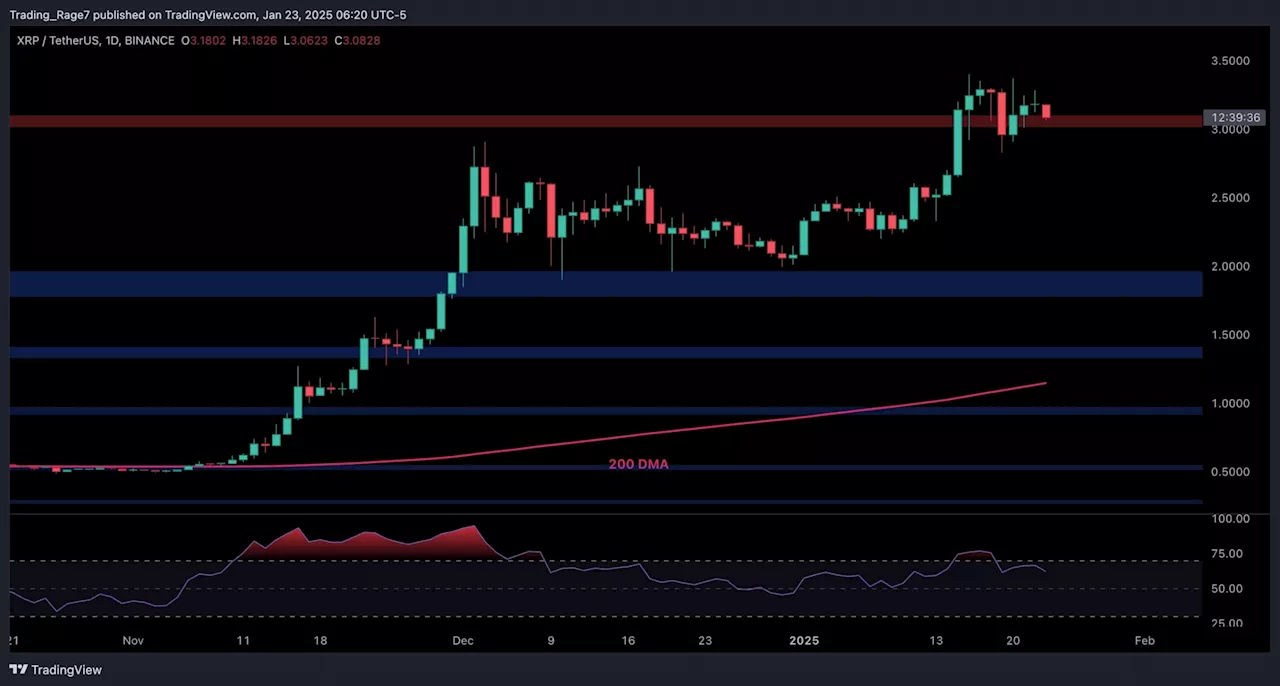 Ripple Price Analysis: Key Support Breakdown May Push XRP to $2Crypto Blog
Read more »
 Trump May Dismantle National Space Council Amidst Push for Private Space IndustryPresident Donald Trump's administration is considering dismantling the National Space Council, a body tasked with overseeing and coordinating space policy, potentially signaling a shift towards a more privately-led space sector. The council was revived by Trump in 2017, playing a key role in establishing the U.S. Space Force and promoting a human return to the Moon. However, lobbyists at SpaceX, led by Elon Musk, reportedly view the council as a bureaucratic hindrance. The decision to potentially disband the council comes as Trump seeks to consolidate decision-making power within a smaller group of advisors and prioritize efficiency, as exemplified by the creation of the Department of Government Efficiency (DOGE). While the council's website currently displays a '404 page not found' error, its future remains uncertain.
Read more »
 Utah’s water efficiency push may help farms more than the Colorado RiverUsing water more efficiently in agriculture has many benefits. But bolstering the Colorado River may not be one of them.
Read more »
 Utah's big water efficiency push may help farms more than the Colorado RiverMaking sprinklers more water-efficient may help farms produce more crops but that doesn't mean it would save more water for the Colorado River.
Read more »
 European Leaders Push Back Against Trump's Ukraine Peace PushEuropean leaders are taking steps to counter the assertive U.S. efforts to end the war in Ukraine, while calling for more pressure on Russia. Meanwhile, Ukrainian President Zelenskyy warns of a high risk of Russian occupation of Europe.
Read more »