U.N. food agency finally was able to deliver aid to northern Gaza, and efforts are afoot to bring relief by sea. But the challenges are many.
U.N. food agency finally was able to deliver aid to northern Gaza, and efforts are afoot to bring relief by sea. But the challenges are many.Displaced Palestinians gather to receive food donated by a charity before an iftar meal, the breaking of fast, on the second day of the Muslim holy fasting month of Ramadan, in Deir al-Balah, central Gaza Strip, Tuesday, amid ongoing battles between Israel and the militant group Hamas.
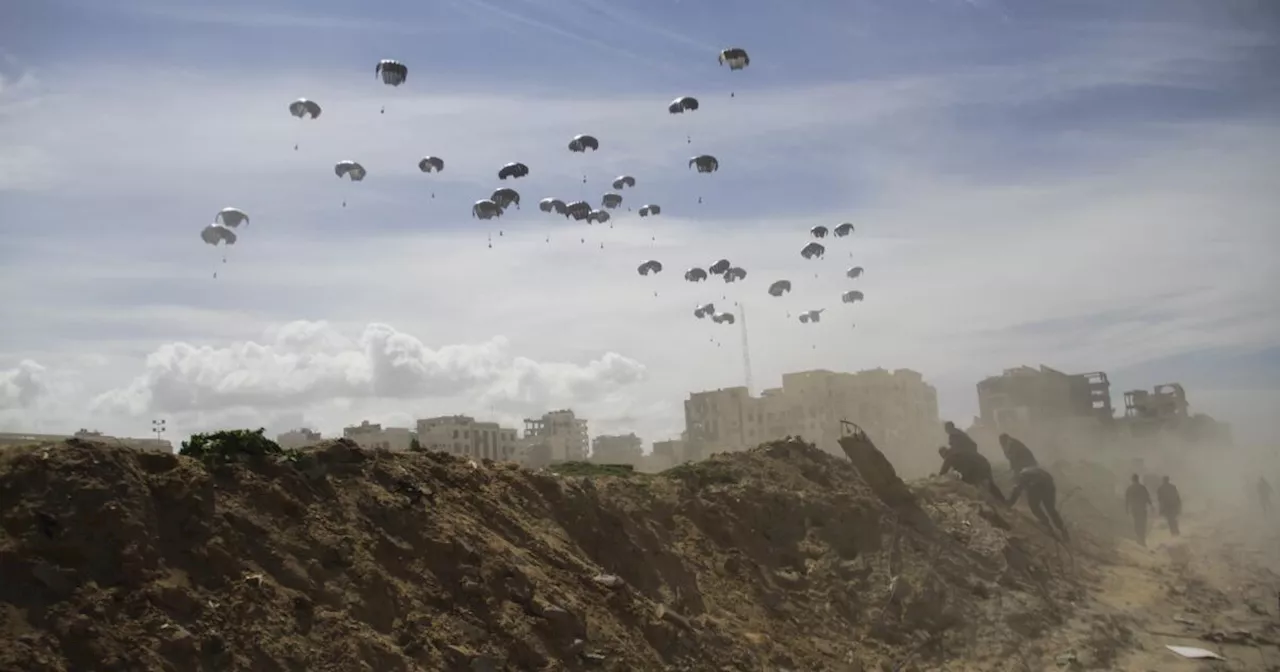
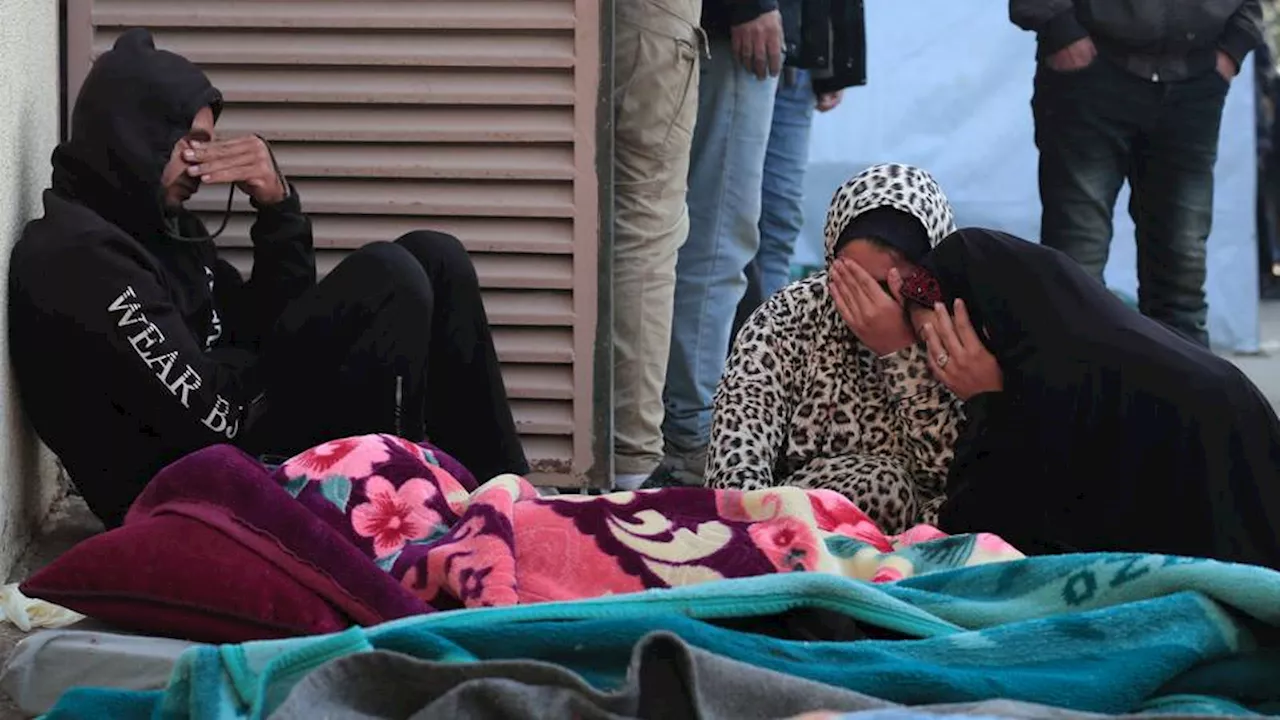
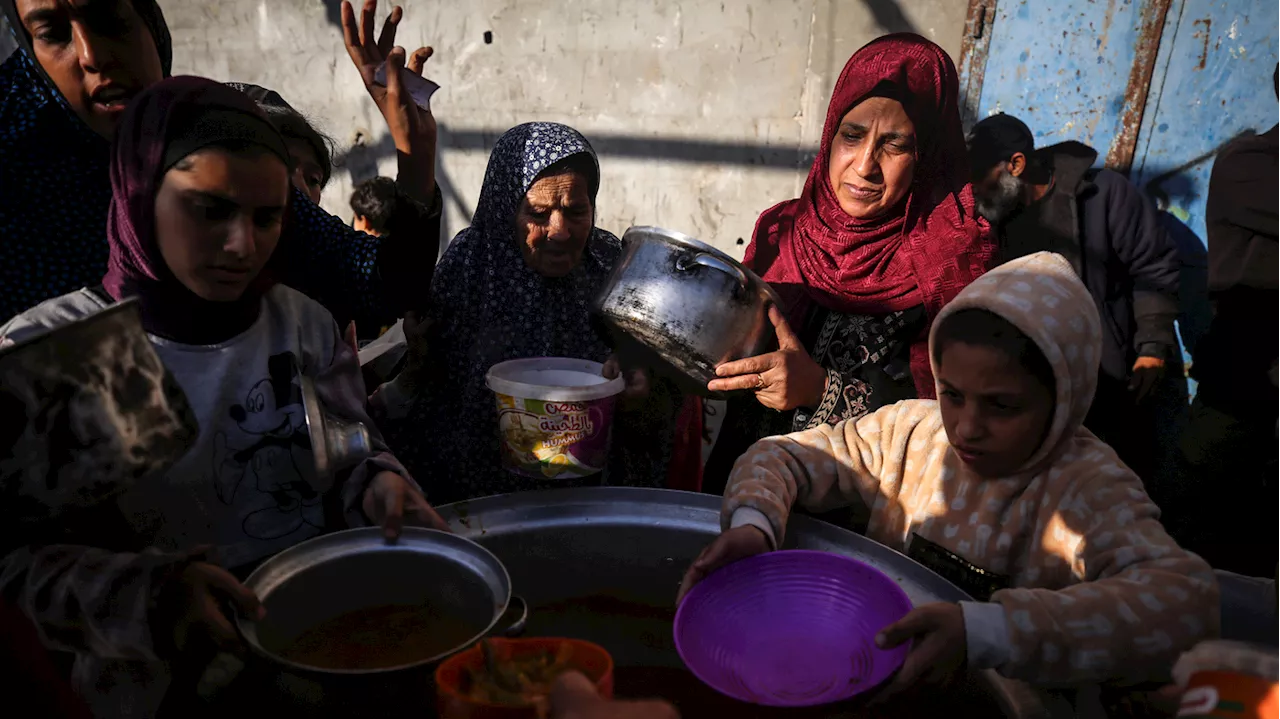
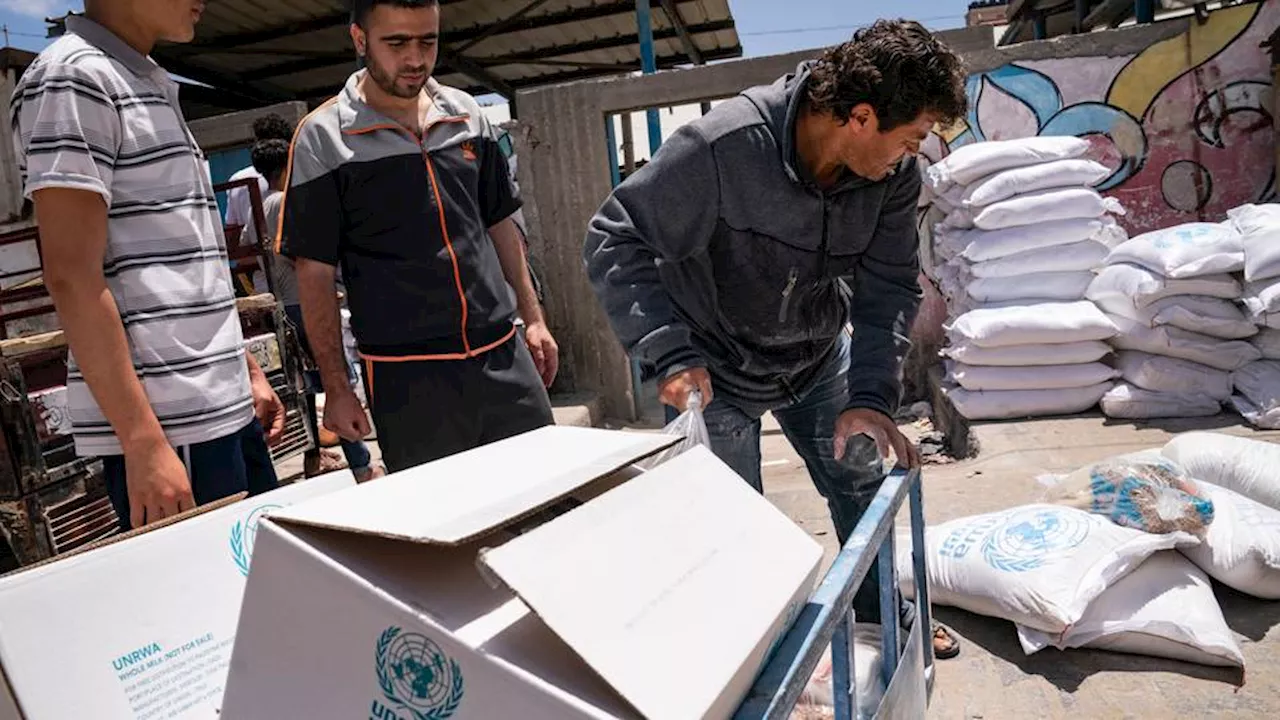
Displaced Palestinians gather to receive food donated by a charity before an iftar meal, the breaking of fast, on the second day of the Muslim holy fasting month of Ramadan, in Deir al-Balah, central Gaza Strip, Tuesday, amid ongoing battles between Israel and the militant group Hamas.NITZANA, Israel-Egypt border — Airdropping aid packages from planes, U.S. military and NGO boats working independently to deliver aid by sea, and now the U.N. food agency has finallyin by land. Multiple international efforts are afoot to bring desperately needed food, medicine and other supplies to Palestinians in the besieged Gaza Strip, but significant hurdles remain in the way.urging the Israeli government to enable humanitarian relief to reach the population in the enclave. But the pier won't be ready for several weeks.during the war, and the waters along the Gaza Strip are shallow, so there's a logistical challenge to bringing goods ashore from large ships. In a separate mission, a humanitarian ship is pulling a barge loaded with food for Gaza, which is expected to arrive this week. Humanitarian-chef José Andrés' World Central Kitchen, a charity that provides food in disaster zones,The need in Gaza is urgent, says Jamie McGoldrick, the U.N. humanitarian coordinator for the Palestinian territories, warning of a"massive deterioration" if aid doesn't reach people immediately. "Any supplementary possibility of bringing in aid through either airdrops or by sea is helpful. But the main part of it has to be done by road. That's the only way we can deliver bulk and at scale to populations inside Gaza, especially in the north," McGoldrick told NPR.is"man-made, and when we look for alternative ways of providing support by sea, by air, we have to remind that we have to do it because the natural way of providing support through roads is being closed."Humanitarian aid falls from planes over northern Gaza as seen from Israel's southern border with the Gaza Strip on March 7.Humanitarian aid falls from planes over northern Gaza as seen from Israel's southern border with the Gaza Strip on March 7."Starvation is being used as a war arm and when we condemned this happening in Ukraine, we have to use the same words for what is happening in Gaza," Borrell said."With people in northern Gaza on the brink of famine, we need deliveries every day and we need entry points directly into the north," the U.N. food agency said.to distribute aid to northern Gaza on March 5, in its first attempt since Feb. 20. Israeli soldiers turned away its 14-truck food convoy after a three-hour wait at the Wadi Gaza checkpoint that separates the northern and southern parts of the enclave. After being rerouted, the convoy was stopped by a large crowd of desperate people who looted about 200 tons of food, the U.N. food agency said. When Israel launched its air, sea and ground offensive, in response to the Hamas-led Oct. 7 attack on the country, it targeted northern Gaza first. The north has remained largely cut off since. But the U.N. estimates up to 300,000 people remain there under some of the worst conditions in Gaza, with little to no access to food and water and barely functioning hospitals. According to the Health Ministry in Gaza, at least 23 children and four adults have died of malnutrition and dehydration at hospitals in northern Gaza. The World Health Organization has warned of an"Abed Amin, a 35-year-old who lives in Gaza City and takes care of his three sisters, says he and his family have not received any aid since the start of the war over five months ago. Sometimes he borrows money from his friends to buy canned mushrooms or olives at a steep price on the black market. But these days, they mostly grind animal feed to a sort of flour. "It's anything but flour," Amin says."You can barely make a dough out of it, can't cook it and can barely swallow it. But it's all there is."Airdropping aid is inefficient — so why is the U.S. doing it in Gaza anyway? Mass starvation in Gaza has also created a big security problem, where people are desperate for any food, and usually the strongest are able to access what little aid gets in. Taghreed Al Khoudary, a mother of four daughters in northern Gaza, says before the war she spoiled her children and made whatever they wanted for dinner. Now, she has had to teach her daughters to survive on one loaf of bread a day. Recently, an airdropped package landed on the roof of her two-story home. Khoudary rushed up and was elated to find boxes of food. Then, she turned around and saw a large crowd behind her, some had climbed up, many of them holding knives and some were even armed, she said. "It felt like a scene from a zombie movie. Their eyes were laser focused, like they only saw the food packages and nothing else," she says.McGoldrick, the U.N. humanitarian coordinator, says the situation has become a Catch-22. "What we need to do is flood the north with food so it doesn't become a very prized commodity. If people in the north could see the fact that on a daily basis there was regular supplies of trucks of food, medicine and other key commodities, I think the desperation would not be there. The insecurity wouldn't be there either," McGoldrick says.Biden to announce the setting up of a temporary Mediterranean port to deliver Gaza aid For that, McGoldrick says Israel needs to open up more border crossings, increase its ability to do inspections on aid trucks and allow aid groups access to secure roads that the Israeli military uses in northern Gaza.Aid trucks to Gaza have also been stalled by Israeli protesters, who want nothing to go in until Hamas releases hostages taken from Israel during the Oct. 7 attack. "The fact that they've had to do airdrops shows that we are succeeding," said Debby Sharon, one of the organizers for the protest at Nitzana crossing on the Egypt-Israel border, where all the trucks heading to Gaza stop for Israeli inspection. The sit-in that day earlier this month prevented any trucks from getting inspected. Currently aid trucks can enter Gaza either through Egypt's border crossing at Rafah or Israel's Kerem Shalom crossing. But protesters, who have gained support in Israel in recent weeks from some families of hostages, have been blocking aid trucks both at Kerem Shalom and at Nitzana.How much humanitarian aid is getting into Gaza? The exact answer can be hard to know "Why are we relying on feeding over 1.5 million displaced people through one gate, when you have disruptions to that gate because of demonstrations that block it for days?" says McGoldrick. He says Israel should open the Ashdod border crossing into northern Gaza.Activists from Standing Together set out in a convoy, including a large truck holding donated dried goods and cans, with the goal of delivering aid directly to Gaza on March 7. The group was blocked en route to Israel's Kerem Shalom border crossing with Gaza by Israeli police and soldiers.Activists from Standing Together set out in a convoy, including a large truck holding donated dried goods and cans, with the goal of delivering aid directly to Gaza on March 7. The group was blocked en route to Israel's Kerem Shalom border crossing with Gaza by Israeli police and soldiers."Israel works tirelessly on finding ways to get humanitarian aid to the residents of Gaza," says Shimon Friedman, spokesperson for Israel's Coordination of Government Activities in the Territories."And we've gone through to great lengths to increase our capacity of inspection in order to facilitate additional aid." Friedman says any problems with the distribution and flow of aid are the fault of aid organizations for not having enough"manpower" to deal with the demand. But the Association of International Development Agencies, whose members include dozens of nongovernmental aid groups operating in the region, says Israel's Welfare Ministry stopped renewing visas for humanitarian workers in early February.Miriam Marmur, the director of public advocacy at Gisha, an Israeli nonprofit organization that monitors the rights of Palestinians with a focus on Gaza, says there are several factors in current Israeli policy that directly affect the flow of aid. One major issue is that Israel doesn't allow aid agencies to purchase any goods within Israel or the occupied West Bank or to import them through Israeli ports, as part of its post-Oct. 7 policy to cut off Gaza. "Before Oct. 7, the aid agencies that were active in the area were only sourcing goods through Israel. So, the adjustment of having to purchase all of their goods in Egypt or import goods that they need has in itself been a hindering factor and is impacting aid operations," Marmur says. Then there is the fuel cap Israel imposes, which affects every aspect of humanitarian operation, including communication, because of the electrical blackout.Activists from Standing Together set out to deliver aid to Gaza on March 7 but were blocked by Israeli police and soldiers.Activists from Standing Together set out to deliver aid to Gaza on March 7 but were blocked by Israeli police and soldiers.McGoldrick says Israeli officials need to understand their responsibility when it comes to the civilian population in Gaza. "They have the war aims that they have and the humanitarian part of it, I don't think is a priority for them," McGoldrick says. "They have a responsibility to allow the humanitarians unfettered access. And that's not happening often enough or we have many deconfliction issues," McGoldrick says."We have many issues that have been notified in advance. At the same time, we get blocked or we get diverted or maintained. We've seen some trucks being actually hit by military fire as well." Georgios Petropoulos, who heads the U.N. humanitarian coordination sub-office in Gaza, describes what he recently saw driving around in the Gaza Strip as"profoundly grotesque." "I could see civil defense vehicles annihilated. I saw ambulances cut in half by machine gun fire. I saw primary health care centers shut up, at the same time that you have a war of such acute aggression and violence in such a contained area," Petropoulos says.
United States Latest News, United States Headlines
Similar News:You can also read news stories similar to this one that we have collected from other news sources.
Live blog: Israel kills 85 more Palestinians in Gaza, death toll at 31,045Israel's war on besieged Palestinians of Gaza — now in its 156th day — has killed at least 31,045 people, mostly children and women, and wounded 72,654.
Read more »
Un barco estadounidense con equipamiento para construir un muelle navega hacia GazaUn barco del ejército estadounidense con material para construir un muelle temporal en Gaza iba camino del Mediterráneo el domingo, tres días después de que el presidente de Estados Unidos, Joe Biden, anunciara planes para incrementar la ayuda por mar al asediado enclave, donde cientos de miles de palestinos pasan hambre.
Read more »
Biden: Netanyahu 'hurting Israel' by not preventing more civilian deaths in GazaPresident Joe Biden said Saturday that he believes Israeli Prime Minister Benjamin Netanyahu is 'hurting Israel more than helping Israel' in how he is approaching its war against Hamas in Gaza.
Read more »
Readers' wishes for Ramadan: Cease-fire in Gaza, peace on Earth and more empathyThe holiest month in the Muslim calendar begins the weekend of March 10. This is what NPR readers will be praying for.
Read more »
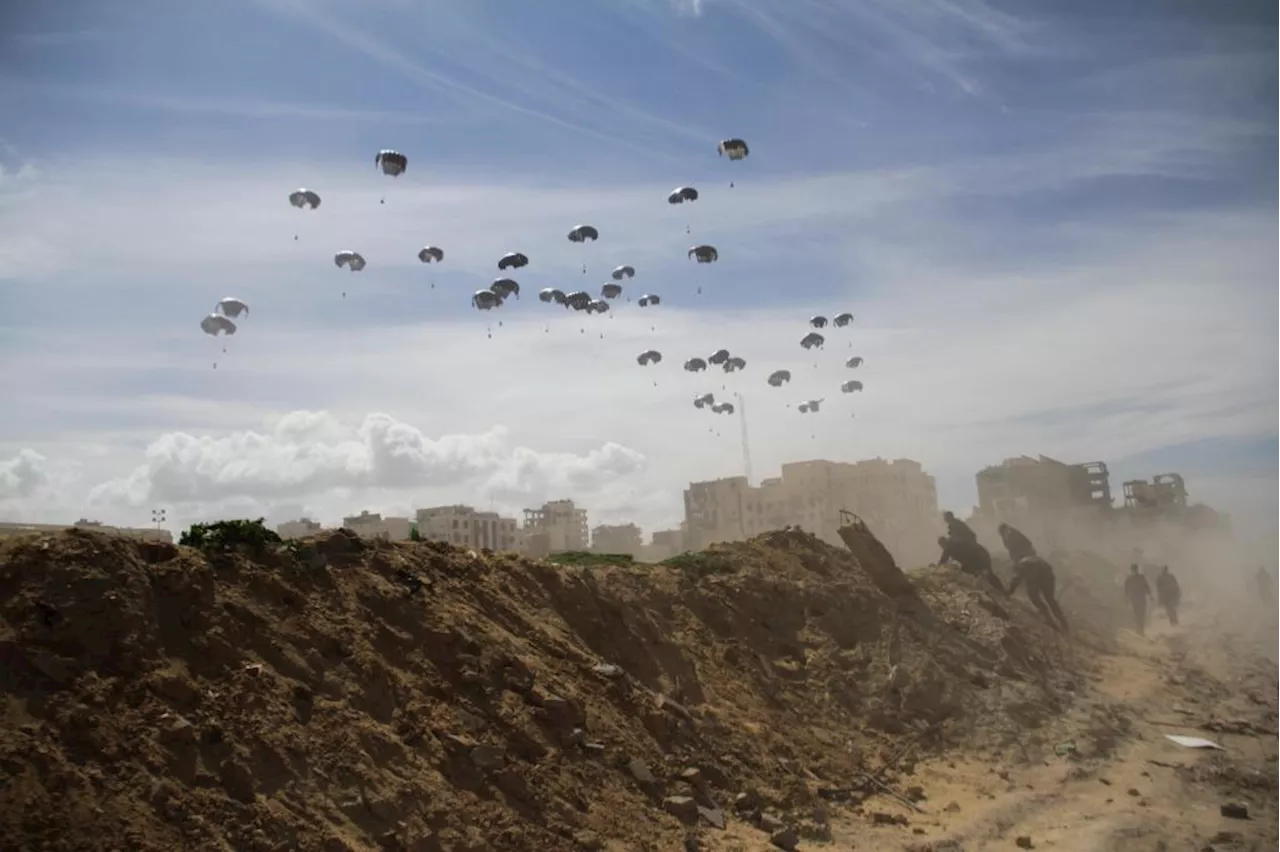
An effort to get aid to Gaza by sea is moving aheadThe opening of the sea corridor showed growing alarm over Gaza’s deadly humanitarian crisis and a new willingness to bypass Israeli control over land shipments.
Read more »
Israel visa freeze on aid workers hampers humanitarian efforts in GazaVisa freeze has left 15 organizations without country directors in Israel, making what little work they can do even more difficult, according to the NGO's official.
Read more »