
Scientific divers in the Mediterranean Sea discovered that wild fish can distinguish between humans based on visual cues. Through experiments, researchers found that fish learned to associate specific divers who provided them with food rewards.
For years, scientific divers at a research station in the Mediterranean Sea had a problem: at some point in every field season, local fish would follow them and steal food intended as experimental rewards.
Intriguingly these wild fish appeared to recognize the specific diver who had previously carried food, choosing to follow only them while ignoring other divers. To find out if that was true, a team conducted a series of experiments while wearing a range of diving gear, finding that fish in the wild can discriminate among humans based on external visual cues. Intriguingly these wild fish appeared to recognize the specific diver who had previously carried food, choosing to follow only them while ignoring other divers. To find out if that was true, a team from the Max Planck Institute of Animal Behavior in Germany conducted a series of experiments while wearing a range of diving gear, finding that fish in the wild can discriminate among humans based on external visual cues. The experiments were designed to answer a question never before asked of wild fish: are they capable of telling people apart? Overall, little scientific evidence exists to show that fish can recognize humans at all. One captive-bred species, archerfish, was able to recognize computer-generated images of human faces in laboratory experiments."But nobody has ever asked whether wild fish have the capacity, or indeed motivation, to recognize us when we enter their underwater world," says Maëlan Tomasek, a doctoral student at MPI-AB and the University of Clermont Auvergne, France. Now, a team from MPI-AB have asked; and the fish have responded. Wild fish can recognize individual humans. And, more than that, they follow specific divers they know will reward them. This finding, published inThe research team conducted the study eight meters underwater at a research site in the Mediterranean Sea where populations of wild fish have become habituated to the presence of scientists. Their experiments took place in open water and fish participated in trials as"willing volunteers who could come and go as they pleased," explains Katinka Soller, a bachelor student from MPI-AB who was co-first author on the study with Tomasek. The first experimental phase -- the training -- tested if fish could learn to follow an individual diver. The training diver, Soller, started by trying to attract the attention of local fish; she wore a bright red vest and fed fish while swimming a length of 50 meters. Over time, Soller removed the conspicuous cues until she wore plain dive gear, kept the food hidden, and fed fish only after they had followed her the full 50 meters. Of dozens of fish species inhabiting the marine station, two species of seabream in particular willingly engaged in the training sessions. Sea bream are best known to us as fish that we buy to eat, yet they surprised the scientists by their curiosity and willingness to learn. "Once I entered the water, it was a matter of seconds before I would see them swimming towards me, seemingly coming out of nowhere," says Soller. Not only were bream learning to follow her, but the same individuals were showing up day after day to join the lessons. Soller even took to giving them names:"There was Bernie with two shiny silver scales on the back and Alfie who had a nip out of the tail fin," she says. After 12 days of training, roughly 20 fish were reliably following Soller on training swims and she could recognize several of them from physical traits. By identifying individual fish participating in the experiment, the stage was set for the next experimental phase: testing if these same fish could tell Soller apart from another diver.This time Soller dived with Tomasek whose dive gear differed slightly from hers, notably in some colorful parts of the wetsuit and fins. Both divers started at the same point and then swam in different directions. On the first day, the fish followed both divers equally."You could see them struggling to decide who to chase," says Soller. But Tomasek never fed the fish who followed him, so from the second day, the number of fish following Soller increased significantly. To confirm that fish were learning to recognize the correct diver, the researchers focused on six fish out of the large group to study individually, finding that four of these showed strong positive learning curves over the experiment."This is a cool result because it shows that fish were not simply following Katinka out of habit or because other fish were there," says Tomasek."They were conscious of both divers, testing each one and learning that Katinka produced the reward at the end of the swim." But when Soller and Tomasek repeated the trials, this time wearing identical diving gear, the fish were unable to discriminate them. For the scientists, this was strong evidence that fish had associated the differences in the dive gear, most likely the colors, with each diver."Almost all fish have color vision, so it is not surprising that the sea bream learned to associate the correct diver based on patches of color on the body," says Tomasek.Underwater, we do the same."Faces are distorted by diving masks, so we usually rely on differences between wetsuits, fins, or other parts of the gear to recognize each other," says Soller. With more time, the authors say, fish might have learned to pay attention to subtler human features, like hair or hands, to distinguish divers."We already observed them approaching our faces and scrutinizing our bodies," adds Soller."It was like they were studying us, not the other way around." This study corroborates many anecdotal reports of animals, including fish, recognizing humans; but it goes further by performing dedicated experiments in completely natural contexts. Finding that wild fish can quickly learn to use specific cues to recognize individual human divers, it stands to reason that many other fish species, our pets included, can recognize certain patterns to identify us, the scientists say. This mechanism is the foundation for special interactions between individuals, even across species. Senior author Alex Jordan, who leads a group at MPI-AB, says:"It doesn't come a shock to me that these animals, which navigate a complex world and interact with myriad different species every minute, can recognize humans based on visual cues. I suppose the most surprising thing is that we would be surprised they can. It suggests we might underestimate the capacities of our underwater cousins." Adds Tomasek:"It might be strange to think about humans sharing a bond with an animal like a fish that sits so far from us on the evolutionary tree, that we don't intuitively understand. But human-animal relationships can overcome millions of years of evolutionary distance if we bother to pay attention. Now we know that they see us, it's time for us to see them."When certain species of wild birds and primates discover new ways of finding food in the wild, it can serve to measure their flexibility and intelligence. In the largest experimental study ever ... Artificial Reefs Help Preserve Coral Reefs by Shifting Divers Away from the Natural Ones, According to New Long-Term Study of One in Eilat Divers are essentially tourists who love coral reefs and invest a lot of time and effort to watch them. Unfortunately, divers also cause damage to corals, often unintentionally, through disturbing ... The first global analysis of larval orientation studies found that millimeter-size fish babies consistently use external cues to find their way in the open ocean. There are many external cues ... Farming Atlantic salmon requires a high volume of wild-caught fish as feed, but produces only a small percentage of the world's farmed fish supply. A study suggests redirecting wild-caught fish ...FOSSILS & RUINS
ANIMAL BEHAVIOR FISH RECOGNITION HUMAN-ANIMAL INTERACTION LEARNING
United States Latest News, United States Headlines
Similar News:You can also read news stories similar to this one that we have collected from other news sources.
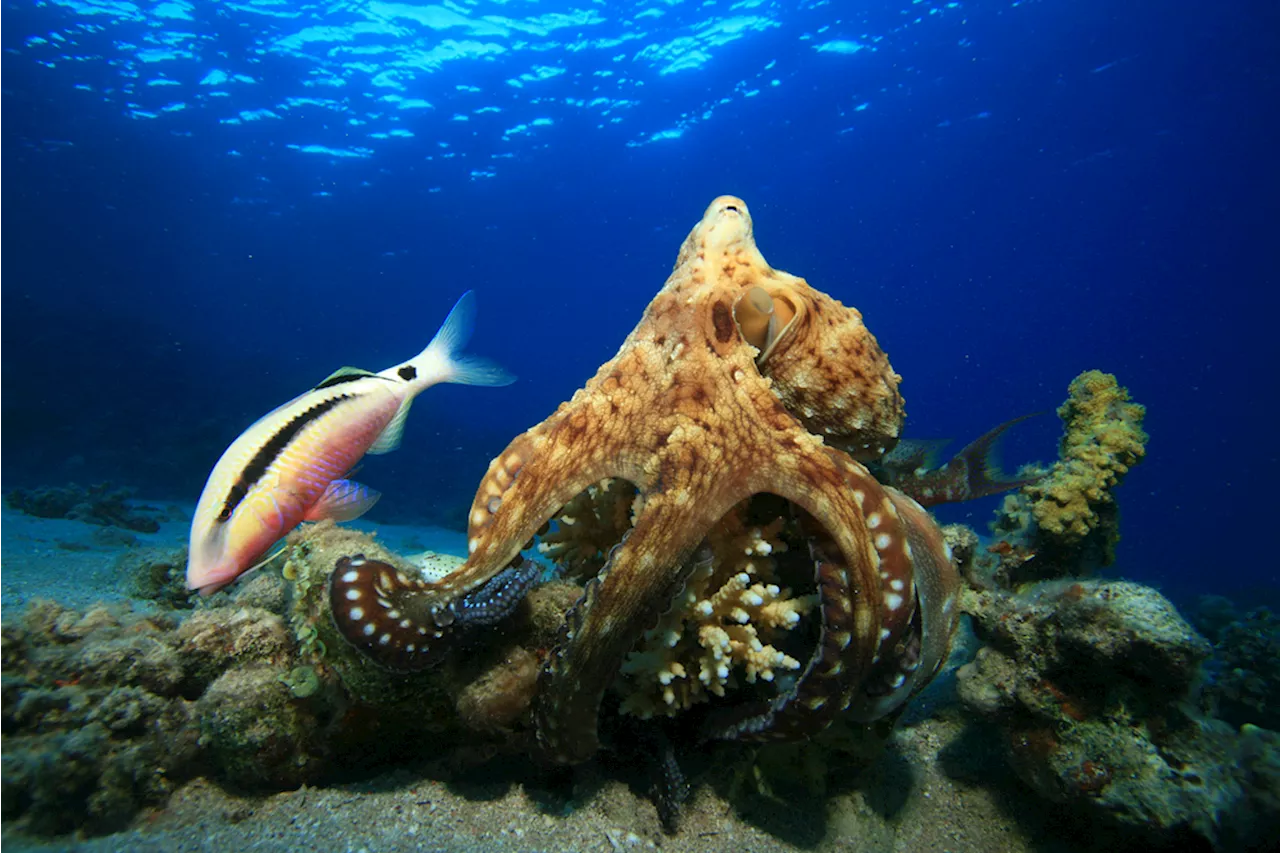 Octopuses Partner with Fish to Hunt, and Will Slap the Fish That Slacks OffThis underwater alliance between octopus and fish tends to pay off for both. Learn why the relationship works.
Read more »
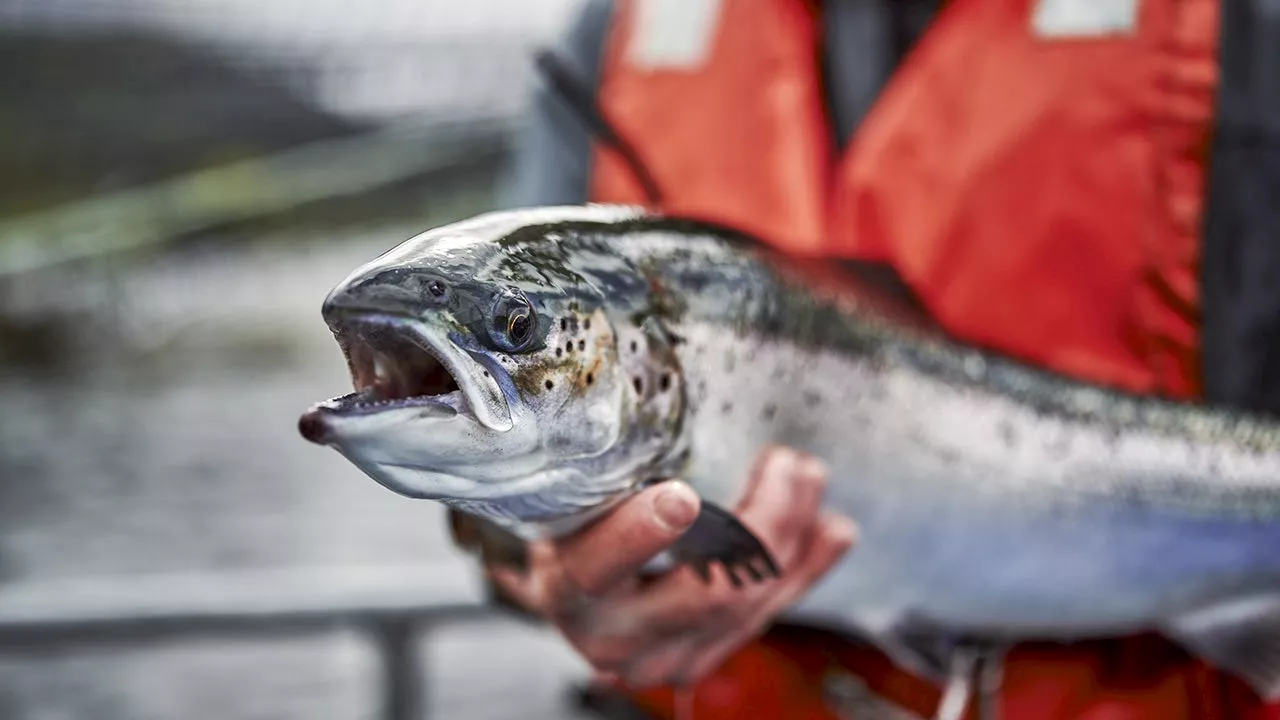 Norway Salmon Escape: Company Offers Bounty for Recaptured FishMowi, the world's largest Atlantic salmon producer, is offering a bounty of 500 kroner ($44) per fish after 27,000 salmon escaped from a farm damaged by a storm. The escaped fish are believed to be in the waters off the coast of Troms, Norway. Mowi is concerned about the potential risks to the wild salmon population if the farmed fish interbreed.
Read more »
 Dead Fish Found in Jacksonville Cemetery Pond Raise ConcernsA Jacksonville man is seeking answers after discovering a large number of dead fish in a pond near a local cemetery. Artis Warthen, a longtime resident, shared his concerns with News4JAX, highlighting the unusual sight and its potential impact on the surrounding community. The Florida Fish and Wildlife Conservation Commission (FWC) responded, attributing the fish kill to recent cold temperatures and classifying the deceased fish as invasive tilapia.
Read more »
 Medaka's Nocturnal Life: Wild Fish Exhibit Distinct Behaviors from Lab CounterpartsA recent study by Osaka Metropolitan University researchers sheds light on the nocturnal habits of wild medaka, revealing fascinating differences compared to their lab-raised counterparts. The research team observed wild medaka in their natural river habitat, capturing their activity patterns and courtship behaviors throughout the night.
Read more »
 Norway Salmon Company Offers Bounty After 27,000 EscapeMowi, the world's largest Atlantic salmon producer, is offering a reward of 500 kroner ($44) per fish for captured escaped salmon after a storm damaged a farm fence. Approximately 27,000 fish are believed to be in the waters off the coast of Troms, Norway. There are concerns that the escaped farmed salmon could interbreed with wild salmon, potentially impacting the wild population.
Read more »
 Wild fish can recognize human diversLaura is a science news writer, covering a wide variety of subjects, but she is particularly fascinated by all things aquatic, paleontology, nanotechnology, and exploring how science influences daily life. Laura is a proud former resident of the New Jersey shore, a competitive swimmer, and a fierce defender of the Oxford comma.
Read more »