


 +34
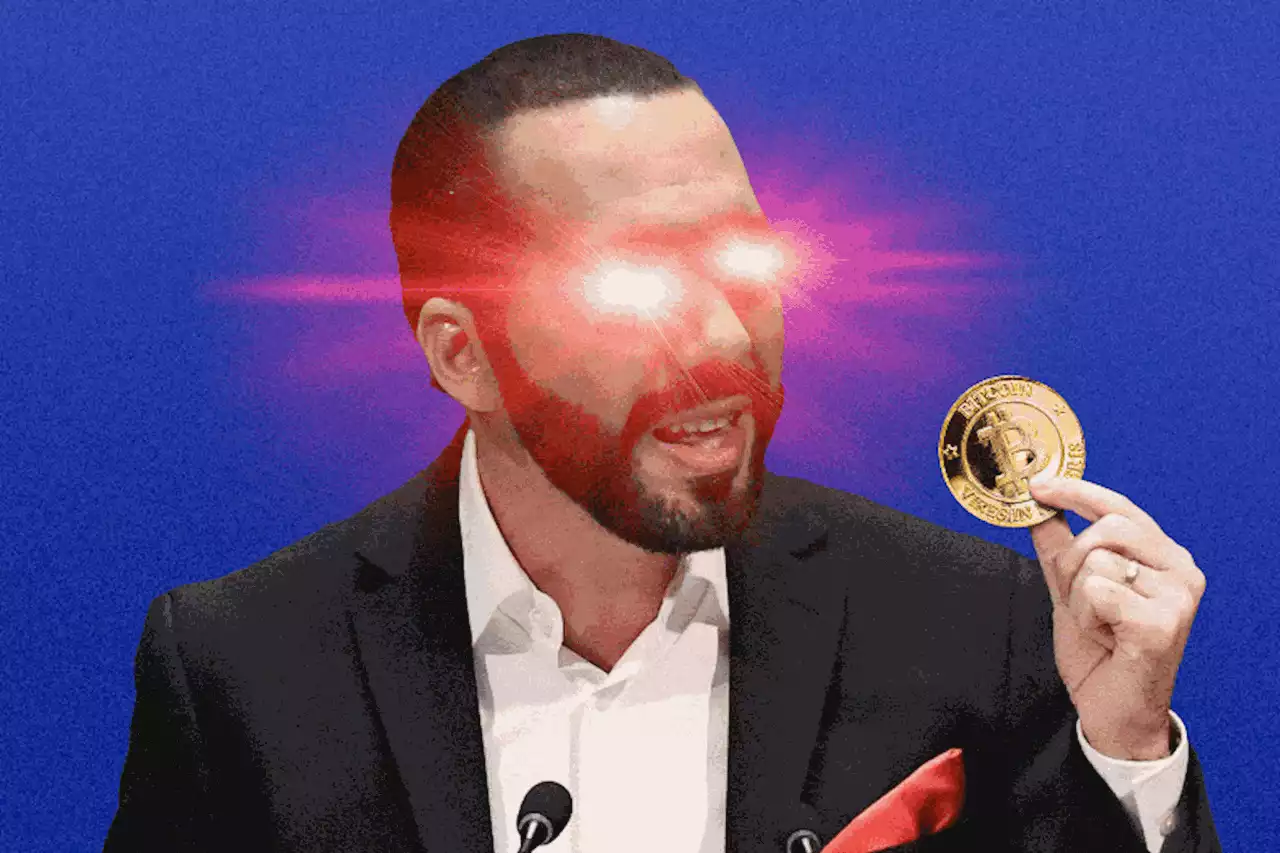
El Salvador turned to Bitcoin to escape the global financial establishment. It's just gone deeper into a hole.
The first indication from El Salvador’s extremely online president Nayib Bukele that his country’s experiment with Bitcoin was not going well came last week, in typical fashion, on Twitter. But this time it was uncharacteristically subtle: He briefly removed the red laser eyes from his avi.
on social media, had marked Bukele as a true believer. It dovetailed well with the 40-year-old’s carefully crafted public image of a hip, young, tech-savvy entrepreneur-president, which extended to his sartorial style of shades, baseball caps, and leather jackets. If this conflicted with his other image—that of an autocrat who has locked up 30,000 people in the past month and a half—his crypto fans seemed not to notice or care. Bukele would alternately identify himself on Twitter as “CEO of El Salvador,” “the world’s coolest president,” and “the coolest dictator in the whole world.”Bukele had gone all-in on Bitcoin, turning an entire country into a cryptocurrency laboratory. Despite polls showing a clear majority of the public opposing this, the Legislative Assembly, controlled by his allies, passed a law with nearly no debate naming Bitcoin legal tender, alongside the U.S. dollar, which El Salvador adopted in 2001. Advised by Strike CEO Jack Mallers, Bukele’s government rolled out a digital crypto wallet in app form, called Chivo , which came preloaded with $30 of Bitcoin to encourage adoption. Many who downloaded it found it confusing and buggy, or that their $30 had already been stolen by identity thieves. Aby economists at the University of Chicago, Penn State and Yale found that of those who managed to access it, most cashed out their $30 and didn’t use Chivo again. One of them, Chicago’s Fernando Álvarez, told the tech site , “There is no experiment where a currency was introduced with such strong incentives and it still failed.”As El Salvador’s government found out, the problem with cryptocurrency as legal tender is the aspirational but misleading premise of the word itself. A currency, as economists understand it, must fulfill three functions: It must be a relatively stable store of value, a commonly understood unit of account, and a widely accepted medium of exchange. Bitcoin fulfills none of these. It is, like other cryptocurrencies, a speculative asset masquerading as a currency—or to be more generous, an asset whose speculated value is based in part on the promise of one day becoming a commonly used currency. But until that happens, the popularity of cryptocurrencies rests on in their highly volatile values and the get-rich-quick dreams they conjure, which cuts against the very promise of stability and future everyday use.The bubble burst last week, as the stablecoin Terra proved to be far less stable than advertised and crashed, precipitating a wider freefall in crypto markets which wiped out $400 billion in market capitalization. Bitcoin influencers, in their usual parlance, exhorted retail investors to “” and sacrifice their losses in order to shore up billionaires’ assets, a transparent pump-and-dump playing out in real time on social media. Even Bukele tweeted “Buy the dip!”—something El Salvador’s Treasury soon did. For some individuals, the crash was a devastating loss of personal wealth. For a country, the results are devastating on a much larger scale. El Salvador is on the verge of defaulting on its debts, which amount to close to 100 percent of its gross domestic product. This is exacerbated by the loss of value of the country’s Bitcoin holdings, which Bukele bragged he would trade with public funds on his phone while in the bathroom. As of now, he has personally cost the Treasury about $40 million—an amountto its next foreign debt payment, due to bondholders in June. I once joked that Bukele would either be the world’s first head of state to run a multi-level marketing scam, or the first to fall for one. It appears possible he is both.Although Bitcoin was sold to the Salvadoran public as a cheaper vehicle for remittances and banking for the unbanked, the fact that it never caught on for either purpose was never the main point. Deeply indebted due to decades of fiscal mismanagement, El Salvador’s government depends on foreign capital to operate. But its bonds have fallen to junk status. Bukele has burned bridges with traditional banks, the U.S. Treasury, and the International Monetary Fund—which has put a much needed $1 billion loan to the country on indefinite hold—over corruption. This includes of COVID relief funds—likely but not proven because Bukele shut down the corruption probe and fired the attorney general investigating it.Even before the crash, El Salvador was a bad bet for foreign lenders. The Bitcoin gambit was in large part an attempt to circumvent the global financial system and appeal directly to the crypto community as a lender of last resort. So the Bukele government hyped ever-more-incredible promises of a Bitcoin City run on geothermal power, and unveiled a crypto-backed sovereign debt instrument called volcano bonds—announced, in true crypto fashion, at a Bitcoin conference event set to AC/DC. The bond was set at $1 billion—coincidentally the same amount of the denied IMF loan—and promised to pay out a 6.5 percent annual interest rate after a five-year lock-in period. The terms for these fantasy bonds seemed implausible for a country whose real bonds have been downgraded by ratings agencies to ever greater depths. They had no takers, and were never rolled out.Despite driving the country to financial ruin, Bukele remains enormously popular with voters, enjoying the highest approval rating of any Latin American president. His entrepreneurial image was real—when I was in El Salvador doing research for my doctorate, he was still mayor of San Salvador, and I lived across the street from his Yamaha dealership. But his main business was public relations, and it reflects in his social media presence and the army of social-media trolls he commands to harass his enemies. When he met Donald Trump, they instantly vibed. “President Trump is very nice and cool, and I’m nice and cool too,” he
Scratch the next story
United States Latest News, United States Headlines
Similar News: You can also read news stories similar to this one that we have collected from other news sources.
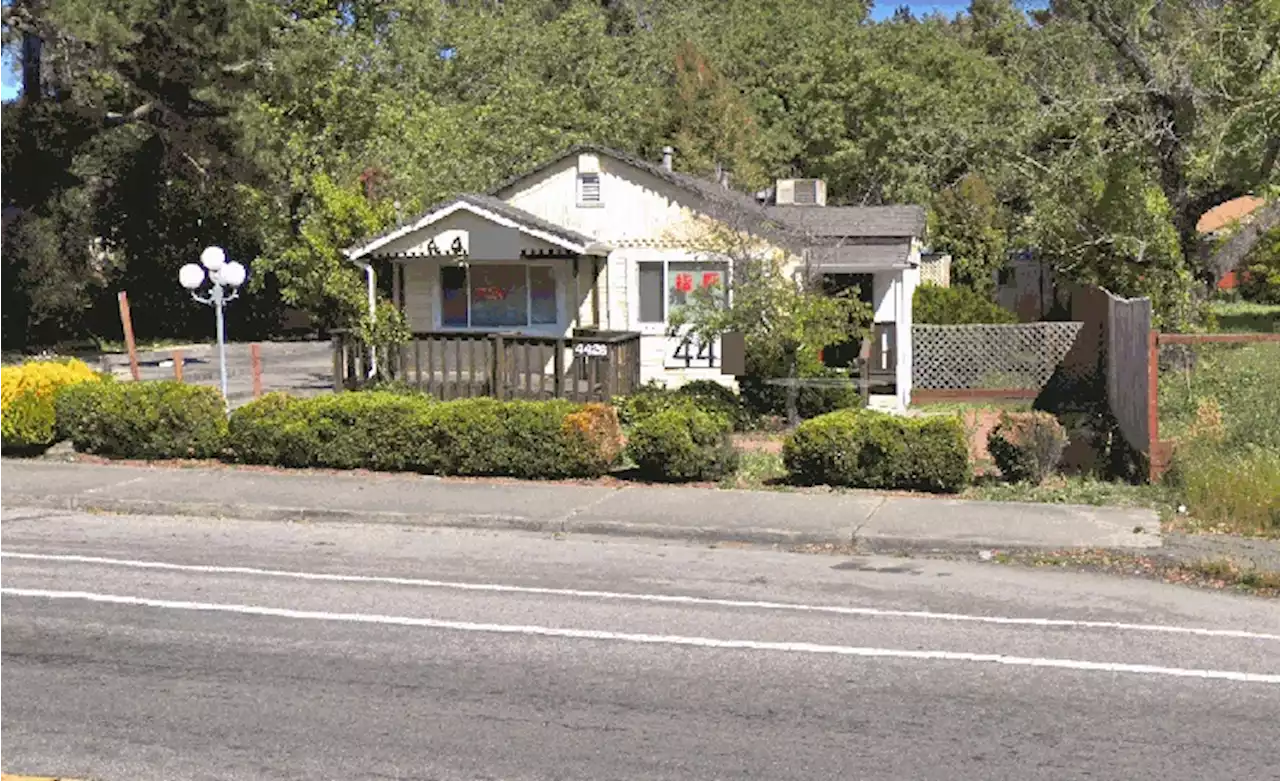 El Sobrante massage parlor raided in prostitution investigation for second time in four yearsThe massage parlor on Appian Way had been raided before in 2018, police say.
Read more »
 High school roundup: How No. 15 seed El Cerrito advanced in NCS baseball playoffsTop seeds Granada, Heritage rally to reach the NCS softball quarterfinals. In tennis, Cupertino’s Tommy Kim wins the CCS singles title.
Read more »
 Encuentre vacunas contra el COVID‑19 cerca de ustedObtén el refuerzo adicional que necesitas para mantenerte protegido contra el COVID en los próximos meses. Encuentra una dosis de refuerzo cerca de ti en JuntosSíPodemosUSA
Read more »
 Fiesta Grill, from owners of El Arepazo Y Pupuseria, coming to Great Northern MallDon’t expect standard food-court fare. Instead, find favorites from the restaurant group’s other eateries on the menu at Fiesta Grill, including burritos, tacos, torta, bowls, arepas and nachos, along with signature dishes like bandeja paisa & carne asada.
Read more »
 Woman, 88, found dead inside El Cajon home; son arrestedA man was arrested for murder Thursday after authorities say his 88-year-old mother was found dead inside an El Cajon home.
Read more »
 Adil El Arbi, Bilall Fallah to Direct ‘2000’ About Sexual Abuse Survivor’s Rebellion (EXCLUSIVE)Adil El Arbi and Bilall Fallah, the Belgian directing duo behind “Bad Boys For Life” and Cannes’ Midnight Screening title “Rebel,” are developing “2000,” a…
Read more »