Beyond the Breaking News

Why a new report on child mortality is historic, encouraging — and grim

United States News News

Why a new report on child mortality is historic, encouraging — and grim
United States Latest News,United States Headlines

Child mortality has hit a historic low around the world — fewer then 5 million deaths a year. But experts believe that millions more could be saved by relatively cheap, simple interventions.

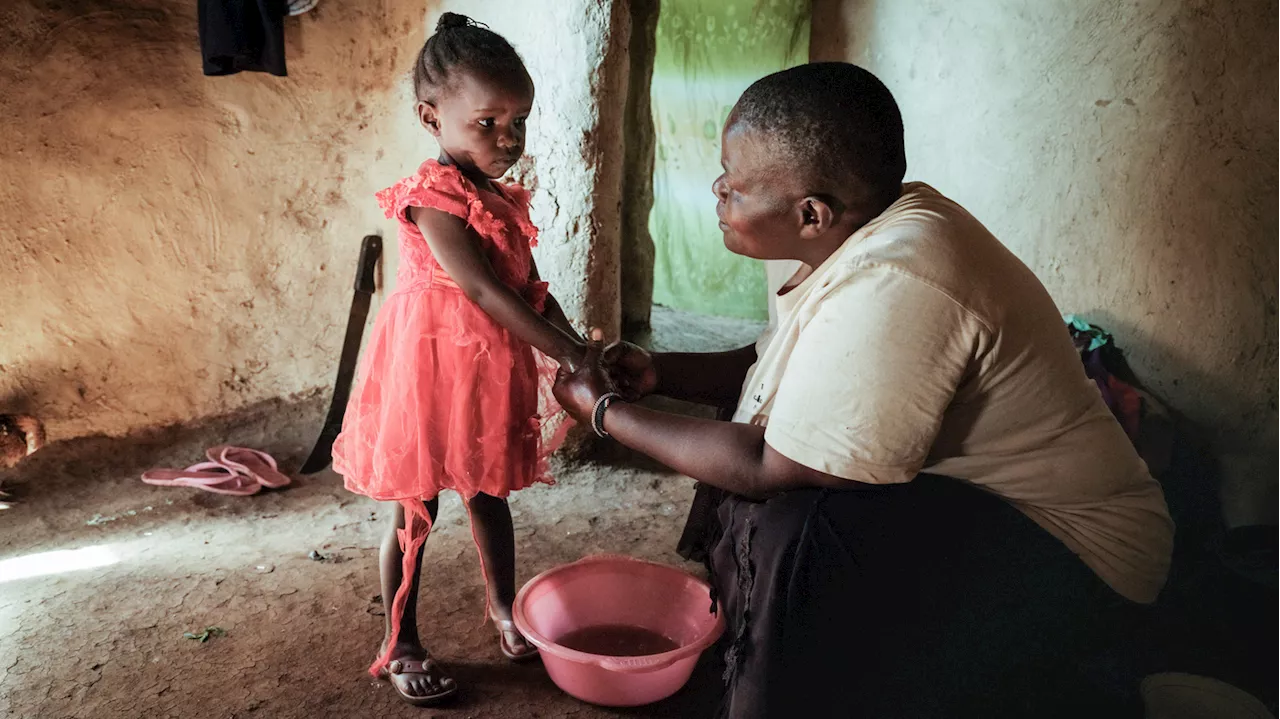
iframe src="https://www.npr.org/player/embed/1238295742/1238332307" width="100%" height="290" frameborder="0" scrolling="no" title="NPR embedded audio player">Isabela Oside, 45, washes hands of her daughter Faith, 3, who completed doses through the worlds first malaria vaccine.

Malaria is one of the preventable diseases that contributes to worldwide child mortality.Yasuyoshi Chiba/AFP via Getty Images Isabela Oside, 45, washes hands of her daughter Faith, 3, who completed doses through the worlds first malaria vaccine. Malaria is one of the preventable diseases that contributes to worldwide child mortality."There's some good news and then there's some bad news," said Helga Fogstad, the director of health for the United Nations Children's Fund, or UNICEF.For the first time on record, the number of children worldwide who died before their 5th birthday has dipped below 5 million. In 2022, 4.9 million young children died – that's fewer than half the number who died in 2000. Some countries, including Malawi, Rwanda, Cambodia, Mongolia and Uzbekistan, have done even better, reducing their country's numbers by more than 75%. "This is historic. This is very positive. However, on the discouraging side, we need to accelerate efforts," Fogstad said, noting that 4.9 million is a monumental number of deaths and these children primarily died from preventable and treatable conditions. She says the progress that's been made is the result of many interventions, from vaccination efforts to improved nutrition and access to antibiotics. "This has been done by governments and NGOs, donors, health-care professionals – and also families and individuals that have more knowledge today," Fogstad said, pointing to the U.N.'sas a force that united people around the shared target of reducing childhood mortality. However, she warns, there is a lot more work to do. A child's chance of surviving the first five years of life varies greatly depending on where they are born. The latest data show families in sub-Saharan Africa and Southern Asia shoulder most of the burden. A child born in sub-Saharan Africa is, on average, 18 times more likely to die before turning 5 than a child born in Australia or New Zealand. And many of these deaths are caused by things like diarrhea, malaria and complications during birth, which can be addressed if people have timely access to medical care. In addition to starkly different child mortality rates between countries, there are inequalities within some countries. Li Liu, a professor at Johns Hopkins' Bloomberg School of Public Health, said she's seen this divide play out in Ethiopia. The country has dramatically reduced the number of kids who die before their 5th birthday – from 200 deaths per 1,000 births in 1990 to under 47 deaths per 1,000 births in 2021 – but the gains have been uneven. "There's this huge gap between urban and rural areas. So, in urban areas, you see a lot faster decline in child mortality," Liu said."A lot more resources are needed to try to scale up interventions in rural areas." Other factors that correlate with a child's chance of dying include the family's wealth and the parents' education level. In low- and middle-income countries where data was available, children born into the poorest households were more than twice as likely to die before the age of 5 compared to children born into the richest households. There's a similar pattern with parental education: In families where a mother had no education or only a primary-school education, the child was more than twice as likely to die before age 5 than a kid born to a mother with secondary or post-secondary education. "We know that female education is one of the important things that can really improve child mortality," said Ole Frithjof Norheim, a physician and professor of global public health at the University of Bergen in Norway.One of the benefits of tracking each country's progress and gathering data on what is working is that"we know what is needed" to make more progress, said UNICEF's Fogstad. She points to the use of community health workers in places like Malawi, Ethiopia, India and Iran as a particularly effective intervention. These workers, often women with some health-care training and roots in the communities, teach people about everything from washing hands to stave off infection to better nutrition and the use of bed nets to avoid malaria. "They are also key in ensuring that these children get to the right services at the right time, so it doesn't become too late," said Fogstad. But, she added, many of these community health workers need more training and need to be better compensated."In many countries, they are actually unpaid," she said.Of the 4.9 million children who died before their fifth birthday in 2022, 2.3 million were newborns who passed away in the first month of their life. The number of deaths among newborns has not fallen as quickly as it has among older age groups. "It's important to focus on this age group because there are affordable, creative, innovative interventions," said Liu, who served on a technical advisory group for the UN report. "For example, there's kangaroo mother care. For premature babies, you put them on your bare skin and that could actually help regulate the body temperature of the babies and also stabilize the heart rate," she said. Some studies have shown kangaroo care canby as much as a quarter. However, there's often not sufficient local education and support for this practice. "It's a cheap, simple thing to do, but it has not been implemented everywhere," said Norheim, adding that he'd also like to see more education around early breastfeeding and better trained birth attendants who can intervene in high-risk deliveries. Further reducing newborn fatalities, as well as child mortality more broadly, will require continued health investments, says Norheim. However, this is not guaranteed. "In the early 2000s and up to 2015, we saw a very steady increase and then it plateaued," he said. But since the pandemic,"we see actually in some countries a decline in the investment in the health budgets. So, many people working or doing research on health financing are concerned." Norheim said he hopes the"amazing achievement" captured in the U.N. report is motivation to keep investing in further reducing child mortality."There exist technologies, health services, living standards that would make it possible to get these numbers almost down to zero," he said.

We have summarized this news so that you can read it quickly. If you are interested in the news, you can read the full text here. Read more:

NPRHealth /  🏆 144. in US


United States Latest News, United States Headlines

Similar News:You can also read news stories similar to this one that we have collected from other news sources.

Why You Really Do Need Eclipse Glasses—and Why You Should Buy Them Right NowWhy You Really Do Need Eclipse Glasses—and Why You Should Buy Them Right NowAlso, here’s why you can't look directly at the sun.
Read more »

Henry Winkler Believes “A Heard Child Is A Powerful Child”Henry Winkler Believes “A Heard Child Is A Powerful Child”The iconic actor, his longtime writing partner Lin Oliver, and award-winning creator Dan Santat discuss their new children’s book, 'Detective Duck.'
Read more »

San Pablo child kidnapped when carjacker takes vehicle; person detained in OaklandSan Pablo child kidnapped when carjacker takes vehicle; person detained in OaklandSan Pablo police said someone stole a car Monday afternoon that had a child inside.
Read more »

Child found alone, locked inside Target, reunited with parents: reportChild found alone, locked inside Target, reunited with parents: reportA Target employee who arrived to open the store discovered the child alone inside.
Read more »

Can Texas’ child services handle more kids after abortion ban?Can Texas’ child services handle more kids after abortion ban?Texas’ fertility rose after new abortion restrictions, raising concerns that special education and specialized health care will be stretched even thinner.
Read more »

Why Dune 2 Cut Paul & Chani's Child Explained By WriterWhy Dune 2 Cut Paul & Chani's Child Explained By WriterIt 'would’ve been a peculiar distraction.'
Read more »



Render Time: 2026-06-15 16:53:38