
“Family history is an uneasy topic for a German-American,” Burkhard Bilger wrote, in an essay, from 2016, that inspired his new book “Fatherland.” “You can hear it in people’s voices.”
Many of Hellinger’s followers have distanced themselves from their founder over the years. Baring told me to concentrate on his earlier work—though her approach may be as prone as his to inventing false narratives—while other therapists have tried to put their method on firmer footing.
Two years ago, a group of psychologists at the University of Heidelberg published a controlled, randomized study of. They took two hundred and eight participants and divided them into two groups. Half were kept on a waiting list; the other half were divided into groups of twenty-six and participated in a three-day-long session, led by an experienced therapist . Two weeks after the session, members of the active group felt better, on average, about their social relations than seventy-three per cent of those in the control group.owes much of its power to the secrets it reveals. It’s like a visit to a psychic under the sober auspices of therapy. How does it work, if not by spiritual means? Thirteen years ago, Peter Schlötter, a doctoral candidate in psychology at the University of Witten/Herdecke, designed a study to find out. A former engineer, Schlötter began by videotaping a session and marking exactly where the participants stood and what they said. Then he set up life-size statues in their place and had volunteers take turns replacing them. When asked how they felt at different spots, the volunteers gave remarkably consistent answers. They felt powerful in some places and weak in others, connected to certain people and disconnected from others. When volunteers in a follow-up study were asked where they felt best in the group, they were drawn to the same spots. Schlötter repeated the experiment last year in China, with employees of the German engineering firm Bosch. The results followed the same pattern. There is a hidden language in how we stand together, Schlötter told me—a body language writ large that’s so rich and specific that even strangers can decipher it. Schlötter recently led a session in which one of the stand-ins sensed that the patient had a half brother, born out of wedlock. Afterward, the patient repeated the story to one of his aunts, who confirmed that it was true. “The patient had this idea in his subconscious, and the stand-in recognized it,” Schlötter told me. No ghosts necessary., I found myself back in Berlin, standing in front of Baring’s studio off Neue Kantstrasse. A year of researching my family history had done little to convince me that I could communicate with the dead, but I couldn’t get the last session out of my head. So much of what the stand-ins had said seemed to strike a chord with the people listening. I’d learned a great deal about my grandfather since then, but there was much more that I would never know, and I wondered what a roomful of ordinary Germans might make of him. The group in the drawing room included two doctors, a therapist, a seminarian, a computer scientist, and a philosophy student. Some were there to work through their family issues, others just to serve as stand-ins—junkies, people call them. The intensity of the sessions seems to be addictive, and, according to the Heidelberg study, they’re almost equally therapeutic for patients and stand-ins. The very act of empathizing so deeply seems to help people understand themselves. Still, it’s exhausting. Baring’s sessions run from nine in the morning till six at night. By the end of the second day, I’d been a brother, a grandfather, Restlessness, and the country of Germany. I’d watched people burst into tears, climb into one another’s laps, and pretend to be God. I’d heard a woman scream that she was bleeding from her vagina and that crows had eaten her baby. At times, the sobs and shouting rose to such a pitch that I worried that the police might come. There were moments, I’ll admit, when I would rather have had all my molars pulled than be asked to play another Nazi war criminal. But if catharsis was what was required, then Baring surely provided it. When my turn came, I felt a twinge of performance anxiety. All the others had ended their sessions in tears. Would I have to do the same? I imagined my stand-ins circling the room for hours, telling dismal tales about my ancestors until I finally broke down. Baring is a canny judge of character and a skilled stage manager. She knows how to strip the nerves in a group and then soothe them, tease out complications and swiftly resolve them. “Let’s just see how we can get out of this mess,” as she put it in one session. But what if there was no trauma to unearth? No guilty party to absolve? The more I’d learned about my grandfather, the more contradictory he seemed. He’d studied to be a priest, but lost his faith on the battlefield. He’d been arrested as a war criminal, but was sent home without a sentence. He’d served as a teacher and Nazi administrator, but seemed to have played a dangerous double game. Among the few personal effects that he left behind when he died, in 1979, was a batch of letters from the village in Alsace where he was stationed. They were handwritten by local farmers and villagers and addressed to the French military authorities in Strasbourg, where my grandfather was in solitary confinement after the war. They were pleading for his release. “Of the eighteen hundred souls in our village, not one was exiled,” a villager named Joseph Merzisen wrote. Another wrote that his son had been arrested while fleeing Alsace and was sent to a concentration camp. “But Herr Gönner, after many appeals, was able to secure his freedom for us.” He had even helped the same boy stay hidden from German authorities when he was later drafted. Yet, in other ways, my grandfather had stayed a loyal German to the end. A few months earlier, I’d tracked down some of his former students in Alsace, now in their eighties. They all described him in the same confounding way. “Your grandfather was a good man,” one of them told me. “He was a just man. But he was a fanatical Nazi.” The obvious spot to put his stand-in was trapped in a corner, facing the wall. I placed my grandmother behind him—the supportive wife, abandoned for war—and my mother beside her. Then I put my three uncles in a wedge behind them all. They stood there for a moment in silence, as if humming to the same vibration—an arrow shot into an oak. Then everyone seemed to move and talk at once. I remember my mother falling to her knees and laying her forehead on the ground; my grandmother kneeling beside her and putting a hand on her shoulder; my grandfather saying, “You have to believe in something. If not God, then Hitler.” But it’s hard to recall how it all fit together. There is a kind of dream logic to aIt took Baring, as usual, to get us back to the plot. She chose one woman from the group to represent my grandfather’s victims, and another to represent those he’d saved. The first stand-in was an elderly therapist with hollow, deep-set eyes. She lay on the ground and pointed a long, thin finger at him. “Acknowledge us!” she said. One of my uncles tried to intervene. “He did better than almost anyone!” he said. But my grandfather shook his head. His stand-in was a pale, ponytailed art-history student in his twenties—nothing like the stern figure I’d known, with his unblinking glass eye. But for a moment I could almost see a resemblance. “I could have saved them, but I didn’t,” he said. “I passed along their coördinates, and they died.”Copy link to cartoon
United States Latest News, United States Headlines
Similar News:You can also read news stories similar to this one that we have collected from other news sources.
 Israel Says It Should Mediate Peace in Sudan, the Sudanese People DisagreeIsrael wants to exploit the conflict to normalize relations, but a democratic Sudan would never agree to that deal.
Read more »
 Pope speaks of secret peace 'mission,' help for Ukraine kidsPope Francis says a secret peace “mission” in Russia’s war in Ukraine is under way, though he gave no details, and that the Vatican is willing to help facilitate the return of Ukrainian children taken to Russia during the war. Francis said during an airborne press conference Sunday en route home from Hungary that he's “available to do anything.” He added, “There’s a mission that’s not public that’s underway; when it’s public I’ll talk about it.” Deportations of Ukrainian children have been a concern since Russia’s invasion of Ukraine began. Francis said the Holy See had already helped mediate some prisoner exchanges and would do “all that is humanly possible” to reunite families.
Read more »
 Blinken pledges US support for Azerbaijan, Armenia peace processRelations between the two former Soviet republics have been tense since 1991, when the Armenian military occupied Karabakh, which is internationally recognised as part of Azerbaijan, and seven adjacent regions.
Read more »
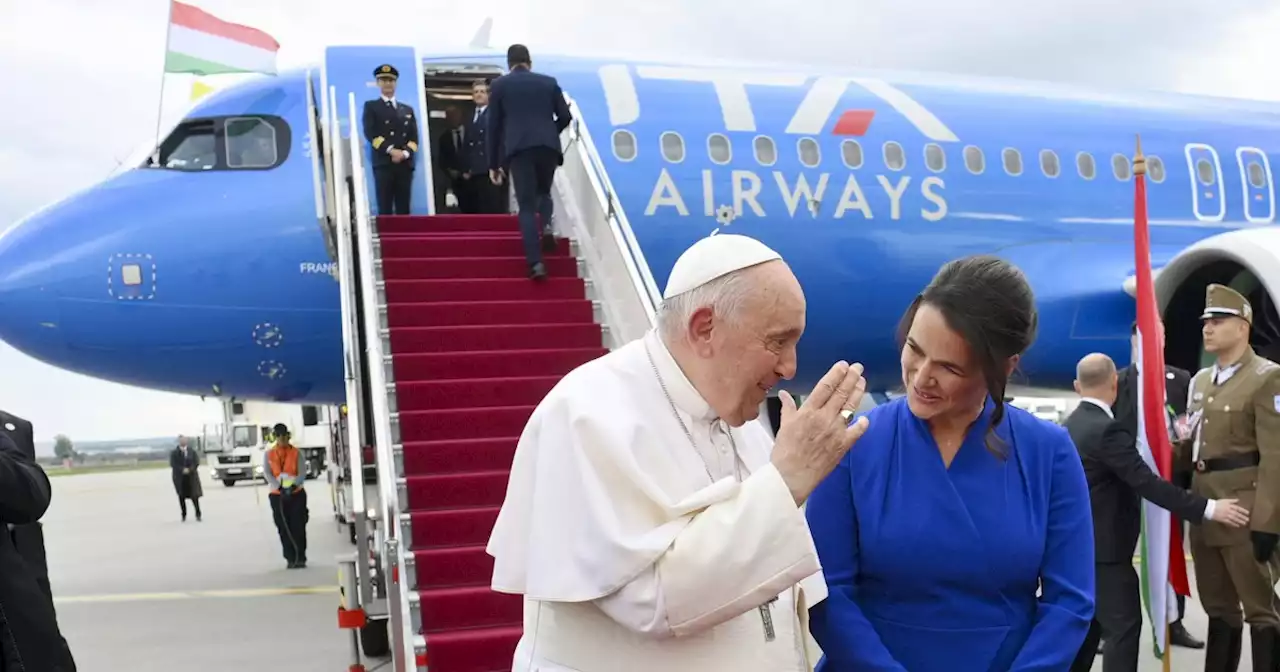 Pope speaks of secret peace ‘mission,’ help for Ukraine kidsPope Francis revealed that a secret peace “mission” in Russia’s war in Ukraine was under way, though he gave no details, and said the Vatican is willing to help facilitate the return of Ukrainian children taken to Russia during the war.
Read more »
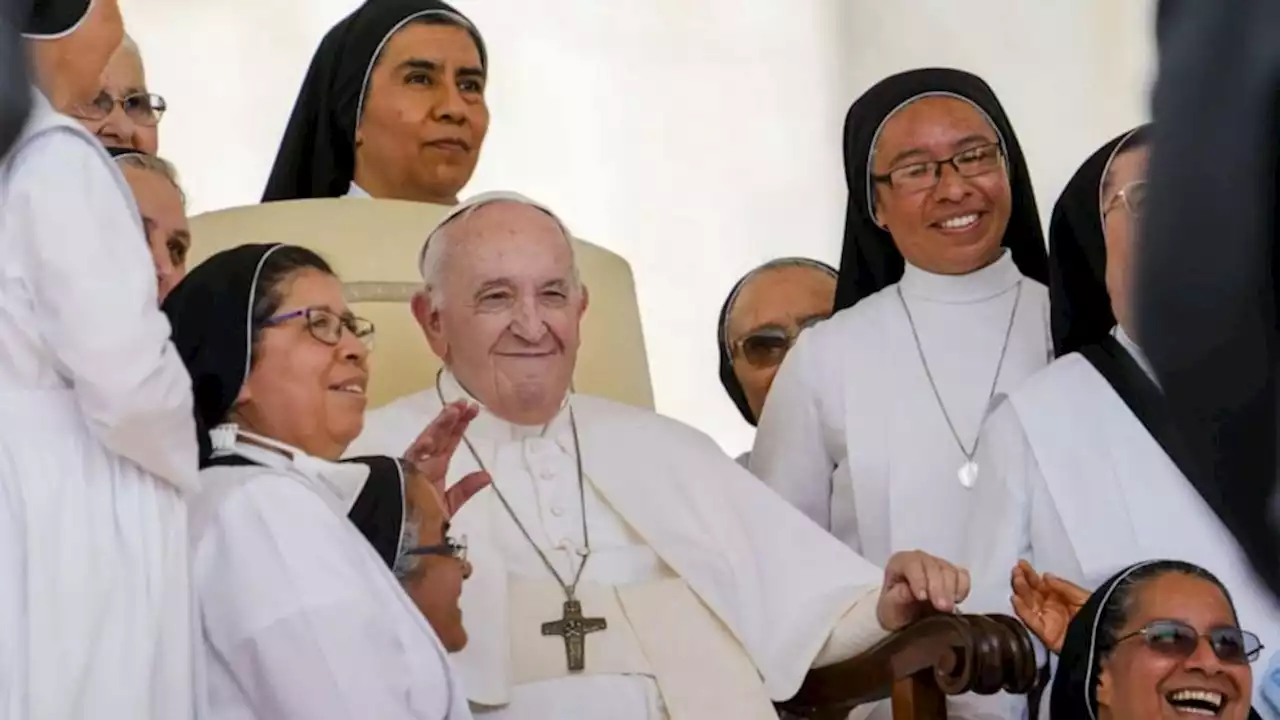 Pope speaks of secret peace 'mission,' help for Ukraine kidsPope Francis says a secret peace “mission” in Russia’s war in Ukraine is under way, though he gave no details, and that the Vatican is willing to help facilitate the return of Ukrainian children taken to Russia during the war
Read more »