
'I want better for us,' Alejandro Vásquez writes. 'We’re in an age of reboots that bulldoze over entire franchises just to plant marginalized characters in narratives loosely based on originals, as if that were the key to novelty.'
to name a couple, the show relies on the relative diversity of its cast too much to focus on constructing plots that aren’t entirely constituted of the characters’ marginalizations—or that even remotely resemble the delightfully blue, existentially dreadful world we could lose ourselves in.
Now that the season has premiered on Peacock and people have had time to binge through its eight episodes, I have thoughts.Returning to his native New Orleans after some time away lolling around medical school in Baltimore, Brodie Beaumont is looking to repair relationships eroded by his absence. By day, the city is drenched in warm filters and charactersThe sanitized aesthetic registers subtly as PR, a kind of damage control that uses the pleasant feeling of brighter color schemes to indicate that these franchises have indeed turned a corner. Long gone are the days of pale, heroin-chic lesbians like Shane and Jenny from, or the neutral-toned wardrobes donned by lily-white Justin Taylor from the original, twink-worshippingBrodie is this version’s Brian Kinney, the smoking-hot Narcissus of the original. Traveling the streets of a city in perpetual revelry, Brodie makes his arrival known to those most important to him: his white, affluent adoptive family made up of his mother, a coy Southern socialite played by Kim Cattrall; his brother Julian who lives with cerebral palsy played by the charming Ryan O’Connell; and his father Winston, who largely remains a pasty specter of the isolation Brodie feels as the only Black person in his family. Judging by the way he breaks into his own house through a window, they’re surprised by his return and scrutinize his motives. He jumps into a Jeep and pays a visit to Ruthie , his best friend since youth, and Shar , Ruthie’s partner, who used Brodie’s sperm to conceive twins and start a family of their own. Brodie keeps making his rounds, also stopping by his ex-boyfriend’s house, unknowingly interrupting a meth-fueled tryst between Noah and Brodie’s best friend, Daddius . If there’s one cue this version takes from the original, it’s the eagerness to depict the flashier ins and outs of gay sex lives. They all eventually make their way to Babylon, a popular gay club where we see Mingus , the spiritual successor to the original’s Justin, a skinny high schooler with no qualms about his gender fluidity and a penchant for glam-rock drag. But in the middle of what is supposed to be a showstopping performance, an unidentified gunman steps into the club with a semi-automatic rifle and opens fire. The lights shatter and things go dark. It’s obvious that this was inspired by the Pulse nightclub shooting that took the lives of 49 people back in 2016., which discourse around the tragedy and the issue of gun violence rarely acknowledges. As someone who belongs to that community that was so despicably targeted, it does give me pause that a show with virtually no Latino representation would use suchDaddius dies in the attack. Afterward, Brodie and his friends are left with a looming dread that nevertheless motivates them to fight for their right to party. In the tradition of gay communities and our seeming disposition toward a good rager, they resolve to continue the fun they once had at Babylon by hosting parties and orgies at Noah’s spacious duplex, while Brodie and Ruthie can’t stop masturbating. It’s fascinating what trauma does to your libido. It’s painfully clear that the show has a message to send. It wants you to feel as guilty as the producers who want to make up for the original’s aggressively narrow-minded depiction of gays and our communities. While I clearly adore the originaland other shows of its time, it was never lost on me that the spectacular breadth of queer experiences was, at best, reduced to just a footnote in a greater white-obsessed narrative, or a callously bigoted punchline at worst. Still, after the initial surprise has settled, I wondered why I’m still invested in a show that often feels like it’s motivated by nothing other than guilt over past sins. The moody atmosphere, seedy exchanges, and fuzzy, cool-toned panorama of existential dread that made the original so enticing are now gone. But so is the tunnel vision on Eurocentric beauty standards and upper-class ennui. I want better for us. We’re in an age of reboots that bulldoze over entire franchises just to plant marginalized characters in narratives loosely based on originals, as if that were the key to novelty. Whether it’s racial minorities or LGBTQ communities, we deserve to have new stories—stories that win attention through the delightful theatricality of queer life, through the wisdom we find between a rock and a hard place. We shouldn’t need to piggyback off the faded glory of white television to get the recognition, support, and acclaim we deserve for the tales we need to tell. I definitely cried as people limped away from the shooting. But to get caught up in the happy-go-lucky optics of the reboot age is to be complicit in getting these networks the ratings and image of social awareness they want—without making them work for it first. There’s no point in making yet another laundry list of experiences that need to be represented on screen. That sort of discourse is what got us into this mess in the first place. As characters dish out clunky platitudes I’ve seen in cutesy Instagram infographics since high school, I’m reminded that Hollywood still hasn’t realized that the key to fulfilling stories isn’t simply replacing white or privileged characters with their downtrodden counterparts. Storytellers need to start asking themselves what genres can do
United States Latest News, United States Headlines
Similar News:You can also read news stories similar to this one that we have collected from other news sources.
 The Queer Children’s Books Targeted By the “Don’t Say Gay” BillOn a new episode of our Politics and More Podcast, winterjessica discusses what queer children’s books mean to L.G.B.T.Q. families, why the right finds them so dangerous, and how their banning will affect the lives and education of young people.
Read more »
 'Keep the Castro queer': SF photographer celebrates LGBTQ cultureAnton O'Donnell creates vivid images of one of SF's most unique neighborhoods.
Read more »
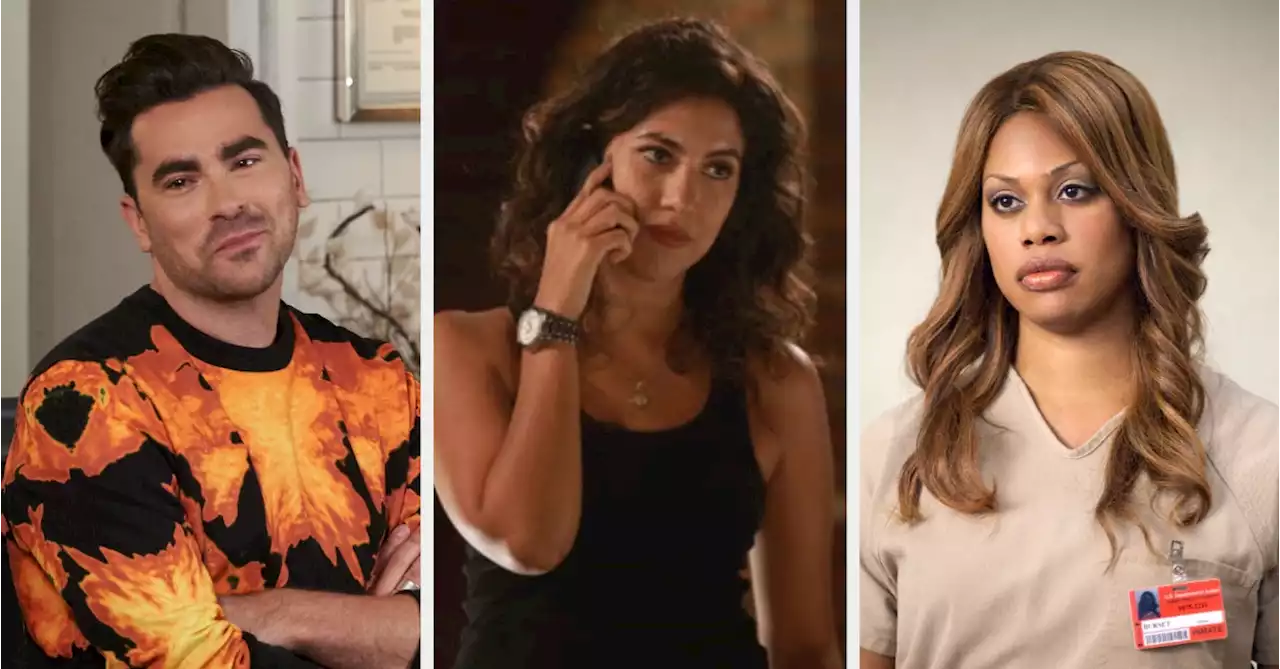 20 Times Hollywood Got It Right By Casting LGBTQ+ Actors In Leading Queer RolesRepresentation is important and these casting choices are a reminder of it.
Read more »
 Even Chris Pratt Doesn't Wanna Play Indiana JonesI got $10 on him playing Deckard in a Blade Runner reboot, tho.
Read more »
 No, Millions of Cars Are Not Catching Fire Every YearA New York Times story about U.S. car fires references a study that gets the frequency wrong by a factor of at least 60.
Read more »
 Hairdressers Are Revealing The Things You Must Stop Doing During Your Haircut, And It's Eye-OpeningFYI: You're probably doing a few things wrong when getting a shampoo.
Read more »