Jamie is an experienced science, technology and travel journalist and stargazer who writes about exploring the night sky, solar and lunar eclipses, moon-gazing, astro-travel, astronomy and space exploration. He is the editor of WhenIsTheNextEclipse.com and author of A Stargazing Program For Beginners, and is a senior contributor at Forbes.
Jam packed issues filled with the latest cutting-edge research, technology and theories delivered in an entertaining and visually stunning way, aiming to educate and inspire readers of all agesFrom"blood moon" and"ring of fire" eclipses to total eclipses and deep or shallow partials, eclipses come in various types.
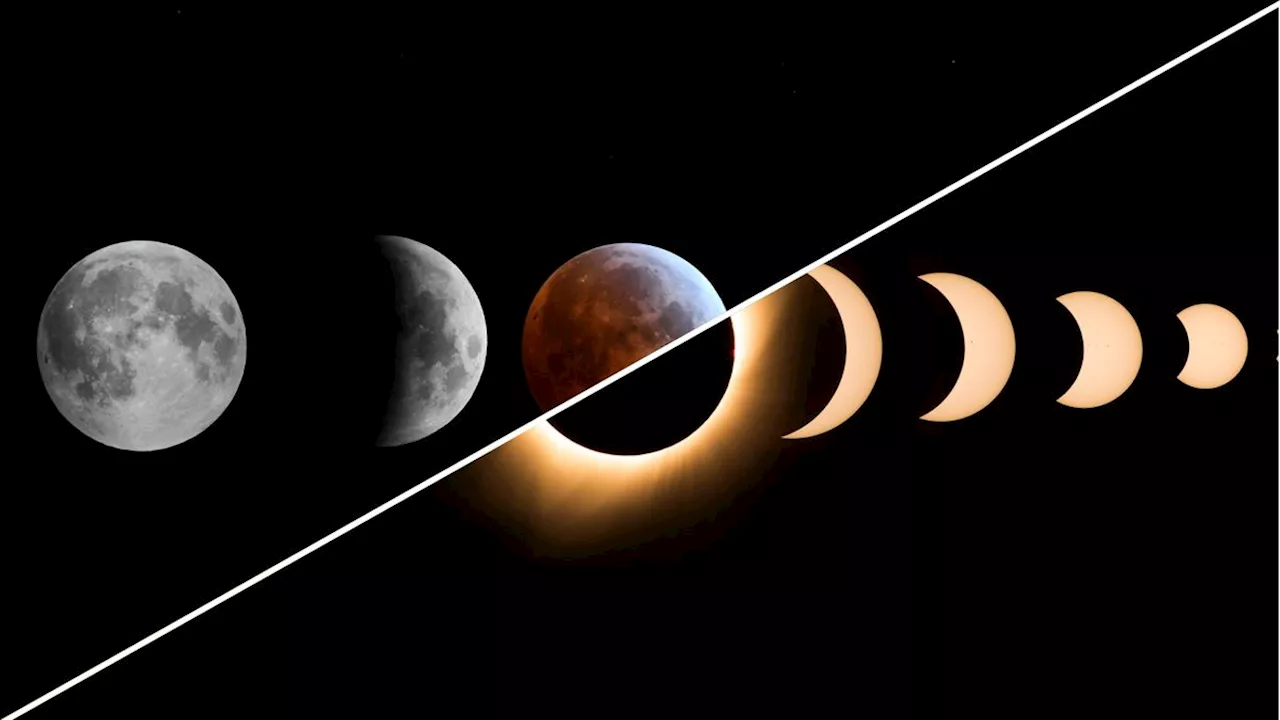
However, one key question forms the basis of the conversation: What's the difference between a Here's everything you need to know about how the positions of Earth, the moon and the sun combine to create some of the sky's most spectacular events.moves between the sun and Earth, blocking the sun's light and casting a shadow on Earth. This can occur only during a, when the moon is positioned in front of the sun. However, the moon's orbit is tilted by about 5 degrees, so it usually misses the sun from our perspective. Only when it aligns perfectly do we witness a solar eclipse. How can that happen when the moon is 400 times smaller than the sun? As luck would have it, the sun is 400 times farther from Earth than the moon is, causing them to appear almost the same size in our sky.What causes a lunar eclipse? A lunar eclipse occurs when Earth gets between the sun and the moon, causing Earth's shadow to be projected onto the lunar surface. By definition, this can happen only during a. Although full moons occur roughly every 29 days, lunar eclipses are relatively rare because the moon's orbit is slightly tilted relative to Earth's orbit around the sun. As a result, the moon usually passes above or below Earth's shadow instead of through it.Every calendar year, there are two"eclipse seasons," each of which lasts between 31 and 37 days, that can create between four and seven eclipses,. These eclipse seasons are periods when the alignments of Earth, the moon and the sun cause either a full moon to move through Earth's shadow or a new moon to appear to pass across the sun's disk.on an orbital path that's slightly different from the ecliptic . Although that orbital path is tilted by 5 degrees to the ecliptic, it intersects it twice each month. The moon usually crosses the ecliptic when the sun is positioned elsewhere along it. When a new moon crosses the ecliptic, a solar eclipse occurs. When a full moon crosses the ecliptic, it results in a lunar eclipse. When one happens, the other follows, which is why there are typically two eclipses within an eclipse season, separated by two weeks.There are three main solar eclipse types. During a partial solar eclipse, a new moon appears to move across part of the sun, blocking it from view. This event must be viewed throughDuring an annular solar eclipse, the moon covers only the center of the sun's disk, leaving a bright"ring of fire" around its edges. This is also dangerous to look at without eye protection. The entire event is a kind of partial solar eclipse. In contrast, during a total solar eclipse — which is preceded by a partial eclipse — the moon completely covers the, revealing the sun's outer atmosphere, called the corona, during totality. That's the only time it's safe to look at a solar eclipse with the naked eye, since all of the sun's light is blocked. The existence of annular and total solar eclipses is explained by the moon's slightly elliptical orbit, which means its apparent size waxes and wanes over the course of a month.A lunar eclipse has between one and five phases. During a penumbral lunar eclipse, the moon passes only through Earth's outer, lighter penumbral shadow, with a slight dimming as the only visual effect. If it moves through Earth's penumbra and then part of it goes through its umbra — the darkest part of the shadow — that part of the moon goes dark in a partial lunar eclipse. When these phases are followed by the moon fully entering the umbra, there is a"blood moon" total lunar eclipse, when the entire lunar surface turns red during totality. The effect happens when sunlight is filtered byTherefore, a total lunar eclipse has five distinct phases. Unlike with a solar eclipse, all phases of a total lunar eclipse are safe to look at with the naked eye.Total solar eclipses and"blood moon" total lunar eclipses tend to be the crowd-pleasing eclipse types. Most solar eclipses are partial, and most lunar eclipses are penumbral or partial. A total solar eclipse is visible from somewhere on Earth roughly every 18 months, but it is a rare event for any given location on Earth, occurring about once every 366 years, on average,https://mynasadata.larc.nasa.gov/mini-lessonactivity/what-difference-between-solar-eclipse-and-lunar-eclipseJoin our Space Forums to keep talking space on the latest missions, night sky and more! And if you have a news tip, correction or comment, let us know at:Contact me with news and offers from other Future brands Jamie is an experienced science, technology and travel journalist and stargazer who writes about exploring the night sky, solar and lunar eclipses, moon-gazing, astro-travel, astronomy and space exploration. He is the editor of Hope is all but lost for private asteroid probe in deep space — 'the chance of talking with Odin is minimal'
Trending
 A gorgeous April afternoon in store across the Denver metro area
  ‘Artemis Mission Cannot Lead To Interplanetary Wild West,’ Astronomer Warns
  Trump says US forces will ‘finish the job’ soon in first prime-time speech since starting Iran war
  Former Wisconsin football player, who left the sport amid mental health struggles, dead at 24
  Drew McIntyre Gives Honest Take About His Recent WWE Title Reign
  U.S. Sen. Bernie Sanders introduces bill that could keep the Padres in San Diego
 United States Latest News, United States Headlines
Similar News:You can also read news stories similar to this one that we have collected from other news sources.
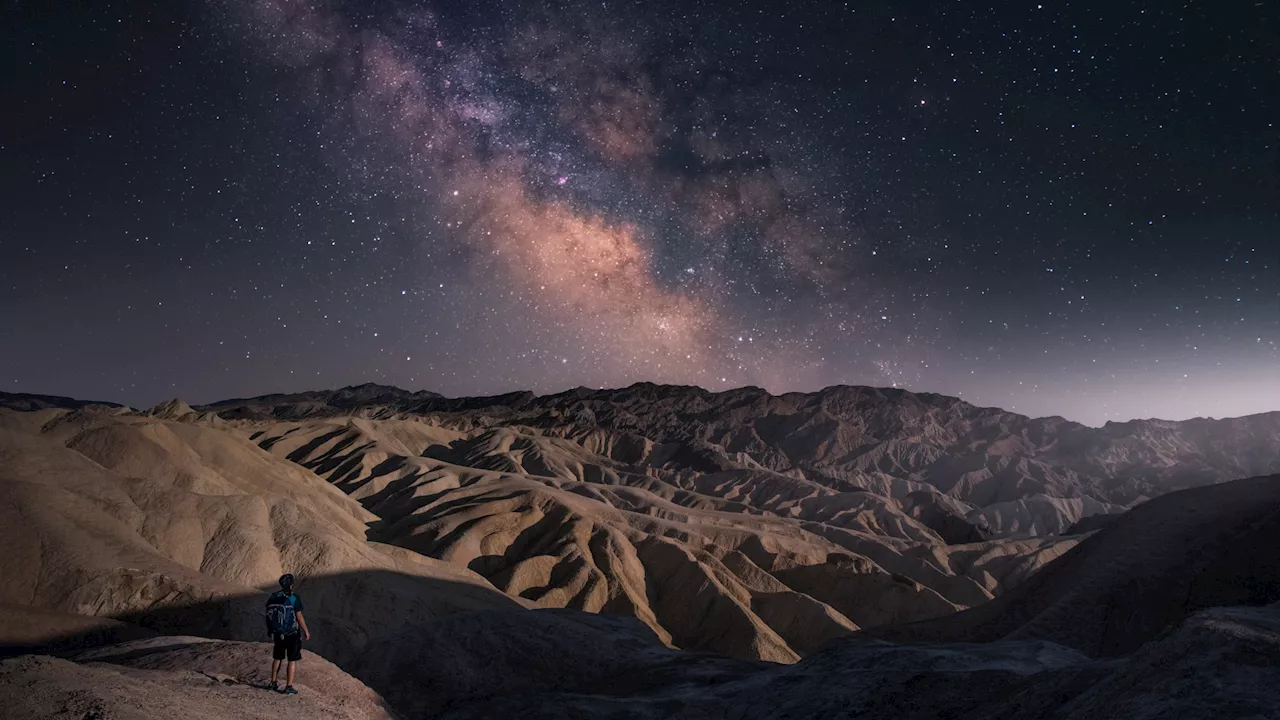 Death Valley National Park Hosts Stargazing FestivalDeath Valley National Park, a Gold Tier Dark Sky Park, is hosting a stargazing festival featuring talks, telescope viewing, and opportunities to learn about the universe in its incredibly dark skies. The event is open to all, from astronomy enthusiasts to casual stargazers who simply want to appreciate the beauty of the night sky.
Read more »
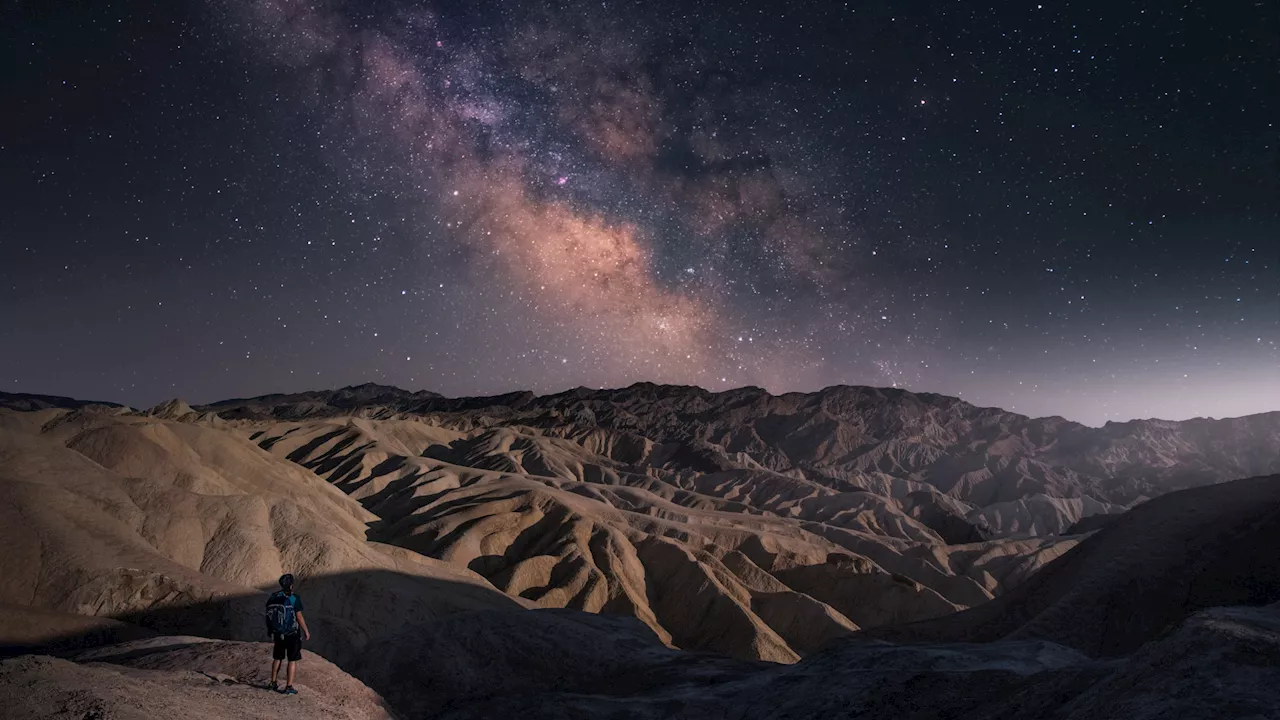 Death Valley National Park Hosts Stargazing SpectacleDeath Valley National Park, a Gold Tier Dark Sky Park, is hosting a nighttime science spectacular featuring talks, telescope viewing, and opportunities to admire the beauty of the night sky. The event, known for its telescope-laden tradition, caters to both astronomy enthusiasts and casual stargazers. Activities include constellation tours led by park rangers, telescope viewing areas, and informative chats with knowledgeable astronomers.
Read more »
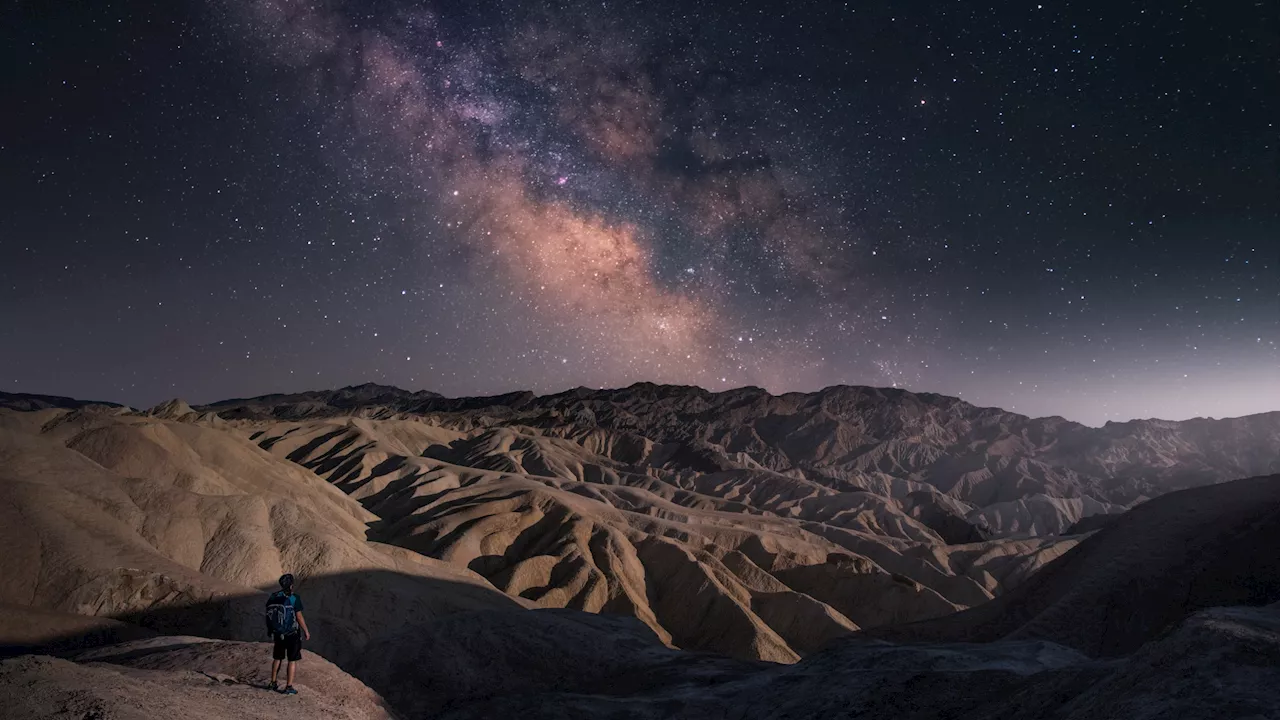 Death Valley National Park Hosts Awesome Stargazing FestivalDeath Valley National Park, a Gold Tier Dark Sky Park, is hosting a spectacular stargazing event. The festival features talks, telescope viewing opportunities, and constellation tours led by park rangers. Attendees can learn about nebulae, the luminosity of stars, and more. The park's lack of artificial lighting offers a truly immersive experience.
Read more »
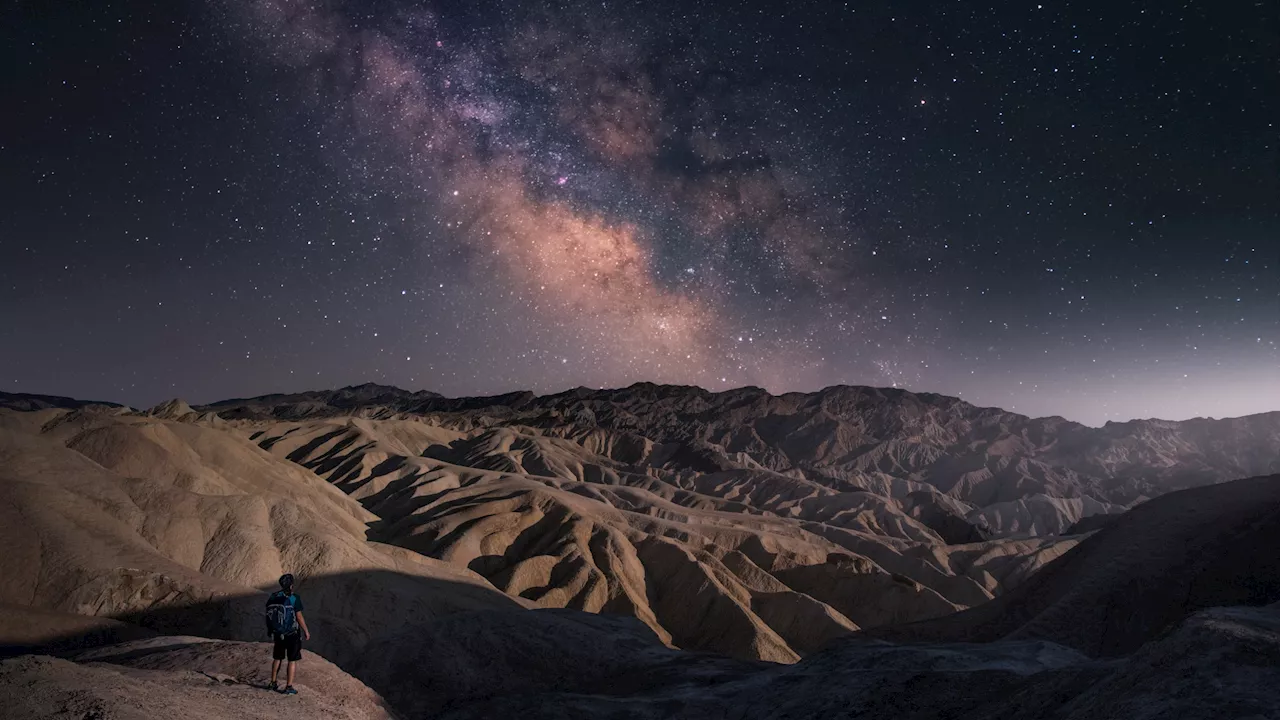 Death Valley National Park Hosts Stargazing ExtravaganzaDeath Valley National Park is renowned for its exceptionally dark skies, making it an ideal location for stargazing. The park is hosting a nighttime event that offers visitors a chance to explore the cosmos through telescopes, learn about constellations, and engage with astronomy experts.
Read more »
 Class 6A program brings back former head football coach to lead programHe returns to the Etowah County program after one season at Tuscaloosa County.
Read more »
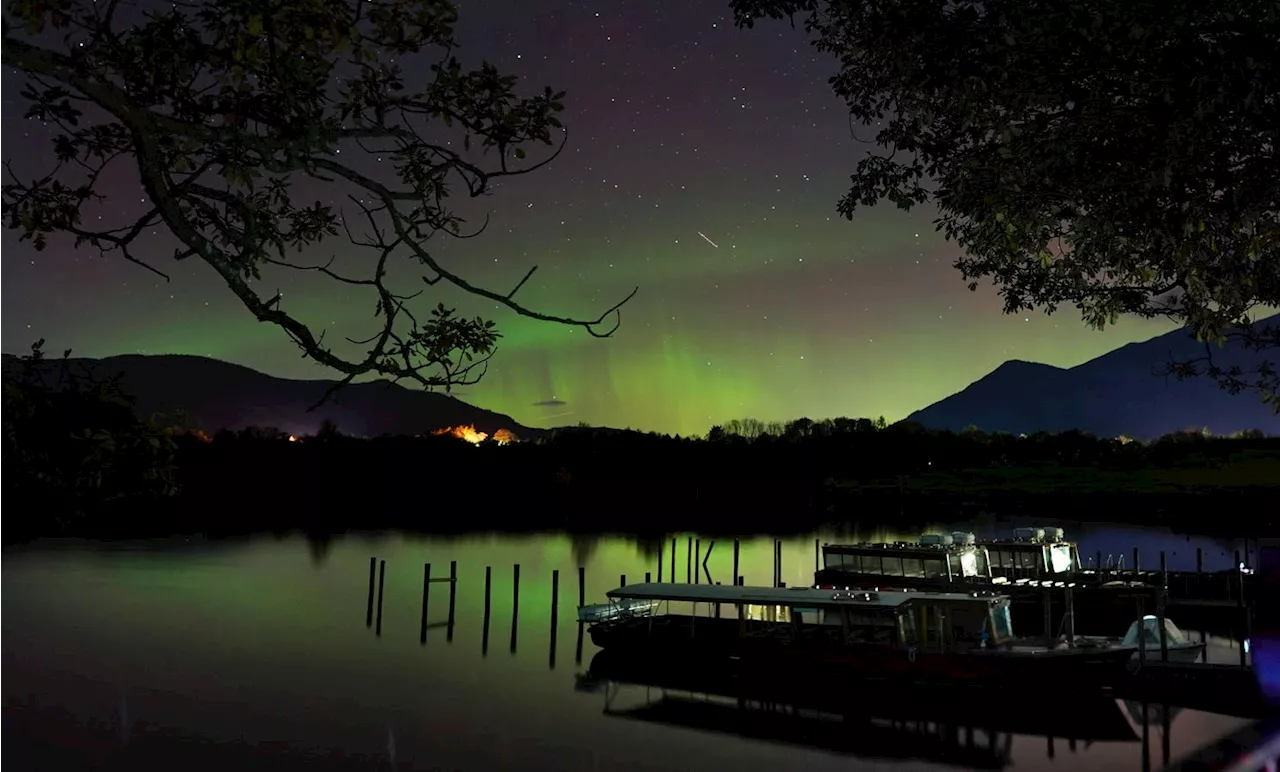 Easily See Mercury And The Northern Lights: Stargazing This WeekendEach Friday, I pick out North America’s celestial highlights for the weekend (which also applies to northern hemisphere mid-northern latitudes).
Read more »