
They want to show that the nouveau-riche blockchain elite can be good stewards of a community institution. But like the rest of the industry, they’ve seen their extravagant ambitions collide with reality.
Preston Johnson, a soft-spoken cryptocurrency millionaire with a long, bushy, brown beard, leaned forward in his seat, fists clenched, surveying his empire. He wasn’t perched on a mega-yacht or enjoying any of the other ostentatious perks of crypto wealth.
The setting was humbler: a small soccer stadium in a town about 30 miles south of London, where the lowest-ranked team in England’s professional leagues was battling for survival. On a sunny Saturday in mid-October, Johnson, 35, sat in a box above the center circle, watching Crawley Town face off against visiting Newport County, a club from south Wales. Straining to make himself heard over shouts of “Shoot the bloody ball,” Johnson explained that the rainbow-colored squiggle splashed across Crawley’s new Adidas jerseys was artwork from a “historically significant NFT.” Someday, he said, an immersive recording of this type of run-of-the-mill soccer match might attract viewers in the metaverse. In the physical world, Crawley had more immediate problems: The scoreboard was broken. And with one win in its first 12 games, the team sat in last place in League Two, the lowest fully professional division of English soccer, facing possible relegation. This was not the vision of blockchain-inspired sporting ecstasy that Johnson had sketched out six months earlier, when he and a group of fellow American crypto entrepreneurs raised $18 million to buy Crawley, a soccer club competing three divisions below the flagship Premier League. With a flourish of tech industry bravado, the owners had pledged to turn lowly Crawley into the “internet’s team.” They aimed to build a global following of crypto enthusiasts and propel the club to greatness — or at least help it move up from the fourth division to the third. Johnson pitched the soccer takeover to business partners as a real-life version of the feel-good TV show “Ted Lasso” — but one injected with “crypto cocaine.” Crawley fans were instinctively suspicious of the Americans. But Johnson and his fellow investors soon earned some goodwill: Over the summer, they raised $4.8 million from the sale of a line of soccer-themed NFTs, the unique digital collectibles that exploded in popularity last year. The owners used the proceeds — which amounted to about seven times the club’s revenue last season — to invest aggressively in the team, hiring video analysts and recruiting a star striker. They also reduced season-ticket prices and pledged to involve fans in the club’s decision-making with a transparent, egalitarian management style that they portrayed as a reflection of crypto’s utopian principles. But results on the field have been disastrous: The week before the Newport match, Crawley lost, 3-0, to Grimsby Town, prompting Johnson to fire the coach he had appointed over the summer. “We’ve professionalized the club greatly,” Johnson explained to an acquaintance who had joined him in the stands for the Newport match. “We just haven’t been able to win.” As digital currencies gained widespread popularity last year, crypto advertisements became ubiquitous in the world of sports. A Coinbase commercial aired during the Super Bowl. The crypto exchange FTX, run by billionaire Sam Bankman-Fried, bought the naming rights to the Miami Heat’s arena. In Europe, a company called Socios markets soccer-centric “fan tokens,” special digital currencies associated with teams like Barcelona and Manchester City. To critics, the crypto industry’s flood of sports marketing looked like an opportunistic strategy to lure young men into speculative investments; when the crypto market cratered this spring, wiping away $2 trillion in value, many of those amateur traders lost everything. Johnson insists that his soccer project is different. Rather than selling crypto to Crawley fans, he said, the ownership group is trying to sell Crawley to crypto fans and thus create new sources of revenue for the club. With skepticism about the industry spiking in the wake of the crash, the project is a quixotic effort to prove that crypto technology has real-world utility, as a vehicle for raising money and engaging fans in a communal project. The Crawley investment is also an act of reputational cleansing. The great crypto crash of 2022 was partly a failure of ambition, as companies that had overextended themselves, convinced that the good times would keep rolling, suddenly lost it all. Crawley’s new owners crave respectability. They want to show that the nouveau-riche blockchain elite can be good stewards of a community institution. But like the rest of the industry, they’ve seen their extravagant ambitions collide with reality. At the start of Crawley’s season, American crypto enthusiasts gathered at early-morning screenings in New York and California to watch the team’s matches. The events became unlikely networking opportunities for people working in web3, the catchall term for a newfangled internet built on crypto technology. But Crawley’s losing streak dampened some of the enthusiasm. Local fans started to complain, and earnest tweets from crypto investors were greeted with angry replies calling for the manager to be fired.The grand plan to turn a tiny English soccer team into a symbol of crypto’s global clout began thousands of miles from Crawley, at the Malibu, California, branch of Nobu. Last fall, Johnson attended a dinner at the beachside restaurant, where a group of NFT enthusiasts had gathered to bask in their newfound wealth. He was right at home: A former gambling analyst for ESPN, Johnson had made a fortune in crypto, with NFT holdings that totaled as much as $18 million when the market peaked last year. At the dinner, he was approached by Eben Smith, a fellow crypto entrepreneur, who soon pitched him on a collaboration: a sports team for the crypto community. Over the next few months, Johnson and Smith cobbled together a group of about 35 crypto proponents, including Gary Vaynerchuk, an NFT entrepreneur, and Daryl Morey, a blockchain enthusiast who is also president of basketball operations at the Philadelphia 76ers. They set up a business entity, WAGMI United. Pronounced “wag me,” the name stands for “We’re all gonna make it,” a popular rallying cry in crypto circles. A large industrial town near Gatwick Airport, Crawley is not an athletic powerhouse; in an interview, one member of the WAGMI project described the area as “the kind of Newark, New Jersey, of England.” But the local club was available at a relatively affordable price of between 4 million and 5 million pounds — about a third of what WAGMI had raised. The crypto takeover has brought an unusual level of attention to Crawley, leaving players and staff somewhat baffled. Early in the season, a documentary film crew embedded with the squad to collect behind-the-scenes footage. But the cameras disappeared after a few days, and the crew hasn’t been back. “We weren’t sure if they’d reviewed the footage and thought: This is rubbish,” said Tom Nichols, one of Crawley’s strikers. The club’s Broadfield Stadium is nothing like the sprawling arenas in the Premier League: Trees are visible behind the stands, which are rarely full, and many of the club’s sponsors are local, including a waste-management firm whose logo is splashed beneath the box where the owners sit. Before matches, fans gather at a sports bar next to the stadium to drink beer and reminisce about the club’s fleeting moments of glory, like its valiant 1-0 defeat against Manchester United in 2011. “That’s what you want,” said Scott Anscomb, a 49-year-old Crawley fan, as he stood outside the bar on a recent weekend. “It’s about dreams and memories.” Longtime fans say they’ve been impressed with the transparency and accessibility of the crypto owners. Johnson lives in Southern California, but he has made six trips to Crawley in 2022; in August, days after the birth of his daughter, he flew over to help the club sign new players. “It’s nice — you go to games, and you can say hello and chat,” said Carol Bates, a fan who attends home and away matches. The bar was low. WAGMI bought the club from a Turkish steel magnate who rarely interacted with fans. A previous owner, Mohammed Azwar Majeed, was imprisoned for tax fraud. Perhaps with that history in mind, some fans are concerned that the out-of-town crypto investors will disappear as fast as they arrived. “My fear is these guys will get bored with it,” said Peter Frake, who runs a local security business that used to sponsor the team’s jerseys. But most of all, fans have grown doubtful that Johnson, Smith and their collaborators have enough soccer expertise to build a successful team. The most important decision any owner makes is in hiring a coach. When the owners bought the team, Crawley was managed by John Yems, a lower-league veteran who was soon fired, after players accused him of racism. To replace Yems, WAGMI hired Kevin Betsy, a youth coach at Arsenal who had never managed a team in the lower leagues. The hire was catastrophic. Betsy tried to play a skillful and precise brand of soccer that proved unsuitable for the lower leagues. He was fired in early October after a run of five consecutive defeats.On a recent evening at Broadfield, Crawley’s captain, George Francomb, sat in the stands with Hunter Orrell, one of the club’s new owners. An American crypto trader, Orrell, 28, has a TikTok page dedicated to Crawley, which has turned him into something of a celebrity among 14-year-old fans, who line up to request selfies. But Francomb was not interested in hearing about TikTok or even in discussing Orrell’s preferred cologne, an object of fascination among a segment of the local youth. He wanted to talk about NFTs. In the insular community of lower-league soccer, Francomb is known as an experienced and versatile professional, with the ability to play multiple positions. On Twitter, however, he operates under the pseudonym “Blockchain Jorge,” posting crypto memes and trading tips to his 143 followers. He is probably one of the few players in the division with an informed opinion on the complex crypto software update known as the Merge. Sometimes, he explained in an interview, he’s asked whether he fully understands the risks of crypto. “I understand the risks of keeping my money in Great British pounds,” he said. “That’s what I say.” Francomb’s fascination with crypto long predates the WAGMI takeover. But even since Crawley became a crypto brand, his efforts to proselytize in the locker room have had mixed results. Nichols, the team’s striker, said he once spent roughly $600 on an NFT depicting a cartoon ape with a white headband. The image’s value eventually plummeted to about $20. “A recommendation from George,” he recalled with a grimace. Francomb found a more appreciative audience in Orrell, who runs Futureproof, a crypto investment firm. As his teammates took the pitch at Broadfield for a midweek match against Aston Villa’s youth team, Francomb handed his phone to Orrell to show off a collection of NFTs, before detailing the price history of Rangas, a line of crypto collectibles that had recently rocketed in value. Orrell listened politely, and then shared some insights from his own trading career. “My most profitable NFT trade — I was in my underpants when I bought it,” Orrell said. “I’ve been in the shower, and then come out and bought stuff.” Francomb and Orrell have been heavily involved in the crypto-fication of Crawley. Over the summer, the team unveiled a new jersey featuring the “chromie squiggle,” a rainbow design that appears in a popular NFT collection. “That squiggle means so much to me,” Orrell said. Francomb personally arranged a separate crypto promotion: He connected Johnson with a friend who runs the crypto platform XCAD Network, and soon the XCAD logo was on the sleeve of Crawley’s jerseys. But the club’s most ambitious crypto initiatives revolved around the NFT sale. Anyone who has bought a Crawley NFT is entitled to a vote on certain club decisions; a recent ballot helped determine the team’s priorities in the transfer market. Johnson has also pledged to give season-ticket holders and NFT owners the chance to vote him out of Crawley’s leadership if the club isn’t promoted to a higher division by 2024. The Newport County match kicked off at the end of a tumultuous week at Broadfield. A few days earlier, Johnson had flown to England to hold one-on-one talks with the players; Betsy was promptly fired, with Lewis Young, a popular assistant coach, stepping in as a temporary replacement. The stakes were high: Another defeat would leave Crawley dangerously adrift at the bottom of the standings. When a glancing header put Crawley up 2-0 shortly after halftime, Johnson leaped from his seat, hands raised in celebration. The team closed out the victory, and Johnson jogged onto the pitch, where he hugged Nichols and Francomb. Then he checked his phone and sighed in frustration: Because of other match results, Crawley was still in the relegation zone, at risk of demotion to an even lower division. But the mood around the stadium had lifted. Back in the parking lot, Johnson posed for a photograph with a couple of children in Crawley shirts, as a woman looking after them framed the shot. “Go near him,” she instructed, gesturing frantically. “He don’t smell.” As a gambling analyst on ESPN, Johnson sometimes felt like a “semi-celebrity” in Las Vegas, where viewers would greet him as “Sports Cheetah,” his online nickname. These days, he is a semi-celebrity in Crawley. “We want you to succeed,” one supporter told him outside the stadium. Johnson smiled. He remains committed to turning an obscure English soccer club into the internet’s team, with a global network of wealthy crypto backers. But, as the fan clapped him supportively on the shoulder, Johnson marveled at the display of kindness, especially notable after the months of Twitter abuse. Everyone in Crawley, he said, was so much nicer in person.Place a free digital obituaryWe provide a free service for you to honor your loved ones. Click below to get started.
United States Latest News, United States Headlines
Similar News:You can also read news stories similar to this one that we have collected from other news sources.
 U.S. Supreme Court's Barrett again declines to block Biden student debt reliefU.S. Supreme Court Justice Amy Coney Barrett on Friday again declined to block President Joe Biden's plan to cancel billions of dollars in student debt, this time in a challenge brought by two Indiana borrowers, even as a lower court considers whether to lift a freeze it imposed on the program in a different case.
Read more »
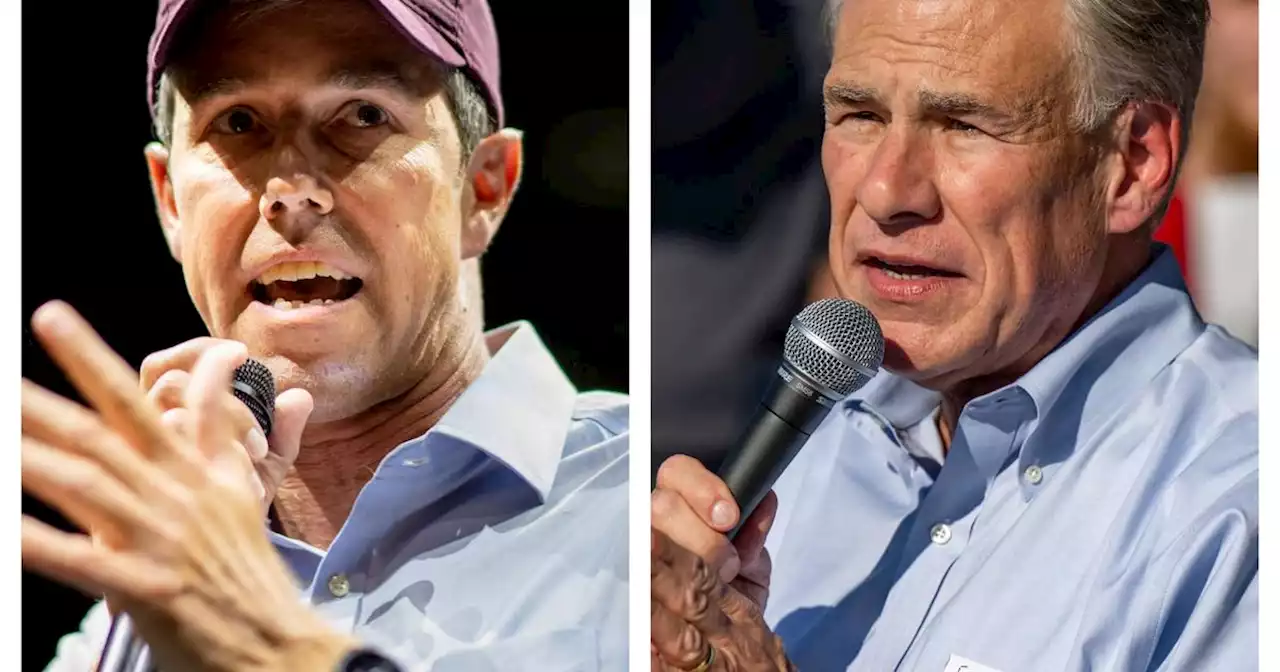 Democrat Beto O'Rourke takes his shot with Texas voters againTexas' incumbent Republican Gov. Greg Abbott could be facing his closest Democratic challenger ever, former Rep. Beto O'Rourke — the one-time Democratic star who is risking his second straight election statewide loss in Texas.
Read more »
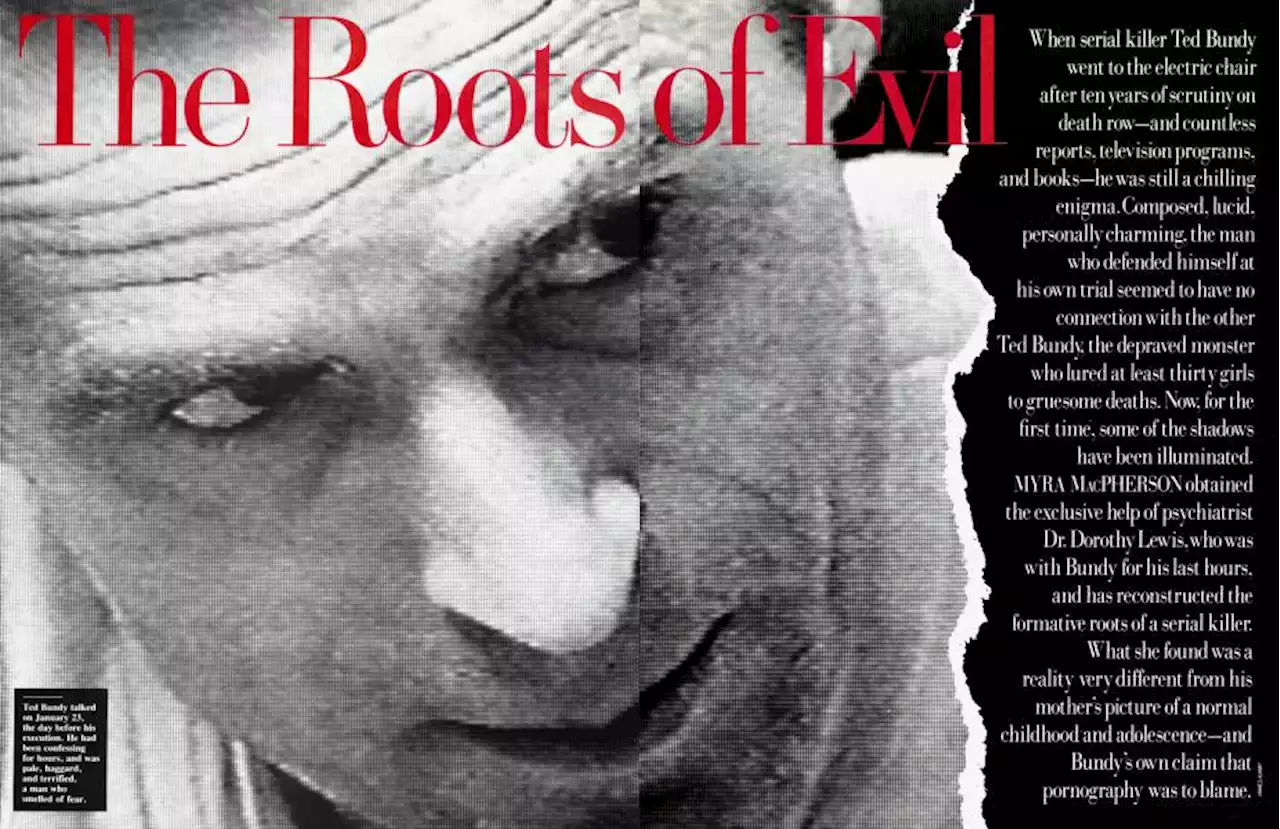 The Roots of Evil | Vanity Fair | May 1989When serial killer Ted Bundy went to the electric chair after ten years of scrutiny on death row—and countless reports, television programs, and books—he was still a chilling enigma. Composed, lucid, personally charming, the man who defended himself at his own trial seemed to have no connection with the other Ted Bundy, the depraved monster who lured at least thirty girls to gruesome deaths. Now, for the first time, some of the shadows have been illuminated. MYRA MACPHERSON obtained the exclusive help of psychiatrist Dr. Dorothy Lewis, who was with Bundy for his last hours, and has reconstructed the formative roots of a serial killer. What she found was a reality very different from his mother’s picture of a normal childhood and adolescence—and Bundy’s own claim that pornography was to blame.
Read more »
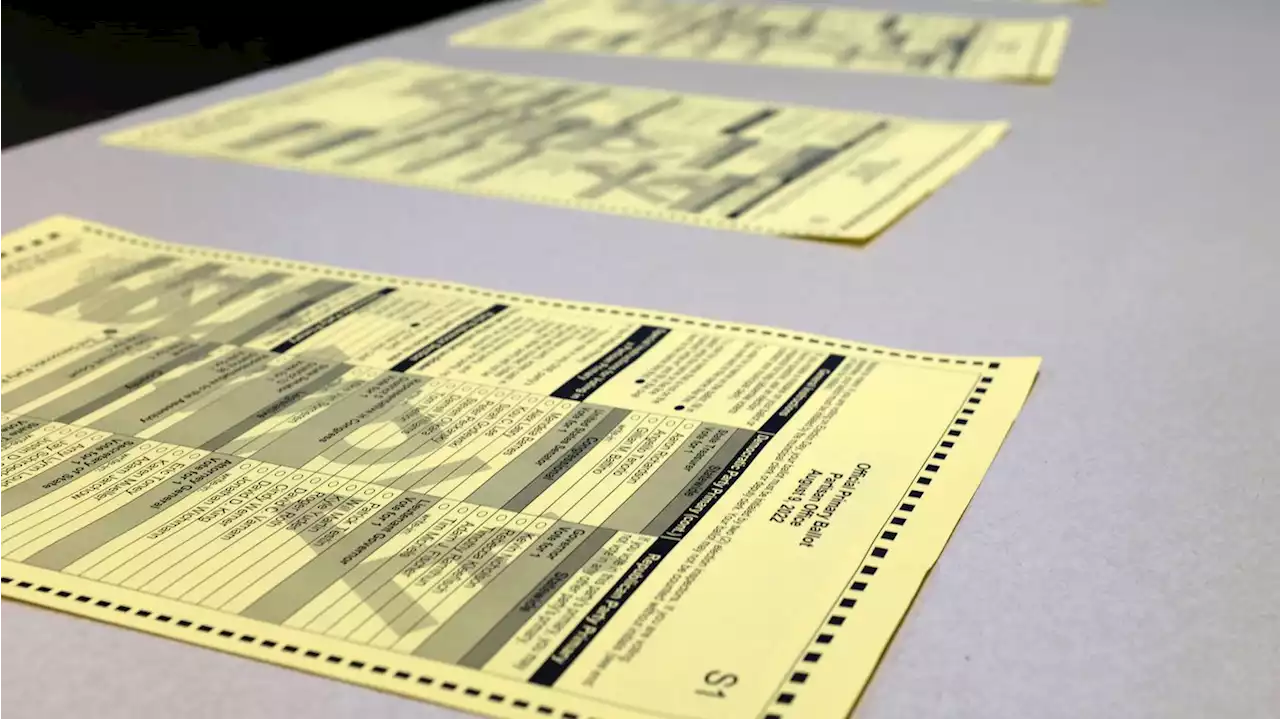 Wisconsin lawmaker sues to block military ballots from being countedThe Wisconsin lawmaker has been criticized by election officials for spreading false information about the system.
Read more »
 Judge denies request to block sexually explicit images in Netflix documentary about 'orgasmic meditation'A Los Angeles judge has denied a request to block or alter parts of a Netflix documentary about a wellness company known for “orgasmic meditation” over allegations that it may have included “misappropriated” sexually explicit material.
Read more »
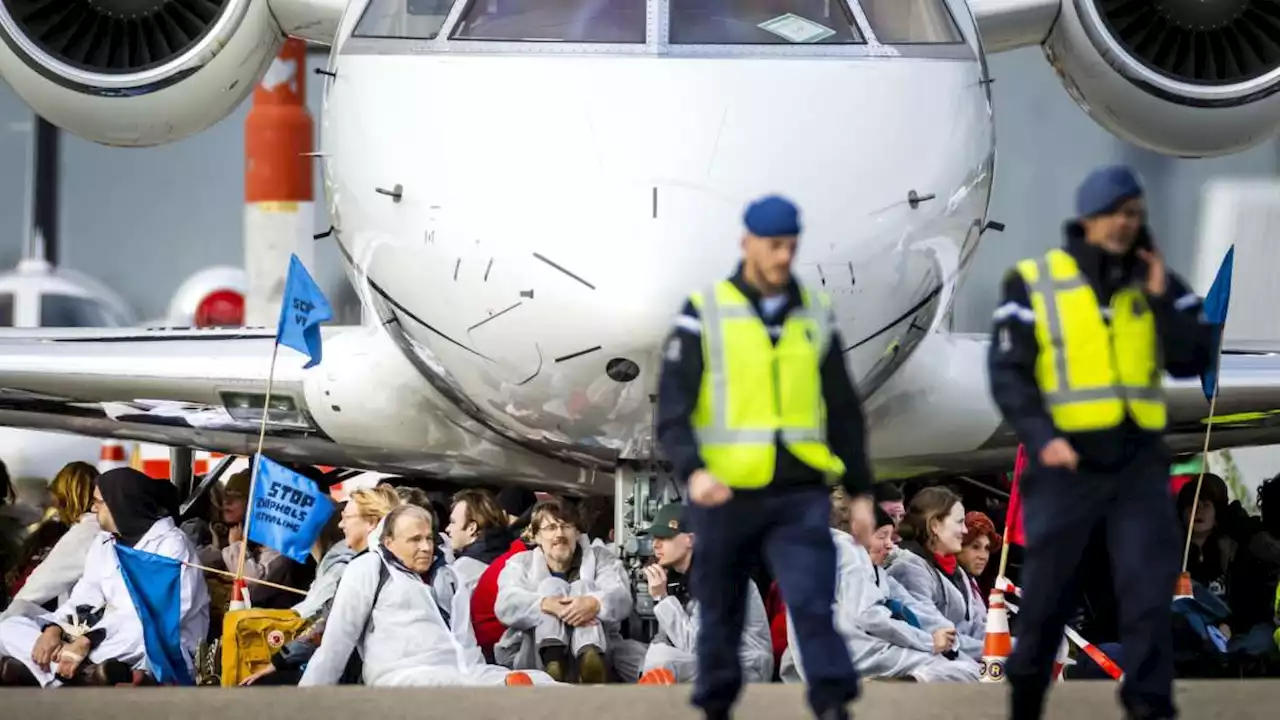 Dutch Climate Activists Block Private Jets From Taking Off, Over 100 ArrestedOver 500 protesters called out the high emissions lifestyle of the uber-rich and demanded an end to private air travel.
Read more »